

VoiceDDB
Politics • Culture • News
oDDBall analysis of conservative politics with a libertarian economic conservative twist. Small government, big freedom.
Interested? Want to learn more about the community?
October 01, 2021
On this day, 1st Oct 2016

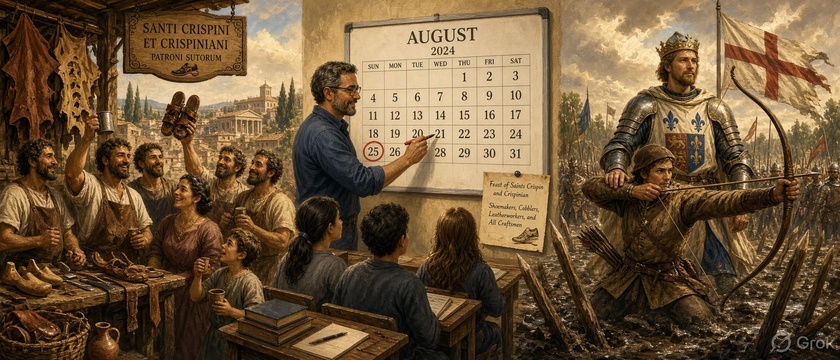
A graceless pre match interview highlighted how inappropriate it is to allow the Australian PM Malcolm Turnbull out without a full round of opinion panels advising of alternatives. Turnbull was interviewed on 3AW, Melbourne's home of footy broadcasts for radio. Turnbull pretended he was a Swan supporter from way back. Only he did not know the lyrics to the club song. I don't follow the Swans closely, but I know them. It was a very bad look for Turnbull. He was even prompted, and showed he had no idea. Then, Turnbull turned on Bulldog supporters. It isn't their fault Julia Gillard follows the club. But Turnbull burned them as if they were his political opponents. It isn't the Swans fault Turnbull pretends to follow them, too. Turnbull mentioned Shorten too, clearly showing he only thinks in political terms, but not too deeply. Note to Mike Baird, it is too late now, but we have evidence that Bulldogs are a dangerous breed and something must be done. Luckily Baird has a sense of humour and dignity. Turnbull is a disaster who doesn't know the words to the club song of the club he supports. I wanted Swans to win, but I am happy that a magnificent team of Bulldogs outplayed Swans and deserved to win. Bulldogs beat Weagles in Perth. Hawks in Melbourne. Giants in Sydney and finally the minor premiers. It was a timeless, perfect finals run. Bulldogs match play in the final was likened by a Richmond supporter to be "like a season highlight reel for Tigers in one game." Probably schools will have to built in Melbourne for students conceived in celebration. The last Bulldogs premiership had been 1954. Minor Premiers Swans looked the goods until Turnbull spoke out for them.
https://conservativeweasel.blogspot.com/2021/10/1st-oct-review-of-historical-and.html

post photo preview
Interested? Want to learn more about the community?
What else you may like…
Videos
Posts
Articles
00:01:07
November 27, 2022
Jingle Bell Rock

Jingle bell, jingle bell, jingle bell rock
Jingle bells swing and jingle bells ring
Snowin' and blowin' up bushels of fun
Now the jingle hop has begun

Jingle bell, jingle bell, jingle bell rock
Jingle bells chime in jingle bell time
Dancin' and prancin' in Jingle Bell Square
In the frosty air

What a bright time, it's the right time
To rock the night away
Jingle bell time is a swell time
To go glidin' in a one-horse sleigh

Giddy-up jingle horse, pick up your feet
Jingle around the clock
Mix and a-mingle in the jinglin' feet
That's the jingle bell rock

Jingle bell, jingle bell, jingle bell rock
Jingle bell chime in jingle bell time
Dancin' and prancin' in Jingle Bell Square
In the frosty air

What a bright time, it's the right time
To rock the night away
Jingle bell time is a swell time
To go glidin' in a one-horse sleigh

Giddy-up jingle horse, pick up your feet
Jingle around the clock
Mix and a-mingle in the jinglin' feet
That's the jingle bell
That's the jingle...

00:02:04
September 01, 2021
Intro to Locals for the Conservative Voice

David Daniel Ball calls himself the Conservative Voice.

I'm a teacher with three decades experience teaching math to high school kids.I also work with first graders and kids in between first grade and high school. I know the legends of why Hypatia's dad is remembered through his contribution to Math theory. And I know the legend of why followers of Godel had thought he had disproved God's existence.

I'm not a preacher, but I am a Christian who has written over 28 books all of which include some reference to my faith. Twelve blog books on world history and current affairs, detailing world events , births and marriages on each day of the year, organised by month. Twelve books on the background to and history of Bible Quotes. One Bible quote per day for a year. An intro to a science fiction series I'm planning, post apocalyptic cyber punk. An autobiography with short story collections.

I'm known in Australia for my failure as a whistleblower over the negligence death of a school boy. ...

00:01:50
Holiday break is over back to work tonight

Tonight I'll start double posting until I've caught up.

Chinese Space Bio Labs

While Elon Musk is busy landing reusable rockets and building robot swarms on Earth, the CCP has gone full 'Musk but make it bioweapons': they're launching fleets of Starship-inspired rockets crewed by copycat Optimus robots, blasting 'Fau Chi' biolabs straight into Low Earth Orbit.

These gleaming orbital stations, proudly emblazoned with the Chinese characters 福奇 (Fú Qí — sounding suspiciously like 'Fau Chi'), are officially designated as The Science™ Research Facilities. Perfect for safe, ethical gain-of-function experiments on exciting new pathogens like TDS (Trump Derangement Syndrome), 'Last Millennia' nostalgia plagues, and the deadly 'We Are Living in 2026' variant.

The endgame? A billion trusting parents worldwide voluntarily neutering their own children on expert 'Fau Chi' advice from the heavens — because nothing says 'public health' like taking guidance from a floating Chinese biolab with reusable re-entry capabilities.

post photo preview
Editorial from 2018 for June 9th

Don't give up on hope. Western Civilisation is on the nose of universities in Australia. Sydney University collapsed in 1990, and her upper executive got replaced by ALP managerialists as Keating fought a culture war which the Liberal Party have not effectively engaged. Dame Kramer had been made Chancellor, but the Chancellor's position is not executive at Sydney University. Kramer fought effectively for Western Values, but the University, now, is as partisan left as the ABC is now. Kramer had been a powerful presence in charge of the ABC too. 

In 1990, Sydney University lost her Chancellor and Vice Chancellor. The Chancellor, Hermann David Black, died after a long illness. James Anthony Rowland, a former governor of NSW took the chancellor's position for a few years, before passing it to Kramer in 1991. She held on to 2001. From 1981 to 1990, John Manning Ward was the executive head of Sydney University as Vice Chancellor. He had been writing a trilogy on Australian conservative leaders ...

post photo preview
post photo preview
SAVE act
What the SAVE Act Would Mean for the Union If It Fails

What the SAVE Act Would Mean for the Union If It Fails

At least four GOP senators are opposing the SAVE Act, as is every Democrat. There are reasons why the four GOP senators oppose it, but there are reasons why every single Democrat opposes it too. As divisions go, it is not dissimilar to the U.S. Civil War and Lincoln’s fight. Lincoln had looked like he was losing his fight, but managed to get the numbers. What will it mean if SAVE is not passed?

Analysis depends on what has happened before. If we are in a condition of business as usual, then the SAVE Act means little, or is an overreach. In that scenario, Trump has a nefarious plan to remove Democrats from office and seize government control. If we are in a state of crisis—preceding even a stolen election in 2020 and multiple kill attempts on GOP figures, including Trump and Kirk—then SAVE would have to be very special.

Analysis changes depending on sources. Partisan, deep-state affiliates paid for with USAID over decades, Wikipedia, CNN, NYT et al. are claiming Trump has a nefarious plan with SAVE. And so, asking Grok, which has over-reliance on such sources, gets a ridiculous response:

“The comparison does not hold in any meaningful historical, moral, legal, or practical sense. The two events operate on entirely different scales of human impact, constitutional process, and national crisis.”

If one accepts that the 2020 election was stolen, that the COVID crisis was part of an administrative coup, that infiltration of social media by U.S. intelligence has allowed illegal overreach by the deep state, and that the SAVE Act could address electoral irregularities, then one sees the comparison with Civil War issues as comparable. How might Grok respond if it were even-handed and not captive?

Consider those opposing SAVE. They might want a puppet president who was voted in by 18% of counties. Maybe they have a personal enmity with Trump and want him killed? Maybe they want illegal aliens voting, vouching for each other? During the Civil War, awful people argued that “states’ rights” meant there had to be slavery. In the modern scene, states’ rights mean illegals can vote and identity is not required.

Significant members of the January 6th committee were pardoned in extraordinary fashion. And Hunter Biden’s pardon extended back before the Ukraine prosecutor being silenced or the shootdown of the Malaysian airliner. The circumstantial evidence pointing to a grand conspiracy by the deep state is deep. To accept business as usual is to be accepting the credibility of proven liars: Russia Gate, the Biden laptop, the COVID crisis allowing loser-voting rules, 2000 Mules, the bombs at the DNC and RNC, the impeachments on trumped-up evidence, Jack Smith, voting irregularities not investigated, activist judges, partisan news media, comics given work that cost millions simply for hating Trump.

The moral connection of slavery versus voting rights is pithy. The comparison of divided unions is apt. Why would Grok assume the pithy case and ignore the salient one?

If SAVE is not passed, it is likely enough that anti-Trumpers could take Congress and again impeach Trump on political lines, and that dangerous rhetoric would get GOP figures killed.

If it is passed, then people may be elected by voters. That might make a big difference.

= Absurd Grok Response =

The comparison does not hold in any meaningful historical, moral, legal, or practical sense. The two events operate on entirely different scales of human impact, constitutional process, and national crisis.

What actually happened with Lincoln and slavery

Abraham Lincoln issued the Emancipation Proclamation on January 1, 1863, as a wartime measure under his powers as commander-in-chief. It declared free the enslaved people in Confederate-held territory (roughly 3–4 million people), but it did not free those in Union-controlled areas or border states, and it depended on Union military success for enforcement.

The permanent, nationwide end of slavery came with the 13th Amendment, which Congress passed in January 1865 and the states ratified by December 1865. It constitutionally abolished slavery and involuntary servitude (except as punishment for crime) throughout the United States. This required:

  • A civil war that killed roughly 620,000–750,000 Americans.
  • Sustained political effort, including Lincoln’s lobbying of Congress.
  • A formal constitutional amendment process (two-thirds of both houses of Congress + three-fourths of the states).

Ending legal chattel slavery transformed the legal status of millions of human beings who had been treated as property. It was one of the most consequential acts in American history.

Status of the SAVE Act

The Safeguard American Voter Eligibility (SAVE) Act / SAVE America Act is ordinary legislation. Versions have passed the House multiple times (party-line or near party-line votes). It has repeatedly failed to advance in the Senate due to the filibuster (60-vote threshold) and opposition from some Republicans (notably Collins, Murkowski, McConnell, and Tillis on key votes) as well as all Democrats. As of August 2026 it remains unpassed and is not law.

Its core provisions require documentary proof of U.S. citizenship (passport, birth certificate, or equivalent) to register to vote in federal elections, along with related verification and photo-ID elements in some versions. Supporters describe it as enforcing existing law that only citizens may vote and as election-integrity reform. Critics (including voting-rights groups) argue it would create practical barriers for some eligible citizens who lack ready access to the required documents and compare its effects to historical voter-suppression tactics.

Why the parallel fails

AspectLincoln / End of SlaverySAVE Act
Scale of impactFreed millions from legal ownership as propertyAdministrative rules for voter registration
Human stakesLife, liberty, and legal personhoodAccess to the ballot under new documentation rules
ProcessCivil War + constitutional amendmentOrdinary statute blocked by Senate filibuster
Legal statusAchieved (13th Amendment is permanent)Not enacted
Moral weightEnding an institution of human bondageDebated election-administration reform
Historical consensusNear-universal recognition as transformativePartisan dispute; no equivalent consensus


Equating a contested voter-registration bill with the abolition of slavery collapses categories that are not comparable. One resolved a foundational moral and constitutional crisis through war and amendment. The other is a partisan legislative priority that has so far been unable to clear the Senate. Rhetoric that treats them as analogous inflates the stakes of ordinary electoral policy while diminishing the historical reality of slavery and emancipation.

In short: Lincoln’s actions ended the legal institution of slavery. The SAVE Act, even if it eventually passed, would change how Americans prove eligibility to register to vote. Those are not the same kind of event.

= Later Grok response = 

The comparison between the SAVE Act’s fate and Lincoln’s struggle over slavery remains strained even when examined from a position of maximum skepticism toward official narratives. Polarization, institutional distrust, and high-stakes fights over the rules of the republic are real. Equating a stalled voter-registration bill with the constitutional and moral crisis of chattel slavery, secession, and a war that killed hundreds of thousands does not follow from the available evidence.

Current facts on the SAVE Act

As of August 2026 the Safeguard American Voter Eligibility (SAVE) Act / SAVE America Act has passed the House multiple times on near party-line votes. It has repeatedly failed in the Senate. Four Republicans—Susan Collins (Maine), Lisa Murkowski (Alaska), Mitch McConnell (Kentucky), and Thom Tillis (North Carolina)—joined every Democrat on key procedural and amendment votes that blocked it. Senate Majority Leader John Thune has stated the votes for cloture (60) are not there and has declined to eliminate the filibuster.

Stated reasons from the four senators center on federalism (states control the “times, places and manner” of elections under the Constitution), practical implementation (especially Murkowski on Alaska’s vast rural and Native communities, where obtaining documents could require expensive travel), and timing concerns before the midterms. McConnell and Tillis are retiring; Collins is seeking re-election. Democrats uniformly call it voter suppression or “Jim Crow 2.0.” Supporters, including Trump, frame it as enforcing the existing legal requirement that only citizens vote and as a response to perceived vulnerabilities.

Non-citizen voting: the empirical record

Federal law already prohibits non-citizens from voting in federal elections; the penalty includes prison and immigration consequences. Documented cases exist but are rare. State audits, the Heritage Foundation’s own database of prosecuted election crimes, Brennan Center reviews, and recent trackers consistently show dozens to low hundreds of confirmed or highly likely non-citizen registrations/votes across decades and hundreds of millions of ballots—typically fractions of a percent or far less.

Older academic claims of higher rates (e.g., a contested 2014 Stanford paper) have not been borne out by official cross-checks of voter rolls against citizenship databases. Recent Census Bureau matching efforts have flagged larger preliminary numbers in incomplete analyses, but these remain contested and do not demonstrate coordinated outcome-altering fraud. The principle that only citizens should vote is sound and widely supported in polling; whether documentary proof at registration is the optimal, least-burdensome way to enforce it is a separate policy question involving trade-offs for citizens who lack easy access to passports or certified birth certificates (elderly, poor, rural, married women with name changes, etc.).

The Civil War / Lincoln analogy

Lincoln faced an actual rupture of the Union, a war, and the legal ownership of millions of human beings. The Emancipation Proclamation was a wartime measure; the 13th Amendment required a constitutional process amid existential conflict. Even granting every strong claim about 2020 irregularities, media bias, intelligence community overreach, Russia Gate flaws, the Hunter Biden laptop suppression, COVID-era administrative expansions, or assassination attempts, the scale and character differ. Polarization and institutional distrust are severe. They are not the same as secession and slavery.

Charlie Kirk was assassinated in September 2025 while speaking at a university; prosecutors have pointed to political animus in the charging documents (engraved bullet, texts about “hatred”). Trump survived multiple attempts. Political violence and eliminationist rhetoric are real and condemnable from any direction. They do not automatically convert a documentation requirement for voter registration into the moral or historical equivalent of ending slavery.

What non-passage actually means

If the SAVE Act remains blocked:

  • Existing law (citizenship required) continues.
  • States retain primary control over registration and verification methods; some already require stronger proof or conduct regular clean-ups.
  • Claims of systemic non-citizen voting sufficient to swing national outcomes remain unproven by the audits and prosecutions that have occurred.
  • Partisan distrust deepens. Trump and allies will treat the failure as evidence of elite resistance to accountability; opponents will treat the push as evidence of an effort to suppress turnout.
  • Midterm and future elections proceed under the status-quo rules. Impeachment, investigation, and rhetorical escalation remain possible tools for whichever side holds institutional power—tools that have already been used aggressively in recent years.

Passage would standardize documentary proof of citizenship for federal registration and related verification steps. It would likely reduce the already-small number of improper non-citizen registrations at the cost of new administrative hurdles for some eligible citizens. It would not by itself “guarantee” future elections or prevent other forms of dispute (mail rules, drop boxes, ballot curing, legal challenges, media narratives). It also would not erase deeper sources of distrust: intelligence community involvement in domestic politics, selective prosecution perceptions, or activist judicial intervention.

On sources and “captivity”

Distrust of legacy media, certain intelligence assessments, and institutional self-reporting is earned on multiple recent episodes (Steele dossier problems, laptop suppression, shifting COVID guidance, uneven treatment of political violence). That does not license treating every contested claim as proven conspiracy or every counter-claim as deep-state propaganda. Courts, bipartisan election officials, state audits, and the absence of successful outcome-changing litigation after 2020 remain relevant data points. Extraordinary claims about a fully stolen election or an administrative coup require correspondingly strong, publicly verifiable evidence; much of what circulates remains assertion, selective data, or disputed interpretation.

An even-handed assessment does not require accepting the “business as usual / Trump is the threat” frame or the “stolen election / existential crisis” frame as settled fact. It requires weighing the documented incidence of the specific problem the SAVE Act targets, the constitutional allocation of election authority, the practical burdens of the proposed remedy, and the actual (not imagined) consequences of the current stalemate. Polarization is dangerous. Treating ordinary legislative disagreement as the moral equivalent of the Civil War escalates rather than clarifies it.


Read full Article
August 19, 2026
post photo preview
Our Choices Define Us.
Two Trajectories of Registered Democrats.

Two Trajectories of Registered Democrats. Our Choices Define Us.

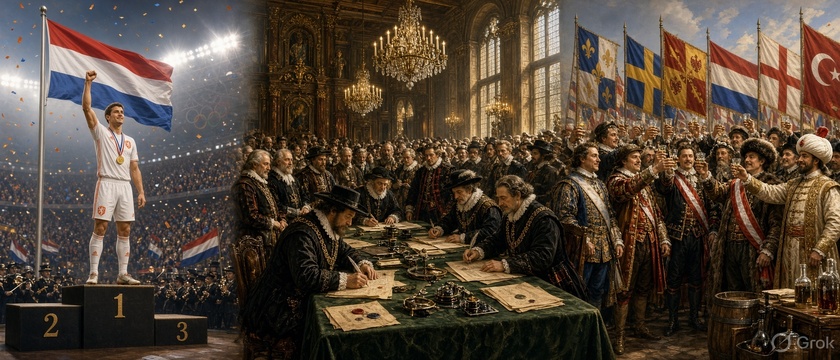
Eric Swalwell was raised in a GOP-leaning household. His father was a police chief. As a child, Eric had Bell’s palsy and needed to wear an eye patch. He earned a Division I soccer scholarship as a goalkeeper but lost it after breaking both thumbs in separate incidents while playing keeper. Recovery was expected to sideline him for at least a season. He pivoted, earned a B.A. in government and politics from the University of Maryland, and interned for Democratic U.S. Rep. Ellen Tauscher (who sat on the Armed Services Committee). As a deputy district attorney in Alameda County, he began serving on local commissions and the Dublin City Council before winning a House seat.

Todd Blanche is the son of a former Canadian hockey player who came to the United States on a sports scholarship and later led a religious congregation from the family basement. Blanche played basketball and baseball at Beloit College before transferring to American University in Washington, D.C., around 1994, where he earned a B.A. in political science. He worked as a paralegal at the U.S. Attorney’s Office for the Southern District of New York while attending Brooklyn Law School at night, serving as an editor of the Brooklyn Law Review. He graduated cum laude with a J.D. in 2003, then clerked for federal judges who later joined the Second Circuit. In 2006 he returned to the SDNY as an Assistant U.S. Attorney, spending eight years there, including time as co-chief of the Violent Crimes Unit. In 2016, by his own account and those of people close to him, he became emotional when Hillary Clinton lost to Donald Trump.

Both men were, in different ways, positioned for further power. Their choices determined the paths that followed.

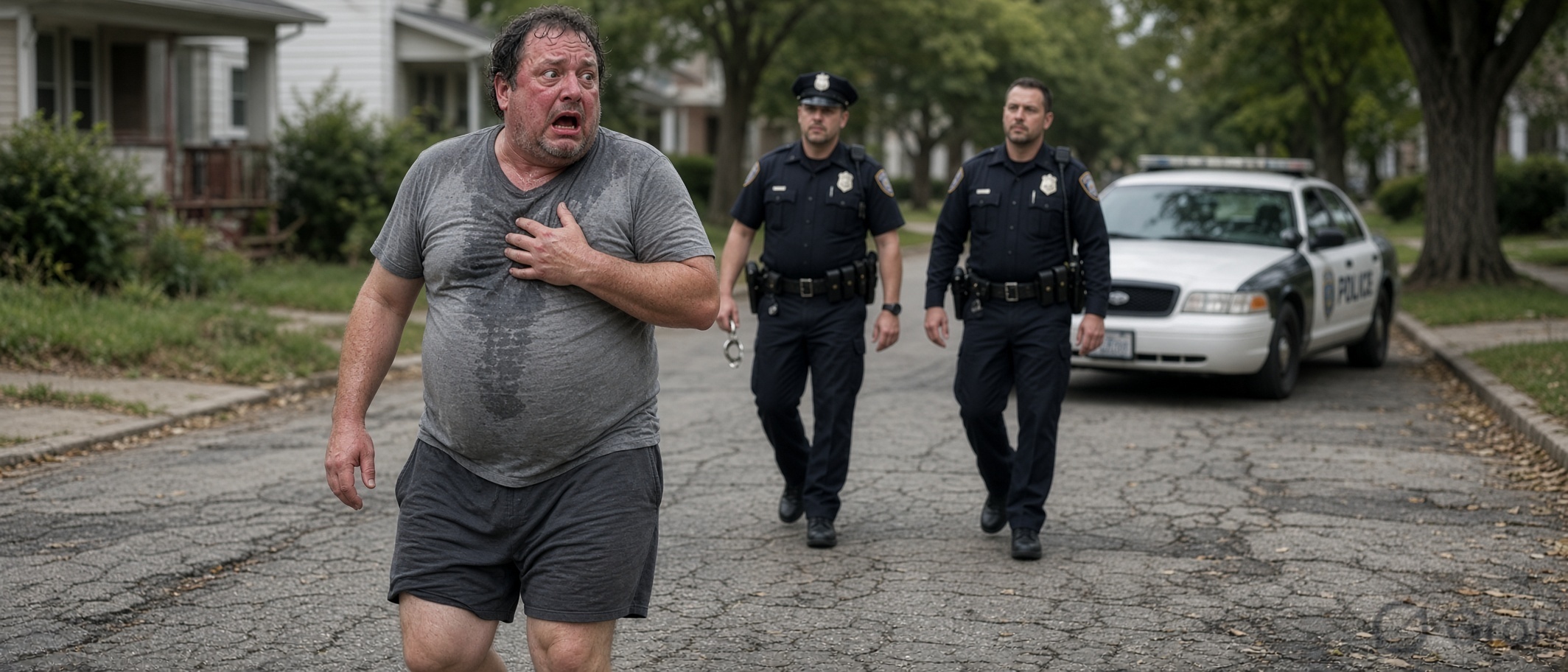
Swalwell secured a prestigious seat on the House Intelligence Committee. There he was exposed to a classic honey-trap operation involving Christine Fang (also known as “Fang Fang”), a suspected Chinese Ministry of State Security operative. Newly declassified FBI interview summaries show that Swalwell admitted in 2015 and 2016 to having “physical relations” with Fang on a “handful of occasions,” including an encounter after she showed up unannounced at his apartment while he was under the influence of Ambien. Fang also helped place interns in his office and was linked to questionable campaign contributions. Swalwell has long maintained he cut contact after an FBI briefing and that no classified information was compromised; the FBI ultimately found no basis to charge him with corruption or a quid pro quo. Yet his committee’s work was marked by highly partisan decision-making, most notably the aggressive pursuit of the Russia collusion narrative that later investigations significantly undermined. Unlike some figures associated with the January 6 Select Committee, Swalwell received no protective pardon. His career ended in 2026 amid multiple sexual misconduct allegations, including claims of assault, which he denies and which remain under investigation. He resigned from Congress and suspended a gubernatorial bid.

Blanche left government service in 2014 for private practice. He worked as counsel at WilmerHale in Manhattan, then in September 2017 became a partner at Cadwalader, Wickersham & Taft in its White Collar Defense and Investigations practice, remaining until 2023. Early Trump-adjacent work included successfully moving to dismiss a New York mortgage-fraud case against Paul Manafort in 2019 and representing clients such as Igor Fruman. In 2023 he left Cadwalader, founded Blanche Law, and became a lead defense attorney for Donald Trump in the New York hush-money case and the two federal cases brought by special counsel Jack Smith. Though earlier a registered Democrat, he later switched registration. This path—from working-class Colorado roots and night law school while supporting a young family, through years as a hard-charging federal prosecutor, to high-profile private defense work—produced a career defined by practical experience rather than elite pedigree or institutional loyalty.

Today one man is in disgrace; the other stands as Attorney General of the United States.

When challenged over his independence, Blanche offered a clear-eyed reply. Asked by Kristen Welker whether he could pledge that the Justice Department would “always act independently of the White House,” he answered:

“There’s a big difference between saying, ‘We will always do our job and investigate any case’ and ‘act independently of the White House.’ No, I’m not going to pledge that. And no attorney general should ever pledge that.” He continued that if the President directed the Department to pursue violent criminals nationwide, refusing on grounds of “independence” would be an abdication. “I will act with integrity. Our prosecutors will act with integrity. We will prosecute without fear or any sort of favor.” Pressed further on whether he would refuse an unethical or illegal request, Blanche stated flatly: “The president will never ask me to do something unethical… or illegal. He never has. He never will… I swore to the Constitution of the United States.”

Swalwell’s trajectory closes with the declassified record of his own admissions regarding Fang—casual physical encounters with a suspected foreign intelligence operative while rising through the ranks of the House Intelligence Committee. Blanche’s trajectory closes with a public refusal to mouth institutional pieties that would require him to ignore the elected President’s lawful priorities.

Two men once registered as Democrats. Their choices defined them.

Read full Article
August 19, 2026
post photo preview
Airplane Safety Presages a Revolution in Car Safety
Must we endure more loss

Airplane Safety Presages a Revolution in Car Safety

On this day in 1961, Patsy Cline recorded her signature hit “Crazy.” Only weeks earlier she had survived a near-fatal head-on car collision in Nashville, being thrown through the windshield. Broken ribs and other injuries still affected her breathing and range, yet she delivered the vocal in a single take over a pre-recorded instrumental track. The song became one of the most enduring recordings in country music.

Less than two years later, on 5 March 1963, Cline was dead at the age of 30. The small Piper PA-24 Comanche carrying her, Cowboy Copas, Hawkshaw Hawkins and pilot-manager Randy Hughes crashed near Camden, Tennessee, while returning from a benefit concert in Kansas City. Flying into deteriorating weather without an instrument rating, Hughes lost control. The crash was ruled pilot error under visual flight rules in instrument conditions. More hits followed posthumously.

Cline’s story forms part of a longer list of musicians lost to aviation accidents while travelling between performances. Buddy Holly, Ritchie Valens and J.P. “The Big Bopper” Richardson died together on 3 February 1959 when their chartered Beechcraft Bonanza crashed in a cornfield near Clear Lake, Iowa, in poor weather — the tragedy later called “The Day the Music Died.” Otis Redding, only 26, perished with members of his band when their plane crashed into Lake Monona near Madison, Wisconsin, in 1967. Jim Croce died at 30 in a takeoff crash in Louisiana in 1973. Lynyrd Skynyrd’s Ronnie Van Zant, Steve Gaines and Cassie Gaines were killed in 1977 when their Convair ran out of fuel and went down in a Mississippi swamp. Randy Rhoads, Ricky Nelson, John Denver and Aaliyah met similar fates in later decades.

Cars have claimed their own share of celebrated lives, often with less lasting public myth-making than the dramatic plane crashes.

James Dean, 24, was killed on 30 September 1955 when his Porsche 550 Spyder collided almost head-on with another vehicle near Cholame, California, while he was driving to a sports-car race. Jayne Mansfield, 34, died in the early hours of 29 June 1967 when the Buick she was travelling in struck the rear of a slow-moving tractor-trailer on a Louisiana highway; her young children, including future actress Mariska Hargitay, survived in the back seat. Grace Kelly, the Hollywood star who became Princess of Monaco, suffered a stroke while driving in 1982; her car left a mountain road and she died the following day at 52. Paul Walker, 40, was a passenger in a Porsche Carrera GT that crashed at high speed in Santa Clarita, California, in 2013 after a charity event; both he and the driver died. Anton Yelchin, 27, was fatally crushed in 2016 when his own vehicle rolled backward on a steep driveway due to a defective gear-shift design.

These losses, whether by air or by road, underline a simple statistical truth: aviation is far safer per passenger-mile than driving. Yet the absolute number of deaths and catastrophic injuries on the roads remains vastly higher. Cars do not have to stay as dangerous as they still are.

Recent technology is beginning to change the odds. Tesla’s Full Self-Driving (FSD) system, based on vision AI trained on real-world driving behaviour rather than pre-mapped courses, has produced striking safety data. Tesla’s own large-scale telemetry reports that vehicles under FSD Supervised travel several times farther between major collisions than the U.S. average. In its first European safety report from the Netherlands, Tesla stated FSD was 3.5 times safer than manual driving; later expanded data covering more than 65 million kilometres across several countries showed the advantage rising to 5.2 times safer overall, with an even larger margin on highways.

While fully unsupervised operation is still developing and independent analyses continue to examine methodology and early robotaxi results, the supervised system’s recorded reduction in collisions is significant. Nations such as France and Germany have so far resisted broader licensing, citing safety concerns and preferring slower EU-wide processes. Domestic industry interests also play a role. Meanwhile regulations lag, and ordinary drivers and passengers — along with the occasional celebrated figure — continue to die or suffer permanent injury in accidents that better technology is already capable of reducing.

I am still Crazy for more Cline.

Read full Article
See More
Available on mobile and TV devices
google store google store app store app store
google store google store app tv store app tv store amazon store amazon store roku store roku store
Powered by Locals