The Nuking of Nagasaki Has Robbed the West of Legitimacy But a partisan press has protected Democrats from the criticism they would have levelled had the GOP been equivalent.
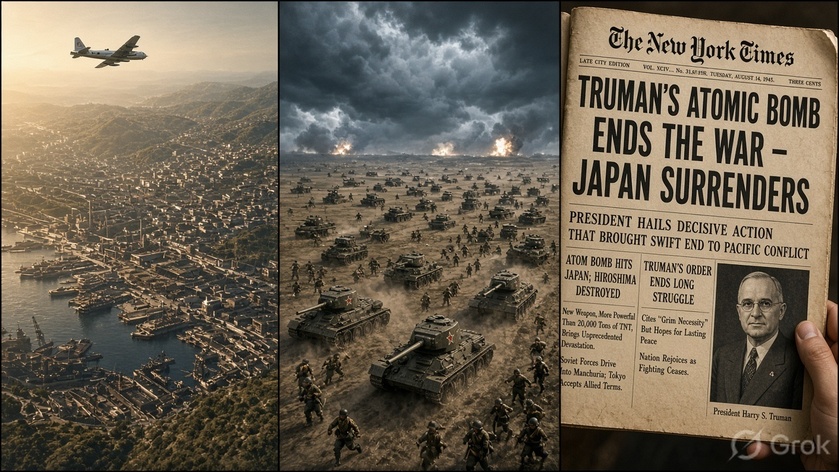
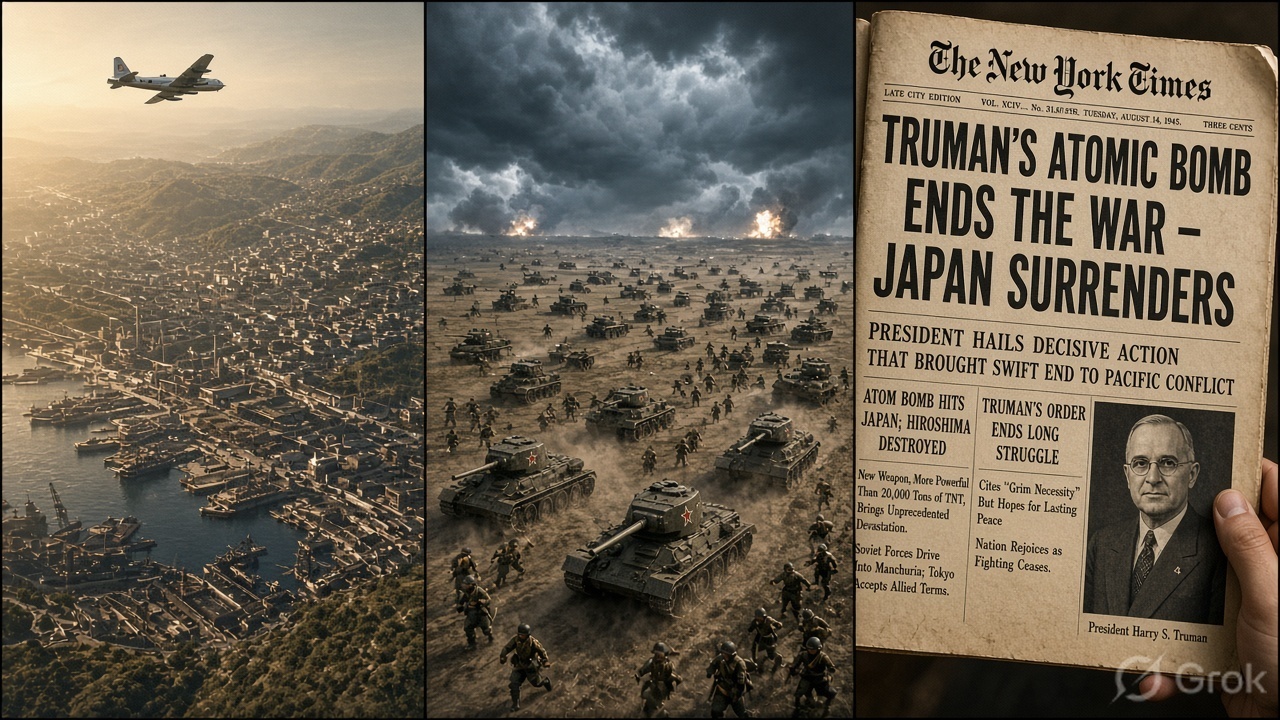
The atomic bombing of Nagasaki on 9 August 1945 did more than end a war. It stripped the West of a lasting claim to moral authority. Hiroshima had already demonstrated the weapon’s power three days earlier. Dropping a second bomb on a second city, when Japan’s capacity to continue was collapsing, crossed a threshold that no later appeal to necessity fully erases. A partisan press and political culture have since protected the Democratic administration that ordered it from the sustained scrutiny that would have followed had a Republican president taken the same decision.
Australia’s experience in the same war reveals a parallel pattern of political convenience and selective memory. At the outset of the Pacific conflict, Australia had already turfed its conservatives. John Curtin’s Labor government took office in October 1941 and immediately began what looked like panic moves: withdrawing battle-hardened divisions from the Middle East. The gesture was presented as national self-defence. In reality it was also political theatre. Australia’s primary defensive stock had been placed in Singapore. That fortress, held by a numerically superior Allied force, surrendered on 15 February 1942 to a smaller but better-led Japanese army. Roughly 15,000 Australians went into captivity; more than 7,000 of them would die as prisoners.
Domestically, democracy itself proved a source of division. Sections of the union movement had opposed robust war measures while the Soviet Union remained aligned with Germany. After the Nazi invasion of the USSR, the political weather changed. Labor won a decisive mandate in 1943. Yet even under wartime conditions, strikes continued in pursuit of industrial advantage. A partisan press that had criticised Menzies for unpreparedness proved far more forgiving of Curtin. The conservative opposition, reduced and cautious, largely supported the national effort while receiving little credit for restraint.
Young, often under-trained Australian troops were thrown into the defence of Papua New Guinea. They helped halt the Japanese southern advance on the Kokoda Track and elsewhere. Their achievement was real. It does not erase the earlier strategic failure at Singapore or the domestic political manoeuvring that accompanied it. American forces, meanwhile, were themselves divided: MacArthur’s South West Pacific command competed with the Navy’s Central Pacific drive, producing duplication and inter-service rivalry even as both pushed toward Japan.
Australia gave general support to American strategy and offered information about its prisoners. There is little evidence of a determined national policy aimed at the early recovery of those prisoners while the war continued. Large-scale rescue was militarily difficult; political will to prioritise it over the broader campaign was limited.
Truman’s decision to use the bomb at Hiroshima failed to produce immediate Japanese surrender. Nagasaki followed. Intelligence and postwar surveys showed that the military toll of the blasts was far lower than the civilian one. Hiroshima’s garrison suffered several thousand dead out of roughly 24,000 present; Nagasaki’s military deaths numbered only in the low hundreds. Total deaths across both cities reached the tens of thousands by the end of 1945, the great majority civilians. Japan surrendered shortly after the Soviet Union declared war and invaded Manchuria on 8–9 August. The Soviet entry destroyed Tokyo’s remaining hope of a mediated peace and threatened the home islands from a new direction. Both shocks mattered. The second atomic bomb was not the sole or even the decisive blow.
Counterfactuals sharpen the point. Had the United States withheld the Nagasaki bomb, the combination of Soviet invasion, continued conventional bombing, and naval blockade might still have forced surrender before any invasion of the home islands—though at higher cost in time and further conventional casualties. Had Australia followed Churchill’s demand and sent the returning 7th Division into Burma in February 1942, those troops would likely have been destroyed or captured as Rangoon fell; the New Guinea campaigns would have been weaker. Had the Soviet Union stayed neutral, Japan’s hardliners would have retained a diplomatic lifeline and the military argument for fighting on would have been stronger. In each case the historical outcome was shaped as much by timing and politics as by pure military necessity.
At war’s end the pattern of selective justice continued. Thailand, a Japanese ally that had facilitated logistics for the Thai-Burma Railway, was treated leniently once the Free Thai movement and a late switch of sides were accepted. The railway’s death marches and forced labour remained primarily a Japanese responsibility, yet the broader regional accounting was muted. Japan and West Germany were not subjected to permanent economic suppression. Instead they were reformed under occupation and then rebuilt as industrial hubs, drawing on the same organisational and technical capacities that had served wartime regimes. The Cold War made former enemies into frontline partners against the Soviet Union. Strategic necessity again overrode earlier moral language.
The West still claims the mantle of liberal order and humanitarian restraint. The second atomic bombing, the political protection afforded its authors, and the uneven postwar settlements sit uneasily with that claim. A press and political class that would have demanded relentless scrutiny of equivalent Republican decisions have preferred silence or justification when the responsibility was Democratic. History is not obliged to be tidy. It is obliged to be remembered without partisan filter.