VoiceDDB
Politics • Culture • News
How FBI took 5 years to catch the wrong guy
Pipe bombs of Jan 6th 2021 inside job
October 03, 2026
post photo preview

How FBI took 5 years to catch the wrong guy

Pipe bombs of Jan 6th 2021 inside job

That video is a commentary interview, not a court finding. It is a Viva Frei stream from about 2–3 October 2026, hosted with former FBI agent Kyle Seraphin, under a title close to “Did the FBI Coerce a FALSE CONFESSION Out of The Alleged Jan. 6 Pipe Bomber?” (the “FALS” spelling is a typo in the share text). The YouTube link circulating with that title is youtu.be/cQn9_7dKRzw. A related version also ran on Rumble as “How to Coerce a False Confession.”

The video’s claim is that the FBI took almost five years to name Brian Cole Jr., and that he had not been hiding from the surveillance the Bureau already had.

Devices were placed the night of 5 January 2021. Cole was arrested on the morning of 4 December 2025, walking to a 7-Eleven near the Woodbridge, Virginia home where he lived with his parents. That is four years and eleven months. On the show, former FBI agent Kyle Seraphin treats that gap as the point: no flight, no new identity, no move. Same house, same daily routine, neighborhood walks with his dog, work tied to his father’s bail-bond business and deliveries. The guest’s line is that this man “evaded” the FBI for five years while living in his parents’ house, in plain sight of the same phone, car, and purchase records the Bureau later called decisive.

What the video says the interview shows:

  • The session ran about four hours on the day of the arrest, starting from a gunpoint stop on the way to the store, before he was taken to a judge the lawyers say was minutes away.
  • He denied being the hooded figure on the video. Agents told him lying to federal agents was another crime and that more denials would make it worse. After a pause he said “yes.”
  • They warned they could bring his family in and put them through the same interview.
  • He was distressed on the recording: chills, gagging, repetitive speech the defense calls stimming. Agents wrapped him in a blanket.
  • A defense expert, Richard Leo, is cited for the claim that the tactics — guilt-presumptive questioning, evidence ploys, minimization and maximization, implied threats — are the kind shown to raise the risk of a false admission, especially in someone later diagnosed with level-1 autism.
  • The “yes,” on this telling, was not recognition of the video. He had just said he did not recognize the person. It was the product of being told that “no” was itself a crime, after which he began repeating the agents’ account.

Seraphin’s claim on the show is that this is how a false confession is produced, and that Cole does not match the hooded figure the FBI had on camera from the start.

=

For October 5th

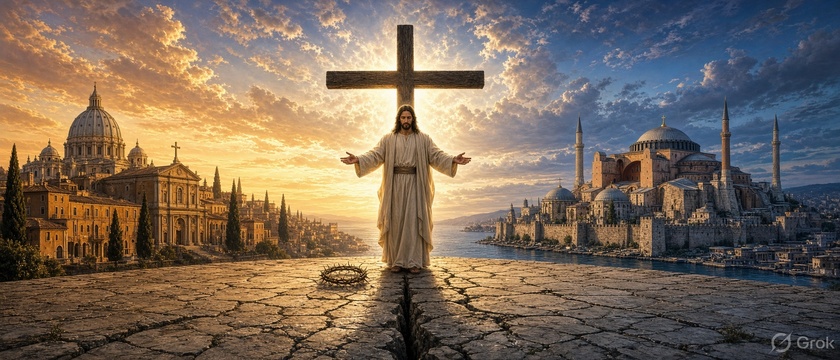
The Catholic and Orthodox churches did not divide on one day. They grew apart for centuries, healed more than once, and only later treated the breach as permanent. The council of 869 is one of the early fractures, and it did not hold.

For the first centuries there was one church with several chief sees. Rome, Constantinople, Alexandria, Antioch and Jerusalem were the five patriarchates. Rome had a primacy of honour as the see of Peter and Paul, and the only apostolic see in the West. Constantinople had the emperor, the court, and from the sixth century the title “ecumenical patriarch.” Greek in the East, Latin in the West, different liturgies, and two ideas of authority were already in place before anyone spoke of a schism. The East thought of Rome as the senior patriarch, whose voice mattered most in a council. The popes of the ninth century were already claiming a jurisdiction that could judge other patriarchs.

Photius sat in the middle of that argument. In 858 the emperor Michael III deposed Patriarch Ignatius and replaced him with Photius, a lay scholar and head of the imperial chancery. He was elected, tonsured and ordained through the grades to the patriarchate within about a week. Ignatius’s party appealed to Rome. Pope Nicholas I refused to recognise the appointment. Canon law, as Rome read it, did not allow a layman to be rushed to the highest see, and it did not allow an emperor to depose a patriarch and have Rome rubber-stamp the result.

The fight then moved to Bulgaria. Both Rome and Constantinople wanted the new Bulgarian church. Nicholas wrote to the Bulgars attacking Greek customs: married clergy, the leavened bread of the Eucharist, and other rites. Photius answered in 867 with a council in Constantinople that deposed and anathematised Nicholas and the Western church. The charge that lasted was the Filioque. The Nicene-Constantinopolitan Creed says the Holy Spirit proceeds from the Father. In Spain, and then more widely in the Latin West, churches had added “and from the Son” — Filioque — to stress the Son’s full divinity against Arianism. Rome itself adopted the addition later. Photius called the addition a corruption of the creed and a theological error. The East’s objection was twofold: that the Spirit proceeds from the Father alone, the Son being involved in the Spirit’s sending but not in his eternal origin; and that no one see had the right to alter a creed fixed by an ecumenical council.

That council of 867 did not last the year. Basil I murdered Michael III, took the throne, and restored Ignatius. Nicholas died in November 867. His successor, Adrian II, condemned Photius, and Basil called the council that opened in Constantinople on 5 October 869. It sat until 28 February 870. It restored Ignatius, anathematised Photius, burned the acts of the 867 synod, and issued 27 canons. The papal legates pressed for a clear submission to Roman judgment. Attendance was poor: about a dozen bishops at the opening, never more than about a hundred. The West later counted this as the Fourth Council of Constantinople and the eighth ecumenical council. The East never did.

It also failed on the ground. Ignatius died in 877. Photius became patriarch again, with Basil’s support, and Pope John VIII recognised him in return for concessions on Bulgaria and a promise not to press the Filioque quarrel. A much larger council in Constantinople in 879–80 rehabilitated Photius, annulled the council of 869–70, and was accepted at the time by John VIII’s legates. Rome later repudiated that acceptance. Photius died in communion with Rome, or near enough to it that the breach closed. The Orthodox Church venerates him as a saint. The Catholic Church does not count his rehabilitating council.

What survived was the pair of questions. Does the Spirit proceed from the Father and the Son, or from the Father alone? And is the pope the monarch of the whole church, or the first among patriarchs who cannot rewrite a council’s creed or depose an eastern bishop on his own? Those questions were quiet for long stretches. They were not settled.

The date everyone remembers is 16 July 1054. Patriarch Michael Cerularius had closed Latin churches in Constantinople and attacked Western rites, especially unleavened bread. Pope Leo IX sent Cardinal Humbert. Humbert was abrasive, Leo had in fact already died, and on 16 July Humbert laid a bull of excommunication on the altar of Hagia Sophia. It named Cerularius and his supporters, and it condemned the Greek doctrine of the Spirit, married priests, and leavened bread. Cerularius excommunicated the legates in return. The two bulls did not excommunicate whole churches. Most bishops, east and west, never heard of them. Communion had already been patchy; it continued, in places, afterwards.

The split became a fact in the crusading era. The massacre of Latins in Constantinople in 1182, and then the Fourth Crusade’s sack of the city in 1204, turned a quarrel of theologians and patriarchs into a wound ordinary people remembered. A Latin patriarch was set up in Constantinople. Reunion was signed at the Second Council of Lyon in 1274 and again at Florence in 1439, both times under political pressure — the second time with the Ottoman siege already in view. Neither union survived contact with the eastern clergy and people. After 1453 Constantinople was Ottoman, and Moscow came to call itself the Third Rome. The anathemas of 1054 were lifted by Pope Paul VI and Patriarch Athenagoras in 1965. That removed a symbol. It did not restore communion.

So the council of 869 matters as a rehearsal. A pope and an emperor deposed a patriarch; a thin council ratified it; a fuller council undid it; Rome and Constantinople kept different memories of which council had spoken for the church. The later schism grew from that disagreement about authority, from the Filioque, and from the political rupture of 1204, not from a single anathema in 869 or 1054.
=

These are the standard “on this day” entries for 5 October. A few of the ancient dates are calendar conversions, and one revolutionary claim is looser than the list makes it sound.

539 BC — Babylon falls to Cyrus. The Nabonidus Chronicle puts the entry into the city on the 16th of Tašrītu in the 17th year of Nabonidus. Sippar had fallen two days earlier without a fight; Nabonidus fled, then was taken when he returned. The man who entered was Ugbaru (Gobryas), governor of Gutium, with Cyrus’s army. Cyrus himself came in about a fortnight later, in Arahsamna. Parker and Dubberstein’s Babylonian chronology converts the 16th of Tašrītu to 12 October Julian, which is about 5–6 October on the proleptic Gregorian calendar — hence the date on modern lists. The Cyrus Cylinder presents the takeover as peaceful and as the choice of Marduk; Herodotus and the book of Daniel remember a festival night and a breached river defence. What is solid is the political result: the Neo-Babylonian empire ended, and Cyrus’s edict let the Judean exiles go home. That is the hinge Second Isaiah and the book of Ezra both hang on.

456 — the Suebi broken on the Órbigo. Theodoric II, king of the Visigoths, moved into Iberia on the orders of the short-lived western emperor Avitus. With him were Burgundian forces under Chilperic I and Gundioc, and Frankish contingents. On the river Urbicus (the Órbigo), near Astorga in Gallaecia, they defeated the Suebi under Rechiar. Rechiar was captured and later executed. Suebic power in the north-west did not vanish at once, but the battle ended their bid to dominate the peninsula and left the Visigoths as the coming power in Hispania.

610 — Heraclius crowned. Heraclius, son of the exarch of Africa, sailed on Constantinople against the usurper Phocas. The Excubitors deserted, the city opened, and Phocas was killed — by Heraclius’s own hand in some accounts, after the exchange “Is this how you have ruled?” / “And will you rule better?” On 5 October, in the chapel of St Stephen in the Great Palace, Patriarch Sergius crowned him, and he married Fabia, who took the name Eudocia. He inherited a wreck: Avars in the Balkans, Khosrow II already using Maurice’s murder as a pretext for war. Syria, Palestine and Egypt would fall; the True Cross would be carried off. Heraclius’s answer was personal command, a rebuilt army, and the campaign that ended at Nineveh in 627. The peace he won was brief. Within a decade the same provinces were lost again, this time to the Arabs.

816 — Louis the Pious crowned at Reims. Louis was already emperor. Charlemagne had crowned him co-emperor at Aachen on 11 September 813, and he had ruled alone since his father’s death in 814. Pope Stephen IV came north anyway. On Sunday 5 October, during Mass at Reims, Stephen anointed him and set on his head a crown said to have been Constantine’s. Ermengarde was crowned with him and hailed Augusta. Louis had prostrated himself before the pope. The act did not make him emperor; it reattached the imperial title to a papal coronation, which Charlemagne’s 813 ceremony had sidestepped. Reims became the place where French kings were crowned.

869 — the council that deposed Photius. The Fourth Council of Constantinople, counted in the West as the eighth ecumenical council, opened on 5 October 869 and sat until 28 February 870. Emperor Basil I and Pope Adrian II wanted Photius out. Photius, a lay scholar raised abruptly to the patriarchate in 858, had been deposed once, restored, and had anathematised Pope Nicholas I in 867. The council restored Ignatius, anathematised Photius, burned the acts of his 867 synod, and issued 27 canons. Attendance was thin — a dozen bishops at the start, never more than about a hundred. The East does not receive it. Photius was patriarch again from 877, and the council of 879–80, far better attended, rehabilitated him. This is one of the fractures that later hardened into the schism.

1143 — Portugal recognised at Zamora. On 5 October, at Zamora, with the papal legate Cardinal Guido de Vico present, Alfonso VII of León and Castile — who styled himself emperor of the Spains — acknowledged his cousin Afonso Henriques as king of Portugal. Afonso had already won the field against his mother at São Mamede in 1128 and had used the royal title after Ourique in 1139. The text of the treaty is lost. What survived is the political fact: the Leonese crown stopped contesting the title, and Afonso signed as rex Portugallensis. Full papal recognition waited until Alexander III’s bull Manifestis Probatum in 1179. Portugal still marks 5 October, though the modern national holiday is the republic of 1910, not Zamora.

1450 — Jews expelled from Lower Bavaria. Louis IX, Duke of Bavaria-Landshut, called Louis the Rich, ordered the Jews out of his part of Bavaria. This sits in the long fifteenth-century squeeze on German Jewish communities — debt cancellation dressed as piety, local expulsions before the larger ones of the 1490s. It was not the end of Jewish life in all Bavaria; Regensburg’s community lasted until 1519. It was a ducal clearance of Lower Bavaria.

1550 — Concepción founded. Pedro de Valdivia founded the city on 5 October 1550, at Penco on the Bay of Concepción, as a southern anchor of Spanish Chile against the Mapuche frontier. Earthquakes and Araucanian war forced later moves; the modern city stands inland of that first site. The date is the official foundation.

1582 — a day that did not happen. Pope Gregory XIII’s bull cut ten days from October so that the spring equinox, and therefore Easter, would fall where the Council of Nicaea had put it. In Italy, Spain, Portugal and the Polish–Lithuanian lands, 4 October was followed by 15 October. The 5th through the 14th do not exist in those countries for that year. France waited until December; Protestant states longer; Britain until 1752.

1607 — the knives and Paolo Sarpi. Sarpi, a Servite friar and Venice’s theological adviser in the Interdict fight with Paul V, was attacked on the night of 5 October as he came down the bridge by Santa Fosca toward his convent. Five men; fifteen thrusts by the count of holes in hat, hood and collar; three wounds that landed, one stiletto left in the cheekbone. He lived. Asked who had done it, he said Agnosco stylum Romanae Curiae — “I recognise the style of the Roman Curia,” with stilus also meaning dagger. The attackers fled toward the papal nuncio’s house and on to Rome. Venice gave him a safer lodging. He went back to his work on the history of the Council of Trent.

1665 — Kiel. Christian Albert, Duke of Holstein-Gottorp, founded the university on 5 October. It still bears his name: Christian-Albrechts-Universität.

1789 — the women march to Versailles. On the morning of 5 October, women from the Paris markets, after days of bread shortage and rumour, set off for Versailles. They wanted grain, and they wanted the king to sanction the August decrees and the Declaration of the Rights of Man. The National Guard followed under Lafayette, partly to lead the march and partly to keep it from becoming a sack. That night and the next morning the palace was invaded; two guards were killed. On the 6th Louis XVI agreed to move to Paris. The court came back to the Tuileries in the train of the crowd. The revolution ceased to be something that happened at a safe distance from the king.

1793 — the calendar, not a single act of abolition. Lists often say Christianity was disestablished in France on this day. What the Convention actually did on 5 October 1793 was accept Gilbert Romme’s scheme for a republican era beginning on 22 September 1792, the day the Republic had been proclaimed. The calendar itself was decreed on 24 October and backdated. Sunday disappeared; saints’ days were replaced by the names of plants, tools and weather; the aim was to take Christian time out of ordinary life. Dechristianisation was already a campaign — closed churches, the Cult of Reason, death for non-juring priests and those who hid them — not a statute passed on the 5th that ended the faith by decree. The Republican calendar lasted until 1806.

The day runs from a change of empire in Babylon to a change of calendar in Paris, with coronations, a council, a new kingdom and a failed killing in between.

community logo
Join the VoiceDDB Community
To read more articles like this, sign up and join my community today
0
What else you may like…
Videos
Posts
Articles
00:01:07
November 27, 2022
Jingle Bell Rock

Jingle bell, jingle bell, jingle bell rock
Jingle bells swing and jingle bells ring
Snowin' and blowin' up bushels of fun
Now the jingle hop has begun

Jingle bell, jingle bell, jingle bell rock
Jingle bells chime in jingle bell time
Dancin' and prancin' in Jingle Bell Square
In the frosty air

What a bright time, it's the right time
To rock the night away
Jingle bell time is a swell time
To go glidin' in a one-horse sleigh

Giddy-up jingle horse, pick up your feet
Jingle around the clock
Mix and a-mingle in the jinglin' feet
That's the jingle bell rock

Jingle bell, jingle bell, jingle bell rock
Jingle bell chime in jingle bell time
Dancin' and prancin' in Jingle Bell Square
In the frosty air

What a bright time, it's the right time
To rock the night away
Jingle bell time is a swell time
To go glidin' in a one-horse sleigh

Giddy-up jingle horse, pick up your feet
Jingle around the clock
Mix and a-mingle in the jinglin' feet
That's the jingle bell
That's the jingle...

00:02:04
September 01, 2021
Intro to Locals for the Conservative Voice

David Daniel Ball calls himself the Conservative Voice.

I'm a teacher with three decades experience teaching math to high school kids.I also work with first graders and kids in between first grade and high school. I know the legends of why Hypatia's dad is remembered through his contribution to Math theory. And I know the legend of why followers of Godel had thought he had disproved God's existence.

I'm not a preacher, but I am a Christian who has written over 28 books all of which include some reference to my faith. Twelve blog books on world history and current affairs, detailing world events , births and marriages on each day of the year, organised by month. Twelve books on the background to and history of Bible Quotes. One Bible quote per day for a year. An intro to a science fiction series I'm planning, post apocalyptic cyber punk. An autobiography with short story collections.

I'm known in Australia for my failure as a whistleblower over the negligence death of a school boy. ...

00:01:50
September 04, 2026
Should violent criminals be made fat? Grok says 'no'

No. Transferring gut bacteria from an obese person into a violent criminal is not a reliable, ethical, or effective way to make them “fat, sedentary, and less of a physical threat.”

The science does not deliver the outcome you want

Mouse studies in germ-free animals showed that microbiota from obese donors can increase energy harvest and adiposity compared with lean-donor microbiota. That is the origin of the idea. Human evidence is far weaker.

Randomized trials of fecal microbiota transplant (FMT) from lean donors into people with obesity have generally failed to produce meaningful, sustained weight loss. Microbiome composition can change; body weight and metabolic markers often do not, or the effects are small and inconsistent. Diet and the existing gut environment usually dominate. A 2025 Nature paper found diet outperformed microbial transplant for microbiome recovery. Human guts are already colonized, not sterile like lab mice, so engraftment is variable and effects unpredictable.

It is not a ...

post photo preview
August 28, 2026
Pfizer struggles to answer

Some in Australia are brilliant. Malcolm Roberts Investigates Pfizer over Covid vaccine.

Holiday break is over back to work tonight

Tonight I'll start double posting until I've caught up.

post photo preview
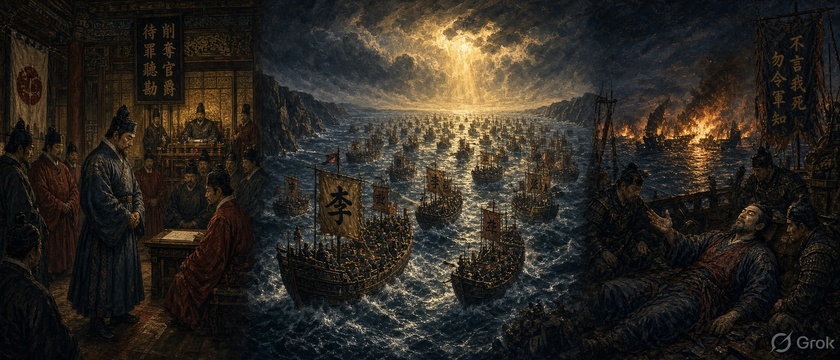
Miracle of Myeongnyang
October 26th

Miracle of Myeongnyang

Battle of Myeongnyang (October 26, 1597), part of the Imjin War (Japanese invasions of Korea, 1592–1598).

Lead-up

The Imjin War began in 1592 when Toyotomi Hideyoshi launched a large-scale invasion of Joseon Korea as a stepping stone toward Ming China. Japanese land forces advanced rapidly, but Joseon Admiral Yi Sun-sin repeatedly disrupted their supply lines with naval victories, using sturdy panokseon warships (and the armored turtle ships/geobukseon he helped develop). These successes helped stall the first invasion and contributed to a temporary truce/negotiations around 1596.

In 1597, Hideyoshi ordered a second invasion (the Chongyu War). Japanese agents spread disinformation that led the Joseon court to arrest, demote, and nearly execute Yi Sun-sin on charges of disloyalty and failure to attack. He was replaced by the less competent Wŏn Kyun (Won Gyun). In the Battle of Chilcheollyang (late August 1597), Wŏn Kyun led most of the Joseon fleet into a Japanese trap; nearly the entire force (around 200 ships) was destroyed, and Wŏn Kyun was killed. Only about 13 panokseon survived, largely because a subordinate (Bae Seol) held them back.

With the Joseon navy effectively shattered, King Seonjo hurriedly reinstated Yi Sun-sin as commander. He inherited a demoralized remnant of roughly 13 warships and a few hundred men. Japanese naval forces, now dominant, prepared to support a renewed land push northward toward Hanyang (Seoul) by clearing the western sea routes and Yellow Sea. Yi rejected advice to abandon the navy and join the army; he chose instead to make a stand in the narrow, tidal Myeongnyang Strait near Jindo Island (southwest Korea). The strait’s strong, reversing currents (up to ~10–11 knots) and constrained waters could negate Japanese numerical superiority and favor Joseon ranged gunnery over Japanese boarding tactics.

The Battle

On October 26, 1597 (lunar calendar dates vary slightly in sources), Yi positioned his small squadron at the northern entrance near Usuyeong. Japanese commanders including Kurushima Michifusa, Tōdō Takatora, Katō Yoshiaki, Wakizaka Yasuharu, and others advanced with a large fleet—Korean sources typically cite ~120–133 warships engaged (with totals sometimes listed up to ~300+ including support vessels). Yi’s diary and records note earlier scouting activity and a decision to draw the enemy into the strait.

Yi led from the front with his flagship, engaging the Japanese vanguard while some of his captains initially hesitated. Japanese ships funneled into the narrow channel. As the tide reversed, it swept vessels into disorder, causing collisions and loss of formation. Joseon ships used cannons, arrows, and ramming effectively at close range. Kurushima Michifusa was killed (his head later displayed as a warning); Tōdō Takatora was wounded. The Japanese could not exploit their numbers or preferred boarding tactics. After hours of fighting, they withdrew. Joseon lost no ships (minimal casualties, a handful of killed/wounded on Yi’s flagship and nearby vessels). Japanese losses were roughly 31 warships sunk or crippled, with additional damage and significant personnel losses (higher figures appear in some Korean accounts).

Results and Significance

The victory halted the Japanese naval advance supporting their land campaign, denied them reliable western sea supply routes, and preserved Joseon control of key waters. It allowed time to rebuild the navy (Yi later expanded his fleet) and contributed to the overall stalemate and eventual Japanese withdrawal after Hideyoshi’s death in 1598. Strategically, it was a “last stand” that turned the tide of the naval war in the second invasion. It is often called the “Miracle of Myeongnyang” and ranks among the most one-sided naval victories against overwhelming odds in history.

Yi Sun-sin was later killed at the Battle of Noryang (November/December 1598) while intercepting withdrawing Japanese forces; his last orders were reportedly not to announce his death to avoid demoralizing the fleet.

Significant Figures

  • Yi Sun-sin (Joseon): Supreme naval commander. A brilliant tactician and leader who had won multiple earlier battles. He studied local tides and geography, motivated demoralized crews, and directed the fight from the front. National hero in Korea; his war diary (Nanjung Ilgi) provides a key firsthand account.
  • Kurushima Michifusa (Japanese): Senior commander (daimyo-level naval leader from the Murakami suigun tradition). Killed in the battle—the highest-ranking Japanese death of the engagement—and his head was displayed. His loss disrupted command.
  • Tōdō Takatora (Japanese): Key commander in the second invasion’s naval efforts (involved in Chilcheollyang). Wounded at Myeongnyang.
  • Wŏn Kyun (Joseon): Yi’s temporary replacement whose catastrophic defeat at Chilcheollyang set the stage for the desperate defense.
  • Supporting Joseon officers: Kim Ŏkch’u, Kim Ŭngham, An Wi, Song Yŏchong, Pae Hŭngnip, and others who fought under Yi.
  • Broader context: Toyotomi Hideyoshi (Japanese supreme leader who ordered the invasions); King Seonjo of Joseon.

The battle exemplifies Yi’s use of terrain, tides, superior artillery, and leadership against superior numbers. Numbers of Japanese ships vary across sources (common range 133 warships engaged, higher totals including support craft), but the disparity and outcome are consistent in the historical record.

= October 26th 

These events are primarily associated with October 26 (with minor variations in some sources for a couple of dates). Here is a concise overview of each:

740 – Earthquake strikes Constantinople and surrounding areas.
A major earthquake (estimated magnitude around 7+ in some modern assessments) hit the vicinity of Constantinople and the Sea of Marmara on October 26, 740. It damaged or collapsed parts of the city’s land walls (Theodosian Walls), public buildings, and structures in nearby towns in Thrace and Asia Minor (including Nicaea/Nicomedia areas). Contemporary accounts (e.g., Theophanes) report over 1,000 deaths in the capital and describe the sea retreating then returning, consistent with a tsunami. Aftershocks continued for months.

1185 – Uprising of Asen and Peter begins.
On the feast day of St. Demetrius of Thessaloniki (October 26), brothers Peter (Theodore) and Asen launched a revolt of Bulgarians and Vlachs in the region of Moesia/the Haemus (Balkan Mountains) against Byzantine rule under Isaac II Angelos. Triggered by heavy taxation (including for the emperor’s wedding), they built a church to St. Demetrius in Tarnovo, claimed the saint’s favor had shifted to them, and proclaimed independence. This led to the restoration of Bulgarian statehood and the Second Bulgarian Empire under the Asen dynasty after several years of fighting.

1341 – Byzantine civil war of 1341–47 formally begins.
Following the death of Andronikos III and the overthrow of the regency of John Kantakouzenos (while he was away from the capital), his army proclaimed him emperor as John VI at Didymoteicho in Thrace on October 26, 1341. He accepted while still acknowledging the rights of the young John V Palaiologos. The resulting six-year civil war involved foreign allies (Turks, Serbs), devastated the empire, and ended with Kantakouzenos as co-emperor/senior ruler until 1354.

1377 – Tvrtko I is crowned the first king of Bosnia.
In the fall of 1377 (commonly dated to October 26, the feast of St. Demetrius), Ban Tvrtko I Kotromanić was crowned king of Bosnia (and claimed the title for the Serbs and other territories). He positioned himself as heir to the extinct Nemanjić dynasty of Serbia. The coronation site is debated (Mileševa Monastery in Serbian accounts vs. a Franciscan church at Mile in Bosnian/Croatian historiography). This elevated the Banate of Bosnia to a kingdom.

1520 – Charles V is crowned as Holy Roman Emperor.
Charles of Habsburg (already King of Spain as Charles I) was elected Holy Roman Emperor in June 1519. He was crowned King of the Romans / Emperor-elect in Aachen Cathedral on October 23, 1520 (some older lists approximate the date). The full papal imperial coronation by Pope Clement VII occurred later, in Bologna on February 24, 1530—the last such papal crowning. This marked the peak of Habsburg power under a ruler whose domains spanned much of Europe and the Americas.

1597 – Battle of Myeongnyang (Imjin War).
On October 26, 1597, Joseon Admiral Yi Sun-sin, with only about 13 panokseon warships remaining after earlier disasters, defeated a far larger Japanese fleet (Korean sources cite ~120–133 warships engaged, with totals up to ~300+ vessels including support craft) in the narrow Myeongnyang Strait near Jindo Island. Using the strong tidal currents, Yi’s forces sank or crippled roughly 30 Japanese ships (including killing a senior commander) with no Korean ships lost. This halted the Japanese naval advance supporting their land campaign toward the capital.

1640 – Treaty of Ripon is signed.
This truce ended the Second Bishops’ War between Charles I of England and the Scottish Covenanters. After Scottish victories and occupation of northern English territory (including Newcastle), the treaty (negotiated at Ripon; sources vary on exact signing between October 16–28, often cited around the 26th) provided for Scottish occupation of parts of northern England and daily payments (~£850) until a final settlement via the English Parliament. It forced Charles to summon the Long Parliament, a key step toward the English Civil War.

1689 – General Piccolomini burns Skopje.
Austrian general Enea Silvio Piccolomini (of Italian noble descent) captured Skopje during the Great Turkish War. On or around October 26, 1689, he ordered the city burned (the fire lasted two days), citing prevention of cholera spread, denial of resources to returning Ottoman forces, or inability to hold the distant city. Much of the city (population then ~60,000) was destroyed, reducing it to ~10,000 and ending its regional prominence. Piccolomini himself died of cholera soon afterward.

1774 – First Continental Congress adjourns in Philadelphia.
After meeting from September 5 at Carpenters’ Hall (delegates from 12 colonies responding to the Intolerable/Coercive Acts), the Congress adjourned on October 26. It had adopted the Articles of Association (economic boycott of Britain), issued the Declaration and Resolves asserting colonial rights, and planned to reconvene in May 1775 if grievances were not addressed. This was a major step in colonial unity short of declaring independence.

1775 – King George III addresses Parliament on the American rebellion.
Following the outbreak of fighting (Lexington/Concord, Bunker Hill) and the earlier Proclamation of Rebellion (August 23, 1775), George III addressed both houses of Parliament on October 27, 1775 (some lists date related actions to the 26th). He declared the colonies in open rebellion, rejected conciliatory approaches, and authorized military measures to suppress it, framing the conflict as an attempt to establish an independent empire.

1776 – Benjamin Franklin departs for France.
On October 26, 1776 (about a month after his appointment as one of the commissioners to France), the 70-year-old Franklin sailed from Philadelphia on the Reprisal. His mission was to secure formal French alliance, military aid, and recognition for the United States. He arrived in France later that year and, leveraging his fame as a scientist and statesman, played a central role in obtaining the 1778 treaties of alliance and commerce after the Saratoga victory.

These October 26 events span natural disasters, revolts and state-building in the Balkans and Byzantium, Habsburg imperial consolidation, a famous naval victory in East Asia, and key steps in the American Revolution. Dates can vary slightly by calendar system or source for a few of them.

Read full Article
October 23, 2026
post photo preview
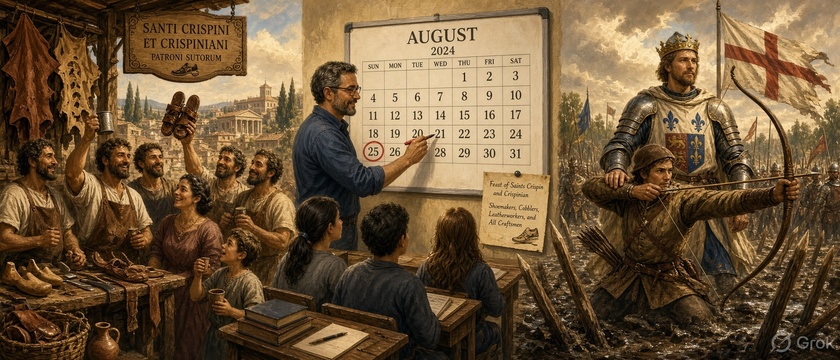
St Crispin's Day Agincourt
October 25th

St Crispin's Day Agincourt

The Battle of Agincourt (25 October 1415) was a decisive English victory in the Hundred Years’ War. An exhausted, outnumbered English army under Henry V defeated a much larger French force on a narrow, muddy field near the village of Agincourt (Azincourt) in northern France.

Lead-up and campaign

Henry V (king since 1413) revived the English claim to the French throne, based on descent from Edward III through the female line. Negotiations with the French court failed in 1414–15. Henry assembled a large expeditionary army (roughly 11,000–12,000 men, including a high proportion of longbowmen) and sailed from Southampton on 11 August 1415.

The primary target was the fortified port of Harfleur at the mouth of the Seine. The siege began in mid-August and lasted until the town surrendered on 22 September. It was costly: dysentery (the “bloody flux”) and other diseases killed or incapacitated a large part of the army—estimates suggest a quarter to a third of the force was lost or invalided home. Henry left a garrison in Harfleur and, with the remaining troops (commonly estimated at 6,000–9,000 fighting men, the majority archers), decided to march overland to the English-held port of Calais rather than risk further campaigning deep in France so late in the season.

The march was difficult. The French blocked river crossings on the Somme, forcing a longer route. By late October the English were tired, short of supplies, and outnumbered when a large French army under the Constable of France intercepted them near Agincourt, blocking the road to Calais.

The battle

The English took up a defensive position on a recently ploughed field between two woods (Agincourt and Tramecourt). The frontage was narrow (roughly 700–1,000 yards at its tightest), which limited the ability of the larger French army to bring its full numbers to bear at once. Heavy rain had turned the ground into deep mud.

Henry organised his force with dismounted men-at-arms in the centre and wedges of longbowmen on the flanks (and sometimes interspersed). The archers drove sharpened stakes into the ground in front of their positions as a defence against cavalry. The French, commanded primarily by Charles d’Albret (Constable of France) and Marshal Boucicaut, had planned a more cautious approach of surrounding and starving the English, but younger nobles insisted on a frontal attack.

On the morning of 25 October (Saint Crispin’s Day):

  • An initial French cavalry charge against the English archers largely failed. The muddy ground slowed the horses, the stakes disrupted the charge, and longbow volleys caused heavy losses.
  • The main French force of dismounted men-at-arms advanced across the mud in dense formations. Their heavy plate armour exhausted them; many sank into the mud. As the front ranks were stopped or killed, those behind pressed forward, creating a deadly crush in which men fell and were trampled.
  • English longbow fire continued to disrupt the French approach. When the French reached the English line, the lightly armoured archers joined the melee with swords, mallets, and other weapons, attacking the flanks and fallen men.
  • Henry himself fought in the hand-to-hand fighting. At one point, fearing a renewed French attack or a breakout by prisoners, he ordered the killing of many captives (a controversial act that violated normal chivalric practice).

The French third line largely did not engage or withdrew. The battle lasted a few hours and ended in a complete English victory.

Result and aftermath

Immediate outcome: English losses were light—commonly estimated at a few hundred (at least 112 named dead in some records, with higher contemporary figures around 400–600). French losses were catastrophic: roughly 6,000–10,000 dead (many of them nobles), plus hundreds to over a thousand high-ranking prisoners. Among the French dead were the Constable Charles d’Albret, the Dukes of Alençon, Bar, and Brabant, and numerous counts and bannerets. Prominent prisoners included Charles, Duke of Orléans (held for 25 years), the Duke of Bourbon, and Marshal Boucicaut.

The English reached Calais a few days later. Henry returned to England in November and was received as a hero. The victory greatly strengthened the legitimacy of the Lancastrian dynasty and Henry’s personal prestige.

Longer-term consequences: The destruction of much of the French military and political leadership (especially the Armagnac faction) left France weakened and divided. It facilitated Henry’s later campaigns, the conquest of Normandy (1417–19), and the Treaty of Troyes (1420), under which Henry married Catherine of Valois and was recognised as heir and regent of France. English dominance in northern France lasted until the appearance of Joan of Arc and the lifting of the Siege of Orléans in 1429. Henry himself died in 1422 during the Siege of Meaux; his infant son became Henry VI.

Significant figures

English

  • Henry V: Commander and active participant in the fighting. The battle cemented his reputation.
  • Edward, Duke of York: Commanded part of the English centre; killed in the battle.
  • Michael de la Pole, Earl of Suffolk: Young earl killed (his father had died of dysentery at Harfleur).
  • Humphrey, Duke of Gloucester and Thomas, Duke of Clarence: Henry’s brothers; prominent in the campaign (Clarence at Harfleur).
  • Sir Thomas Erpingham: Experienced knight often associated with the archers.
  • Dafydd Gam: Welsh captain killed in the fighting.

French

  • Charles d’Albret (Constable of France): Senior commander; killed.
  • Marshal Boucicaut (Jean II le Meingre): Experienced soldier who favoured a more cautious strategy; captured and died in English captivity.
  • Charles, Duke of Orléans: Nephew of King Charles VI; captured and held for decades.
  • Dukes of Alençon, Bar, and Brabant: All killed.
  • King Charles VI: Absent due to mental illness; did not command.

The battle is most famous in English culture through Shakespeare’s Henry V (“We few, we happy few, we band of brothers…”), which dramatises the Saint Crispin’s Day speech and the victory.

= October 25th

October 25 (traditionally linked to the feast of Saints Crispin and Crispinian, and notably Saint Crispin’s Day) is associated with several significant historical events.

Saints Crispin and Crispinian (285/286)

Saints Crispin and Crispinian were early Christian martyrs (traditionally said to be brothers from a noble Roman family) who worked as shoemakers while preaching in Soissons (Gaul). According to legend, during the Diocletianic Persecution they were tortured under the governor Rictius (or Rictiovarus) Varus—including being stretched on the rack, having strips of flesh cut, and awls driven under their nails—then thrown into the river Aisne with millstones around their necks. They miraculously survived drowning and fire before being beheaded on the orders of co-emperor Maximian (or Diocletian). Their feast day is 25 October. They became the patron saints of shoemakers, cobblers, curriers, tanners, leather workers, and related trades. Their story is largely legendary (with some historians noting inconsistencies with the timeline of persecutions in Gaul), but they were widely venerated in medieval Europe, especially by craft guilds. The date is also famous in English culture because of the Battle of Agincourt.

Emperor Leo I acclaims Leo II as Caesar (473)

On or around this date in 473, Eastern Roman (Byzantine) Emperor Leo I elevated his young grandson Leo II (son of the Isaurian general Zeno and Leo I’s daughter Ariadne) to the rank of Caesar, marking him as heir. Leo II was later promoted to co-emperor (Augustus) in November 473 and briefly ruled as sole emperor after Leo I’s death in January 474 before dying himself later that year (age about 7). Chronological details of his elevation to Caesar vary slightly in sources (some place aspects in 472 or link them to other events), but the traditional association is with October 473.

Second Crusade events (1147)

  • Battle of Dorylaeum: In late October 1147 (intensifying around 25 October), the German contingent of the Second Crusade under Conrad III of Germany was defeated by Seljuk Turkish forces under Sultan Mesud I near Dorylaeum (modern Eskişehir, Turkey). After advancing beyond Dorylaeum, the German army faced repeated Turkish attacks during a retreat that turned into a rout. Conrad was wounded by arrows, and the Germans suffered heavy losses (contemporary claims of catastrophic percentages are exaggerated, but the force was badly mauled and largely unable to continue). This was a major early setback for the Second Crusade.
  • Siege of Lisbon: After a four-month siege (beginning 1 July), crusader forces from England, Flanders, the Rhineland and elsewhere, allied with King Afonso Henriques of Portugal, forced the surrender of Lisbon from its Almoravid (Muslim) rulers. The city formally fell around 24–25 October 1147. This was one of the few lasting Christian successes of the broader Second Crusade period and a major step in the Portuguese Reconquista, securing the Tagus and helping establish Portugal’s strategic position.

Battle of Agincourt (1415)

On Saint Crispin’s Day, 25 October 1415, during the Hundred Years’ War, the English army under Henry V (roughly 6,000–9,000 men, including a large proportion of longbowmen and relatively lightly armoured infantry) decisively defeated a much larger French force (estimates commonly 12,000–20,000+ men-at-arms and others, with heavy cavalry) near Agincourt (Azincourt) in northern France. The muddy, narrow field, French tactical errors (including a frontal assault by heavily armoured knights), and the effectiveness of the English longbow led to a crushing English victory with relatively light English casualties and very heavy French losses among the nobility. The battle is immortalised in Shakespeare’s Henry V (“We few, we happy few, we band of brothers…”).

Dirk Hartog landfall in Australia (1616)

On 25 October 1616, Dutch East India Company (VOC) captain Dirk Hartog, commanding the ship Eendracht, made landfall on an uninhabited island off the west coast of Australia (now Dirk Hartog Island in Shark Bay, Western Australia). This was the second recorded European landing on the Australian continent (after Willem Janszoon in 1606) and the first on the western coast. Hartog left a flattened pewter plate inscribed with details of the visit nailed to a post at Cape Inscription—the oldest physical European artefact from Australia. He charted part of the western coastline (naming the region Eendrachtsland after his ship) before continuing to Batavia.

Second Battle of Cape Finisterre (1747)

On 25 October 1747 (14 October Old Style / Julian calendar then used in Britain), during the War of the Austrian Succession, a British fleet of 14 ships of the line under Rear-Admiral Edward Hawke intercepted and defeated a French convoy of ~250 merchant ships protected by 8 ships of the line under Henri-François des Herbiers. The British captured six French warships and thousands of seamen (with only a handful of merchant ships taken). The victory severely disrupted French Atlantic commerce and colonial supply for the remainder of the war.

Accession of George III (1760)

On 25 October 1760, George II died suddenly (of aortic dissection) at Kensington Palace. His grandson, George III (George William Frederick, born 1738 in England—the first Hanoverian king born in Britain and whose first language was English), succeeded as King of Great Britain and Ireland and Elector of Hanover. George III reigned until 1820, a period that included the end of the Seven Years’ War, the American Revolution, and the Napoleonic Wars.

These events illustrate how 25 October has been a date of martyrdom, imperial succession, crusading campaigns, decisive battles, early European contact with Australia, naval warfare, and a British royal succession.

Read full Article
October 22, 2026
post photo preview
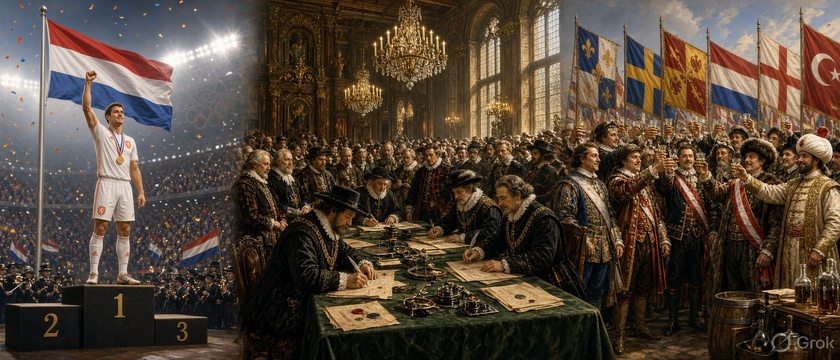
Modern states came into being
October 24th

Modern states came into being

The Peace of Westphalia (24 October 1648) ended the Thirty Years’ War in the Holy Roman Empire and the related phase of the Eighty Years’ War between Spain and the Dutch Republic. It consisted primarily of the Treaty of Münster (between the Emperor and France and their allies) and the Treaty of Osnabrück (between the Emperor and Sweden and their allies), signed the same day in the Westphalian cities of Münster and Osnabrück. A separate Spanish–Dutch treaty had been signed earlier that year (30 January 1648).

Lead-up: The Thirty Years’ War

The war (1618–1648) began as a conflict within the Holy Roman Empire over religion and imperial authority and expanded into a broader European struggle involving dynastic, territorial, and balance-of-power motives.

It was triggered by the Defenestration of Prague (1618), when Protestant Bohemian nobles threw Habsburg officials out of a window in protest against efforts to reverse Protestant gains. This led to the election of the Calvinist Elector Frederick V of the Palatinate as King of Bohemia, which the Catholic Habsburg Emperor Ferdinand II suppressed with Spanish and Bavarian help (Battle of White Mountain, 1620). The war then drew in Denmark (1625–1629), Sweden under Gustavus Adolphus (from 1630; he was killed at Lützen in 1632), and finally Catholic France under Cardinal Richelieu (openly from 1635), which intervened to weaken the Habsburgs despite sharing their religion.

The conflict devastated large parts of Germany through fighting, famine, and disease. Population losses in the Empire are estimated in the millions (modern scholarship often places total deaths in the 4.5–8 million range across the war’s theatres). By the 1640s both sides were exhausted. Preliminary talks and a Franco-Swedish agreement in 1641 set the stage for a general congress; formal negotiations opened in Münster and Osnabrück in 1643–1644, with fighting continuing in parallel to improve bargaining positions. Emperor Ferdinand II had died in 1637; his son Ferdinand III (r. 1637–1657) faced a deteriorating military situation and was forced to negotiate seriously.

The Negotiations and Signing

Talks were complex and protracted. More than 100 delegations represented the Emperor, France, Sweden, Spain, the Dutch, numerous German princes and free cities, and others (England, Poland, Russia, and the Ottomans were not present). Catholic powers largely met in Münster; Protestant ones in Osnabrück. The papal nuncio Fabio Chigi (later Pope Alexander VII) and the Venetian envoy Alvise Contarini acted as mediators.

Key negotiators included:

  • Imperial side: Count Maximilian von Trauttmansdorff (chief plenipotentiary, widely credited with driving the process to a conclusion), assisted by figures such as Johann Ludwig von Nassau-Hadamar and Isaak Volmar.
  • France: Henri II d’Orléans, Duke of Longueville (nominal head), with Claude de Mesmes, Count d’Avaux, and Abel Servien as the principal diplomats.
  • Sweden: Count Johan Oxenstierna (son of the Swedish chancellor Axel Oxenstierna) and Johan Adler Salvius.
  • Spain: Gaspar de Bracamonte y Guzmán and others.
  • Brandenburg and other German states sent their own envoys; Johann von Sayn-Wittgenstein was prominent among the Protestants.

The treaties were signed on 24 October 1648.

Results and Terms

The settlement combined territorial adjustments, religious arrangements, and constitutional changes within the Empire:

  • Territorial gains: Sweden received Western Pomerania (including Stettin), Wismar, and the secularized bishoprics of Bremen and Verden, giving it control of key Baltic and North Sea river mouths and a seat in the Imperial Diet. France gained the Décapole cities in Alsace (with exceptions) and confirmation of Metz, Toul, and Verdun, strengthening its Rhine frontier. Brandenburg obtained Eastern Pomerania and several secularized bishoprics (and the reversion of Magdeburg). Bavaria kept the Upper Palatinate and its electoral title; the Rhenish Palatinate was restored to Frederick V’s son Charles Louis with a new (eighth) electoral vote.
  • Religious settlement: The Peace of Augsburg (1555) was reaffirmed and extended. The principle of cuius regio, eius religio continued, but Calvinism was now recognized alongside Catholicism and Lutheranism. The normal year for determining religious possession was set at 1 January 1624. Forced emigration was restricted, and confessional parity was introduced in certain Imperial institutions.
  • Independence and sovereignty: The Dutch Republic’s independence from Spain was confirmed, ending the Eighty Years’ War. The Swiss Confederation’s independence from the Empire was recognized. The Imperial estates (German princes and free cities) received greater autonomy, including the right to form alliances (with limits) and more control over their internal affairs; the Emperor’s ability to act unilaterally in the Empire was curtailed.
  • Other: Amnesties, restitution rules, and demobilization arrangements were included. France and Sweden became guarantors of the Imperial constitution.

France and Spain continued fighting until the Peace of the Pyrenees (1659). The war’s demographic and economic costs in Germany were severe, though modern estimates are lower than older claims of near-total ruin.

Significance and Legacy

The Peace is traditionally viewed as a landmark in the development of the modern European state system—emphasizing the sovereignty of territorial states, the principle of non-interference in internal affairs, and a shift away from religiously defined universal authority toward a balance-of-power order. Within the Empire it confirmed the fragmentation of authority among hundreds of semi-sovereign entities, limiting Habsburg centralization. Historians debate the precise extent of the “Westphalian system” as a clean break, but the treaties remain a foundational reference point in the history of international relations.

The settlement closed one of the most destructive conflicts in European history and redrew the map of Central Europe for the remainder of the early modern period.

= October 24th

These are all events associated with October 24 in various years.

AD 69 – Second Battle of Bedriacum (also called the Second Battle of Cremona)

During the Year of the Four Emperors, forces loyal to Vespasian (led by Marcus Antonius Primus, commanding Danube/Pannonian and Moesian legions including Legio III Gallica, VII Galbiana, VII Claudia, VIII Augusta, and XIII Gemina) defeated the forces of Emperor Vitellius near Bedriacum (modern Calvatone) in northern Italy, between Bedriacum and Cremona.

Vitellius had sent Aulus Caecina Alienus with a strong army (including XXI Rapax, V Alaudae, I Italica, XXII Primigenia and others), but Caecina’s attempted defection left the Vitellians effectively leaderless. Fighting began on 24 October with a cavalry clash; the main battle raged through the night. At dawn, the III Gallica (which had served in the East) saluted the rising sun in their adopted custom; the Vitellians mistook this for the arrival of eastern reinforcements and broke. The Flavian victory opened the way to Cremona (which was stormed and sacked) and ultimately to Rome, where Vitellius was soon killed. Vespasian became undisputed emperor.

1260 – Dedication of Chartres Cathedral

The Gothic Cathedral of Our Lady of Chartres (Notre-Dame de Chartres) in France was dedicated in the presence of King Louis IX (Saint Louis). The cathedral had been rebuilt after a major fire in 1194 that destroyed most of the previous Romanesque structure (though the west front, Royal Portal, and crypt survived). Construction of the High Gothic building proceeded rapidly; the main fabric was largely complete within about 30 years. It is renowned for its architecture, sculpture, and nearly complete ensemble of 12th- and 13th-century stained glass, and it has been a UNESCO World Heritage Site since 1979.

1360 – Treaty of Brétigny (Treaty of Calais) ratified

The Treaty of Brétigny (drafted 8 May 1360 near Chartres) was ratified at Calais on 24 October 1360 between Edward III of England and John II of France. It ended the first phase of the Hundred Years’ War. Edward renounced his claim to the French throne in exchange for large territories in southwestern France (Aquitaine/Guyenne and associated regions) held in full sovereignty, plus a massive ransom for the captive John II. France later repudiated the treaty under Charles V, and the war resumed.

1590 – John White returns from Roanoke

John White, governor of the second Roanoke Colony (the “Lost Colony”), returned to England (Plymouth) on 24 October after an unsuccessful search. He had left the colonists in 1587 and was delayed by the Spanish Armada crisis. Arriving at Roanoke on 18 August 1590 (his granddaughter Virginia Dare’s third birthday), he found the settlement abandoned. The only clues were “CRO” carved on a tree and “CROATOAN” on a palisade post—indicating, in White’s view, that the settlers had moved to Croatoan (likely modern Hatteras Island) to join the friendly Croatoan people. Bad weather prevented further search, and the fate of the colonists remains a mystery.

1605 – Accession/Coronation of Jahangir

Nur-ud-Din Muhammad Salim, eldest son of Emperor Akbar, ascended the Mughal throne in Agra as Emperor Jahangir (“Conqueror of the World”) after his father’s death. Contemporary sources, including Jahangir’s own memoirs, place the accession around 24 October 1605 (some modern lists give 3 or 24 November depending on calendar conventions). He ruled until 1627 and is noted for his patronage of the arts (especially miniature painting), his memoirs (Jahangirnama), and the cultural flourishing of the Mughal court, despite later political intrigues and his son Khusrau’s rebellion.

1641 – Proclamation of Dungannon

Sir Phelim (Felim) O’Neill of Kinard, a leader of the Irish Rebellion that had begun the previous day, issued the Proclamation of Dungannon. It justified the uprising as a defense of the rights and liberty of the native Irish and of Catholics, while declaring continued loyalty to King Charles I and denying any intent to harm the king or his English and Scottish subjects. O’Neill claimed (falsely, according to later historical consensus) to hold a royal commission authorizing the action against Protestant opponents of the king. The proclamation helped frame the rebellion politically and contributed to its spread into the Irish Confederate Wars.

1648 – Peace of Westphalia signed

The Peace of Westphalia (Treaties of Münster and Osnabrück) was signed on 24 October 1648, ending the Thirty Years’ War (1618–1648) in the Holy Roman Empire and the related phase of the Eighty Years’ War between Spain and the Dutch. Negotiated in the Westphalian cities of Münster and Osnabrück, the settlements involved the Holy Roman Emperor, German princes, France, Sweden, and others. Key outcomes included territorial adjustments, recognition of the independence of the Dutch Republic and Swiss Confederation, and greater autonomy for the states of the Empire (including religious rights under an expanded cuius regio, eius religio principle). It is often cited as a foundational moment in the development of the modern system of sovereign states.

1795 – Third Partition of Poland

Representatives of Austria, Prussia, and Russia agreed on 24 October 1795 to the Third Partition of the Polish–Lithuanian Commonwealth, completely erasing the remaining independent Polish state. This followed the suppression of the Kościuszko Uprising (1794). Russia, Prussia, and Austria divided the residual territory (roughly: Russia took eastern Lithuania and other areas; Prussia gained Warsaw and surrounding districts; Austria received western Galicia and southern Masovia). King Stanisław August Poniatowski was forced to abdicate. Poland did not regain full independence until 1918.

These events span Roman civil war, medieval cathedral building and diplomacy, early English colonization, Mughal succession, the Irish Rebellion, the end of the Thirty Years’ War, and the final erasure of the Polish–Lithuanian Commonwealth.

Read full Article
See More
Available on mobile and TV devices
google store google store app store app store
google store google store app tv store app tv store amazon store amazon store roku store roku store
Powered by Locals