VoiceDDB
Politics • Culture • News
Terrorists also use guns
October 17th
October 16, 2026
post photo preview

Terrorists also use guns

“Naza: The Real Story” (2026) is a roughly 49-minute Israeli documentary featuring first-hand accounts from IDF reserve commanders and intelligence officers who served in Gaza. It is filmed at night on Tel Aviv rooftops (interviewees shown mostly from behind, identified by role). The makers (Roi Danino, Ariel Averbuch, and Hagay Gutman) describe it as an independent production funded privately, with no IDF or government involvement in its creation. It is available free online (with original Hebrew audio, dubs in 8 languages, and subtitles in many more).

It positions itself as a direct rebuttal to the other film titled NAZA (by Yuval Abraham and Rachel Szor), which focuses on IDF targeting processes and expected civilian harm (“Naza”/נז״א is the Hebrew military abbreviation for collateral damage / nezek agavi). This version argues that narratives of indiscriminate or poorly constrained IDF action omit key battlefield realities.

Core content and claims

The film centers on the operational challenges of fighting in dense urban areas against Hamas. Officers describe:

  • Hamas tactics: Terrorists systematically discarded uniforms, moved among civilians in ordinary clothes (jeans, T-shirts, etc.), and used civilian homes, schools, kindergartens, mosques, clinics, and hospitals for military purposes. Weapons and equipment were routinely stored in residences (examples include an anti-tank charge under a child’s bed next to Smurf dolls, mortar shells beside a baby’s crib, and tunnel shafts in or next to children’s rooms or kindergarten yards). Uniforms were often left behind in empty homes. One account mentions a fighter wearing a Jewish tzitzit garment in an apparent attempt to pose as a hostage.
  • Rules of engagement and constraints: Strict procedures requiring intelligence, legal review, and higher-level approvals for strikes (especially near sensitive sites). Evacuation warnings, designation of combat zones (e.g., areas with >75% of the population gone), and a practice of holding fire or aborting strikes when civilians were present or identification was uncertain. Officers note the difficulty of distinguishing armed threats from unarmed civilians or “messengers” in real time, and the personal cost to IDF troops of restraint (including casualties from fire coming from civilian structures).
  • Hostages and aid: Hostages held in civilian homes shaped operations. Accounts of Hamas seizing or diverting aid convoys early on, and of UN-marked food sacks being used as fortification materials. The film includes claims of IDF efforts to facilitate medicine and aid while managing security risks.
  • Supporting material: Alongside the interviews, the film shows photographs, bodycam/drone/aircraft footage, terrain analysis, and documents that the makers say were cleared for publication. Officers recount specific incidents (e.g., fire from a kindergarten that wounded soldiers, ceasefire periods exploited for reconnaissance by mixed groups of children and operatives).

The overall framing is that Hamas deliberately maximized the difficulty of distinguishing combatants from civilians and exploited protected sites, while the IDF operated under significant legal and procedural limits that carried real risks to its own forces. The film presents these as the officers’ direct experiences rather than abstract analysis.

Viewers are encouraged (by the makers and the film itself) to examine the on-screen evidence and compare it with other accounts. The documentary is one perspective from participants in the fighting; competing films and external reports offer different emphases and interpretations of the same conflict.

=

Yoshihiro Hattori (often called Yoshi), a 16-year-old Japanese exchange student, was fatally shot on October 17, 1992, in the Baton Rouge, Louisiana area (near Central) after he and a friend went to the wrong house looking for a Halloween party.

Hattori was from Nagoya, Japan, and had arrived in the U.S. that August through an exchange program (American Field Service). He was staying with the Haymaker family and attending school with their son, Webb Haymaker (also 16). The two were invited to a Halloween party. Hattori dressed as Tony Manero (John Travolta’s character) from Saturday Night Fever in a white tuxedo-style jacket; Webb wore a neck brace and bandages as an “accident victim” costume.

They were looking for the address 10131 but stopped at 10311, a nearby house that had Halloween decorations and cars in the driveway. They rang the front doorbell with no answer. Bonnie Peairs then opened a side/garage door, saw the teenagers (Hattori approaching), became frightened, slammed the door, and told her husband to get his gun.

Rodney Peairs (then about 30, a supermarket butcher) came out holding a .44 Magnum revolver. Hattori turned toward him and said something like “We’re here for the party!” Peairs yelled “Freeze!” Hattori, whose English was limited, was not wearing his contact lenses that night, and may have thought it was part of a Halloween prank or simply not understood the command, continued moving forward while smiling or laughing. Webb saw the gun and tried to warn him. Peairs fired once from roughly 5 feet (1.5 m) away, striking Hattori in the chest. Peairs then retreated inside. Hattori died in the ambulance shortly afterward.

Legal outcomes

Peairs was charged with manslaughter. In a May 1993 criminal trial, a jury acquitted him after about three hours of deliberation, accepting his claim of self-defense under Louisiana law. He testified that he felt threatened when Hattori kept approaching and did not stop. Some spectators applauded the verdict. Outside court, Peairs expressed sorrow that it had happened.

In a later civil wrongful-death suit brought by Hattori’s parents (Masaichi and Mieko Hattori), a judge found Peairs liable in 1994 and ordered him (and his insurer) to pay roughly $650,000–$653,000 in damages. The judge stated there was “no justification whatsoever” for the shooting.

Broader impact

The case drew intense international attention, especially in Japan, where private gun ownership is rare and the shooting was widely seen as a shocking example of American gun culture and “castle doctrine”-style self-defense rules. Hattori’s parents collected more than a million signatures calling for stricter U.S. gun controls and presented them to American officials. The episode contributed to broader U.S. debates that helped build momentum for the Brady Handgun Violence Prevention Act. It also highlighted language and cultural barriers, the risks of mistaken-identity shootings, and differences in attitudes toward firearms and property defense.

The shooting is frequently cited as a classic “wrong house / Halloween” tragedy and has been referenced in later discussions of similar mistaken-address cases.

= October 17th 

These events cluster around mid-to-late October (many traditionally linked to the 17th) across nearly seven centuries. Here is a concise overview of each:

1091 – London tornado (17 October)
This is the earliest recorded tornado in England. Contemporary chroniclers (including William of Malmesbury and Florence of Worcester) described a violent whirlwind that struck the City of London. The church of St Mary-le-Bow was severely damaged—four large rafters were driven deep into the ground—and more than 600 mostly wooden houses plus other churches were destroyed or demolished. Only two deaths were reported in a city of roughly 18,000 people. Modern assessments rate it around T8 on the TORRO scale (roughly F4 equivalent), making it one of the strongest known British tornadoes, though the rating rests on accounts written decades later.

1346 – Battle of Neville’s Cross (17 October)
During the Second War of Scottish Independence and the Hundred Years’ War, King David II of Scotland invaded northern England (as required by the Auld Alliance while Edward III was campaigning in France). An English force under Ralph Neville, Lord Neville, defeated a larger Scottish army near Durham. David II was captured; he spent the next eleven years as a prisoner in the Tower of London (and elsewhere). The battle checked Scottish power in the north for years.
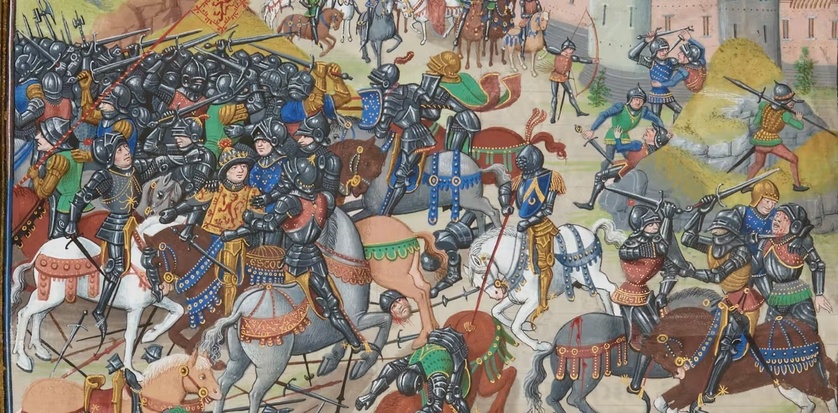
The little-known 14th century battle that has shaped English, Scottish and French relations

1448 – Second Battle of Kosovo (17–20 October)
John Hunyadi led a mainly Hungarian-led Crusader force against Sultan Murad II’s Ottoman army on the Kosovo field. After several days of fighting (including the use of wagon forts and firearms), the Ottomans prevailed. Wallachian troops defected late in the battle. The defeat ended the last major Christian attempt to reverse Ottoman gains in the Balkans and left Constantinople more isolated ahead of its fall in 1453.
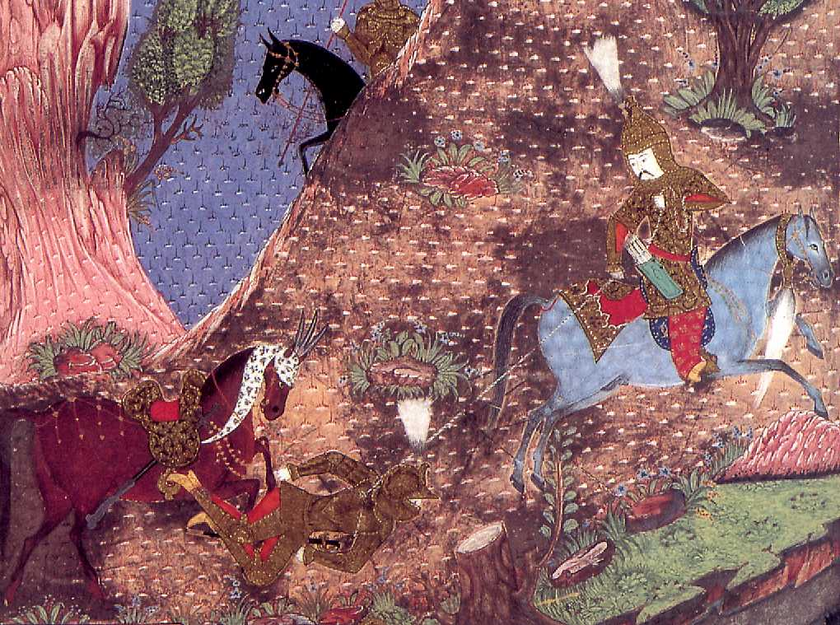
Battle of Kosovo (1448) - Wikipedia

1456 – University of Greifswald founded (17 October)
Founded in the Hanseatic town of Greifswald (in what is now Mecklenburg-Vorpommern, Germany) with papal and imperial approval, largely through the efforts of mayor Heinrich Rubenow (its first rector) and Duke Wartislaw IX of Pomerania. It is one of the oldest universities in northern Europe and, during the period when the region belonged to Swedish Pomerania (1648–1815), was for a time the oldest university under Swedish rule. It began with the traditional faculties of theology, philosophy, medicine, and law.
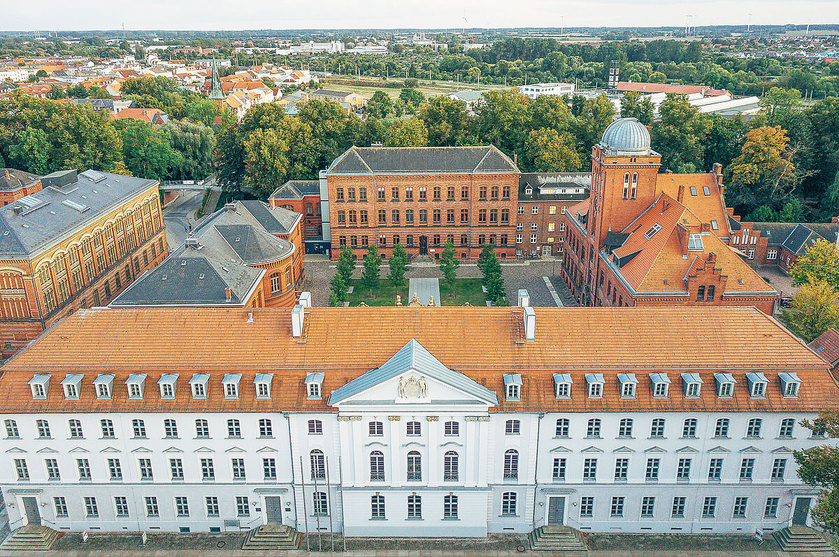
Sights - University of Greifswald

1558 – Poczta Polska (Polish postal service) established (18 October)
King Sigismund II Augustus granted an Italian, Prospero Provana, the right to operate a permanent postal link from Kraków to Venice via Vienna. This is treated as the founding of the Polish postal service (later reorganized under the Thurn und Taxis system). 18 October remains the official Polish Post holiday.

1604 – Kepler’s Supernova (observations beginning 17 October)
A bright new star (a Type Ia supernova, SN 1604) appeared in the constellation Ophiuchus in early October. Johannes Kepler began systematic naked-eye observations on 17 October and tracked it for over a year. It reached magnitude about −2.5 (brighter than Jupiter) and was briefly visible in daylight. His 1606 account (De Stella Nova) made it “Kepler’s Supernova,” the last supernova in the Milky Way clearly observed with the naked eye. The remnant is still studied today.

Chandra :: Photo Album :: Kepler's Supernova Remnant :: September 11, 2012

1610 – Coronation of Louis XIII (17 October)
The nine-year-old Louis XIII (son of the assassinated Henry IV) was crowned and consecrated at Reims Cathedral. His mother, Marie de’ Medici, served as regent. The ceremony formalized his reign; actual power remained with the regency and later with ministers such as Cardinal Richelieu.

1660 – Execution of regicides (including several on 17 October)
After the Restoration of Charles II, a special court tried surviving men who had signed the death warrant of Charles I or otherwise participated in his trial and execution. Ten were sentenced to be hanged, drawn, and quartered. On 17 October, four—Thomas Scot, Gregory Clement, Adrian Scrope, and John Jones—were executed at Charing Cross. Others were put to death on nearby days in mid-October. Samuel Pepys and John Evelyn recorded the events.

1662 – Sale of Dunkirk (17/27 October)
Charles II, short of money and wary of the cost and diplomatic risks of holding the continental port (captured from Spain in 1658), sold Dunkirk and Fort-Mardyck to Louis XIV of France for five million livres (roughly £40,000 in some contemporary reckoning). The transaction was unpopular in England. The date is given as 17 October Old Style / 27 October New Style.

1771 – Premiere of Ascanio in Alba (17 October)
The 15-year-old Wolfgang Amadeus Mozart’s festa teatrale (pastoral opera/serenade) to a libretto by Giuseppe Parini was first performed at the Teatro Regio Ducale in Milan. It was commissioned by Empress Maria Theresa for the wedding of her son Archduke Ferdinand to Maria Beatrice d’Este. The work celebrates the mythical founding of Alba Longa.

1777 – Surrender at Saratoga (convention signed 16 October; formal surrender 17 October)
After the Battles of Saratoga, British General John Burgoyne opened negotiations with American General Horatio Gates. The Articles of Convention were signed on 16 October; Burgoyne’s army marched out and laid down its arms on the 17th. The surrender of roughly 6,000 men was a major turning point that encouraged French recognition of and alliance with the United States.
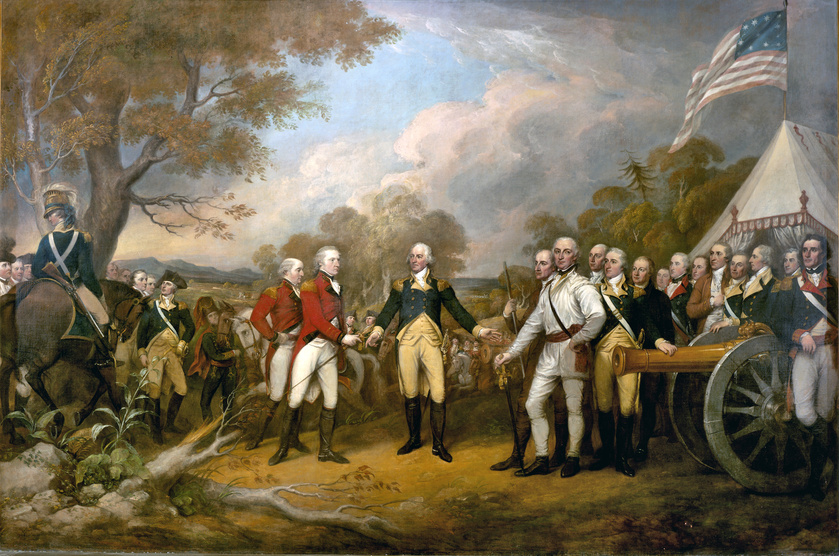
Surrender of General Burgoyne - Wikipedia

1781 – Siege of Yorktown / Cornwallis’s surrender (negotiations from ~17 October; formal surrender 19 October)
A combined Franco-American force under Washington and Rochambeau, supported by the French fleet under de Grasse, trapped British General Charles Cornwallis’s army on the Yorktown peninsula. A British drummer and officer appeared under a white flag on 17 October to open negotiations. After terms were settled, Cornwallis’s army of about 8,000 men formally surrendered on 19 October (Cornwallis himself did not attend the ceremony). The victory effectively ended major fighting in the American Revolutionary War.
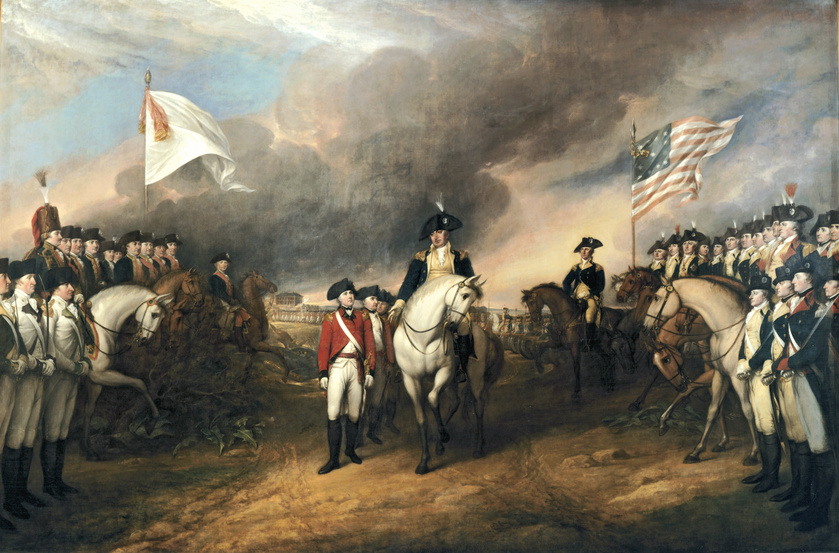
Surrender of Lord Cornwallis - Wikipedia

These episodes range from natural disaster and medieval warfare to the founding of lasting institutions, scientific observation, monarchical ceremony, political retribution, and the decisive campaigns of the American Revolution.



community logo
Join the VoiceDDB Community
To read more articles like this, sign up and join my community today
0
What else you may like…
Videos
Posts
Articles
00:01:07
November 27, 2022
Jingle Bell Rock

Jingle bell, jingle bell, jingle bell rock
Jingle bells swing and jingle bells ring
Snowin' and blowin' up bushels of fun
Now the jingle hop has begun

Jingle bell, jingle bell, jingle bell rock
Jingle bells chime in jingle bell time
Dancin' and prancin' in Jingle Bell Square
In the frosty air

What a bright time, it's the right time
To rock the night away
Jingle bell time is a swell time
To go glidin' in a one-horse sleigh

Giddy-up jingle horse, pick up your feet
Jingle around the clock
Mix and a-mingle in the jinglin' feet
That's the jingle bell rock

Jingle bell, jingle bell, jingle bell rock
Jingle bell chime in jingle bell time
Dancin' and prancin' in Jingle Bell Square
In the frosty air

What a bright time, it's the right time
To rock the night away
Jingle bell time is a swell time
To go glidin' in a one-horse sleigh

Giddy-up jingle horse, pick up your feet
Jingle around the clock
Mix and a-mingle in the jinglin' feet
That's the jingle bell
That's the jingle...

00:02:04
September 01, 2021
Intro to Locals for the Conservative Voice

David Daniel Ball calls himself the Conservative Voice.

I'm a teacher with three decades experience teaching math to high school kids.I also work with first graders and kids in between first grade and high school. I know the legends of why Hypatia's dad is remembered through his contribution to Math theory. And I know the legend of why followers of Godel had thought he had disproved God's existence.

I'm not a preacher, but I am a Christian who has written over 28 books all of which include some reference to my faith. Twelve blog books on world history and current affairs, detailing world events , births and marriages on each day of the year, organised by month. Twelve books on the background to and history of Bible Quotes. One Bible quote per day for a year. An intro to a science fiction series I'm planning, post apocalyptic cyber punk. An autobiography with short story collections.

I'm known in Australia for my failure as a whistleblower over the negligence death of a school boy. ...

00:01:50
September 04, 2026
Should violent criminals be made fat? Grok says 'no'

No. Transferring gut bacteria from an obese person into a violent criminal is not a reliable, ethical, or effective way to make them “fat, sedentary, and less of a physical threat.”

The science does not deliver the outcome you want

Mouse studies in germ-free animals showed that microbiota from obese donors can increase energy harvest and adiposity compared with lean-donor microbiota. That is the origin of the idea. Human evidence is far weaker.

Randomized trials of fecal microbiota transplant (FMT) from lean donors into people with obesity have generally failed to produce meaningful, sustained weight loss. Microbiome composition can change; body weight and metabolic markers often do not, or the effects are small and inconsistent. Diet and the existing gut environment usually dominate. A 2025 Nature paper found diet outperformed microbial transplant for microbiome recovery. Human guts are already colonized, not sterile like lab mice, so engraftment is variable and effects unpredictable.

It is not a ...

post photo preview
August 28, 2026
Pfizer struggles to answer

Some in Australia are brilliant. Malcolm Roberts Investigates Pfizer over Covid vaccine.

Holiday break is over back to work tonight

Tonight I'll start double posting until I've caught up.

post photo preview
Toby or not Toby
November 28th

Toby or not Toby

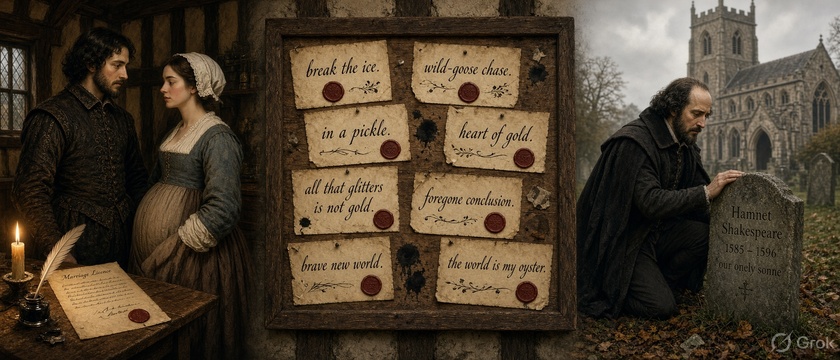
On 28 November 1582, two Stratford farmers posted a £40 bond in the Worcester diocese guaranteeing there was no lawful impediment to the marriage of William Shakespeare (about 18) and Anne Hathaway (about 26). This allowed them to marry after the banns had been asked only once, rather than the usual three times.

Before the bond

William Shakespeare was baptized on 26 April 1564 at Holy Trinity Church, Stratford-upon-Avon, the son of John Shakespeare (a glover, wool dealer, and former town bailiff/alderman) and Mary Arden. He almost certainly attended the local grammar school. By the late 1570s his father’s finances had declined—he fell behind on taxes, mortgaged property, and stepped back from public life.

Anne Hathaway (also referred to as Agnes in some records) was born around 1556 in Shottery, a hamlet about a mile west of Stratford. She was the daughter of Richard Hathaway, a yeoman farmer who held Hewlands Farm (now known as Anne Hathaway’s Cottage). Richard died in September 1581; his will left Anne a dowry of ten marks (£6 13s 4d) to be paid on her wedding day and named Fulk Sandells as a supervisor. In the will she appears as “Agnes,” but Agnes and Anne were often used interchangeably at the time.

The couple were already expecting a child. Anne’s pregnancy made a quick marriage necessary: Advent began on 2 December 1582, and marriages were customarily prohibited during Advent until after Epiphany. A special licence was therefore required so the banns could be read only once. On 27 November 1582 the Bishop of Worcester’s register recorded a licence for “Wm Shaxpere et Annam Whateley de Temple Grafton.” Most scholars treat “Whateley” and the place-name as a clerical error for Hathaway of Stratford (or Shottery); no other contemporary evidence supports a different bride. The exact church where the ceremony took place is unknown—it was not recorded in the Stratford parish register, and several nearby registers for the period do not survive.

The bond itself (28 November 1582)

The next day, Fulk Sandells and John Richardson—both described as husbandmen (farmers) of Stratford and friends/neighbours of the Hathaway family—entered into a £40 bond. They guaranteed to the bishop’s officials that:

  • there was no pre-existing contract, consanguinity, affinity, or other lawful impediment;
  • no lawsuit alleging such an impediment was pending;
  • Shakespeare would not marry without the consent of Anne’s friends; and
  • the couple could marry after the banns had been asked only once.

Shakespeare, being under 21, could not act as his own surety, and his father did not. Anne’s father was already dead. The sureties came from the Hathaway side (Sandells had been named in Richard Hathaway’s will). The bond protected the bishop from liability if the marriage later proved invalid. This procedure was common when a licence was used to shorten the banns period.

After the marriage

Their daughter Susanna was baptized at Holy Trinity Church, Stratford, on 26 May 1583—roughly six months later, confirming that Anne was pregnant at the time of the wedding. Twins Hamnet and Judith were baptized on 2 February 1585. The family initially lived in John Shakespeare’s house on Henley Street (the building now known as Shakespeare’s Birthplace).

Sometime after the birth of the twins, Shakespeare left for London (the so-called “lost years” until he appears in the London theatrical world by 1592). He became a leading member and shareholder of the Lord Chamberlain’s Men (later the King’s Men), wrote the bulk of his plays and sonnets, and in 1597 bought New Place, one of the largest houses in Stratford. Anne and the children remained primarily in Stratford. Their only son, Hamnet, died in August 1596 at the age of 11.

Shakespeare died on 23 April 1616. In his will he left Anne the “second-best bed”—a bequest that has attracted much later commentary. Anne died on 6 August 1623 (aged about 67) and was buried beside him in Holy Trinity Church.

Significant figures

  • William Shakespeare (1564–1616) — the groom; future playwright and actor.
  • Anne Hathaway (c. 1556–1623) — the bride; daughter of Richard Hathaway of Shottery.
  • John Shakespeare (d. 1601) and Mary Arden — William’s parents.
  • Richard Hathaway (d. 1581) — Anne’s father; left her a marriage portion.
  • Fulk Sandells and John Richardson — Stratford farmers who posted the £40 bond; trusted friends of the Hathaway family.
  • John Whitgift, Bishop of Worcester — the official whose registry issued the licence.
  • Children: Susanna (1583–1649, later Hall), Hamnet (1585–1596), and Judith (1585–1662, later Quiney).

The surviving documents are fragmentary, and the precise date and location of the wedding ceremony itself are not recorded. What is clear is that the marriage was arranged quickly because of Anne’s pregnancy, that the legal formalities were completed on 27–28 November 1582, and that the couple went on to have three children while Shakespeare pursued his career in London.

= November 28th

These are all events that occurred on November 28 in their respective years. Here is a concise overview of each, drawn from historical records.

587 – Treaty of Andelot

On 28 November 587 at Andelot-Blancheville, King Guntram of Burgundy and Queen Brunhilda (acting for her son, King Childebert II of Austrasia) signed the Treaty of Andelot. Guntram, who was childless, formally recognized Childebert II as his heir and ally against rebellious Frankish nobles (leudes). The agreement settled territorial disputes (including cession of Tours and other areas to Childebert) and was recorded by Gregory of Tours in his Historia Francorum. It helped stabilize the Merovingian kingdoms of Burgundy and Austrasia.

936 – Shi Jingtang enthroned as emperor of Later Jin

On 28 November 936, Shi Jingtang (a Shatuo Turkic general and son-in-law of a prior Later Tang ruler) was proclaimed Emperor Gaozu of the Later Jin dynasty by Emperor Taizong of the Liao (Khitan) dynasty. This followed Shi’s revolt against Emperor Fei (Li Congke) of Later Tang. In exchange for Liao military support, Shi acknowledged Taizong as a father figure, paid annual tribute, and ceded the strategically vital Sixteen Prefectures of Yanyun. This founded the short-lived Later Jin (936–947) during China’s Five Dynasties and Ten Kingdoms period.

1443 – Skanderbeg liberates Kruja

On 28 November 1443, Gjergj Kastrioti (Skanderbeg), after deserting the Ottoman army following the Battle of Niš, seized the fortress of Krujë (Kruja) in central Albania with roughly 300 men. Using a forged order (firman) from the sultan, his forces entered the castle, overcame the Ottoman garrison overnight, and raised the Kastrioti double-headed eagle flag. This marked the start of his 25-year resistance against Ottoman rule and the formation of the League of Lezhë.

1470 – Lê Thánh Tông launches campaign against Champa

On 28 November 1470, Emperor Lê Thánh Tông of Đại Việt (Vietnam) formally launched a large-scale attack on the kingdom of Champa. In response to Cham raids (including a reported force of around 100,000 that had besieged a Vietnamese garrison), he led a major naval expedition (with subsequent land forces bringing total strength into the hundreds of thousands). The campaign culminated in early 1471 with the fall of the Cham capital Vijaya, heavy Cham casualties and captives, and the effective end of Champa as a major power, enabling Vietnamese southward expansion.

1520 – Magellan’s expedition completes the Strait of Magellan

On 28 November 1520, Ferdinand Magellan’s fleet finished navigating the strait (entered around 21 October) that now bears his name and emerged into the Pacific Ocean—the first Europeans known to do so via this route. The passage was hazardous; one ship (San Antonio) deserted and returned to Spain. Magellan named the ocean Mar Pacifico (“peaceful sea”) because it appeared calm after the difficult strait. This was a key stage in the first circumnavigation of the globe (completed by survivors of the Victoria in 1522).

1582 – Shakespeare and Anne Hathaway’s marriage bond

On 28 November 1582, a £40 bond was posted (in the Worcester diocese) guaranteeing that there was no lawful impediment to the marriage of William Shakespeare (then about 18) and Anne Hathaway of Stratford (about 26). A licence had been recorded the previous day (with a possible clerical discrepancy naming “Anne Whateley”). The bond allowed a quicker marriage outside the normal banns process; Anne was pregnant, and their daughter Susanna was baptized about six months later. The exact date and place of the ceremony are not recorded in surviving parish registers.

1627 – Battle of Oliwa

On 28 November 1627, the Polish–Lithuanian Commonwealth Navy under Arend Dickmann won its greatest (and last major) victory in the Battle of Oliwa (near Gdańsk/Danzig) during the Polish–Swedish War. A Polish squadron of about 10 vessels broke a Swedish blockade, captured the Swedish flagship Tigern, and sank or damaged other ships. Swedish losses were heavy (hundreds killed or captured); both admirals died (Dickmann from a late shot). The battle briefly lifted the blockade of Gdańsk and boosted Polish prestige, though it did not alter the wider war’s outcome.

1660 – Decision to found the Royal Society

On 28 November 1660, after a lecture by Christopher Wren at Gresham College in London, twelve men—including Wren, Robert Boyle, John Wilkins, and Sir Robert Moray—agreed to establish “a Colledge for the Promoting of Physico-Mathematicall Experimentall Learning.” This meeting is regarded as the founding moment of what became the Royal Society of London. Earlier informal “invisible college” discussions had occurred; the group soon gained royal approval from Charles II, and formal charters followed in 1662–1663. It became a leading institution for experimental science.

1666 – Battle of Rullion Green

On 28 November 1666, roughly 2,000–3,000 men of the Royal Scots Army under Tam Dalyell of the Binns defeated about 900 Covenanter rebels led by James Wallace at Rullion Green in the Pentland Hills near Edinburgh. This ended the short-lived Pentland Rising, sparked by opposition to the restoration of episcopacy in the Church of Scotland. Government losses were light; Covenanter casualties included dozens killed, many captured (with subsequent executions and transportations), and a period of intensified repression followed.

1785 – First Treaty of Hopewell

On 28 November 1785, at Hopewell on the Keowee River (South Carolina), U.S. commissioners (including Benjamin Hawkins, Andrew Pickens, Joseph Martin, and Lachlan McIntosh) signed the first Treaty of Hopewell with Cherokee leaders. It established peace, returned prisoners and property from the Revolutionary War, and defined Cherokee hunting grounds and boundaries (including territory in what is now East Tennessee). It was part of a series of treaties with southern tribes under the Confederation Congress, asserting U.S. authority after independence while addressing land and security issues.

These span Frankish politics, Chinese dynastic transitions, Albanian and Vietnamese resistance/expansion, the Age of Exploration, English literary history, Baltic naval warfare, the birth of modern science, Scottish religious conflict, and early U.S.–Native American relations. All share the same calendar date.

Read full Article
post photo preview
Tragic end of Maurice
November 27th

Tragic end of Maurice

The execution of Emperor Maurice on 27 November 602 was a brutal dynastic massacre that ended the Justinian dynasty, installed the usurper Phocas, and triggered the devastating Byzantine–Sasanian War of 602–628. It is one of the clearest turning points in late antiquity: a capable if austere reign gave way to chaos that left both the Eastern Roman (Byzantine) and Sasanian empires exhausted and vulnerable to the later Arab conquests.

Before: Maurice’s Reign and the Path to Revolt (582–602)

Maurice (Mauricius/Maurikios, born c. 539 in Cappadocia) became emperor on 13/14 August 582 as the last ruler of the Justinian dynasty. He was a capable administrator and military leader who had earlier served as a general. Key achievements included:

  • Ending the long war with Persia in 591 by restoring Khosrow II to the Sasanian throne after the revolt of Bahram Chobin. In return, the Romans gained territory in Armenia and Mesopotamia and stopped paying annual tribute to Persia.
  • Campaigning successfully against the Avars and Slavs in the Balkans in the 590s, pushing them back toward the Danube.

However, Maurice faced chronic financial strain and was austere to the point of unpopularity. He cut army pay, restricted booty, and refused to ransom thousands of captured soldiers (leading to their massacre by the Avars). In 602, he ordered the exhausted Balkan army to winter north of the Danube living off the land rather than returning to winter quarters. This final order sparked mutiny.

Earlier tensions had already surfaced: Phocas (a middle-ranking officer/centurion, probably from Thrace or Cappadocia) had been sent as a spokesman for the troops to complain about general Comentiolus and was publicly humiliated at court (his beard was pulled). Maurice’s perceived nepotism (favoring relatives) and failure to cultivate popularity in Constantinople further alienated both the army and the urban populace. Circus factions (especially the Greens) and food shortages had already produced unrest earlier in 602.

The Coup and the Execution (November 602)

In autumn 602 the Balkan army mutinied, first demanding to return inside the frontier. When refused, they raised Phocas on a shield in the traditional acclamation ritual and marched on Constantinople. Maurice had no reliable field army nearby. He tried to arm the circus factions and arrest the potential rival Germanus (father-in-law of his eldest son Theodosius), but this provoked riots. On the night of 22 November, Maurice, Empress Constantina, and their children fled by ship across the Bosporus toward Bithynia/Asia, seeking refuge near the shrine of St Autonomos.

Phocas was crowned emperor on 23 November by Patriarch Cyriacus in the church of St John the Baptist at the Hebdomon (outside the walls). He entered Constantinople on 25 November to popular acclamation, with no serious resistance.

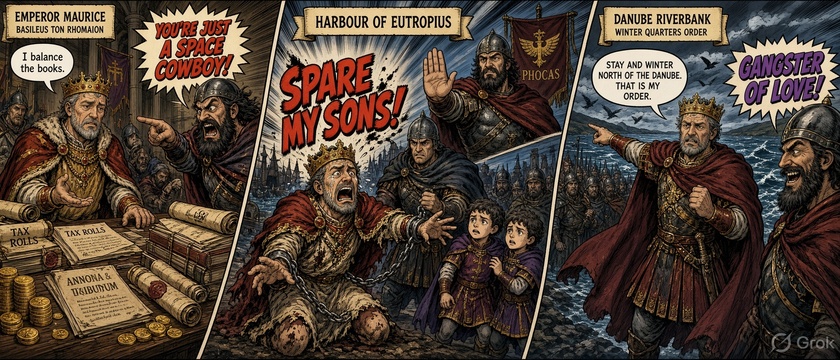
Maurice and most of his family were captured. On 27 November (a Tuesday) at the Harbour of Eutropius near Chalcedon, Phocas’s men (notably Lilius) executed Maurice’s younger sons first while he was forced to watch. Maurice then recited “Thou art just, O Lord, and thy judgement is just” before being beheaded. Sources differ slightly on the exact number of sons present (five or six; the eldest, Theodosius, was recalled from Nicaea and killed nearby shortly afterward). Bodies were thrown into the sea; heads were displayed. Empress Constantina and their three daughters were initially spared and sent to a monastery.

After: Phocas, War with Persia, and Long-Term Consequences

Phocas (ruled 602–610) was a low-born military usurper deeply distrusted by the Constantinopolitan elite. He ruled tyrannically, executed potential rivals (including later Constantina, Germanus, and others around 605–606 after a conspiracy involving rumors that Theodosius had survived), and persecuted Miaphysites and Jews. He made peace with the Avars by increasing tribute so he could focus on the east, but this proved insufficient.

Khosrow II used Maurice’s murder as a pretext (claiming to avenge his benefactor and, in some accounts, supporting a pretender said to be Theodosius). The Byzantine–Sasanian War of 602–628 began almost immediately. Persian forces overran Mesopotamia (Dara, Amida, Edessa, etc.), reached deep into Anatolia, took Antioch, Damascus, and Jerusalem (614), and later Egypt. Both empires were devastated.

In 610, Heraclius (son of the Exarch of Africa) sailed to Constantinople, overthrew and executed Phocas, and eventually reversed the Persian gains in the 620s. The True Cross was restored to Jerusalem in 630, but both empires were exhausted. This weakness facilitated the rapid Arab-Muslim conquests that followed.

Significant Figures

  • Maurice: Last Justinianic emperor; competent but unpopular austerity and military orders triggered the crisis.
  • Phocas: Centurion-turned-usurper; spokesman for the mutinous troops who seized power and ordered the executions.
  • Constantina: Maurice’s wife (daughter of Tiberius II); survived the initial massacre but was later executed.
  • Theodosius: Eldest son and co-emperor (from 590); sent toward Persia for aid, recalled, and killed.
  • Germanus: Influential figure and father-in-law of Theodosius; briefly considered as a possible alternative emperor before submitting to Phocas.
  • Khosrow II (Khosrau II / Khusro): Sasanian king restored by Maurice in 591; launched the great war after 602 under the banner of avenging Maurice.
  • Heraclius: Future emperor who ended Phocas’s reign in 610 and later recovered most lost territories from Persia.
  • Lilius: Phocas’s associate who carried out the executions at Chalcedon.
  • Supporting sources include Theophylact Simocatta, the Chronicon Paschale, and later chroniclers.

The event was remembered as an act of particular cruelty. It marked the first successful violent deposition of a Roman emperor in the East since the third century and is widely seen as the catalyst for the last great war of antiquity between Rome and Persia.

= November 27th

These events are all traditionally dated to or around 27 November (with some calendar variations), and each marks a notable political, military, religious, or cultural turning point.

AD 25 – Luoyang becomes capital of the Eastern Han

After the collapse of Wang Mang’s short-lived Xin dynasty, Liu Xiu (Emperor Guangwu) proclaimed himself emperor in AD 25 and established his capital at Luoyang, roughly 335 km east of the former Western Han capital of Chang’an. This decision marked the formal start of the Eastern (or Later) Han dynasty (AD 25–220). Guangwu spent the next decade consolidating power, defeating rival claimants and the Red Eyebrows peasant army, and largely reunifying China by AD 36. Choosing Luoyang signalled a deliberate break from the western capital and its associations with the previous regime while remaining in the Chinese heartland.

176 – Marcus Aurelius elevates Commodus

On 27 November 176, Marcus Aurelius granted his son Commodus the title Imperator and effectively made him supreme commander of the legions (and soon co-Augustus). Commodus, born “in the purple,” became the first biological son to succeed a long line of adoptive “Five Good Emperors.” The elevation was celebrated with a joint triumph later that year. It ended the practice of selecting capable adult heirs by adoption and placed a teenager on the path to sole rule. Commodus’s later reign (especially after 180) is widely remembered for extravagance, megalomania, and instability that marked the end of the high imperial peak.

395 – Murder of Rufinus

Flavius Rufinus, Praetorian Prefect of the East and the dominant figure at the court of the young Emperor Arcadius after Theodosius I’s death, was killed on 27 November 395 outside Constantinople. Gothic troops under Gainas (recently recalled from the west) cut him down during a formal reception of the returning army. Contemporary accounts describe him being hacked to pieces and his head paraded. The murder removed a powerful rival to the western general Stilicho and reflected the growing influence of Gothic federate forces inside the Eastern Roman political system.

511 – Death of Clovis I

King Clovis I of the Franks died at Lutetia (Paris) on or about 27 November 511 and was buried in the Abbey of St Genevieve (which he had founded). Clovis had united the Salian Franks, defeated the last Roman authority in northern Gaul (Syagrius), conquered much of Aquitaine from the Visigoths, and converted to Catholic Christianity—cementing an alliance with the Gallo-Roman population and the Church. His death led to the partition of the kingdom among his four sons, establishing the characteristic Merovingian pattern of divided rule that lasted until the mid-eighth century.

602 – Execution of Emperor Maurice

On 27 November 602 the Byzantine emperor Maurice was executed by the usurper Phocas at the Harbour of Eutropius near Chalcedon. Maurice was forced to watch his younger sons killed first; he was then beheaded. (Accounts vary slightly on the exact number of sons present.) The coup ended a capable if austere reign and immediately triggered a major war with Sassanid Persia under Khosrow II, who used the murder of his former patron as a pretext. The subsequent decades of conflict exhausted both empires and left them vulnerable to the later Arab conquests.

1095 – Urban II launches the First Crusade

At the Council of Clermont (17–27 November 1095), Pope Urban II delivered his famous appeal on 27 November, calling on Christian warriors to aid the Byzantine Empire against the Seljuk Turks and to liberate Jerusalem. The speech (preserved in several later accounts) promised spiritual rewards, including remission of sins for those who took the cross. The response was immediate and massive; the First Crusade (1096–1099) followed, culminating in the capture of Jerusalem and the establishment of the Crusader states. The council itself also dealt with church reform and the Truce of God, but the crusading call overshadowed everything else.

1703 – Destruction of the first Eddystone Lighthouse

Henry Winstanley’s pioneering wooden lighthouse on the Eddystone Rocks (southwest of Plymouth) was swept away during the Great Storm of 1703. The storm, one of the most destructive in British history, peaked around 27 November (Old Style; 8 December New Style). Winstanley himself was on the rock completing improvements and perished with the structure; no trace of him or his companions was found. The disaster demonstrated both the extreme exposure of the site and the limits of early timber construction on offshore rocks; later stone towers eventually solved the problem.

1727 – Foundation of the Jerusalem Church, Berlin

The foundation stone of the new Jerusalem Church (Jerusalemkirche) in Berlin’s Friedrichstadt (today Kreuzberg) was laid in the mid-1720s under King Frederick William I; the church was completed and consecrated in 1728 to designs by Philipp Gerlach. It replaced an earlier chapel and smaller church on the same site (first mentioned in 1484). The building served the growing Lutheran and Calvinist population of the expanding city. Later rebuilt and enlarged in the nineteenth century, it was destroyed in the Second World War; its ground plan is still marked in the pavement near the Axel Springer building.

Together the dates illustrate a long arc: the re-founding of a major Chinese dynasty, the shift from adoptive to hereditary succession in Rome, the violent politics of late antiquity, the birth of the Merovingian kingdom, a disastrous Byzantine coup, the launching of the Crusades, the limits of early engineering, and the steady expansion of early-modern Berlin.

Read full Article
November 24, 2026
post photo preview
When the challenge fails
November 26th

When the challenge fails

Battle of Caishi (26–27 November 1161) and Vlad the Impaler’s third reign in Wallachia (November 1476) were both short, high-stakes turning points that checked larger powers and highlighted the limits of personal ambition amid shifting alliances.

Battle of Caishi (Jin–Song Wars)

Before. The Jin–Song Wars grew out of the early 12th-century collapse of the Khitan Liao dynasty. Jurchen forces under the Jin allied with the Song against the Liao, then turned on their partners. By 1127 the Jin had taken the Northern Song capital Kaifeng, captured the emperor, and driven the Song court south of the Yangtze to establish the Southern Song at Hangzhou under Emperor Gaozong. The 1142 Treaty of Shaoxing fixed the border roughly along the Huai River, leaving the Jin in control of northern China and the Song in the south. Relative peace held until Wanyan Liang (Prince of Hailing) seized the Jin throne in 1150 after a palace coup. He pursued aggressive sinicization, moved the capital toward the Chinese heartland, and openly aimed to reunify China under Jin rule. In 1158 he claimed the Song had broken the 1142 treaty, launched large-scale conscription (including Han troops), and began building a fleet. The draft was deeply unpopular and sparked revolts that diverted Jin resources. On the Song side, Gaozong hoped to avoid war and delayed major fortifications; only limited garrisons were prepared in 1161. Chen Kangbo (Song prime minister and naval commander) shaped overall strategy, while the civil official Yu Yunwen happened to be at the front distributing awards when the crisis arrived and took effective field command.

The battle. On 26–27 November 1161 at Caishi on the Yangtze (near modern Nanjing/Ma’anshan), Wanyan Liang’s forces tried to cross and open the road into the Song heartland. Song strength is given as roughly 18,000; traditional accounts claim Jin numbers as high as several hundred thousand (figures modern historians treat skeptically—Herbert Franke and others note that the larger totals likely refer to the entire front, and desertions, earlier losses, and poor ship quality sharply reduced the force that actually attempted the crossing). The Song used paddle-wheel warships (faster and more maneuverable than the Jin’s lighter, often hastily built vessels) hidden behind an island. On a signal they sortied and bombarded the attackers with traction trebuchets launching “thunderclap bombs”—soft-cased gunpowder explosives containing lime and sulfur that burst into noxious, blinding clouds. Jin ships suffered from shallow-water losses earlier in the campaign and from poor construction; many troops deserted once it became clear that steppe cavalry was useless on the river. The Song won a clear tactical victory, forcing Wanyan Liang to burn remaining ships and retreat.

After. The defeat was politically fatal for Wanyan Liang. He was assassinated by his own officers in camp in December 1161 amid a military coup that installed Emperor Shizong. The Jin withdrew from the southern offensive in 1162. A formal peace in 1165 reaffirmed the Huai River boundary and ended major hostilities for decades. Song morale and political stability rose; Gaozong abdicated the following year. Traditional Chinese historiography ranked Caishi alongside the 383 Battle of Fei River as a classic southern victory that preserved independence against northern invaders, emphasizing naval technology and gunpowder over raw numbers. Later Jin probes continued in other sectors but avoided another serious Yangtze crossing attempt.

Significant figures.

  • Wanyan Liang — Jin emperor whose unification ambitions and sinicizing policies drove the war; defeated and assassinated.
  • Yu Yunwen — Song civil official who organized and commanded the field army at Caishi.
  • Chen Kangbo — Song prime minister and chief naval/strategic planner.
  • Emperor Gaozong of Song — Southern Song ruler who preferred peace but survived the crisis.
  • Emperor Shizong of Jin — Successor installed by the coup; reversed many of Liang’s policies and accepted the 1165 settlement.

Vlad the Impaler’s third reign (Wallachia, November 1476)

Before. Vlad III (Vlad Țepeș / Vlad Dracula), son of Vlad II Dracul, had already ruled Wallachia briefly in 1448 (with Ottoman backing) and from 1456 to 1462. His second reign is famous for mass impalements, brutal suppression of boyar opposition, and aggressive campaigns against the Ottomans. After the 1462 Ottoman invasion under Mehmed II (which installed his brother Radu), Vlad fled and was imprisoned by King Matthias Corvinus of Hungary on charges of secret dealings with the Ottomans. He spent roughly a dozen years in varying degrees of captivity. By the mid-1470s the strategic picture had shifted: Stephen III of Moldavia (Stephen the Great) had defeated the Ottomans at Vaslui in 1475 and requested Vlad’s release as a useful anti-Ottoman ally. Matthias released him (reportedly after a conversion to Catholicism), recognized him as the legitimate prince, and employed him in early 1476 raids into Ottoman-held territory in Bosnia, where Vlad again used terror tactics. That summer Mehmed II invaded Moldavia, defeated Stephen at Valea Albă (26 July), but then withdrew due to supply problems and disease. Vlad, Hungarian forces under Stephen V Báthory, and Stephen the Great then turned south into Wallachia against the Ottoman-backed Basarab Laiotă (Basarab the Elder), who had displaced Radu.

The campaign and brief reign. In November 1476 Báthory’s troops took Târgoviște (8 November); Vlad and Stephen occupied Bucharest. Basarab fled to the Ottomans (16 November). Vlad was reinstalled and crowned before 26 November—his third and shortest reign. He confirmed trading privileges for Brașov merchants and tried to consolidate control, but his position depended on the continued presence of the allied armies.

After. Once the bulk of the Hungarian and Moldavian forces withdrew, Basarab returned with Ottoman support. Vlad was killed in late December 1476 or early January 1477 near Snagov (north of Bucharest) while fighting the counter-attack; his small force (roughly 2,000 in one account) was overwhelmed. Accounts of the exact circumstances differ: some describe a battle death, others an ambush or assassination by a disguised Turk, and one version claims his own men mistook him for an enemy in the chaos. Contemporary reports state that his head was sent to Constantinople and displayed. His Moldavian bodyguard was also massacred (reported by Stephen the Great in a 10 January 1477 letter). Burial traditions point to Snagov monastery or possibly Comana, but no definitive tomb has been confirmed. Basarab regained Wallachia; the principality returned to the familiar cycle of Ottoman and Hungarian influence, with Stephen the Great later installing another candidate.

Significant figures.

  • Vlad III the Impaler — Restored briefly with foreign help; killed within weeks.
  • Basarab Laiotă — Rival who fled then returned with Ottoman backing.
  • Stephen the Great of Moldavia — Key ally who requested Vlad’s release, campaigned jointly, and left some troops for protection.
  • Stephen V Báthory — Hungarian commander whose forces took Târgoviște and enabled the restoration.
  • Matthias Corvinus — Hungarian king who imprisoned then released Vlad and authorized the campaign.
  • Mehmed II — Ottoman sultan whose earlier invasion of Moldavia and support for Basarab framed the events.

Both episodes show how naval or coalition technology and temporary alliances could halt expansionist rulers, yet neither produced lasting local dominance: the Song secured a stable southern border for decades, while Vlad’s restoration collapsed almost immediately.

= November 26th

These are notable events from late November (often around the 26th) in the listed years, drawn from historical records and Wikipedia-linked pages.

783: Adosinda confined to a monastery

Queen Adosinda of the Kingdom of Asturias (daughter of Alfonso I and Ermesinda, sister of Fruela I, and wife of King Silo) was forced into the monastery of San Juan de Pravia (Santianes de Pravia). Silo had ruled peacefully from 774 to 783 without heirs. On his death, Adosinda backed her nephew Alfonso II for the throne. Her half-brother Mauregatus (an illegitimate son of Alfonso I) seized power with military support, drove Alfonso into exile in Álava, and sidelined Adosinda. She entered the monastery as a nun (in the presence of figures including Beatus of Liébana) and remained there for the rest of her life. She is buried there with Silo.

1161: Battle of Caishi

On 26–27 November, Song dynasty forces decisively defeated a Jin dynasty fleet attempting to cross the Yangtze River at Caishi (near modern Nanjing) during the Jin–Song Wars. The Jin, under Emperor Wanyan Liang, sought to invade the Southern Song. Song commander Yu Yunwen (a civil official) and naval leader Chen Kangbo used superior paddle-wheel warships equipped with trebuchets that launched gunpowder-based “thunderclap bombs” (soft-cased explosives with lime and sulfur that created noxious clouds). The Song fleet outmaneuvered the Jin’s lighter, often hastily built ships; many Jin troops deserted as their steppe cavalry proved ineffective on water. Wanyan Liang was later assassinated by his own men. The victory boosted Song morale and contributed to a lasting peace treaty in 1165 along the Huai River boundary.

1476: Vlad the Impaler’s third reign in Wallachia

Vlad III (Vlad the Impaler / Vlad Dracula) defeated the forces of Basarab Laiotă (Basarab the Elder) with support from Stephen the Great of Moldavia and Stephen V Báthory (leading Hungarian troops). He retook the throne of Wallachia for the third time (after brief rule in 1448 and his main reign of 1456–1462). This came amid shifting alliances against Ottoman influence. The reign was short: Basarab returned with Ottoman backing, and Vlad was killed in battle near Snagov (late December 1476 or early January 1477). Accounts of his death vary (ambush, mistaken identity by his own men, or combat); his head was reportedly sent to Constantinople.

1778: Captain James Cook reaches Maui

During his third Pacific voyage (aboard HMS Resolution and Discovery), Cook’s expedition sighted and visited Maui in the Hawaiian Islands around 26 November 1778. This was the first recorded European contact with Maui (the archipelago as a whole had first been reached in January 1778, when Cook landed on Kauaʻi and named the group the Sandwich Islands). The ships traded with locals for provisions while exploring the coasts of Maui and Hawaiʻi Island before later anchoring at Kealakekua Bay. Cook was killed there in February 1779 during a conflict after returning for repairs.

1789: First national Thanksgiving Day in the United States

At Congress’s request, President George Washington proclaimed Thursday, 26 November 1789, as a day of public thanksgiving and prayer. Issued on 3 October 1789 in New York City (then the capital), the proclamation thanked God for the successful establishment of the Constitution and the new federal government, for protection during the Revolution, and for peace and liberty. Washington attended services at St. Paul’s Chapel and gave food and beer to debtors in prison. This was the first national Thanksgiving under the Constitution (earlier colonial and Continental Congress observances had occurred). It was a one-time event; the annual late-November tradition was later formalized by Abraham Lincoln in 1863.

These episodes span medieval succession struggles, early gunpowder naval warfare, Balkan resistance to the Ottomans, European exploration of the Pacific, and the founding of American national traditions.

Read full Article
See More
Available on mobile and TV devices
google store google store app store app store
google store google store app tv store app tv store amazon store amazon store roku store roku store
Powered by Locals