The birth of Protestant Work Ethic
17 November 1558 marked the death of Mary I and the immediate accession of her half-sister Elizabeth I, ending the brief Catholic restoration under Mary and beginning the long Elizabethan era (1558–1603).
Before 1558: The Path to the Transition
Mary I (born 18 February 1516) was the only surviving child of Henry VIII and his first wife, Catherine of Aragon. After Henry’s break with Rome and the 1533 marriage to Anne Boleyn, Mary was declared illegitimate and suffered years of pressure and isolation. Anne Boleyn’s daughter Elizabeth (born 7 September 1533) was likewise declared illegitimate after Anne’s execution in 1536, though Henry’s 1544 Third Succession Act restored both daughters to the line of succession after their younger half-brother Edward.
Edward VI (reigned 1547–1553) was raised Protestant and died at 15 without heirs. His attempted diversion of the crown to the Protestant Lady Jane Grey collapsed within days; Mary, with strong popular and noble support, entered London and was proclaimed queen in July 1553. She was crowned in October 1553.
Mary’s reign was defined by three interlocking policies:
- Restoration of Catholicism, including the repeal of Edwardian Protestant legislation and reconciliation with Rome under Cardinal Reginald Pole (appointed papal legate and Archbishop of Canterbury).
- Marriage in July 1554 to Philip of Spain (later Philip II), making her queen consort of Spain from 1556. The marriage was deeply unpopular and sparked Wyatt’s Rebellion in early 1554, in which Elizabeth was implicated, imprisoned in the Tower of London, and later held under house arrest. No conclusive evidence of treason was produced, and she was released.
- Persecution of Protestants. Roughly 280 people were burned at the stake (including bishops Hugh Latimer and Nicholas Ridley, and Archbishop Thomas Cranmer), earning Mary the later nickname “Bloody Mary.” Calais, England’s last Continental possession, was lost to France in early 1558.
Mary suffered false pregnancies and declining health. By late 1558 she was dying, probably of cancer. She had reluctantly accepted that the succession must pass to Elizabeth (the only viable heir under Henry VIII’s will), formally acknowledging her on or around 6 November. Philip II’s ambassador, the Count of Feria, was at court reporting on the situation. Mary died quietly at St James’s Palace on 17 November 1558, aged 42.
The Accession Day Itself
Elizabeth, then 25, was at Hatfield House. She was proclaimed queen the same day by the Lords and Commons assembled at Whitehall. Contemporary accounts note that she received the news with expressions of sorrow for her sister while immediately beginning to govern. 17 November later became Accession Day (or Queen’s Day), celebrated annually with bells, sermons, pageants, and (in later years) military reviews as a Protestant patriotic festival.
After 1558: The Elizabethan Settlement and Key Figures
Elizabeth moved quickly to reverse the Marian Catholic restoration. The 1559 Acts of Supremacy and Uniformity re-established a moderate Protestant Church of England with the queen as Supreme Governor, a revised Book of Common Prayer, and a broad church that could accommodate a range of beliefs while excluding open Catholicism and more radical Puritanism. She was crowned on 15 January 1559.
Central figures in the early years included:
- William Cecil (later Lord Burghley): Principal Secretary from the outset and Elizabeth’s most trusted minister for nearly the entire reign.
- Robert Dudley (later Earl of Leicester): Childhood friend, favourite, and persistent suitor; a major political and military figure.
- Matthew Parker: First Archbishop of Canterbury under Elizabeth, who helped shape the settlement.
- Nicholas Bacon and other privy councillors who formed a relatively stable early government.
Longer-term challenges and figures included the threat of Catholic succession (especially from Mary, Queen of Scots, who fled to England in 1568 and was eventually executed in 1587), the Spanish Armada of 1588 under Philip II, and the rise of a distinctive Elizabethan culture associated with figures such as Francis Drake, Walter Raleigh, and (later) William Shakespeare. The religious settlement proved durable enough to outlast the queen, though tensions with both Catholics and Puritans continued.
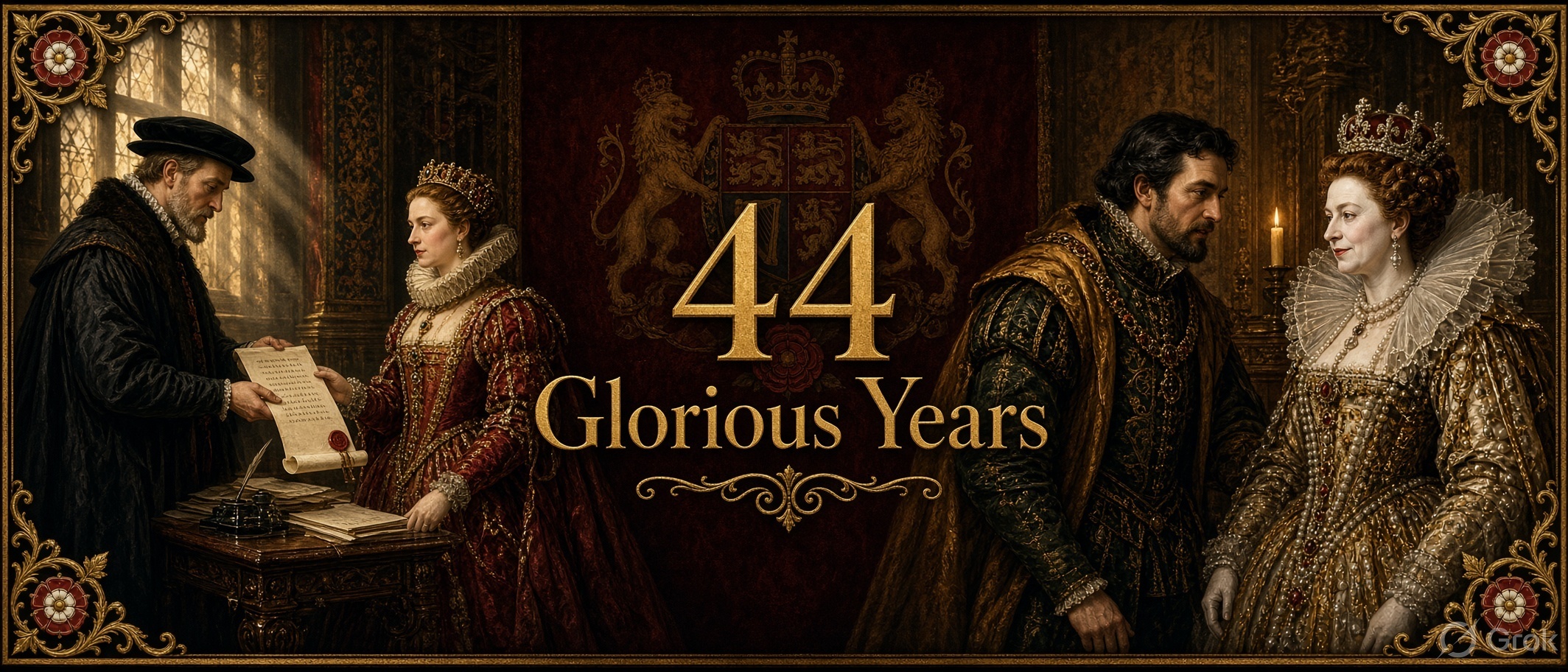
In short, Mary’s death closed a short, polarising Catholic interlude dominated by her Spanish marriage and the burnings, while Elizabeth’s accession launched a 44-year reign that defined a moderate Protestant England, survived major foreign and domestic threats, and is still remembered as a cultural high point.
= November 17th
These events cluster around mid-November in various years (often traditionally listed near 15–17 November). Here is context for each:
474 – Death of Emperor Leo II and sole rule by Zeno.
Leo II (c. 467–November 474), the young grandson of Leo I, had become co-emperor in late 473 and sole emperor after Leo I’s death in January 474. His father Zeno (an Isaurian general married to Leo I’s daughter Ariadne) was made co-emperor shortly afterward because the child was too young to rule effectively. Leo II died in Constantinople at about age 7 after roughly ten months as emperor. Contemporary sources give dates around early-to-mid November (or possibly into December, depending on the chronicler); no contemporary evidence supports poisoning, and high childhood mortality makes a natural death likely. Zeno thereby became sole Eastern Roman (Byzantine) emperor. His rule was immediately challenged by a coup from Verina’s brother Basiliscus in 475, but Zeno recovered the throne and held it until 491.
794 – Emperor Kanmu moves the capital from Nara to Kyoto.
Emperor Kanmu (Kammu, reigned 781–806) had already shifted the capital from Nara (Heijō-kyō) to Nagaoka-kyō in 784, partly to reduce the political influence of powerful Nara Buddhist monasteries. After problems at Nagaoka (including assassination of a key advisor, floods, and other ill omens), he relocated again in 794 to the newly planned Heian-kyō (“Capital of Peace and Tranquility”), modern Kyoto. Traditional dating places the emperor’s ceremonial move and the formal start of the Heian period around 17 November 794. The city was laid out on a Chinese-inspired grid and remained Japan’s imperial capital for more than a thousand years. Kanmu also expanded imperial authority in the north against the Emishi and supported the introduction of Tendai and Shingon Buddhism.
887 – Deposition of Charles the Fat; election of Arnulf of Carinthia.
In November 887 (sources cite an assembly at Frankfurt or nearby Tribur), East Frankish magnates deposed the ineffective Emperor Charles III “the Fat,” the last Carolingian to rule a reunited Frankish empire. His illegitimate nephew Arnulf of Carinthia (son of Carloman of Bavaria) was elected king of the East Frankish Kingdom. Charles yielded without major fighting and died early in 888. The event accelerated the permanent fragmentation of the Carolingian empire: West Francia, Burgundy, and Italy chose their own rulers. Arnulf later defeated Vikings decisively and briefly claimed the imperial title.
1183 – Battle of Mizushima.
On or about 17 November 1183, during the Genpei War (the Taira–Minamoto civil war), a naval action occurred off Mizushima in Bitchū Province (near modern Kurashiki/Okayama). Minamoto forces under commanders linked to Minamoto no Yoshinaka tried to cross the Inland Sea toward the Taira base at Yashima. The Taira (led by figures including Taira no Tomomori, Shigehira, and Noritsune) lashed their ships together with planks to form a fighting platform, used archers effectively, fought hand-to-hand, and even brought horses ashore to finish the rout. It was a clear Taira victory that checked Yoshinaka’s momentum. (Some accounts mention an annular solar eclipse coinciding with the fighting.)
1292 – John Balliol becomes King of Scotland.
After the death of Margaret, the Maid of Norway, left Scotland without a clear heir, the “Great Cause” succession dispute was arbitrated by Edward I of England. On 17 November 1292 at Berwick, the auditors (under Edward’s influence) awarded the crown to John Balliol (c. 1249–1314), whose claim through the female line from David I was judged superior on primogeniture. He was inaugurated at Scone on 30 November (St Andrew’s Day) and did homage to Edward. Edward treated Scotland as a vassal kingdom; Balliol’s weak reign collapsed in 1296 when Edward invaded, deposed him, and took the Stone of Destiny. Balliol later lived in exile in France.
1405 – Sharif ul-Hāshim establishes the Sultanate of Sulu.
Traditional dating places the founding of the Sultanate of Sulu on 17 November 1405 by Sharif ul-Hāshim (Sharif Abubakar Abirin Al-Hashmi), a Johor-born (or Arab-descended) Sunni scholar and explorer. He married a local princess (Dayang-dayang Paramisuli), introduced Islamic institutions and a Quran-based law code (the Diwan), and became the first sultan. The sultanate controlled the Sulu Archipelago, parts of Mindanao, Palawan, and later areas of northern Borneo. (Some accounts give an alternative founding year of c. 1457.) It remained an independent Muslim polity into the late 19th/early 20th century.
1511 – Treaty of Westminster between Henry VIII and Ferdinand II of Aragon.
In the context of the War of the League of Cambrai and the emerging Holy League against France, Henry VIII entered an alliance. On or about 17 November 1511 at Westminster, a treaty of mutual aid against France was concluded with Ferdinand II of Aragon (Henry’s father-in-law via Catherine of Aragon). It supported joint operations (including an eventual English expedition aimed at recovering Guienne/Aquitaine) and committed both to the papal-led anti-French coalition. It formed part of the wider diplomatic realignment of 1511–13 that led to English military involvement on the Continent.
1558 – Death of Mary I; accession of Elizabeth I (start of the Elizabethan era).
Mary I (daughter of Henry VIII and Catherine of Aragon) died on 17 November 1558 at St James’s Palace, aged 42, after a short and troubled reign marked by the restoration of Catholicism, the Spanish marriage to Philip II, and the persecution of Protestants. With no child, she was succeeded by her Protestant half-sister Elizabeth I (daughter of Anne Boleyn), then 25. Elizabeth was proclaimed the same day. The transition ended the brief Catholic restoration and opened the long Elizabethan reign (1558–1603), which re-established a moderate Protestant settlement and became a golden age of English culture and power. 17 November was later celebrated as Accession Day.
1603 – Sir Walter Raleigh’s trial for treason.
On 17 November 1603 at Winchester (moved from London because of plague), the Elizabethan courtier, explorer, and writer Sir Walter Raleigh was tried for high treason before a special commission. He was accused of involvement in the “Main Plot” to replace the new King James I with Arabella Stuart, involving Spanish money and Lord Cobham. The prosecution (led by Attorney-General Sir Edward Coke) relied heavily on Cobham’s statements; Raleigh had no counsel and limited rights to confront witnesses. He was convicted after a short jury deliberation and sentenced to death, but James reprieved him. Raleigh spent years in the Tower, was released for a final (failed) Guiana voyage, and was finally executed in 1618.
1777 – Articles of Confederation submitted to the states.
After months of debate, the Continental Congress adopted the Articles of Confederation on 15 November 1777 and submitted them to the thirteen states for ratification (with a covering letter dated around 17 November). This was the first constitution of the United States, creating a loose “league of friendship” of sovereign states with a weak central Congress. Unanimous state ratification was required; disputes over western land claims (especially Maryland’s holdout) delayed final ratification until 1 March 1781. The Articles governed the new nation through the end of the Revolutionary War and the early Confederation period until replaced by the 1787 Constitution.
1796 – Battle of the Bridge of Arcole.
From 15–17 November 1796, during the War of the First Coalition and Napoleon’s Italian Campaign, French forces under General Napoleon Bonaparte defeated an Austrian army under József Alvinczi near the bridge over the Alpone at Arcole (southeast of Verona). The fight was part of the third Austrian attempt to relieve the besieged fortress of Mantua. Fighting was fierce around the causeway and bridge; legend and contemporary propaganda emphasize Napoleon seizing a tricolor and leading charges (though the bridge was not decisively crossed on the first day, and the battle was a hard-won, multi-day engagement). The French victory forced Alvinczi to withdraw, preserved the Mantua siege, and boosted Bonaparte’s reputation. It was later celebrated in paintings (notably Horace Vernet’s) as a heroic moment.
These episodes span the late Roman/Byzantine world, medieval Europe and Japan, the early modern period, and the American and French Revolutions, illustrating shifts in imperial succession, capital relocation, the breakup of Carolingian power, clan warfare in Japan, Scottish-English relations, Islamic state formation in Southeast Asia, Tudor succession, English constitutional foundations, and Revolutionary warfare.