



439 Vandals take Carthage
Background
The Vandals (primarily the Asdingi branch) and their Alan allies were a Germanic confederation that had crossed into Roman territory during the early fifth-century migrations. After years in Spain, they crossed the Strait of Gibraltar into North Africa in 429 under their king Gaiseric (also spelled Genseric or Geiseric). They exploited Roman internal divisions, including the conflict between the comes Africae Bonifatius (Boniface) and the imperial government in Ravenna under Valentinian III and the general Aetius.
They overran much of Mauretania and Numidia, defeated Roman forces, and besieged Hippo Regius (where Saint Augustine died in 430 during the siege). Hippo fell and became an early Vandal centre. In 435 a treaty with Valentinian III recognised Vandal control of parts of Numidia and Mauretania as foederati (treaty allies). Carthage and the rich province of Africa Proconsularis remained under Roman control; Gaiseric was to pay tribute and sent his son Huneric as a hostage to Rome.
Gaiseric observed the treaty only while it suited him. In 439, while Roman attention and forces were focused on Visigothic problems in Gaul, he broke the agreement without a declaration of war and moved on Carthage.
The Capture (19 October 439)
Gaiseric’s forces took Carthage by surprise and with little resistance. Contemporary accounts (including Prosper of Aquitaine) describe the seizure as achieved by stratagem or under the cover of the existing peace. One later tradition states that the Vandals entered while most inhabitants were at the races in the hippodrome. They also seized much of the Western Roman naval squadron docked in the harbour, instantly giving them a fleet and shipbuilding capacity they had previously lacked. Carthage, one of the largest and richest cities in the Western Empire and the key grain port for Rome, became the new Vandal capital. Gaiseric styled himself King of the Vandals and Alans and is said to have dated his sovereignty from this capture.
Significant Figures
- Gaiseric (r. 428–477): The central figure. A shrewd and opportunistic leader, he turned a land-based Germanic people into a Mediterranean naval power. He remained undefeated for the rest of his long reign and repeatedly outmanoeuvred both Western and Eastern Roman attempts to dislodge him.
- Valentinian III: Western Roman emperor. Forced into successive unfavourable treaties (435 and later 442).
- Flavius Aetius: The dominant Western Roman general. Preoccupied with Gaul in 439, he later directed unsuccessful efforts to recover Africa.
- Huneric: Gaiseric’s son, held as a hostage after 435 and later succeeded him as king (r. 477–484). He intensified anti-Nicene measures.
- Quodvultdeus: Catholic (Nicene) bishop of Carthage at the time of the capture. He was exiled (to Naples) as Gaiseric preferred Arian advisors and clergy.
- Victor of Vita: Later Nicene bishop and author of the Historia Persecutionis, the main contemporary account of Vandal religious policy (written in the 480s). His narrative emphasises persecution, though modern scholars note that intensity varied by ruler and period.
Results and Consequences
The immediate and longer-term effects were severe for the Western Roman Empire and transformative for the Vandals:
- Economic and strategic blow: North Africa was the West’s primary grain supplier (supporting the annona system that fed Rome) and a major source of tax revenue. Its loss impoverished the imperial treasury, reduced the ability to pay armies and manage barbarian federates, and permanently shifted the balance of Mediterranean power. Historians often treat 439 as a critical step toward the West’s fiscal and political collapse.
- Naval supremacy: With Carthage’s harbours, shipyards, and captured ships, the Vandals rapidly became the dominant naval force in the western Mediterranean. They raided Sicily, seized Sardinia, Corsica, the Balearic Islands, and at times parts of Sicily, and conducted widespread piracy and coastal raids.
- Recognition and expansion: After further fighting (including a failed joint Roman–Eastern expedition), a 442 treaty recognised Vandal control of Africa Proconsularis, Byzacena, and parts of Numidia—far more than the 435 settlement. The Vandals held the core of their African kingdom until the Byzantine reconquest under Belisarius in 533–534.
- Sack of Rome (455): From their African base the Vandals under Gaiseric sailed to Italy and thoroughly sacked Rome, taking vast treasure and captives (including imperial family members).
- Religious policy: The Vandals were Homoian (“Arian”) Christians. Gaiseric and his successors promoted their own church at the expense of the Nicene (Catholic) majority. Policies included confiscation of churches, exile of Nicene bishops and clergy, bans on Nicene services in Vandal settlement areas, and pressure on officials and elites to convert. Intensity fluctuated: relatively focused under Gaiseric, more severe under Huneric (especially the 484 conference and mass exiles), and milder under some later kings (e.g., Gunthamund, Hilderic). Nicene writers (notably Victor of Vita) portrayed this as systematic persecution; the result was a prolonged ecclesiastical conflict in Africa.
In short, the 439 capture turned a previously land-based barbarian group into a durable maritime kingdom, stripped the Western Empire of its richest province, and accelerated the political and economic fragmentation of the late Roman West.
= October 19th
These are all events traditionally associated with 19 October in historical “on this day” calendars. For the earliest entries (especially 202 BC), the precise day is conventional rather than firmly fixed by contemporary sources; ancient dating and calendar conversions are imprecise.
202 BC – Battle of Zama
Roman legions under Publius Cornelius Scipio (later Scipio Africanus) decisively defeated Hannibal Barca’s Carthaginian army in what is now Tunisia. This was the final major battle of the Second Punic War (218–201 BC). Scipio had invaded North Africa, forced Hannibal’s recall from Italy, and used superior cavalry (especially Numidian allies under Masinissa) plus tactics to neutralize Hannibal’s war elephants. Carthaginian losses were heavy (roughly 20,000 killed and as many captured); Roman losses were far lighter. The defeat ended Carthage’s ability to challenge Rome and established Roman dominance in the western Mediterranean.
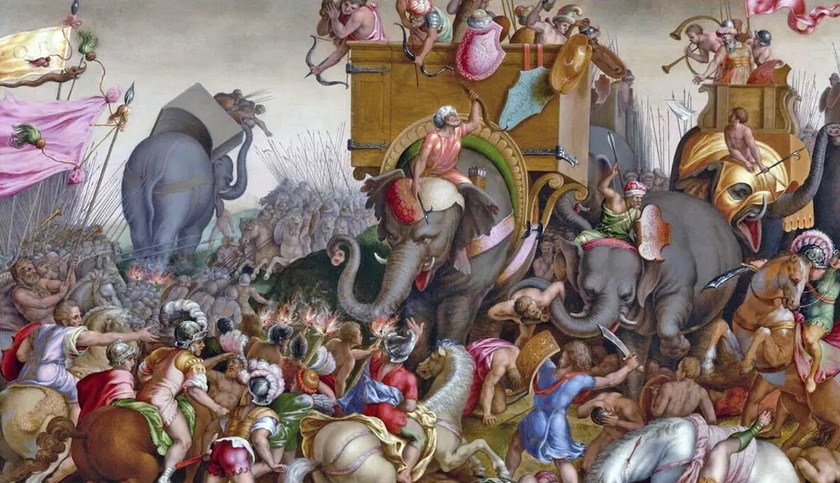
439 – Vandals take Carthage
King Gaiseric (Genseric) of the Vandals (with Alan allies) seized Carthage, the great Roman city and grain port in North Africa, in a surprise move that broke an earlier treaty. Sources indicate the city fell with little resistance while many inhabitants were at the races. Carthage became the capital of the Vandal Kingdom. The loss deprived the Western Roman Empire of vital grain supplies and tax revenue and gave the Vandals a powerful naval base. From there they later controlled Mediterranean islands and, in 455, sacked Rome. The Vandals were Arian Christians, which led to ongoing religious tensions with the Nicene majority.
1216 – Death of King John of England
King John (reigned 1199–1216) died at Newark-on-Trent during the First Barons’ War. He was succeeded by his nine-year-old son, Henry III. John is best remembered for the sealing of Magna Carta in 1215 under baronial pressure, the loss of most of the Angevin lands in France, and prolonged conflict with the papacy and his own nobility. His death left a child king and a contested realm.
1386 – First lecture at Heidelberg University
The University of Heidelberg (Ruperto Carola), founded by Elector Palatine Rupert I with papal approval (modelled on Paris), held its first lectures. A formal opening Mass took place on 18 October in the Heiliggeistkirche; teaching began the next day in the faculties of theology, law, and the arts (medicine followed soon after). Marsilius of Inghen became the first rector. It is the oldest university in what is now Germany.
1466 – Second Treaty of Thorn (Toruń)
The Thirteen Years’ War (1454–1466) between the Kingdom of Poland (under Casimir IV Jagiellon) and the Teutonic Order ended with this treaty signed in Thorn (modern Toruń). Poland gained Royal Prussia (including Gdańsk/Danzig, Chełmno Land, and other territories), while the Teutonic Order retained eastern Prussia as a Polish fief. The Grand Master was required to swear allegiance to the Polish king. This significantly reduced Teutonic power and strengthened Poland in the Baltic region.
1469 – Marriage of Ferdinand of Aragon and Isabella of Castile
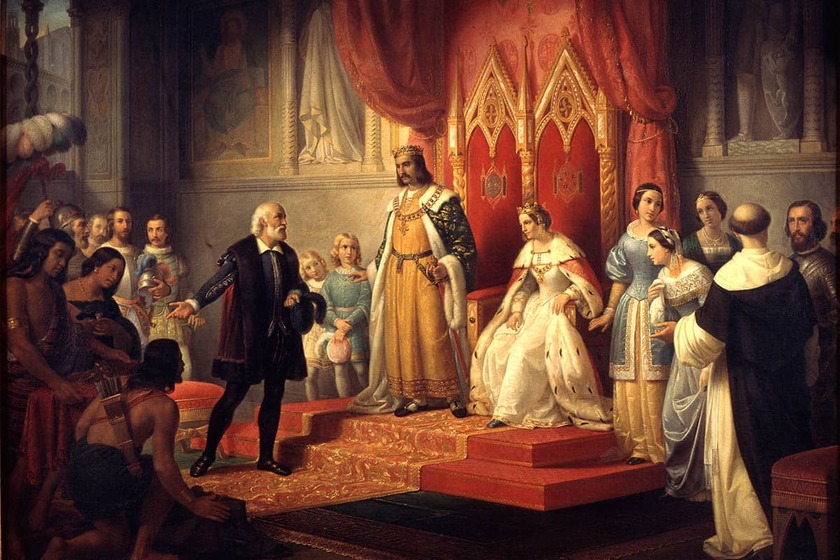
Ferdinand II of Aragon married Isabella I of Castile in Valladolid. Their union began the process of unifying the crowns of Aragon and Castile into the Kingdom of Spain. Together they completed the Reconquista, established the Spanish Inquisition, sponsored Columbus’s voyages, and laid the foundations for Spain’s rise as a major European and global power.
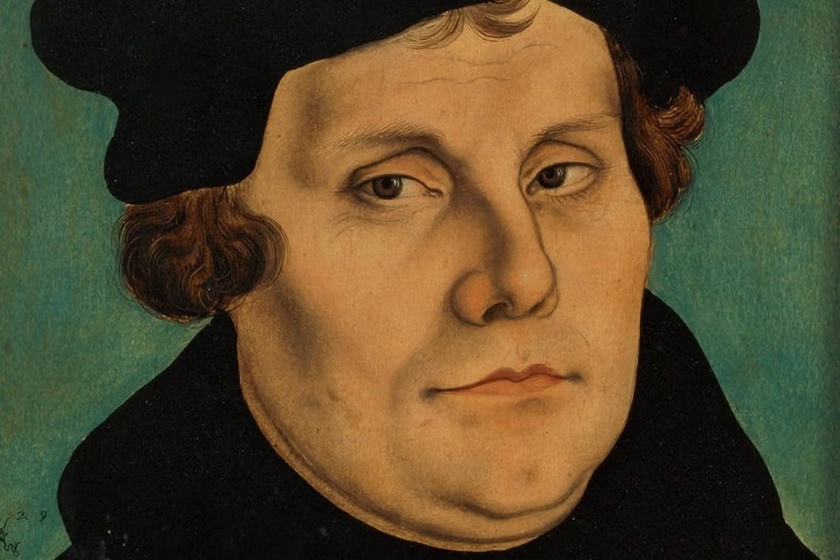
1512 – Martin Luther receives his doctorate in theology
At the University of Wittenberg, Martin Luther (then an Augustinian friar) was formally promoted as Doctor of Theology (Doctor in Biblia). The ceremony took place in the Castle Church; he received the usual insignia (Bible, biretta, ring) and took the customary oaths. The doctorate gave him the right and duty to lecture on Scripture. He later frequently cited this office when challenging Church teachings, making the degree a key step toward the Reformation.
1649 – New Ross surrenders to Oliver Cromwell
During the Cromwellian conquest of Ireland, the town of New Ross (County Wexford) surrendered to Oliver Cromwell’s forces. After the severe treatment of Drogheda and Wexford, the governor (Lucas Taaffe) accepted terms that allowed the garrison to march out with arms and colours. The surrender gave Cromwell control of a useful crossing of the River Barrow and demonstrated that towns which yielded promptly could receive relatively lenient terms.
1781 – Surrender at Yorktown
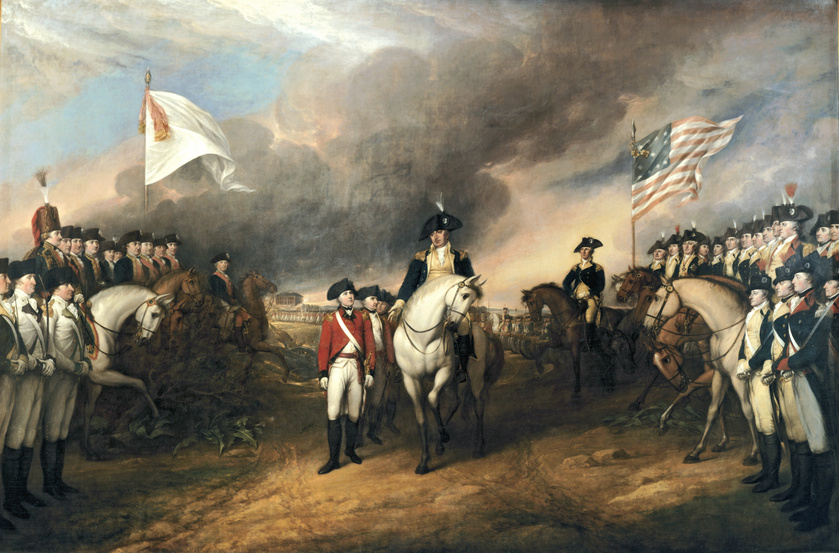
At Yorktown, Virginia, the British army under Lord Cornwallis formally surrendered to the combined American and French forces under George Washington and the comte de Rochambeau. Cornwallis himself did not attend the ceremony (claiming illness); a subordinate handed over the sword. The siege and surrender effectively ended major land operations in the American Revolutionary War and opened the way for the Treaty of Paris (1783).
1789 – John Jay sworn in as first Chief Justice
John Jay took the oaths of office as the first Chief Justice of the United States Supreme Court. Nominated by President George Washington and confirmed by the Senate, he swore the judicial and constitutional oaths before Richard Morris, Chief Justice of New York. Jay, a key Founding Father and co-author of The Federalist, served until 1795.
A curious historical coincidence noted by some chroniclers is that Gaiseric’s capture of Carthage in 439 fell on the anniversary of the Roman victory at Zama in 202 BC—the same city, centuries apart, marking the rise and later decline of Roman power in North Africa.