



VoiceDDB
Politics • Culture • News
oDDBall analysis of conservative politics with a libertarian economic conservative twist. Small government, big freedom.
Interested? Want to learn more about the community?
September 15, 2021
On this day, 15th Sept 1830

1830 – The Liverpool to Manchester railway line opens; British MP William Huskisson becomes the first widely reported railway passenger fatality when he is struck and killed by the locomotive Rocket.
It had been a clumsy mistake on Huskisson's part. He had been sick following surgery and been told not to attend the meet. When faced with the approaching train Huskisson panicked and crossed and recrossed the train lines, before being hit. He was mortally wounded, his legs mangled, but he didn't die for hours. He still completed a will before dying.
https://conservativeweasel.blogspot.com/2021/09/15th-sept-review-of-historical-and.html

Interested? Want to learn more about the community?
What else you may like…
Videos
Posts
Articles
00:01:07
November 27, 2022
Jingle Bell Rock

Jingle bell, jingle bell, jingle bell rock
Jingle bells swing and jingle bells ring
Snowin' and blowin' up bushels of fun
Now the jingle hop has begun

Jingle bell, jingle bell, jingle bell rock
Jingle bells chime in jingle bell time
Dancin' and prancin' in Jingle Bell Square
In the frosty air

What a bright time, it's the right time
To rock the night away
Jingle bell time is a swell time
To go glidin' in a one-horse sleigh

Giddy-up jingle horse, pick up your feet
Jingle around the clock
Mix and a-mingle in the jinglin' feet
That's the jingle bell rock

Jingle bell, jingle bell, jingle bell rock
Jingle bell chime in jingle bell time
Dancin' and prancin' in Jingle Bell Square
In the frosty air

What a bright time, it's the right time
To rock the night away
Jingle bell time is a swell time
To go glidin' in a one-horse sleigh

Giddy-up jingle horse, pick up your feet
Jingle around the clock
Mix and a-mingle in the jinglin' feet
That's the jingle bell
That's the jingle...

00:02:04
September 01, 2021
Intro to Locals for the Conservative Voice

David Daniel Ball calls himself the Conservative Voice.

I'm a teacher with three decades experience teaching math to high school kids.I also work with first graders and kids in between first grade and high school. I know the legends of why Hypatia's dad is remembered through his contribution to Math theory. And I know the legend of why followers of Godel had thought he had disproved God's existence.

I'm not a preacher, but I am a Christian who has written over 28 books all of which include some reference to my faith. Twelve blog books on world history and current affairs, detailing world events , births and marriages on each day of the year, organised by month. Twelve books on the background to and history of Bible Quotes. One Bible quote per day for a year. An intro to a science fiction series I'm planning, post apocalyptic cyber punk. An autobiography with short story collections.

I'm known in Australia for my failure as a whistleblower over the negligence death of a school boy. ...

00:01:50
September 04, 2026
Should violent criminals be made fat? Grok says 'no'

No. Transferring gut bacteria from an obese person into a violent criminal is not a reliable, ethical, or effective way to make them “fat, sedentary, and less of a physical threat.”

The science does not deliver the outcome you want

Mouse studies in germ-free animals showed that microbiota from obese donors can increase energy harvest and adiposity compared with lean-donor microbiota. That is the origin of the idea. Human evidence is far weaker.

Randomized trials of fecal microbiota transplant (FMT) from lean donors into people with obesity have generally failed to produce meaningful, sustained weight loss. Microbiome composition can change; body weight and metabolic markers often do not, or the effects are small and inconsistent. Diet and the existing gut environment usually dominate. A 2025 Nature paper found diet outperformed microbial transplant for microbiome recovery. Human guts are already colonized, not sterile like lab mice, so engraftment is variable and effects unpredictable.

It is not a ...

post photo preview
August 28, 2026
Pfizer struggles to answer

Some in Australia are brilliant. Malcolm Roberts Investigates Pfizer over Covid vaccine.

Holiday break is over back to work tonight

Tonight I'll start double posting until I've caught up.

post photo preview
Musk flying car was a stunt. Nobody else could have done it.
What It Took — Musk’s Flying Car and Pappus’s Intermediate Theorem

What It Took — Musk’s Flying Car and Pappus’s Intermediate Theorem

Musk flying car was a stunt. Nobody else could have done it.

The flying car demonstration was a stunt. That is the easy dismissal. What it actually required was a convergence no one else possessed. To put a sporty Tesla through that sequence—controlled flight, rocket propulsion, and the inverted suspension that held the vehicle against gravity—demanded three things at once: a driver-pilot system more precise and reliable than any human hand, a vehicle architecture able to feed the rockets their fuel without compromising the car’s structure, and a suction or attachment method strong enough to keep the chassis inverted and stable. Others had sketched flying cars for decades. None combined the electric powertrain, the rocket hardware, the control software, and the manufacturing capability in one place. Only Musk’s stack made the stunt possible. The spectacle was real because the prerequisites were unique.

The parallel with Pappus of Alexandria is exact in kind, if not in century. Pappus (fl. c. 320) is routinely called a collector: the man who gathered results that would otherwise have vanished, the author of the Synagoge that preserved pieces of Euclid, Apollonius, and others. That description is true and incomplete. His intermediate theorem—the result on the centroid of a plane figure rotated about an external axis that yields the volume of the solid of revolution—was not archival. It was a step that later mathematicians recognized as lying on the road to the integral calculus. The method isolates the geometric center and multiplies distance traveled by area; it converts a solid into a product of simpler quantities. In the hands of later writers it became a practical tool for volumes that pure exhaustion methods handled clumsily. Pappus did not invent the calculus, but he supplied a precise intermediate result that made one of its central applications thinkable.

He could do so only because he occupied a position no one else filled. Alexandria still held the texts, the teaching tradition, and the habit of commentary on Ptolemy’s Almagest and Euclid’s Elements. Pappus worked inside that continuity. He observed and calculated with the solar eclipse of 18 October 320, wrote the commentary that fixed his date, and dedicated major books of the Collection to his son Hermodorus. He was not inventing a new science from nothing; he was operating at the exact point where classical geometry could still be extended before the tradition thinned. Theon of Alexandria, a generation later, used his material; Hypatia, Theon’s daughter, continued the same line of commentary and instruction until the school was broken in 415. Pappus sat at the last moment when the full apparatus—texts, students, and technical command—still existed in one place. Without that, the intermediate theorem would not have been formulated, or would not have survived to be read by Commandino, Descartes, Fermat, and Newton.

Dismissing Pappus as “mere collector” is the same error as calling the flying-car sequence “just a stunt.” Both judgments ignore the prerequisites. In one case the prerequisites were an electric car that could also serve as a rocket stage, control systems beyond human reaction time, and attachment physics sufficient for inverted flight. In the other they were mastery of the classical corpus, the geometric insight to isolate the centroid theorem, and a school still capable of transmitting the result. Later workers stood on what each man made available. The demonstration and the theorem both look, in retrospect, like displays. They were possible only because the required combination existed in one hands.

=

Pappus of Alexandria and the solar eclipse of 18 October 320

Pappus of Alexandria (Ancient Greek: Πάππος ὁ Ἀλεξανδρεύς; c. 290 – c. 350 AD) was one of the last major Greek mathematicians of late antiquity. Almost nothing is known of his personal life beyond what appears in his own writings. He lived and taught in Alexandria, Egypt, and is described as heading a school there. He had a son named Hermodorus, to whom he dedicated Books VII and VIII of his main work. He also refers to contemporaries such as the philosopher Hierius and a woman mathematician named Pandrosion (to whom he addressed a critique of her students’ training).

The eclipse and the Almagest commentary

In his commentary on Ptolemy’s Almagest (the Syntaxis Mathematica, later known in Arabic as al-Majisti and in Latin as the Almagest—“the Great Astronomer”), Pappus calculates “the place and time of conjunction which gave rise to the eclipse in Tybi in 1068 after Nabonassar.” This corresponds to 17 Tybi in the Egyptian calendar and 18 October 320 in the Julian calendar. He writes as if the eclipse were a recent event he had observed, which has allowed historians (notably Adolphe Rome in his 1931 edition of the commentaries) to fix his activity around that year. Alternative earlier or later eclipses have been considered, but the 320 event best fits the language and context.

The eclipse of 18 October 320 was a total solar eclipse (Saros 87). Greatest eclipse occurred near 2.9°N, 33.7°E (roughly in the region of modern Sudan/Ethiopia border area), with a magnitude of about 1.026 and a central duration of roughly 2 minutes 36 seconds. From Alexandria (approximately 31°N, 30°E) it would have been visible as a substantial partial eclipse. Pappus uses the event in the context of discussing the conditions for solar eclipses, following Ptolemy closely on conjunctions, oppositions, and prediction methods. Only portions of his commentary survive (mainly material related to Books V and VI of the Almagest); he refers in other works to a commentary on Book I as well. Later, Theon of Alexandria’s more extensive commentary on the Almagest shows that he had Pappus’s work before him.

Background and the Alexandrian tradition

By the early 4th century, original creative mathematics in the classical Greek tradition had largely stagnated. Pappus stands out as a compiler, commentator, and teacher who preserved and organized earlier material rather than claiming major new discoveries. He worked in the scholarly environment of Alexandria, still a center of mathematical and astronomical study even after the political and religious upheavals of the late Roman Empire.

Significant individuals in this lineage include:

  • Claudius Ptolemy (c. 100–170 AD): Author of the Almagest, the foundational astronomical treatise on which both Pappus and later Alexandrians commented.
  • Theon of Alexandria (c. 335–405 AD): Active later in the 4th century. He produced a major commentary on the Almagest (drawing on Pappus), edited Euclid’s Elements (his version became the standard), and wrote on the Handy Tables. He is the last attested member of the Alexandrian Museum/Mouseion tradition in the scholarly sense.
  • Hypatia (c. 350/370–415 AD): Daughter of Theon and the most famous woman mathematician and philosopher of antiquity. She continued the family program of commenting on classical mathematical and astronomical works (including material related to the Almagest, Apollonius’s Conics, and Diophantus’s Arithmetic), taught mathematics and Neoplatonic philosophy, and constructed instruments such as astrolabes. She was murdered by a Christian mob in Alexandria in 415. While there is no direct personal connection to Pappus (she lived a generation or more later), she and her father represent the continuation of the same Alexandrian mathematical-astronomical school that Pappus exemplified earlier in the century. Modern scholars sometimes group Pappus, Theon, and Hypatia as successive figures engaged with Ptolemy’s technical and philosophical approach to mathematics and astronomy.

Major works and results

Pappus’s principal surviving work is the Synagoge (Collection), a mathematical encyclopedia in at least eight books (possibly originally more), written around 340. Book I is lost; the rest survive in varying states of completeness. It covers geometry, astronomy, mechanics, and recreational mathematics, drawing heavily on the “Treasury of Analysis” (works by Euclid, Apollonius of Perga, Eratosthenes, and Aristaeus). It is often the sole source for otherwise lost Greek geometry. Notable contributions associated with him include Pappus’s hexagon theorem (in projective geometry) and material that later influenced the study of loci and algebraic approaches to geometric problems.

Other works include:

  • The partial commentary on the Almagest already mentioned.
  • A commentary on Book X of Euclid’s Elements (surviving in Arabic).
  • Lost or fragmentary works such as a Description of the Inhabited World, Rivers of Libya, and Interpretation of Dreams.

The Collection was translated into Latin by Federico Commandino in 1588 and became highly influential in the Renaissance and early modern period. Mathematicians including René Descartes, Pierre de Fermat, and Isaac Newton drew on it for problems involving loci, projective ideas, and geometric analysis. In this sense, Pappus’s role was less that of an original innovator and more that of a crucial transmitter who kept classical Greek mathematics accessible when many original texts had disappeared.

In short, the 18 October 320 eclipse provides one of the few fixed chronological anchors for Pappus’s career, while his commentaries and especially the Collection form a vital bridge between classical Greek mathematics and its later recovery in the Islamic world and early modern Europe. The Alexandrian line of teachers and commentators that includes him, Theon, and Hypatia represents the final major flowering of that tradition before the disruptions of the 5th century.

= Oct 18th

These events are all associated with 18 October in historical calendars and “On This Day” compilations (with minor source variation on a couple of the earlier ones). Here is a concise overview of each.

320 – Pappus of Alexandria and the eclipse

Pappus of Alexandria (fl. c. 320), one of the last major Greek mathematicians of late antiquity, refers in his commentary on Ptolemy’s Almagest (the “Great Astronomer”) to a solar eclipse he observed. Modern calculations identify this as the eclipse of 18 October 320. Pappus is best known for his Synagoge (Collection), a major source for otherwise lost Greek geometry, and for work that influenced later mathematicians including Newton.

614 – Edict of Paris (Edictum Chlotacharii)

Merovingian King Chlothar II promulgated the Edict of Paris on 18 October 614, shortly after the Council of Paris and his unification of the Frankish kingdoms. It addressed justice, church rights, and aristocratic privileges (sometimes likened to a “Frankish Magna Carta”). It also barred Jews from civil and military offices in which they would exercise authority over Christians. It is the last major Merovingian capitulary.

629 – Dagobert I becomes King of the Franks

On 18 October 629, Chlothar II died. His son Dagobert I, already king of Austrasia since 623, succeeded as king of Neustria and Burgundy and effectively of the Franks. He is widely regarded as the last Merovingian ruler to exercise substantial personal power; later kings became more dependent on the mayors of the palace.

1009 – Destruction of the Church of the Holy Sepulchre

Fatimid Caliph al-Hakim bi-Amr Allah ordered the destruction of the Church of the Holy Sepulchre in Jerusalem (and other non-Muslim religious sites). Contemporary accounts describe the structure being razed to the foundations, including attempts to obliterate the rock-cut tomb. The exact day is given variously as around 28–29 September or 17–18 October 1009; many “On This Day” lists use 18 October. The church was later rebuilt (completed c. 1048).

1016 – Battle of Assandun (Ashingdon)

On 18 October 1016, Danish forces under Cnut (Canute) defeated the English under Edmund Ironside at Assandun in Essex. It was the decisive engagement of Cnut’s campaign. A subsequent treaty divided England, but Edmund’s death soon after left Cnut as undisputed king.

1081 – Battle of Dyrrhachium (Dyrrachium / Durrës)

On 18 October 1081, Norman forces under Robert Guiscard defeated a Byzantine army led by Emperor Alexios I Komnenos outside Dyrrhachium (modern Durrës, Albania). It was a major early setback for Alexios in the First Norman invasion of the Balkans.

1356 – Basel earthquake

On the evening of 18 October 1356 (St Luke’s Day), a major earthquake (estimated magnitude roughly 6.0–7.1) struck Basel and the surrounding region. It is the most significant historic seismic event north of the Alps. Fires followed the main shock; the city was heavily damaged and casualties numbered in the hundreds to around a thousand.

1540 – Destruction of Mabila

On 18 October 1540, Hernando de Soto’s expedition reached the fortified Mississippian town of Mabila (present-day Alabama), where Chief Tuskaloosa had prepared an ambush. After a hard fight the Spanish destroyed the town. Both sides suffered heavy losses; the Spanish also lost much of their supplies and loot in the fires. It was one of the bloodiest encounters of the expedition.

1561 – Fourth Battle of Kawanakajima

On 18 October 1561, the largest of the series of battles between Takeda Shingen and Uesugi Kenshin was fought on the Kawanakajima plain in Shinano (modern Nagano Prefecture). The engagement was bloody and ended in a draw, characteristic of the prolonged rivalry between the two daimyō.

1565 – Battle of Fukuda Bay

On 18 October 1565, ships of the Matsura clan attacked Portuguese trading vessels (a carrack and a galleon) at Fukuda Bay near modern Nagasaki. The Portuguese repelled the attack. It is the first recorded naval battle between Japanese forces and a Western power.

1599 – Battle of Șelimbăr (Sellenberk)

On 18 October 1599, Wallachian forces under Michael the Brave defeated the army of Andrew Báthory near Șelimbăr (near Sibiu in Transylvania). The victory opened the way for Michael’s brief unification of Wallachia, Transylvania, and (later) Moldavia.

1648 – Boston shoemakers’ organization

On 18 October 1648 the Massachusetts General Court granted a limited charter to the Company of Shoemakers (and also to coopers) in Boston—the earliest formal recognition of craft associations in the English colonies. These were restricted quality-control bodies rather than modern trade unions; price-fixing and many guild privileges were forbidden.

1748 – Treaty of Aix-la-Chapelle

Signed on 18 October 1748 (primarily by Britain, France, and the Dutch Republic, with other powers acceding later), the treaty ended the War of the Austrian Succession. It largely restored the pre-war status quo, confirmed Maria Theresa’s rights in the Habsburg lands, and left Prussia in possession of Silesia.

1775 – Phillis Wheatley freed

African-American poet Phillis Wheatley was manumitted by the Wheatley family of Boston. Contemporary “On This Day” lists place this on 18 October 1775. She had returned from England in 1773 after the publication of her Poems on Various Subjects, Religious and Moral; the precise instrument of freedom is dated variously in late 1773–1775 in modern scholarship.

1775 – Burning of Falmouth

On 18 October 1775 a Royal Navy squadron under Captain Henry Mowat bombarded and burned much of Falmouth (present-day Portland, Maine) in retaliation for Patriot coastal actions. Hundreds of buildings were destroyed and roughly a thousand people left homeless. The incident heightened colonial outrage and is sometimes cited among the grievances leading toward independence.

1779 – Siege of Savannah lifted

After a failed Franco-American assault on 9 October, General Benjamin Lincoln raised the siege of British-held Savannah on 18 October 1779. The British retained the city until the end of the war; the failure strained the Franco-American alliance in the southern theatre.

1797 – Treaty of Campo Formio

Signed on 17 October 1797 (some secondary lists place the anniversary on the 18th) between France (represented by Napoleon Bonaparte) and Austria. It ended the War of the First Coalition on the continent, recognized French gains, partitioned the Venetian Republic, and left Britain as France’s sole major opponent. A subsequent Congress of Rastatt was intended to settle remaining German questions but failed to prevent renewed war.

These entries form a typical cross-section of 18 October anniversaries spanning mathematics, Merovingian legislation and succession, Islamic–Christian conflict in Jerusalem, medieval battles, a major Central European earthquake, colonial and early American events, and European peace treaties.

Read full Article
post photo preview
Terrorists also use guns
October 17th

Terrorists also use guns

“Naza: The Real Story” (2026) is a roughly 49-minute Israeli documentary featuring first-hand accounts from IDF reserve commanders and intelligence officers who served in Gaza. It is filmed at night on Tel Aviv rooftops (interviewees shown mostly from behind, identified by role). The makers (Roi Danino, Ariel Averbuch, and Hagay Gutman) describe it as an independent production funded privately, with no IDF or government involvement in its creation. It is available free online (with original Hebrew audio, dubs in 8 languages, and subtitles in many more).

It positions itself as a direct rebuttal to the other film titled NAZA (by Yuval Abraham and Rachel Szor), which focuses on IDF targeting processes and expected civilian harm (“Naza”/נז״א is the Hebrew military abbreviation for collateral damage / nezek agavi). This version argues that narratives of indiscriminate or poorly constrained IDF action omit key battlefield realities.

Core content and claims

The film centers on the operational challenges of fighting in dense urban areas against Hamas. Officers describe:

  • Hamas tactics: Terrorists systematically discarded uniforms, moved among civilians in ordinary clothes (jeans, T-shirts, etc.), and used civilian homes, schools, kindergartens, mosques, clinics, and hospitals for military purposes. Weapons and equipment were routinely stored in residences (examples include an anti-tank charge under a child’s bed next to Smurf dolls, mortar shells beside a baby’s crib, and tunnel shafts in or next to children’s rooms or kindergarten yards). Uniforms were often left behind in empty homes. One account mentions a fighter wearing a Jewish tzitzit garment in an apparent attempt to pose as a hostage.
  • Rules of engagement and constraints: Strict procedures requiring intelligence, legal review, and higher-level approvals for strikes (especially near sensitive sites). Evacuation warnings, designation of combat zones (e.g., areas with >75% of the population gone), and a practice of holding fire or aborting strikes when civilians were present or identification was uncertain. Officers note the difficulty of distinguishing armed threats from unarmed civilians or “messengers” in real time, and the personal cost to IDF troops of restraint (including casualties from fire coming from civilian structures).
  • Hostages and aid: Hostages held in civilian homes shaped operations. Accounts of Hamas seizing or diverting aid convoys early on, and of UN-marked food sacks being used as fortification materials. The film includes claims of IDF efforts to facilitate medicine and aid while managing security risks.
  • Supporting material: Alongside the interviews, the film shows photographs, bodycam/drone/aircraft footage, terrain analysis, and documents that the makers say were cleared for publication. Officers recount specific incidents (e.g., fire from a kindergarten that wounded soldiers, ceasefire periods exploited for reconnaissance by mixed groups of children and operatives).

The overall framing is that Hamas deliberately maximized the difficulty of distinguishing combatants from civilians and exploited protected sites, while the IDF operated under significant legal and procedural limits that carried real risks to its own forces. The film presents these as the officers’ direct experiences rather than abstract analysis.

Viewers are encouraged (by the makers and the film itself) to examine the on-screen evidence and compare it with other accounts. The documentary is one perspective from participants in the fighting; competing films and external reports offer different emphases and interpretations of the same conflict.

=

Yoshihiro Hattori (often called Yoshi), a 16-year-old Japanese exchange student, was fatally shot on October 17, 1992, in the Baton Rouge, Louisiana area (near Central) after he and a friend went to the wrong house looking for a Halloween party.

Hattori was from Nagoya, Japan, and had arrived in the U.S. that August through an exchange program (American Field Service). He was staying with the Haymaker family and attending school with their son, Webb Haymaker (also 16). The two were invited to a Halloween party. Hattori dressed as Tony Manero (John Travolta’s character) from Saturday Night Fever in a white tuxedo-style jacket; Webb wore a neck brace and bandages as an “accident victim” costume.

They were looking for the address 10131 but stopped at 10311, a nearby house that had Halloween decorations and cars in the driveway. They rang the front doorbell with no answer. Bonnie Peairs then opened a side/garage door, saw the teenagers (Hattori approaching), became frightened, slammed the door, and told her husband to get his gun.

Rodney Peairs (then about 30, a supermarket butcher) came out holding a .44 Magnum revolver. Hattori turned toward him and said something like “We’re here for the party!” Peairs yelled “Freeze!” Hattori, whose English was limited, was not wearing his contact lenses that night, and may have thought it was part of a Halloween prank or simply not understood the command, continued moving forward while smiling or laughing. Webb saw the gun and tried to warn him. Peairs fired once from roughly 5 feet (1.5 m) away, striking Hattori in the chest. Peairs then retreated inside. Hattori died in the ambulance shortly afterward.

Legal outcomes

Peairs was charged with manslaughter. In a May 1993 criminal trial, a jury acquitted him after about three hours of deliberation, accepting his claim of self-defense under Louisiana law. He testified that he felt threatened when Hattori kept approaching and did not stop. Some spectators applauded the verdict. Outside court, Peairs expressed sorrow that it had happened.

In a later civil wrongful-death suit brought by Hattori’s parents (Masaichi and Mieko Hattori), a judge found Peairs liable in 1994 and ordered him (and his insurer) to pay roughly $650,000–$653,000 in damages. The judge stated there was “no justification whatsoever” for the shooting.

Broader impact

The case drew intense international attention, especially in Japan, where private gun ownership is rare and the shooting was widely seen as a shocking example of American gun culture and “castle doctrine”-style self-defense rules. Hattori’s parents collected more than a million signatures calling for stricter U.S. gun controls and presented them to American officials. The episode contributed to broader U.S. debates that helped build momentum for the Brady Handgun Violence Prevention Act. It also highlighted language and cultural barriers, the risks of mistaken-identity shootings, and differences in attitudes toward firearms and property defense.

The shooting is frequently cited as a classic “wrong house / Halloween” tragedy and has been referenced in later discussions of similar mistaken-address cases.

= October 17th 

These events cluster around mid-to-late October (many traditionally linked to the 17th) across nearly seven centuries. Here is a concise overview of each:

1091 – London tornado (17 October)
This is the earliest recorded tornado in England. Contemporary chroniclers (including William of Malmesbury and Florence of Worcester) described a violent whirlwind that struck the City of London. The church of St Mary-le-Bow was severely damaged—four large rafters were driven deep into the ground—and more than 600 mostly wooden houses plus other churches were destroyed or demolished. Only two deaths were reported in a city of roughly 18,000 people. Modern assessments rate it around T8 on the TORRO scale (roughly F4 equivalent), making it one of the strongest known British tornadoes, though the rating rests on accounts written decades later.

1346 – Battle of Neville’s Cross (17 October)
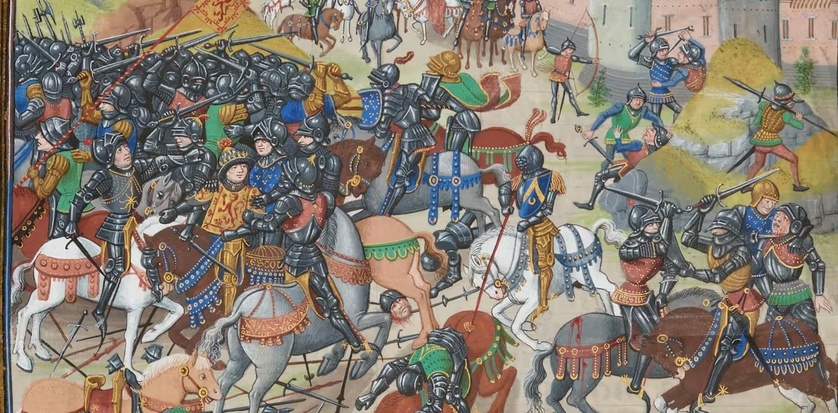
During the Second War of Scottish Independence and the Hundred Years’ War, King David II of Scotland invaded northern England (as required by the Auld Alliance while Edward III was campaigning in France). An English force under Ralph Neville, Lord Neville, defeated a larger Scottish army near Durham. David II was captured; he spent the next eleven years as a prisoner in the Tower of London (and elsewhere). The battle checked Scottish power in the north for years.

The little-known 14th century battle that has shaped English, Scottish and French relations

1448 – Second Battle of Kosovo (17–20 October)
John Hunyadi led a mainly Hungarian-led Crusader force against Sultan Murad II’s Ottoman army on the Kosovo field. After several days of fighting (including the use of wagon forts and firearms), the Ottomans prevailed. Wallachian troops defected late in the battle. The defeat ended the last major Christian attempt to reverse Ottoman gains in the Balkans and left Constantinople more isolated ahead of its fall in 1453.

Battle of Kosovo (1448) - Wikipedia

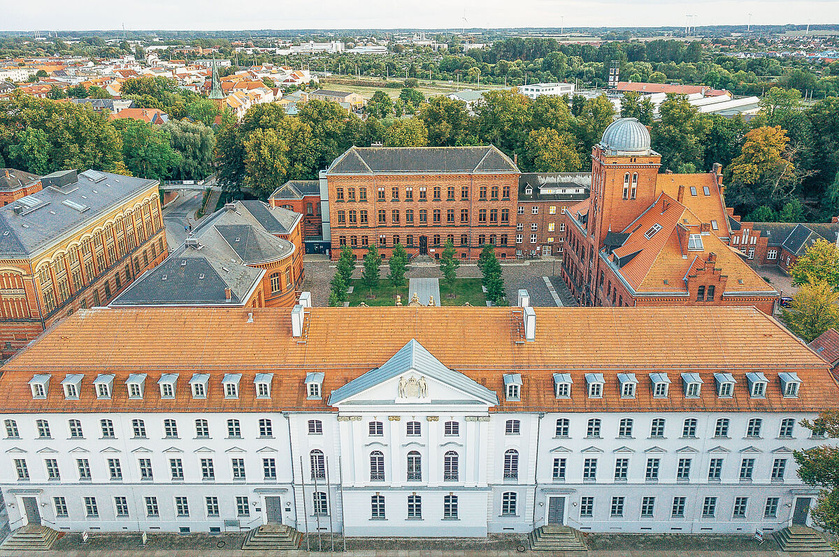
1456 – University of Greifswald founded (17 October)
Founded in the Hanseatic town of Greifswald (in what is now Mecklenburg-Vorpommern, Germany) with papal and imperial approval, largely through the efforts of mayor Heinrich Rubenow (its first rector) and Duke Wartislaw IX of Pomerania. It is one of the oldest universities in northern Europe and, during the period when the region belonged to Swedish Pomerania (1648–1815), was for a time the oldest university under Swedish rule. It began with the traditional faculties of theology, philosophy, medicine, and law.

Sights - University of Greifswald

1558 – Poczta Polska (Polish postal service) established (18 October)
King Sigismund II Augustus granted an Italian, Prospero Provana, the right to operate a permanent postal link from Kraków to Venice via Vienna. This is treated as the founding of the Polish postal service (later reorganized under the Thurn und Taxis system). 18 October remains the official Polish Post holiday.

1604 – Kepler’s Supernova (observations beginning 17 October)
A bright new star (a Type Ia supernova, SN 1604) appeared in the constellation Ophiuchus in early October. Johannes Kepler began systematic naked-eye observations on 17 October and tracked it for over a year. It reached magnitude about −2.5 (brighter than Jupiter) and was briefly visible in daylight. His 1606 account (De Stella Nova) made it “Kepler’s Supernova,” the last supernova in the Milky Way clearly observed with the naked eye. The remnant is still studied today.

Chandra :: Photo Album :: Kepler's Supernova Remnant :: September 11, 2012

1610 – Coronation of Louis XIII (17 October)
The nine-year-old Louis XIII (son of the assassinated Henry IV) was crowned and consecrated at Reims Cathedral. His mother, Marie de’ Medici, served as regent. The ceremony formalized his reign; actual power remained with the regency and later with ministers such as Cardinal Richelieu.

1660 – Execution of regicides (including several on 17 October)
After the Restoration of Charles II, a special court tried surviving men who had signed the death warrant of Charles I or otherwise participated in his trial and execution. Ten were sentenced to be hanged, drawn, and quartered. On 17 October, four—Thomas Scot, Gregory Clement, Adrian Scrope, and John Jones—were executed at Charing Cross. Others were put to death on nearby days in mid-October. Samuel Pepys and John Evelyn recorded the events.

1662 – Sale of Dunkirk (17/27 October)
Charles II, short of money and wary of the cost and diplomatic risks of holding the continental port (captured from Spain in 1658), sold Dunkirk and Fort-Mardyck to Louis XIV of France for five million livres (roughly £40,000 in some contemporary reckoning). The transaction was unpopular in England. The date is given as 17 October Old Style / 27 October New Style.

1771 – Premiere of Ascanio in Alba (17 October)
The 15-year-old Wolfgang Amadeus Mozart’s festa teatrale (pastoral opera/serenade) to a libretto by Giuseppe Parini was first performed at the Teatro Regio Ducale in Milan. It was commissioned by Empress Maria Theresa for the wedding of her son Archduke Ferdinand to Maria Beatrice d’Este. The work celebrates the mythical founding of Alba Longa.

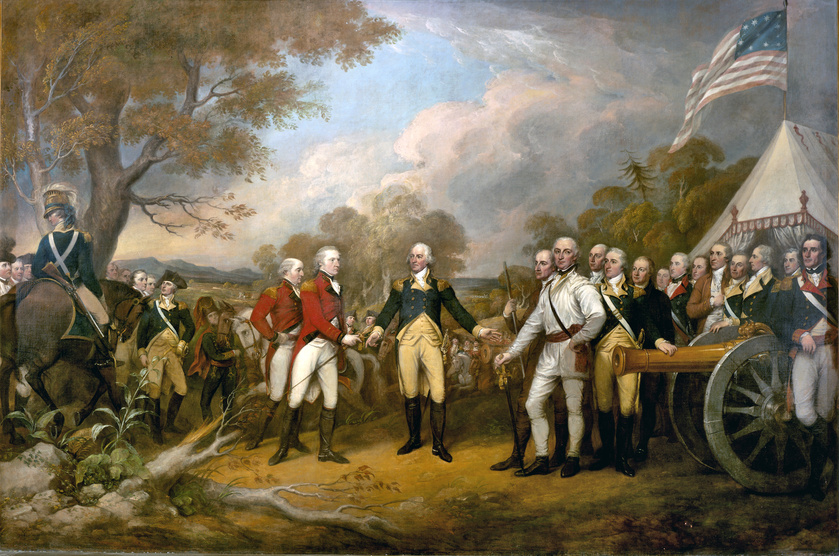
1777 – Surrender at Saratoga (convention signed 16 October; formal surrender 17 October)
After the Battles of Saratoga, British General John Burgoyne opened negotiations with American General Horatio Gates. The Articles of Convention were signed on 16 October; Burgoyne’s army marched out and laid down its arms on the 17th. The surrender of roughly 6,000 men was a major turning point that encouraged French recognition of and alliance with the United States.

Surrender of General Burgoyne - Wikipedia

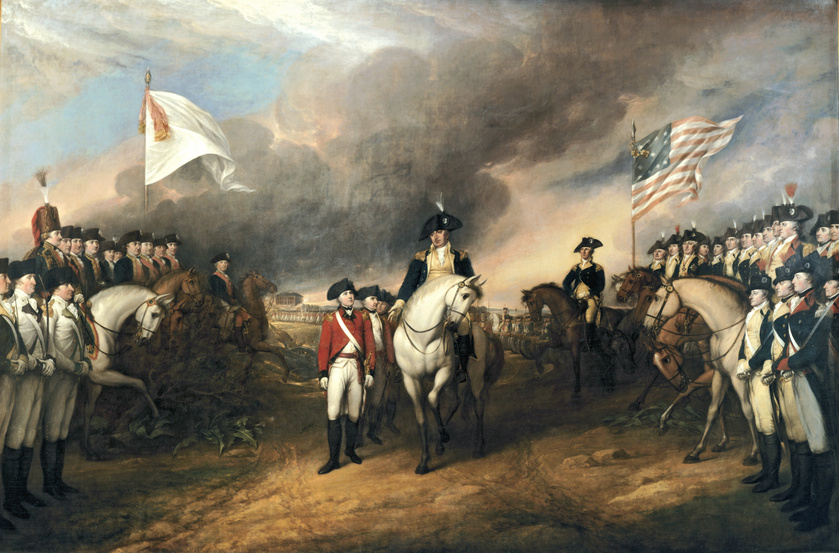
1781 – Siege of Yorktown / Cornwallis’s surrender (negotiations from ~17 October; formal surrender 19 October)
A combined Franco-American force under Washington and Rochambeau, supported by the French fleet under de Grasse, trapped British General Charles Cornwallis’s army on the Yorktown peninsula. A British drummer and officer appeared under a white flag on 17 October to open negotiations. After terms were settled, Cornwallis’s army of about 8,000 men formally surrendered on 19 October (Cornwallis himself did not attend the ceremony). The victory effectively ended major fighting in the American Revolutionary War.

Surrender of Lord Cornwallis - Wikipedia

These episodes range from natural disaster and medieval warfare to the founding of lasting institutions, scientific observation, monarchical ceremony, political retribution, and the decisive campaigns of the American Revolution.


Read full Article
October 15, 2026
post photo preview
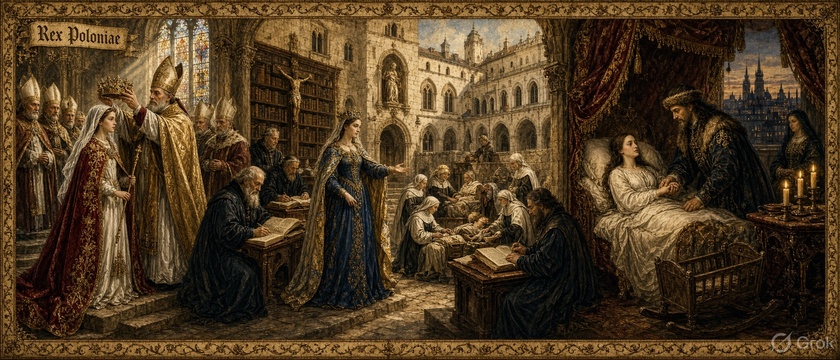
Jadwiga crowned King of Poland
October 16th

Jadwiga crowned King of Poland

Jadwiga (Hedwig/Hedvig; born between October 1373 and February 1374 in Buda, died 17 July 1399 in Kraków) was the youngest of the three daughters of Louis I the Great (King of Hungary 1342–1382 and King of Poland 1370–1382) and Elizabeth of Bosnia. Louis had no sons. Through his mother, Elizabeth of Poland (daughter of Władysław I Łokietek), he had a Piast claim to Poland and succeeded his childless maternal uncle Casimir III the Great in 1370 under earlier agreements.

In the Privilege of Koszyce (Košice) of 1374, Louis secured noble recognition of his daughters’ succession rights in exchange for significant privileges (reduced taxes, military obligations limited largely to defending the kingdom). He initially designated his eldest daughter Catherine for Poland and Jadwiga for Hungary. Catherine died in 1378. Mary (engaged to Sigismund of Luxembourg) was then intended for Poland, with Jadwiga for Hungary. Jadwiga was provisionally betrothed in 1375/1378 (ceremony at Hainburg) to William of Habsburg (Duke of Austria); she spent time in Vienna. The match was never fully consummated.

Louis died on the night of 10/11 September 1382. Within days the Hungarian elites crowned the elder daughter Mary as king of Hungary under her mother Elizabeth’s influence, ending the personal union. Polish nobles (especially the powerful lords of Lesser Poland) refused to accept Mary and Sigismund or continued absentee rule from Hungary. They insisted on a resident daughter of Louis. After roughly two years of negotiations, civil unrest (including in Greater Poland), and pressure (including threats of electing someone else), Elizabeth of Bosnia sent the approximately 10-year-old Jadwiga to Poland. She arrived in Kraków around 12–13 October 1384.

Rival candidates had included Siemowit IV of Masovia (a Piast) and Sigismund. Archbishop Bodzanta of Gniezno had at times leaned toward Siemowit.

The Coronation (16 October 1384)

On Sunday, 16 October 1384, in Wawel Cathedral, Kraków, Archbishop Bodzanta of Gniezno crowned Jadwiga. Contemporary and near-contemporary sources (including Jan Długosz) and the traditional scholarly consensus describe her as crowned rex (“king”) rather than regina (“queen”)—in regem Poloniae coronata. This emphasized that she was a sovereign monarch in her own right, not a consort. Polish custom and law treated the ruler as “king”; there was no established form for a queen regnant, and the masculine title helped preserve the crown’s full authority and prevent any future husband from automatically taking the title without noble consent.

A large gathering of clergy, nobles, and burghers welcomed her. No formal regent was appointed; the lords of Lesser Poland (in contact with Elizabeth) effectively guided government while she was a minor. Her main early advisers included Archbishop Bodzanta, Bishop Jan Radlica of Kraków, Bishop Dobrogost of Poznań, and figures such as Duke Władysław of Opole. Her formal style included “Hedvigis Dei gratia rex/regina Poloniae...” along with titles over specific Polish lands.

Significant Figures and Immediate Aftermath

  • Elizabeth of Bosnia: Mother and key negotiator; later involved in Hungarian politics and was murdered in 1387 amid civil strife.
  • Mary of Hungary and Sigismund of Luxembourg: Elder sister and her fiancé/husband; the Polish rejection of them ended the Angevin dual monarchy.
  • William of Habsburg: Childhood betrothed. In 1385 he came to Kraków hoping to consummate and validate the match. Polish nobles expelled him. Jadwiga publicly renounced the childhood betrothal (sources vary on her personal feelings and any attempts to join him). The Church accepted it as unconsummated.
  • Jogaila (Jogaila/Jagiello), Grand Duke of Lithuania: The preferred political match. On 14 August 1385 at Krewo (Kreva), he issued the Act of Krewo promising: baptism of himself, his family, and subjects into Roman Catholicism; marriage to Jadwiga; compensation (traditionally cited around 200,000 florins) to William; recovery of certain Polish lands; and association of Lithuania and its Ruthenian territories with the Polish Crown.
  • He was baptized in Kraków on 15 February 1386 as Władysław, married Jadwiga on 18 February 1386 in Wawel Cathedral, and crowned King of Poland jure uxoris by Bodzanta on 4 March 1386. They ruled jointly while she lived; she remained a leading figure.
  • Other notables: Lesser Poland magnates who drove the policy; later Vytautas the Great (Jogaila’s cousin) in Lithuania; Teutonic Knights as a major external threat that the union helped counter.

Results and Longer-Term Consequences

The marriage and Act of Krewo created a personal union between Poland and Lithuania that lasted, in evolving forms, until the Union of Lublin (1569) and the Polish-Lithuanian Commonwealth. It Christianized the last major pagan realm in Europe (the Lithuanian core), shifted the regional balance of power (especially against the Teutonic Order), and integrated large Orthodox Ruthenian territories. Poland gained a powerful partner and ended the short Angevin personal union with Hungary.

Jadwiga and Jogaila had one child, a daughter Elizabeth Bonifacia (born 22 June 1399). The infant died after about three weeks (c. 13 July); Jadwiga died of postpartum complications on 17 July 1399, aged about 25. They were buried together in Wawel Cathedral. With no surviving heir, she was Poland’s last hereditary ruler; subsequent kings (starting with her husband and the Jagiellonian dynasty) were elective.

While she lived she was an active co-ruler and patron of religion, charity, and learning. She supported the restoration and expansion of the University of Kraków (later the Jagiellonian University), founded or aided hospitals, churches, and a Lithuanian college in Prague, and promoted the Christianization and cultural ties of the united lands. Her early death left succession and governance more fully in Jogaila’s hands (he later married Anna of Cilli as she advised).

She was venerated soon after death, beatified in 1979, and canonized by Pope John Paul II on 8 June 1997 (feast day 17 July or 28 February in some calendars). She remains a major figure in Polish history as the child sovereign whose coronation and marriage launched the Polish-Lithuanian union and the Jagiellonian era.

Primary narrative sources include Jan Długosz’s 15th-century Annales; documentary evidence includes the Privilege of Koszyce, the Act of Krewo, and cathedral calendars. Some details (exact feelings about William, precise legal force of “attachment” of Lithuania, minor date variants) remain debated among historians.

= October 16th

456 – Ricimer defeats Emperor Avitus at Piacenza

Flavius Ricimer (a Germanic general of Suebic/Visigothic descent serving as magister militum) and the comes domesticorum Majorian rebelled against the short-reigning Western Roman Emperor Eparchius Avitus (r. 455–456). After killing Avitus’s magister militum Remistus near Ravenna in September, they faced Avitus’s remaining forces near Placentia (modern Piacenza) in northern Italy. Contemporary and near-contemporary sources place the battle on 17 or 18 October (some later accounts say the 16th). Avitus was defeated, his army shattered, and his commander Messianus killed. Ricimer spared Avitus’s life but forced him to abdicate and become Bishop of Piacenza. Avitus died soon afterward (accounts vary between starvation, execution, or natural causes while fleeing). Ricimer emerged as the dominant power in the West, effectively the “maker of emperors” for the next 16 years, installing a series of short-lived puppet rulers while the Western Empire continued to fragment.

690 – Wu Zetian ascends the throne

Wu Zhao (Wu Zetian), already the de facto ruler of Tang China for decades (first as empress consort to Gaozong, then as empress dowager controlling her sons), formally took the throne. On 16 October 690 she proclaimed the Zhou dynasty (named after the ancient Zhou, from which she claimed descent), changed the imperial surname, and ruled as huangdi (emperor) under titles such as “Sacred and Divine Emperor.” She is the only woman in Chinese imperial history to rule in her own name and right. Her formal enthronement or related ceremonies are sometimes dated a few days later (around 19 October), but 16 October is the conventional date for the proclamation of the dynasty and her accession. She ruled until a palace coup forced her abdication in 705.

955 – Battle on the Raxa (Recknitz)

King Otto I of Germany (later Holy Roman Emperor) defeated a coalition of Slavic tribes, primarily the Obotrites under Nako and his brother Stoigniew (Stoinef/Stoignew), near the Raxa river (most often identified with the Recknitz in present-day Mecklenburg-Vorpommern). The battle followed Otto’s decisive victory over the Magyars at the Lechfeld in August. Otto’s forces (drawn from across the German kingdom, with Bohemian allies) used a feint and secretly built bridges to cross the river, routing the Slavs. Stoigniew was killed (his head displayed the next day), and roughly 700 captives were executed. The victory consolidated Otto’s control of the Billung March and was a high point of his reign.

1384 – Jadwiga crowned King of Poland

Jadwiga (Hedwig) of Anjou, roughly 10–11 years old and the youngest daughter of Louis I of Hungary and Poland, was crowned rex (“king”) rather than regina (“queen”) in Wawel Cathedral, Kraków. The masculine title underscored that she was a sovereign in her own right, not a consort; Polish law had no formal provision for a queen regnant. She reigned until her death in 1399. Her later marriage to the pagan Grand Duke Jogaila of Lithuania (who converted and became Władysław II Jagiełło) created the Polish-Lithuanian union that shaped East-Central European history for centuries. She was later canonized.

1590 – Carlo Gesualdo murders his wife and her lover

Carlo Gesualdo, Prince of Venosa and Count of Conza (and later a renowned composer of chromatic madrigals), caught his wife Donna Maria d’Avalos in bed with her lover Fabrizio Carafa, Duke of Andria, at the Palazzo San Severo in Naples. Accompanied by armed retainers, he murdered both (accounts describe multiple stab wounds, gunshots, and extreme violence; Maria’s throat was cut). The killing was treated as an “honour” crime under contemporary Neapolitan aristocratic norms; Gesualdo faced little legal consequence and retreated to his estates. The episode became inseparable from his later reputation as a tormented, innovative composer.

1780 – Royalton and Tunbridge raids

British Lieutenant Richard Houghton, with about 300 Mohawk (and some Abenaki) warriors from Kahnawake, raided settlements along Vermont’s White River Valley. On 16 October they attacked and burned Royalton, Sharon, and Tunbridge, killing a few settlers, taking roughly 26 prisoners (later marched to Canada), and destroying homes and livestock. Local Vermont militia pursued them but broke off after threats to the captives. It was the last major British-led Indigenous raid in New England during the Revolutionary War.

1793 – Execution of Marie Antoinette and the Battle of Wattignies

  • Marie Antoinette: The former queen of France (widow of Louis XVI, executed in January) was tried by the Revolutionary Tribunal on charges including treason and conspiracy with foreign powers. Found guilty in the early hours of 16 October, she was guillotined that afternoon at the Place de la Révolution (now Place de la Concorde) in Paris, at the height of the Reign of Terror. She was about 37–38 years old.
  • Battle of Wattignies: Fought 15–16 October near Maubeuge during the War of the First Coalition. French forces under Jean-Baptiste Jourdan (with Lazare Carnot of the Committee of Public Safety present) defeated a Coalition (mainly Austrian) covering force under Prince Josias of Saxe-Coburg and Count Clerfayt. The victory raised the siege of Maubeuge and temporarily checked the Allied advance into northern France. The same day as Marie Antoinette’s execution.

These events illustrate the date’s range: late Roman power struggles, the sole female Chinese emperor, medieval German-Slavic warfare, a female sovereign in Poland, a notorious Renaissance murder, the closing phase of the American Revolution in New England, and the radical peak of the French Revolution. Sources sometimes differ by a day or two on the precise dating of the 456 battle and the exact ceremonial timing of Wu Zetian’s proclamation, but 16 October is the conventional anniversary for all of them.

Read full Article
See More
Available on mobile and TV devices
google store google store app store app store
google store google store app tv store app tv store amazon store amazon store roku store roku store
Powered by Locals