



What It Took — Musk’s Flying Car and Pappus’s Intermediate Theorem
Musk flying car was a stunt. Nobody else could have done it.
The flying car demonstration was a stunt. That is the easy dismissal. What it actually required was a convergence no one else possessed. To put a sporty Tesla through that sequence—controlled flight, rocket propulsion, and the inverted suspension that held the vehicle against gravity—demanded three things at once: a driver-pilot system more precise and reliable than any human hand, a vehicle architecture able to feed the rockets their fuel without compromising the car’s structure, and a suction or attachment method strong enough to keep the chassis inverted and stable. Others had sketched flying cars for decades. None combined the electric powertrain, the rocket hardware, the control software, and the manufacturing capability in one place. Only Musk’s stack made the stunt possible. The spectacle was real because the prerequisites were unique.
The parallel with Pappus of Alexandria is exact in kind, if not in century. Pappus (fl. c. 320) is routinely called a collector: the man who gathered results that would otherwise have vanished, the author of the Synagoge that preserved pieces of Euclid, Apollonius, and others. That description is true and incomplete. His intermediate theorem—the result on the centroid of a plane figure rotated about an external axis that yields the volume of the solid of revolution—was not archival. It was a step that later mathematicians recognized as lying on the road to the integral calculus. The method isolates the geometric center and multiplies distance traveled by area; it converts a solid into a product of simpler quantities. In the hands of later writers it became a practical tool for volumes that pure exhaustion methods handled clumsily. Pappus did not invent the calculus, but he supplied a precise intermediate result that made one of its central applications thinkable.
He could do so only because he occupied a position no one else filled. Alexandria still held the texts, the teaching tradition, and the habit of commentary on Ptolemy’s Almagest and Euclid’s Elements. Pappus worked inside that continuity. He observed and calculated with the solar eclipse of 18 October 320, wrote the commentary that fixed his date, and dedicated major books of the Collection to his son Hermodorus. He was not inventing a new science from nothing; he was operating at the exact point where classical geometry could still be extended before the tradition thinned. Theon of Alexandria, a generation later, used his material; Hypatia, Theon’s daughter, continued the same line of commentary and instruction until the school was broken in 415. Pappus sat at the last moment when the full apparatus—texts, students, and technical command—still existed in one place. Without that, the intermediate theorem would not have been formulated, or would not have survived to be read by Commandino, Descartes, Fermat, and Newton.
Dismissing Pappus as “mere collector” is the same error as calling the flying-car sequence “just a stunt.” Both judgments ignore the prerequisites. In one case the prerequisites were an electric car that could also serve as a rocket stage, control systems beyond human reaction time, and attachment physics sufficient for inverted flight. In the other they were mastery of the classical corpus, the geometric insight to isolate the centroid theorem, and a school still capable of transmitting the result. Later workers stood on what each man made available. The demonstration and the theorem both look, in retrospect, like displays. They were possible only because the required combination existed in one hands.
=
Pappus of Alexandria and the solar eclipse of 18 October 320
Pappus of Alexandria (Ancient Greek: Πάππος ὁ Ἀλεξανδρεύς; c. 290 – c. 350 AD) was one of the last major Greek mathematicians of late antiquity. Almost nothing is known of his personal life beyond what appears in his own writings. He lived and taught in Alexandria, Egypt, and is described as heading a school there. He had a son named Hermodorus, to whom he dedicated Books VII and VIII of his main work. He also refers to contemporaries such as the philosopher Hierius and a woman mathematician named Pandrosion (to whom he addressed a critique of her students’ training).
The eclipse and the Almagest commentary
In his commentary on Ptolemy’s Almagest (the Syntaxis Mathematica, later known in Arabic as al-Majisti and in Latin as the Almagest—“the Great Astronomer”), Pappus calculates “the place and time of conjunction which gave rise to the eclipse in Tybi in 1068 after Nabonassar.” This corresponds to 17 Tybi in the Egyptian calendar and 18 October 320 in the Julian calendar. He writes as if the eclipse were a recent event he had observed, which has allowed historians (notably Adolphe Rome in his 1931 edition of the commentaries) to fix his activity around that year. Alternative earlier or later eclipses have been considered, but the 320 event best fits the language and context.
The eclipse of 18 October 320 was a total solar eclipse (Saros 87). Greatest eclipse occurred near 2.9°N, 33.7°E (roughly in the region of modern Sudan/Ethiopia border area), with a magnitude of about 1.026 and a central duration of roughly 2 minutes 36 seconds. From Alexandria (approximately 31°N, 30°E) it would have been visible as a substantial partial eclipse. Pappus uses the event in the context of discussing the conditions for solar eclipses, following Ptolemy closely on conjunctions, oppositions, and prediction methods. Only portions of his commentary survive (mainly material related to Books V and VI of the Almagest); he refers in other works to a commentary on Book I as well. Later, Theon of Alexandria’s more extensive commentary on the Almagest shows that he had Pappus’s work before him.
Background and the Alexandrian tradition
By the early 4th century, original creative mathematics in the classical Greek tradition had largely stagnated. Pappus stands out as a compiler, commentator, and teacher who preserved and organized earlier material rather than claiming major new discoveries. He worked in the scholarly environment of Alexandria, still a center of mathematical and astronomical study even after the political and religious upheavals of the late Roman Empire.
Significant individuals in this lineage include:
- Claudius Ptolemy (c. 100–170 AD): Author of the Almagest, the foundational astronomical treatise on which both Pappus and later Alexandrians commented.
- Theon of Alexandria (c. 335–405 AD): Active later in the 4th century. He produced a major commentary on the Almagest (drawing on Pappus), edited Euclid’s Elements (his version became the standard), and wrote on the Handy Tables. He is the last attested member of the Alexandrian Museum/Mouseion tradition in the scholarly sense.
- Hypatia (c. 350/370–415 AD): Daughter of Theon and the most famous woman mathematician and philosopher of antiquity. She continued the family program of commenting on classical mathematical and astronomical works (including material related to the Almagest, Apollonius’s Conics, and Diophantus’s Arithmetic), taught mathematics and Neoplatonic philosophy, and constructed instruments such as astrolabes. She was murdered by a Christian mob in Alexandria in 415. While there is no direct personal connection to Pappus (she lived a generation or more later), she and her father represent the continuation of the same Alexandrian mathematical-astronomical school that Pappus exemplified earlier in the century. Modern scholars sometimes group Pappus, Theon, and Hypatia as successive figures engaged with Ptolemy’s technical and philosophical approach to mathematics and astronomy.
Major works and results
Pappus’s principal surviving work is the Synagoge (Collection), a mathematical encyclopedia in at least eight books (possibly originally more), written around 340. Book I is lost; the rest survive in varying states of completeness. It covers geometry, astronomy, mechanics, and recreational mathematics, drawing heavily on the “Treasury of Analysis” (works by Euclid, Apollonius of Perga, Eratosthenes, and Aristaeus). It is often the sole source for otherwise lost Greek geometry. Notable contributions associated with him include Pappus’s hexagon theorem (in projective geometry) and material that later influenced the study of loci and algebraic approaches to geometric problems.
Other works include:
- The partial commentary on the Almagest already mentioned.
- A commentary on Book X of Euclid’s Elements (surviving in Arabic).
- Lost or fragmentary works such as a Description of the Inhabited World, Rivers of Libya, and Interpretation of Dreams.
The Collection was translated into Latin by Federico Commandino in 1588 and became highly influential in the Renaissance and early modern period. Mathematicians including René Descartes, Pierre de Fermat, and Isaac Newton drew on it for problems involving loci, projective ideas, and geometric analysis. In this sense, Pappus’s role was less that of an original innovator and more that of a crucial transmitter who kept classical Greek mathematics accessible when many original texts had disappeared.
In short, the 18 October 320 eclipse provides one of the few fixed chronological anchors for Pappus’s career, while his commentaries and especially the Collection form a vital bridge between classical Greek mathematics and its later recovery in the Islamic world and early modern Europe. The Alexandrian line of teachers and commentators that includes him, Theon, and Hypatia represents the final major flowering of that tradition before the disruptions of the 5th century.
= Oct 18th
These events are all associated with 18 October in historical calendars and “On This Day” compilations (with minor source variation on a couple of the earlier ones). Here is a concise overview of each.
320 – Pappus of Alexandria and the eclipse
Pappus of Alexandria (fl. c. 320), one of the last major Greek mathematicians of late antiquity, refers in his commentary on Ptolemy’s Almagest (the “Great Astronomer”) to a solar eclipse he observed. Modern calculations identify this as the eclipse of 18 October 320. Pappus is best known for his Synagoge (Collection), a major source for otherwise lost Greek geometry, and for work that influenced later mathematicians including Newton.
614 – Edict of Paris (Edictum Chlotacharii)
Merovingian King Chlothar II promulgated the Edict of Paris on 18 October 614, shortly after the Council of Paris and his unification of the Frankish kingdoms. It addressed justice, church rights, and aristocratic privileges (sometimes likened to a “Frankish Magna Carta”). It also barred Jews from civil and military offices in which they would exercise authority over Christians. It is the last major Merovingian capitulary.
629 – Dagobert I becomes King of the Franks
On 18 October 629, Chlothar II died. His son Dagobert I, already king of Austrasia since 623, succeeded as king of Neustria and Burgundy and effectively of the Franks. He is widely regarded as the last Merovingian ruler to exercise substantial personal power; later kings became more dependent on the mayors of the palace.
1009 – Destruction of the Church of the Holy Sepulchre
Fatimid Caliph al-Hakim bi-Amr Allah ordered the destruction of the Church of the Holy Sepulchre in Jerusalem (and other non-Muslim religious sites). Contemporary accounts describe the structure being razed to the foundations, including attempts to obliterate the rock-cut tomb. The exact day is given variously as around 28–29 September or 17–18 October 1009; many “On This Day” lists use 18 October. The church was later rebuilt (completed c. 1048).
1016 – Battle of Assandun (Ashingdon)
On 18 October 1016, Danish forces under Cnut (Canute) defeated the English under Edmund Ironside at Assandun in Essex. It was the decisive engagement of Cnut’s campaign. A subsequent treaty divided England, but Edmund’s death soon after left Cnut as undisputed king.
1081 – Battle of Dyrrhachium (Dyrrachium / Durrës)
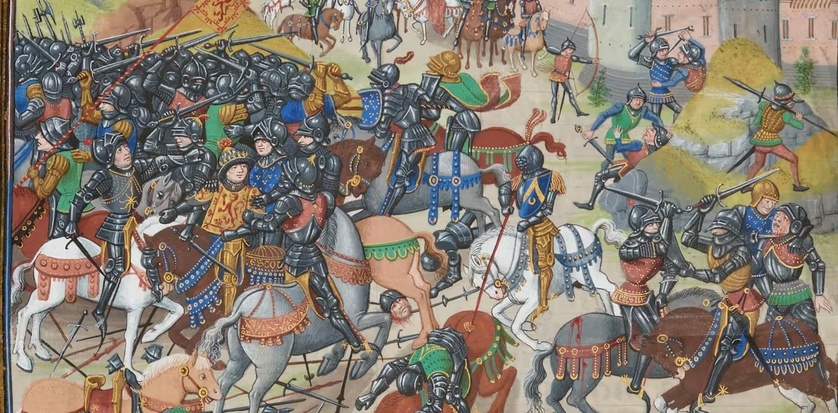
On 18 October 1081, Norman forces under Robert Guiscard defeated a Byzantine army led by Emperor Alexios I Komnenos outside Dyrrhachium (modern Durrës, Albania). It was a major early setback for Alexios in the First Norman invasion of the Balkans.
1356 – Basel earthquake
On the evening of 18 October 1356 (St Luke’s Day), a major earthquake (estimated magnitude roughly 6.0–7.1) struck Basel and the surrounding region. It is the most significant historic seismic event north of the Alps. Fires followed the main shock; the city was heavily damaged and casualties numbered in the hundreds to around a thousand.
1540 – Destruction of Mabila
On 18 October 1540, Hernando de Soto’s expedition reached the fortified Mississippian town of Mabila (present-day Alabama), where Chief Tuskaloosa had prepared an ambush. After a hard fight the Spanish destroyed the town. Both sides suffered heavy losses; the Spanish also lost much of their supplies and loot in the fires. It was one of the bloodiest encounters of the expedition.
1561 – Fourth Battle of Kawanakajima
On 18 October 1561, the largest of the series of battles between Takeda Shingen and Uesugi Kenshin was fought on the Kawanakajima plain in Shinano (modern Nagano Prefecture). The engagement was bloody and ended in a draw, characteristic of the prolonged rivalry between the two daimyō.
1565 – Battle of Fukuda Bay
On 18 October 1565, ships of the Matsura clan attacked Portuguese trading vessels (a carrack and a galleon) at Fukuda Bay near modern Nagasaki. The Portuguese repelled the attack. It is the first recorded naval battle between Japanese forces and a Western power.
1599 – Battle of Șelimbăr (Sellenberk)
On 18 October 1599, Wallachian forces under Michael the Brave defeated the army of Andrew Báthory near Șelimbăr (near Sibiu in Transylvania). The victory opened the way for Michael’s brief unification of Wallachia, Transylvania, and (later) Moldavia.
1648 – Boston shoemakers’ organization
On 18 October 1648 the Massachusetts General Court granted a limited charter to the Company of Shoemakers (and also to coopers) in Boston—the earliest formal recognition of craft associations in the English colonies. These were restricted quality-control bodies rather than modern trade unions; price-fixing and many guild privileges were forbidden.
1748 – Treaty of Aix-la-Chapelle
Signed on 18 October 1748 (primarily by Britain, France, and the Dutch Republic, with other powers acceding later), the treaty ended the War of the Austrian Succession. It largely restored the pre-war status quo, confirmed Maria Theresa’s rights in the Habsburg lands, and left Prussia in possession of Silesia.
1775 – Phillis Wheatley freed
African-American poet Phillis Wheatley was manumitted by the Wheatley family of Boston. Contemporary “On This Day” lists place this on 18 October 1775. She had returned from England in 1773 after the publication of her Poems on Various Subjects, Religious and Moral; the precise instrument of freedom is dated variously in late 1773–1775 in modern scholarship.
1775 – Burning of Falmouth
On 18 October 1775 a Royal Navy squadron under Captain Henry Mowat bombarded and burned much of Falmouth (present-day Portland, Maine) in retaliation for Patriot coastal actions. Hundreds of buildings were destroyed and roughly a thousand people left homeless. The incident heightened colonial outrage and is sometimes cited among the grievances leading toward independence.
1779 – Siege of Savannah lifted
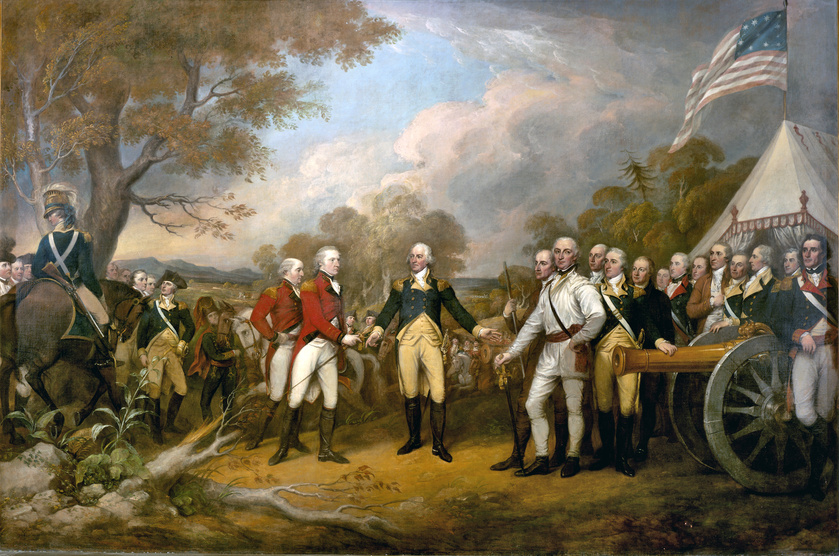
After a failed Franco-American assault on 9 October, General Benjamin Lincoln raised the siege of British-held Savannah on 18 October 1779. The British retained the city until the end of the war; the failure strained the Franco-American alliance in the southern theatre.
1797 – Treaty of Campo Formio
Signed on 17 October 1797 (some secondary lists place the anniversary on the 18th) between France (represented by Napoleon Bonaparte) and Austria. It ended the War of the First Coalition on the continent, recognized French gains, partitioned the Venetian Republic, and left Britain as France’s sole major opponent. A subsequent Congress of Rastatt was intended to settle remaining German questions but failed to prevent renewed war.
These entries form a typical cross-section of 18 October anniversaries spanning mathematics, Merovingian legislation and succession, Islamic–Christian conflict in Jerusalem, medieval battles, a major Central European earthquake, colonial and early American events, and European peace treaties.