



Young people lead the way.
But rules define their success.
Youth can be thrust onto the world stage by accident of timing, boldness, or simple opportunity. What follows is rarely a pure contest of talent or right. Circumstances, established rules, and the capacity of those already in power to respond quickly usually decide the outcome.
In 1996 a 21-year-old business student named John Leonard watched a Pepsi commercial that listed a Harrier jump jet as redeemable for 7 million Pepsi Points. He did the arithmetic, raised roughly $700,000, and tendered the required points plus cash. Pepsi refused, calling the jet a joke. Leonard sued. The litigation ran for years and cost Pepsi substantial sums. In the end the courts held that a humorous advertisement is not a binding offer; no reasonable person would treat it as one. Leonard never received the aircraft. Pepsi revised the commercial, raised the points total dramatically, and added an explicit disclaimer. Advertising practice tightened. The case became a standard teaching example that catalogues and broadcast jokes do not create enforceable contracts. Leonard’s initiative forced a rapid clarification of the rules. The rules, once clarified, defined the result.
Nine centuries earlier, a teenage Edgar Ætheling found himself the last male of the House of Wessex after Harold Godwinson fell at Hastings. Leading figures in London, including the Archbishop of York and the earls Edwin and Morcar, put him forward as king. He possessed a clear dynastic claim. He was never crowned. The earls failed to raise effective forces, and within weeks Edgar and the other English leaders submitted to William at Berkhamsted. The rules of succession had not been abolished in theory; they had been overridden in practice by military victory and the absence of unified English resistance. William moved quickly, entered London, and was crowned on Christmas Day. Edgar lived on for decades, involved in later campaigns and Scottish affairs, but the brief recognition of autumn 1066 produced no reign. His claim tested the new order; the new order held.
Both men enjoyed relatively long lives. Leonard is still alive. Edgar survived into the 1120s. In each case the young man identified an opening that existing power had left unclosed—an advertisement without a disclaimer, a vacant throne without a ready military response. In each case those in power reacted with speed once the opening was exploited. The courts restated the ordinary meaning of an offer. William secured the crown and the submission of the remaining English leadership. Initiative created pressure; the governing rules, once applied or enforced, determined the outcome.
Youth supplies energy, calculation, and the willingness to test a boundary that older hands may have left unexamined. Rules—legal, military, political—supply the structure within which that energy either produces lasting change or is absorbed. Leonard’s suit did not rewrite the law of contract, but it made the existing doctrine impossible to ignore in advertising. Edgar’s proclamation did not restore the House of Wessex, but it forced William to complete the conquest without delay. In both episodes the young men led the way into an open question. The rules, and the speed with which those who controlled them answered, defined the success that followed.
=
Edgar Ætheling’s brief recognition as king in late 1066 was a short-lived, unconsummated claim by the last male of the House of Wessex after Harold Godwinson’s death at Hastings. He was proclaimed (or put forward) in London but never crowned or anointed, and he submitted to William the Conqueror within weeks.
Background
Edgar Ætheling (also Æþeling; sometimes called Edgar II by those who count his recognition) was born around 1051–1052, probably in Hungary. He was the son of Edward the Exile (son of Edmund Ironside) and Agatha. After the death of his father, Edgar and his sisters Margaret and Christina were brought to England by Edward the Confessor around 1057. As the last male descendant of the House of Wessex in the direct male line, he held the title ætheling (“prince eligible for the throne”).
When Edward the Confessor died in January 1066, the Witan chose Harold Godwinson as king rather than the teenage Edgar, who lacked military experience and political support. After Harold was killed at the Battle of Hastings on 14 October 1066, the remaining English leadership in London faced Norman advance and the collapse of organized resistance.
Contemporary accounts (notably the Anglo-Saxon Chronicle, especially the Worcester/D manuscript) record that Edgar was chosen or put forward as king by the Archbishop of York (Ealdred), the leading citizens of London, and with the promised support of Earls Edwin of Mercia and Morcar of Northumbria. This was an attempt to preserve an English dynasty rather than submit immediately to William of Normandy. There is no evidence he was formally elected by a full Witan or crowned.
Significant Characters
- Edgar Ætheling: The teenage claimant (roughly 14–15 years old). He had a strong hereditary claim but no personal military following or experience. He never exercised real power.
- Harold Godwinson: Previous king, killed at Hastings on 14 October 1066. His death created the vacancy.
- William the Conqueror (William of Normandy): Invader and eventual king. He moved methodically toward London after Hastings.
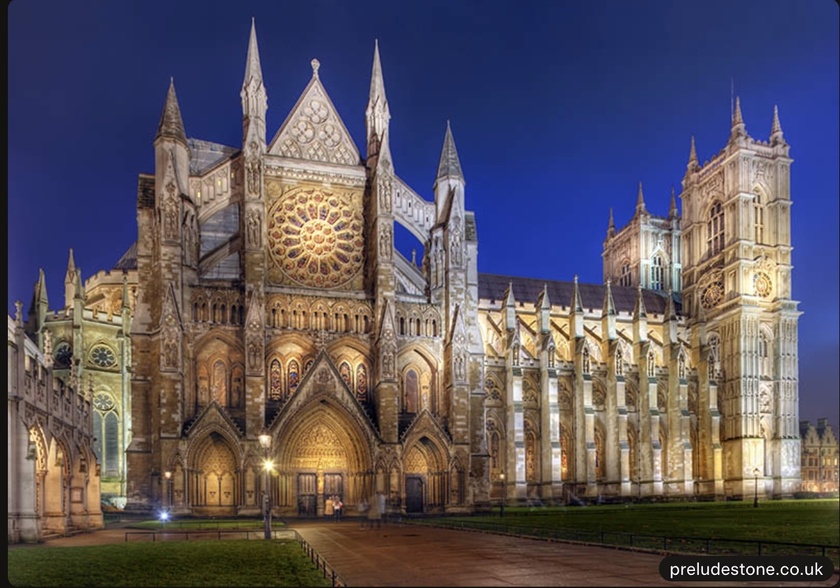
- Archbishop Ealdred of York: One of the key figures who supported Edgar’s recognition in London. (He later crowned William at Westminster.)
- Earls Edwin of Mercia and Morcar of Northumbria: Powerful northern earls who initially backed Edgar but failed to deliver meaningful military support. They later submitted to William and retained their earldoms for a time.
- Other English leaders: Citizens of London and various nobles who briefly rallied around the Wessex heir before the practical reality of Norman strength became clear.
Results and Aftermath
Support for Edgar proved hollow. Edwin and Morcar did not raise effective armies, and no coherent English resistance formed around him. In early December 1066, Edgar, along with Archbishop Ealdred, Edwin, Morcar, and other leaders, submitted to William at Berkhamsted (Berkhamstead). William then entered London and was crowned on Christmas Day 1066.
Edgar was never crowned or anointed. His “reign” (if counted at all) lasted only from roughly mid-October to early December 1066—about six to eight weeks of nominal recognition without effective rule. Most historians treat him as a claimant rather than a king.
After submission:
- He lived under Norman rule for periods and spent time in Scotland with his sister Margaret (who married King Malcolm III Canmore).
- He was involved in various revolts and campaigns against the Normans in the late 1060s and 1070s, then reconciled at times with William I and William II.
- He later took part in Norman ventures (including a force sent toward Apulia) and intervened in Scottish succession politics.
- He lived into the 1120s (death in or after 1125) and is sometimes described as the last male of the old English royal line.
The episode marked the effective end of the House of Wessex as a ruling dynasty in England. William’s coronation and subsequent consolidation of power completed the Norman Conquest. Edgar’s claim is noted in sources as a brief alternative that collapsed for lack of military force and unified leadership.
=
John Leonard was not legally correct. In Leonard v. Pepsico, Inc. (88 F. Supp. 2d 116 (S.D.N.Y. 1999), aff’d 210 F.3d 88 (2d Cir. 2000)), the courts ruled that Pepsi’s humorous commercial did not constitute a binding offer. Leonard lost. The case is a famous teaching example in U.S. contract law on when advertisements create offers versus mere puffery or invitations to negotiate. It reinforced existing principles rather than rewriting advertising law, though it did push advertisers toward clearer disclaimers in extreme or joke promotions.
Background
In the mid-1990s, during the cola wars, Pepsi launched “Pepsi Stuff,” a loyalty program. Customers collected “Pepsi Points” from product packaging and redeemed them for branded merchandise (T-shirts, jackets, sunglasses, etc.). Extra points could be bought for 10 cents each, provided the customer submitted at least 15 points from actual products.
A 1995–96 television commercial (part of the campaign’s advertising, including Super Bowl exposure) showed a teenager collecting various Pepsi items and then flying to school in a McDonnell Douglas AV-8B Harrier II jump jet. On-screen text listed the jet at 7,000,000 Pepsi Points. The tone was deliberately over-the-top and humorous: the jet lands near a school bicycle rack, blasts a principal’s clothes off with its exhaust, and the teen remarks that it “sure beats the bus.”
John D.R. Leonard, a 21-year-old business student at Shoreline Community College near Seattle, saw the ad. He calculated that buying the remaining points at 10 cents each would cost about $700,000 for a jet then valued in the tens of millions of dollars (court and contemporary figures often cited roughly $23–37 million). He and associates treated it as an arbitrage opportunity. In late March 1996 he submitted an official order form requesting “1 Harrier Jet,” 15 original Pepsi Points, and a check for $700,008.50 (including shipping). Pepsi returned the check, described the jet as “fanciful” and “humorous,” and sent some free coupons.
Leonard (and investors) sued for breach of contract, fraud, and related claims, seeking the jet or specific performance. Pepsi filed a preemptive declaratory-judgment action in New York federal court seeking a ruling that it had no obligation and attempting to recover fees.
Significant Characters
- John Leonard: The plaintiff. A young, adventurous business student and mountaineer. He later became a National Park Service ranger (including mountaineering work at Denali) and has lived in the Washington, D.C., and Alaska areas with his family. He has said he genuinely believed the claim could succeed at the time and has reflected on it as opportunistic in hindsight. He appears in the 2022 Netflix documentary Pepsi, Where’s My Jet?.
- Todd Hoffman: Leonard’s older friend, mentor, and primary financial backer. They met on a mountaineering trip. Hoffman (a businessman with various ventures) helped raise or supply the ~$700,000 and was involved in the strategy and publicity. They remained friends afterward.
- Judge Kimba M. Wood: U.S. District Judge for the Southern District of New York who wrote the detailed 1999 opinion granting Pepsi summary judgment.
- Michael Avenatti: Then a law student, he briefly assisted Leonard’s side (especially with media/PR strategy). He later became nationally known representing Stormy Daniels and was subsequently convicted on multiple federal charges (extortion, fraud, etc.).
- PepsiCo and its team: The defendant corporation. Spokespeople emphasized that “tens of millions” of viewers understood the ad as a joke. The ad agency and Pepsi revised the commercial after the claim (raising the jet to 700 million points and adding “Just Kidding”).
Court Rulings and Outcomes
Judge Wood granted Pepsi summary judgment on August 5, 1999. Core holdings (later affirmed by the Second Circuit in a short per curiam opinion):
- Advertisements are generally invitations to negotiate or solicit offers, not binding offers themselves (citing the Restatement (Second) of Contracts). The commercial lacked the definite, clear, and explicit terms needed to create an offer that left nothing open for negotiation.
- Under the objective reasonable-person standard, no one would take the jet depiction seriously. The scene was an exaggerated adolescent fantasy: an improbable young pilot, a military attack jet landing in a school zone, the absurdity of the numbers, and the overall humorous tone. It was classic puffery.
- The governing catalog (the actual redemption document) did not list the jet.
- Any alleged high-value contract failed the Statute of Frauds for lack of a sufficient signed writing from Pepsi.
- Pepsi never cashed the check, undercutting fraud claims.
Leonard recovered nothing. Pepsi had offered a settlement (reported in some accounts around $750,000) which was declined. The commercial was revised with the higher points total and an explicit “Just Kidding” disclaimer. The case became a standard example in American law-school contract courses on offer, acceptance, the reasonable-person test, and the limits of advertising.
Practical effects: Advertisers grew more cautious about extreme or joke prizes without clear disclaimers. The case is still widely discussed in marketing and legal contexts as a cautionary tale. It did not overhaul U.S. advertising law (existing doctrines on puffery and ads-as-invitations already covered the ground), but it made the principles vivid and memorable.
Later cultural notes include the 2022 Netflix documentary featuring Leonard and Hoffman, and a 2026 Frontier Airlines Super Bowl ad in which Leonard “redeems” the 7 million points for free Frontier miles for life.
In short, Pepsi successfully defended the claim that the jet was a joke, not a contractual offer. Leonard’s attempt was creative and well-funded, but the courts applied standard contract principles and found no enforceable deal. The litigation was costly and drawn-out for Pepsi, but the company prevailed on the law.
= October 15th
1066 – Edgar the Ætheling proclaimed King of England
After Harold Godwinson’s death at the Battle of Hastings on 14 October 1066, leading English figures in London (including the Archbishop of York and Earls Edwin and Morcar) put forward the teenage Edgar Ætheling as king. Edgar was the last male of the House of Wessex, a grandson of Edmund Ironside, and had a strong dynastic claim as ætheling (“prince eligible for the throne”). He was never crowned or anointed. Support proved hollow: the earls failed to raise effective forces, and in early December Edgar and other English leaders submitted to William the Conqueror at Berkhamsted. Edgar later lived in Scotland, took part in various campaigns, and died in or after 1125. He is sometimes styled Edgar II by those who treat his short recognition as a reign (roughly mid-October to early December 1066).
1211 – Battle of the Rhyndacus
On 15 October 1211, Latin Emperor Henry of Flanders defeated Nicaean Emperor Theodore I Laskaris near the Rhyndacus River in northwestern Anatolia. Henry had only a few hundred Frankish knights (sources often cite around 260). Laskaris had a larger force but had recently suffered losses against the Seljuks; he tried to ambush the Latins, but Henry’s assault broke the Nicaean lines in a day-long fight. The victory let Henry advance deep into Nicaean territory (as far as Nymphaion). It contributed to the later Treaty of Nymphaeum (1214), which fixed a frontier and recognised Nicaea as a sovereign power.
1529 – End of the Siege of Vienna
Suleiman the Magnificent’s Ottoman army besieged Vienna from late September 1529. The defenders, heavily outnumbered, held the walls with arquebuses and pikes and repulsed repeated assaults. A major final Ottoman attack on or about 14 October failed. Facing early winter, supply problems, and disease, Suleiman ordered the withdrawal on 15 October. The retreat was costly; snow and mud made movement difficult and Austrian horsemen harried stragglers. The failure checked nearly a century of Ottoman expansion into Central Europe and is widely seen as a strategic turning point, even though the Ottomans retained control of much of Hungary.
1582 – Implementation of the Gregorian calendar
Pope Gregory XIII’s reform (bull Inter gravissimas) took effect in Catholic Europe. In Italy, Spain, Portugal, and Poland, Thursday 4 October 1582 was followed immediately by Friday 15 October 1582—ten days were dropped to bring the calendar back into alignment with the seasons and the intended date of Easter. The reform also adjusted the leap-year rule. Protestant and Orthodox countries delayed adoption for decades or longer (Britain and its colonies switched in 1752). The skip produced temporary calendar confusion across borders.
1764 – Edward Gibbon’s inspiration in Rome
On 15 October 1764, Edward Gibbon sat among the ruins of the Capitol in Rome while barefooted friars sang vespers in the Temple of Jupiter (the site later occupied by the church of Santa Maria in Aracoeli). The contrast between the pagan imperial past and the Christian present struck him powerfully; he later wrote that the idea of writing the history of the decline and fall of the city first came to him then. This became The History of the Decline and Fall of the Roman Empire (published 1776–1789), one of the great works of Enlightenment historiography.
1783 – First human ascent in a hot-air balloon
On 15 October 1783, at the Réveillon workshop in the Faubourg Saint-Antoine, Paris, the Montgolfier brothers conducted the first manned tethered flights. Étienne Montgolfier rose first, followed the same day by Jean-François Pilâtre de Rozier (to the length of the tether, roughly 25 metres). These tests followed earlier unmanned and animal flights and preceded the first free manned flight (Pilâtre de Rozier and the Marquis d’Arlandes) on 21 November 1783. The Montgolfiers’ hot-air balloons opened the age of human flight.
1793 – Trial of Marie Antoinette
Marie Antoinette’s trial before the Revolutionary Tribunal in Paris began on 14 October 1793 and lasted roughly two days. The charges included high treason, conspiracy with foreign powers, and depletion of the treasury. The proceedings were rapid and the outcome effectively predetermined by the political climate of the early Terror. She was convicted and sentenced to death; she was guillotined on 16 October 1793 in the Place de la Révolution (now Place de la Concorde).
These episodes range from dynastic succession and medieval warfare to the limits of Ottoman power, calendar reform, the birth of modern historiography, the dawn of aviation, and the violence of the French Revolution.