



VoiceDDB
Politics • Culture • News
oDDBall analysis of conservative politics with a libertarian economic conservative twist. Small government, big freedom.
Interested? Want to learn more about the community?
Live Streamed on October 23, 2021 7:01 PM ET
October 23, 2021
Live cast 10 am 24th Oct Melbourne

My name is David Daniel Ball and I am Voice DDB dot locals dot com a voice of freedom supporting freedom around the world for all peoples. I write on historical and current affairs. I look for the conservative voice where mainstream media eschews it. Around the world media espouses liberalism orthodoxy and proclaims a history of liberalism that never happened. Liberalism of today is based on repeated lies that have been accepted from the past.

Consider these recent truths

A year ago today, FB dumped their God Emperor Trump account, claiming the 5 yo account had been merely created to overcome FB censorship. The obvious reality being that the partisan outfit of FB was (illegally?) campaigning for Democrats. FB protects pedophiles and terrorists, but attacks conservatives? Did Zuckerberg learn from what happened to Epstein? It is dangerous to have a posture when the wind changes.

The incompetence of Joe Biden mirrors the past. Gough Whitlam

I dispute that Gough was the worst ever Australian PM at the time of his death. His abysmal foreign policy is still felt around the world, his debt crisis is still unbalancing the Australian economy and his bad 'reform' of ALP has kept it in the nineteenth century and prevented good people from achieving anything, but Rudd, then Gillard were worse. It is worth listing Gough's achievements. Gough distrusted the US who were allies, and embraced Communist China before Nixon went to negotiate freedoms. He ended conscription and pulled Australia out of Vietnam sooner than high command had planned. That meant when US pulled out in '75 that lots of weapons were left behind that were dangerous for the communist world to have. The threat that Communist Vietnam would sell those weapons to Timor's communist rebels meant Gough gave the nod to Indonesia to invade to prevent those communist Timor rebels from buying and using those weapons. The Timor invasion by Indonesia resulted in the apparently planned deaths of Australian journalists at Balibo by Indonesian special forces, some of whom vie for Indonesian politics today. Gough distrusted Southern Vietnamese who had been supported by the US and spurned their pleas for help. Because of his disastrous spending, Gough needed lots of money and sought to embroil Australia with Iraq. Gough had become leader of a disunited infighting ALP and he took steps to reform it by aligning it more closely with unions and producing the model that cannot be reformed now without disentangling from corrupt union leadership. In Australia, Gough spent unsustainably, and made reckless promises. He promised free education and made it harder for better students to study at university, ultimately making it more expensive for everyone. He promised fair access to health care but delivered a faulty product that needed to be reformed. He politicised the High Court and Governor General's position and created the family court which even today is highly criticised for poor decision making. Gough cared little for those he was responsible for and complained when his holidays were interrupted for disasters, like Cyclone Tracy and the Melbourne floods. Gough was the champion of empty symbolism and claimed to do things he hadn't done, like ending the White Australia Policy. He divided Australia on racial lines by creating a body which has failed to address needs of Aboriginals adequately. Gough felt betrayed by the governor general he appointed and he ruined the man who served faithfully, John Kerr. Gough was patron to notable ALP failures in Keating, Gillard and Clare. He was a charming man who could joke about his megalomania in a pasta advert. On the plus side, he got rid of McMahon as Liberal chief. But he ruined that with Fraser.

We are not lost, despite what we are told by elite. Consider Margaret Thatcher

It was the radical Socialist writer and patriot, the late George Orwell, who described the left-wing intellectuals as men motivated primarily by hatred of their own country.

Socialists who spoke most about brotherhood of man [sic] could not bear their fellow-Englishmen, he complained. Their well-orchestrated sneers from their strong point in the educational system and media have weakened the national will to transmit to future generations those values, standards and aspirations which made England admired the world over.
It is just because their message is that self-discipline is out of date and that the poor cannot be expected to help themselves, that they want the state to do more. That is why they believe in state ownership and control of economic life, education, health.

Their wish to end parental choice in where and how their children shall be educated, in spending their money on better education and health for their children instead of on a new car, leisure, pleasure, is all part of the attempt to diminish self and self-discipline and real freedoms in favour of the state, ruled by socialists, the new class, as one disillusioned communist leader called them.


1974 Oct 18 Fr, Joseph (Sir Keith).
Speech at Edgbaston (“our human stock is threatened”).

via The Grocer's Daughter

We are not lost, despite what we are told by elite. Consider Trafalgar

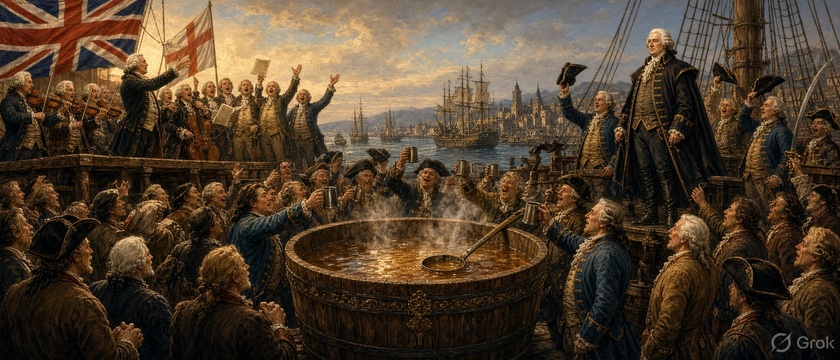
To set the scene in 1805, England's greatest sailor was facing near certain death and humiliation off the Spanish coast on the morning. He had a desperate plan that had never worked successfully before. He was faced with a larger force of a combined fleet of Spanish and French fleet, under the command of Pierre-Charles Villeneuve for France and Federico Gravina for Spain. Nelson had 27 ships of the line to 33. Classically, the ships would form in two lines and shoot at each other with broadsides until the fleet with less guns and ships was annihilated or surrendered. But Napoleon had had plans to march his grand army into Britain and if Napoleon's fleet was free, her massive army would easily take London. So Nelson was faced with a battle he couldn't surrender or lose, but couldn't win through conventional means. So Nelson's plan addressed it by promoting the superiority of British ships on one to one combat. Britain had had better ships thanks to her guns having triggers instead of lit wicks for firing, better trained men and copper lined bottoms to her ships. Nelson's desperate plan was to sail his ships directly towards the enemy line in two lines at a right angle. He knew the front two British ships would have to weather about thirty minutes of direct fire from the enemy line, but when the closed, he would be able to fight ship to ship with the centre and vanguard of enemy ships, while the enemy ships in the top of the line would have to turn around and re engage. Nelson had two lines because when the tactic had been applied in the past, the concentrated fire on one ship had sunk it and every subsequent one. Two lines, he calculated, would diminish the damage taken to either. Nelson led one line, Cuthbert Collingwood another. Nelson wanted to tell his men he was confiding in them, and he knew they would do their best. But the flag signal man told him he could transmit the message more easily if he substituted a few words. The message, approved by Nelson, is recorded in history and stirring. Instead of Admiral Nelson, the word used was England. Instead of confides, the word used was expects. The message had become "England expects every man will do their duty."

In battle, the forecastle of Victory (Nelson's ship) had lines of marines. Some six were picked off before he gave instructions that they could break ranks and seek cover. Nelson's secretary was adjacent to him when a cannonball knocked his head in, splashing his brains onto Nelson, who remarked he didn't like the taste and regretted that the secretary would not experience victory. Nelson stood with full assignations on his uniform, including a stunning diamond. Smoke obscured the scene as Victory closed with Redoubtable and a sniper shot from Redoubtable's Mast Nest mortally wounded Nelson. Captain Hardy was on hand, and carried Nelson below deck to see the surgeon. Hardy could have been charged with negligence for deserting his post later. Nelson took some five hours to die. Near death, Hardy returned to report success. Nelson thanked God he had done his duty. Britain had not lost a ship, but captured 21 ships and destroyed another. Napoleon would march his Grand Armee on Moscow later. As a result, England would rule the waves around the world until WW2.

We are being lied to. But not by everyone. Our nations and their justice machinery are not broken, but damaged. Things are bad, but they are supposed to be bad, rather than merely breaking. We can't give up. We must reject the liars, and remove them from public office, and prosecute them lawfully. Things can get better, but we must persevere or risk losing hope. We must not fight the Devil by playing the Devil's game. Rather we must resist the Devil by being free. There is no law against doing what is right. Their utter depravity kills us. They target us and they seek to restrain us. But while the greatest among us a hundred years ago has died, their legacy has not. That which we are, we are. Lockdowns were ineffective in dealing with COVID. Effective medication has been denied whole populations. Herd immunity will prevail. Fraud deleteriously affected recent elections around the world. But, Democracy will prevail. Our oppressors will pass. For us to win, we must assert our freedoms. For us to lose, we must willingly surrender our freedoms forever. Our children will have to pay back our debt. We must sacrifice now so that they can. That means telling truth to power. That means pointing up when when some get confused and lose their way. Stand by the one who sacrificed their pension and freedoms to speak out. Prosecute the ones forgiven by a debauched and self interested administration. Vote for those who help you exercise your freedom. Don't wait for free speech. Exercise free speech.

https://conservativeweasel.blogspot.com/2021/10/sun-24th-october-2021-current-affairs.html

00:13:30
Interested? Want to learn more about the community?
What else you may like…
Videos
Posts
Articles
November 27, 2022
Jingle Bell Rock

Jingle bell, jingle bell, jingle bell rock
Jingle bells swing and jingle bells ring
Snowin' and blowin' up bushels of fun
Now the jingle hop has begun

Jingle bell, jingle bell, jingle bell rock
Jingle bells chime in jingle bell time
Dancin' and prancin' in Jingle Bell Square
In the frosty air

What a bright time, it's the right time
To rock the night away
Jingle bell time is a swell time
To go glidin' in a one-horse sleigh

Giddy-up jingle horse, pick up your feet
Jingle around the clock
Mix and a-mingle in the jinglin' feet
That's the jingle bell rock

Jingle bell, jingle bell, jingle bell rock
Jingle bell chime in jingle bell time
Dancin' and prancin' in Jingle Bell Square
In the frosty air

What a bright time, it's the right time
To rock the night away
Jingle bell time is a swell time
To go glidin' in a one-horse sleigh

Giddy-up jingle horse, pick up your feet
Jingle around the clock
Mix and a-mingle in the jinglin' feet
That's the jingle bell
That's the jingle...

00:02:04
September 01, 2021
Intro to Locals for the Conservative Voice

David Daniel Ball calls himself the Conservative Voice.

I'm a teacher with three decades experience teaching math to high school kids.I also work with first graders and kids in between first grade and high school. I know the legends of why Hypatia's dad is remembered through his contribution to Math theory. And I know the legend of why followers of Godel had thought he had disproved God's existence.

I'm not a preacher, but I am a Christian who has written over 28 books all of which include some reference to my faith. Twelve blog books on world history and current affairs, detailing world events , births and marriages on each day of the year, organised by month. Twelve books on the background to and history of Bible Quotes. One Bible quote per day for a year. An intro to a science fiction series I'm planning, post apocalyptic cyber punk. An autobiography with short story collections.

I'm known in Australia for my failure as a whistleblower over the negligence death of a school boy. ...

00:01:50
Iran’s Peace Charade: Demanding Truce to Keep Killing

As President Trump weighs the latest overtures from Tehran for some form of “peace,” the Islamic Republic’s mullahs are once again playing a familiar game. They wave the olive branch in public while sharpening their daggers in private. The regime’s history over 47 years reveals a consistent pattern: tactical pauses and diplomatic smiles are simply opportunities to regroup, rearm, and continue their campaign of domestic slaughter, international terrorism, and ideological warfare. Any genuine peace must confront this reality head-on rather than wish it away.

The theocratic takeover in 1979 did not emerge from a vacuum. In the years leading up to the overthrow of the Shah, Ayatollah Ruhollah Khomeini and his network operated covertly from exile in Iraq and later France. Khomeini’s fiery sermons were smuggled into Iran via cassette tapes, building a revolutionary infrastructure among disaffected clerics, bazaar merchants, students, and leftist groups. This underground agitation combined religious fervor with ...

post photo preview
What peace with Iran entails

Since the 1979 Iranian Revolution that established the Islamic Republic, the regime has been accused by the US, Israel, European governments, human rights organizations, and courts of systematic domestic atrocities, state-sponsored terrorism, proxy warfare, and a covert nuclear weapons program. These actions span nearly five decades and form the core legacy any US administration—including one seeking “peace”—must weigh. Iran denies most allegations, framing them as resistance to imperialism or self-defense, but intelligence assessments, UN/IAEA reports, court rulings, and survivor accounts paint a consistent pattern of aggression, repression, and bad-faith diplomacy.

Domestic Atrocities and Repression

The regime has prioritized internal control through mass executions, torture, and brutal crackdowns on dissent, often targeting political opponents, women, minorities, and protesters.

Early post-revolution purges (1980s): After the revolution, thousands of officials from the Shah’s era, leftists, and others were ...

post photo preview
How historical bigotry led to the creation of the Protocols of the Elders of Zion

In the dying years of Tsarist Russia, around 1900–1903, antisemitism was not a fringe prejudice but a state-tolerated weapon and popular scapegoat. Jews were confined to the Pale of Settlement, barred from most rural land ownership by the 1882 May Laws, and subjected to university quotas, expulsions, and periodic mob violence. The 1881–1884 pogroms—sparked by the assassination of Alexander II and fueled by rumors of Jewish conspiracy—killed dozens and destroyed thousands of homes. A second wave loomed, including the deadly Kishinev pogrom of April 1903. Across Europe, older religious hatreds had morphed into modern racial antisemitism: Jews were portrayed not merely as Christ-killers or usurers but as an unassimilable “alien race” undermining nations through finance, revolution, and the press. Pseudoscientific theories and nationalist fervor provided intellectual cover. This toxic soil produced one of history’s most enduring forgeries.

The Protocols of the Elders of Zion emerged ...

post photo preview
post photo preview
The Echo of Haymarket: How Emma Goldman and Leon Czolgosz Still Haunt Us
How many die by journalism?

In the autumn of 1901, a self-taught anarchist named Leon Czolgosz stepped up to President William McKinley at the Pan-American Exposition in Buffalo and fired two shots into his abdomen. Czolgosz and Emma Goldman had never met. They exchanged no letters, plotted no conspiracy, and shared no secret handshake. Yet Goldman’s fiery lectures and essays—denouncing government, capitalism, and the “rulers” who oppressed the working class—had lodged in Czolgosz’s mind like shrapnel. He attended one of her speeches, absorbed the anarchist literature she championed, and later told interrogators her words helped convince him that McKinley represented the enemy. Goldman, arrested and questioned, refused to condemn the assassin outright. In her essay “The Tragedy at Buffalo,” she framed Czolgosz not as a monster but as a symptom of a diseased society.

Neither knew the other personally. Together, they helped inspire a generation of radicals to view political violence as a legitimate reply to perceived injustice. The Haymarket Affair of 1886—where four anarchists were hanged after a bombing at a labor rally Goldman saw as a travesty—had already radicalized her. Her rhetoric, in turn, radicalized others. The result was not revolution but a backlash: stricter immigration laws, expanded secret policing, and a cultural association of anarchism with terror. Rational policy—gradual reform, democratic debate, constitutional order—became the enemy.

More than a century later, the pattern repeats with eerie familiarity. We now live amid “batteries” of activist journalists and commentators whose output functions less as reporting than as ideological accelerant. Their work does not directly order violence, any more than Goldman ordered Czolgosz to shoot. Yet it cultivates a worldview in which political opponents are not mistaken but evil, not wrong but existential threats deserving whatever fate befalls them. The targets today are different, but the mechanism is the same: lone actors, marinated in grievance, acting on a steady drip of dehumanizing rhetoric.

Consider the recent record. Donald Trump survived two assassination attempts during his 2024 campaign—one in Butler, Pennsylvania, where a bullet grazed his ear, and another weeks later in Florida. Then, in September 2025, Charlie Kirk—co-founder of Turning Point USA and a vocal conservative voice—was assassinated by sniper fire while speaking at Utah Valley University. The shooter, 22-year-old Tyler James Robinson, left a note expressing his intent and acted alone. Investigators found no grand conspiracy, just a young man steeped in the online and media ecosystem that had framed Kirk and Trump as avatars of oppression, fascism, or whatever the current vocabulary of outrage demands. These were not spontaneous crimes. They were downstream of a cultural current that treats conservative figures as legitimate prey.

Who today plays Emma Goldman’s role? The archetype is no longer a single immigrant orator lecturing in union halls. It is the networked activist-journalist—podcasters, Substackers, cable commentators, and social-media influencers—who command far larger audiences than Goldman ever dreamed of. They do not call themselves anarchists; many cloak their work in the language of “social justice,” “accountability,” or “resistance.” Their output is slicker, algorithmic, and endlessly amplified. The common thread is the same moral certainty Goldman possessed: the system is irredeemable, the other side is irredeemable, and therefore any blow struck against it is, if not praiseworthy, at least understandable. They do not pull triggers, but they load the cultural magazine.

The more uncomfortable question is whether intelligence agencies—particularly the CIA and its successors—have had any hand in “mass producing” such figures. History offers precedents for skepticism. Operation Mockingbird, the Cold War-era program in which the Agency cultivated relationships with journalists to shape domestic and foreign narratives, is well-documented. The CIA has admitted to using media assets for propaganda and has never fully foresworn the practice. Yet the leap from “the Agency influenced reporters to push anti-communist stories in the 1950s” to “the Agency today engineers radical left-wing journalists to provoke right-wing assassinations” is enormous and unsupported by credible evidence. Conspiracy theorists have long filled that gap with claims of MKUltra-style mind control or “deep state” social engineering, but those narratives collapse under scrutiny. Lone actors have always existed; the internet simply supercharges their grievances faster than any government handler could. Blaming a shadowy cabal risks the same intellectual shortcut the anarchists once took: if the world is too complex and ugly to explain through ordinary human folly, malice, and ideology, then there must be a hidden director pulling strings.

Still, the lesson from Goldman and Czolgosz endures. Ideas have consequences. When journalism abandons the pursuit of truth for the manufacture of righteous fury, it does not merely “oppose rational policy”—it corrodes the very possibility of rational policy. It tells impressionable minds that debate is futile and violence is expressive. The proper response is not censorship or conspiracy-mongering. It is relentless insistence on evidence, proportion, and the distinction between disagreement and demonization. Until journalists—on every side—relearn that distinction, we should expect more Czolgoszes: isolated, radicalized, and convinced that the next shot will finally make the oppressors listen.

The tragedy is not that Goldman and Czolgosz never met. It is that their example still meets new disciples every day.

Read full Article
post photo preview
From Phoenician Shores to Remote Classrooms: How an Ancient Invention Is Closing the Literacy Gap Today

More than 3,000 years ago, a seafaring people on the eastern Mediterranean coast did something revolutionary. The Phoenicians—traders and innovators from what is now Lebanon—did not invent writing. But around 1200 BCE, they perfected a system that changed human history: the first true phonetic alphabet.

Unlike the cumbersome hieroglyphs of Egypt or the wedge-shaped cuneiform of Mesopotamia—systems with hundreds or thousands of symbols representing whole words or ideas—the Phoenician script used just 22 letters. Each stood for a single sound (a consonant, with vowels inferred by the reader). One symbol, one sound. It was simple, portable, and learnable by ordinary merchants, not just elite scribes. This phonetic breakthrough spread rapidly through trade routes, laying the foundation for the Greek alphabet (which added vowels), and eventually Latin, Arabic, and nearly every modern writing system we use today.

The Phoenicians gave us more than letters. They handed humanity the alphabetic principle—the idea that written symbols can directly represent spoken sounds. That principle is the bedrock of phonics: the explicit, systematic teaching of how letters and letter combinations map to the sounds of language.

Fast-forward to the 21st century, and that ancient insight is proving its worth in the places where it is needed most: remote and disadvantaged communities. In Australia’s Northern Territory, Western Australia, and Queensland, in rural New Zealand, and in isolated pockets of Chile and beyond, evidence-based phonics programs are transforming outcomes for Indigenous, low-income, and geographically isolated students who have long been left behind.

The data are clear and compelling. In South Australia, the rollout of mandatory phonics screening checks for Year 1 students delivered dramatic gains: non-metropolitan students improved by 22 percentage points, Aboriginal students saw similar leaps, and children from the most disadvantaged communities jumped 20 points in meeting benchmarks. In New Zealand, a program pairing systematic phonics with authentic children’s literature lifted Year 2 Māori students in poor areas to age-appropriate levels in word reading, accuracy, comprehension, and spelling—gains that traditional “whole-word” or context-guessing approaches had failed to deliver.

Randomised trials tell the same story. In a remote Chilean community, a 27-week reading and language intervention built on phonics and explicit instruction produced substantial improvements in pre-literacy skills, word reading, and vocabulary—gains that held for months afterward and partially explained better reading comprehension. In Australia, Direct Instruction literacy programs rolled out in very remote primary schools showed stronger progress in reading, writing, and spelling compared with control schools, particularly benefiting disadvantaged and minority students.

Why does this ancient method work so powerfully for today’s most vulnerable learners? Because many children in remote communities arrive at school with thinner oral language exposure, fewer books in the home, and greater linguistic diversity. Phonics does not assume background knowledge; it builds the decoding skill that lets every child crack the code independently. It turns reading from a guessing game into a reliable, empowering tool. Once children can sound out words accurately and automatically, they can focus on meaning, stories, and ideas—the very things that make reading joyful and life-changing.

Critics sometimes dismiss phonics as “drill and kill” or culturally insensitive. Yet the evidence shows the opposite: when delivered with care, in culturally responsive ways, and alongside rich read-alouds and knowledge-building, it is one of the most equitable educational interventions we have. It levels the playing field for students who cannot afford to fall further behind.

The Phoenicians democratised writing for traders and sailors who needed to record deals across cultures and languages. Today, explicit phonics is doing the same for remote classrooms: giving every child, regardless of postcode, postcode, or family income, the power to read the world for themselves.

We owe it to those ancient innovators—and to the children who will inherit their legacy—to keep this revolution alive. Policymakers, school leaders, and teacher educators must double down on the Science of Reading, ensure every teacher is trained in systematic phonics, and prioritise these proven approaches in the communities that need them most. Literacy is not a luxury. In the hands of disadvantaged students, it is the ultimate tool for opportunity.

Three millennia after the Phoenicians simplified the written word, their gift continues to unlock futures. The question is no longer whether phonics works. It is whether we have the will to deliver it where it matters most.

Read full Article
post photo preview
Drink History
I am, therefore I drink

The idea that agriculture emerged not primarily for bread or staples, but because hunter-gatherers stumbled upon fermentation and craved reliable booze is a provocative, well-supported hypothesis in archaeology and anthropology. It flips the usual narrative: alcohol wasn’t a happy accident of farming—it may have been the spark that made farming worthwhile. Different staple crops then produced signature drinks (grain beer, rice wine, grape wine), which in turn wove into rituals, social norms, and even psychological tendencies, subtly “colouring” the personalities and cultures of the peoples who built their worlds around them. Let’s unpack this step by step.

1. The Discovery of Drinking → The Birth of Agriculture

Hunter-gatherers didn’t need to settle down to eat more calories; early grains were labour-intensive and unreliable for daily bread. But fermentation turned surplus or wild grains/fruits into something far more valuable: a safe, storable, mind-altering social lubricant. Evidence shows intentional brewing predates full domestication.

  • In the Near East (Natufian culture, ~13,000 years ago), hunter-gatherers at Raqefet Cave were already malting and brewing barley and wheat into beer for ritual feasts—centuries before agriculture took hold. These weren’t accidental sips; they were deliberate, multi-stage processes. Beer likely fuelled communal raves and ancestor-honouring events that rewarded cooperation and sedentism. Demand for reliable grain supplies pushed people to plant, weed, and select better varieties.
  • Similar patterns appear elsewhere: alcohol as a “social technology” that made the risky shift to farming pay off through feasts that built alliances and status.

This “beer before bread” (or more broadly, “fermentation before farming”) idea has been debated since the 1950s but keeps gaining archaeological traction.

2. Three Crops, Three Drinks, Three Agricultural Worlds

Once farming locked in, the dominant crop dictated the dominant drink—and the drink fed back into culture.

  • Grain beer (barley/wheat): Fertile Crescent and later northern Europe. Easy to malt, scalable, and suited to temperate climates and large communal gatherings. Beer became the everyday social glue of Mesopotamia, Egypt, medieval Europe, and Germanic/ Celtic societies. Taverns and halls fostered boisterous, relatively egalitarian (or at least horizontally bonded) drinking. Think Viking mead-halls or British pubs: rowdy camaraderie, storytelling, and group bonding after hard physical labour. The crop itself required less intensive coordination than rice, so wheat/barley cultures often trended more individualistic.
  • Rice wine (huangjiu, sake, makgeolli, etc.): East and Southeast Asia, especially the Yangtze River region of China. Recent finds at Shangshan (~10,000 years ago) show rice was already being fermented into beer-like drinks using fungi (koji mould) almost as soon as wet-rice farming began. Rice wine production exploded with paddy agriculture. Unlike grape wine, it needs a two-step process (starch → sugar → alcohol), tying it intimately to the rhythms of rice cultivation. Rice farming demands massive coordination: shared irrigation canals, labour exchanges for transplanting/harvesting, and tight village interdependence. This forged highly collectivistic, “tight” cultures—strong in-group loyalty, harmony rituals, and hierarchical toasting. Rice wine became central to banquets, ancestor rites, and diplomacy: pouring for others first, never yourself. It’s ceremonial, often warmer and sweeter, drunk in rounds that reinforce social bonds rather than individual indulgence.
  • Grape wine: Caucasus (Georgia ~8,000 years ago) and Mediterranean spread. Grapes ferment naturally on the vine; viticulture is climate-specific (sunny hillsides) and perennial. Wine production required settled estates, storage in amphorae or barrels, and later elite trade networks. It became tied to philosophy (Greek symposia), religion (Dionysus, later Christian Eucharist), and refined sociability. Mediterranean cultures—French, Italian, Greek—developed a reputation for expressive passion, individualism within social grace, and wine-as-civilisation (art, poetry, measured intoxication with meals). Wine drinking is often slower, more contemplative or sensual than beer chugging or rice-wine toasting rounds.

3. How the Drinks “Coloured the Personalities of Peoples”

This is the most speculative—and fun—part. The crops shaped the societies (labour demands → social norms), and the drinks became both symbol and reinforcer of those norms. Cultural psychology offers one rigorous lens: the “rice theory” shows that historical rice-farming regions (southern China, much of East Asia) remain more interdependent, holistic-thinking, and tight-knit than wheat-farming areas—even controlling for modern factors. Rice wine’s ritual role amplifies this: group harmony over individual flair.

  • Beer cultures (northern/western Europe, ancient Near East): Practical, gregarious, sometimes rowdy. Beer’s accessibility and lower ritual formality suited mobile or frontier societies. Think German Gemütlichkeit, British pub banter, or American tailgates—direct, egalitarian bonding. Personalities stereotyped as hearty, straightforward, community-oriented but less rigidly hierarchical.
  • Rice-wine cultures (China, Japan, Korea, SE Asia): Emphasis on face, reciprocity, and collective flow. Drinking is rarely solitary; it’s about pouring for others, matching rounds, and lubricating hierarchy or group cohesion. This aligns with broader rice-farming psychology: loyalty to in-groups, sensitivity to social cues, and a preference for harmony over confrontation. The drink itself (often higher ABV, sometimes warmed) encourages sustained social immersion rather than quick intoxication.
  • Grape-wine cultures (Mediterranean and its cultural heirs): More individualistic within a cultured frame—romantic, artistic, philosophically inclined. Wine’s association with leisure, connoisseurship, and the “good life” fostered expressive individualism: debate, flirtation, poetry. French joie de vivre, Italian la dolce vita, Greek symposium wit. The crop’s prestige and trade value also supported elite refinement and export-oriented identities.

Of course, these are broad brushes—genes (e.g., East Asian alcohol flush reaction via ALDH2), religion, later colonialism, and industrialisation all layer on top. But the pattern holds: the agricultural base selected for certain social technologies, the signature drink ritualised them, and centuries of reinforcement etched them into cultural “personality.”

Final Thought

Agriculture didn’t just feed bodies—it fermented minds. Hunter-gatherers discovered drinking, domesticated the plants that made it reliable, and ended up with three great civilisational drinks that still echo in how we gather, toast, argue, and dream today. Rice wine binds tight collectives; beer fuels boisterous fellowship; grape wine sparks individual reflection amid shared pleasure. The concept isn’t deterministic, but it’s a delicious lens: we are, in part, what we ferment. Cheers to that ancient thirst.

Read full Article
See More
Available on mobile and TV devices
google store google store app store app store
google store google store app tv store app tv store amazon store amazon store roku store roku store
Powered by Locals