




When the challenge fails
Battle of Caishi (26–27 November 1161) and Vlad the Impaler’s third reign in Wallachia (November 1476) were both short, high-stakes turning points that checked larger powers and highlighted the limits of personal ambition amid shifting alliances.
Battle of Caishi (Jin–Song Wars)
Before. The Jin–Song Wars grew out of the early 12th-century collapse of the Khitan Liao dynasty. Jurchen forces under the Jin allied with the Song against the Liao, then turned on their partners. By 1127 the Jin had taken the Northern Song capital Kaifeng, captured the emperor, and driven the Song court south of the Yangtze to establish the Southern Song at Hangzhou under Emperor Gaozong. The 1142 Treaty of Shaoxing fixed the border roughly along the Huai River, leaving the Jin in control of northern China and the Song in the south. Relative peace held until Wanyan Liang (Prince of Hailing) seized the Jin throne in 1150 after a palace coup. He pursued aggressive sinicization, moved the capital toward the Chinese heartland, and openly aimed to reunify China under Jin rule. In 1158 he claimed the Song had broken the 1142 treaty, launched large-scale conscription (including Han troops), and began building a fleet. The draft was deeply unpopular and sparked revolts that diverted Jin resources. On the Song side, Gaozong hoped to avoid war and delayed major fortifications; only limited garrisons were prepared in 1161. Chen Kangbo (Song prime minister and naval commander) shaped overall strategy, while the civil official Yu Yunwen happened to be at the front distributing awards when the crisis arrived and took effective field command.
The battle. On 26–27 November 1161 at Caishi on the Yangtze (near modern Nanjing/Ma’anshan), Wanyan Liang’s forces tried to cross and open the road into the Song heartland. Song strength is given as roughly 18,000; traditional accounts claim Jin numbers as high as several hundred thousand (figures modern historians treat skeptically—Herbert Franke and others note that the larger totals likely refer to the entire front, and desertions, earlier losses, and poor ship quality sharply reduced the force that actually attempted the crossing). The Song used paddle-wheel warships (faster and more maneuverable than the Jin’s lighter, often hastily built vessels) hidden behind an island. On a signal they sortied and bombarded the attackers with traction trebuchets launching “thunderclap bombs”—soft-cased gunpowder explosives containing lime and sulfur that burst into noxious, blinding clouds. Jin ships suffered from shallow-water losses earlier in the campaign and from poor construction; many troops deserted once it became clear that steppe cavalry was useless on the river. The Song won a clear tactical victory, forcing Wanyan Liang to burn remaining ships and retreat.
After. The defeat was politically fatal for Wanyan Liang. He was assassinated by his own officers in camp in December 1161 amid a military coup that installed Emperor Shizong. The Jin withdrew from the southern offensive in 1162. A formal peace in 1165 reaffirmed the Huai River boundary and ended major hostilities for decades. Song morale and political stability rose; Gaozong abdicated the following year. Traditional Chinese historiography ranked Caishi alongside the 383 Battle of Fei River as a classic southern victory that preserved independence against northern invaders, emphasizing naval technology and gunpowder over raw numbers. Later Jin probes continued in other sectors but avoided another serious Yangtze crossing attempt.
Significant figures.
- Wanyan Liang — Jin emperor whose unification ambitions and sinicizing policies drove the war; defeated and assassinated.
- Yu Yunwen — Song civil official who organized and commanded the field army at Caishi.
- Chen Kangbo — Song prime minister and chief naval/strategic planner.
- Emperor Gaozong of Song — Southern Song ruler who preferred peace but survived the crisis.
- Emperor Shizong of Jin — Successor installed by the coup; reversed many of Liang’s policies and accepted the 1165 settlement.
Vlad the Impaler’s third reign (Wallachia, November 1476)
Before. Vlad III (Vlad Țepeș / Vlad Dracula), son of Vlad II Dracul, had already ruled Wallachia briefly in 1448 (with Ottoman backing) and from 1456 to 1462. His second reign is famous for mass impalements, brutal suppression of boyar opposition, and aggressive campaigns against the Ottomans. After the 1462 Ottoman invasion under Mehmed II (which installed his brother Radu), Vlad fled and was imprisoned by King Matthias Corvinus of Hungary on charges of secret dealings with the Ottomans. He spent roughly a dozen years in varying degrees of captivity. By the mid-1470s the strategic picture had shifted: Stephen III of Moldavia (Stephen the Great) had defeated the Ottomans at Vaslui in 1475 and requested Vlad’s release as a useful anti-Ottoman ally. Matthias released him (reportedly after a conversion to Catholicism), recognized him as the legitimate prince, and employed him in early 1476 raids into Ottoman-held territory in Bosnia, where Vlad again used terror tactics. That summer Mehmed II invaded Moldavia, defeated Stephen at Valea Albă (26 July), but then withdrew due to supply problems and disease. Vlad, Hungarian forces under Stephen V Báthory, and Stephen the Great then turned south into Wallachia against the Ottoman-backed Basarab Laiotă (Basarab the Elder), who had displaced Radu.
The campaign and brief reign. In November 1476 Báthory’s troops took Târgoviște (8 November); Vlad and Stephen occupied Bucharest. Basarab fled to the Ottomans (16 November). Vlad was reinstalled and crowned before 26 November—his third and shortest reign. He confirmed trading privileges for Brașov merchants and tried to consolidate control, but his position depended on the continued presence of the allied armies.
After. Once the bulk of the Hungarian and Moldavian forces withdrew, Basarab returned with Ottoman support. Vlad was killed in late December 1476 or early January 1477 near Snagov (north of Bucharest) while fighting the counter-attack; his small force (roughly 2,000 in one account) was overwhelmed. Accounts of the exact circumstances differ: some describe a battle death, others an ambush or assassination by a disguised Turk, and one version claims his own men mistook him for an enemy in the chaos. Contemporary reports state that his head was sent to Constantinople and displayed. His Moldavian bodyguard was also massacred (reported by Stephen the Great in a 10 January 1477 letter). Burial traditions point to Snagov monastery or possibly Comana, but no definitive tomb has been confirmed. Basarab regained Wallachia; the principality returned to the familiar cycle of Ottoman and Hungarian influence, with Stephen the Great later installing another candidate.
Significant figures.
- Vlad III the Impaler — Restored briefly with foreign help; killed within weeks.
- Basarab Laiotă — Rival who fled then returned with Ottoman backing.
- Stephen the Great of Moldavia — Key ally who requested Vlad’s release, campaigned jointly, and left some troops for protection.
- Stephen V Báthory — Hungarian commander whose forces took Târgoviște and enabled the restoration.
- Matthias Corvinus — Hungarian king who imprisoned then released Vlad and authorized the campaign.
- Mehmed II — Ottoman sultan whose earlier invasion of Moldavia and support for Basarab framed the events.
Both episodes show how naval or coalition technology and temporary alliances could halt expansionist rulers, yet neither produced lasting local dominance: the Song secured a stable southern border for decades, while Vlad’s restoration collapsed almost immediately.

= November 26th
These are notable events from late November (often around the 26th) in the listed years, drawn from historical records and Wikipedia-linked pages.
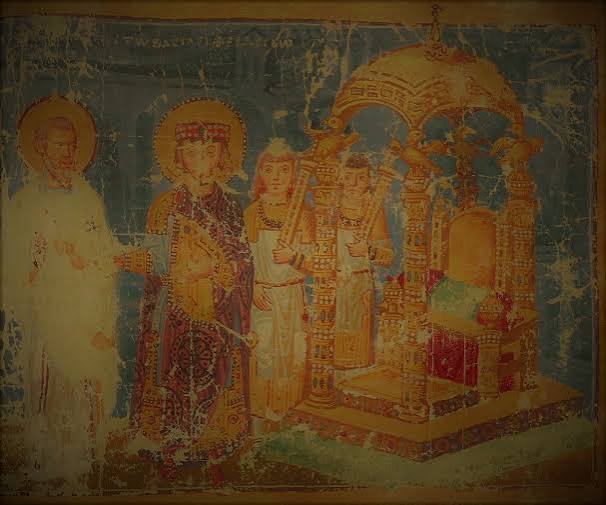
783: Adosinda confined to a monastery
Queen Adosinda of the Kingdom of Asturias (daughter of Alfonso I and Ermesinda, sister of Fruela I, and wife of King Silo) was forced into the monastery of San Juan de Pravia (Santianes de Pravia). Silo had ruled peacefully from 774 to 783 without heirs. On his death, Adosinda backed her nephew Alfonso II for the throne. Her half-brother Mauregatus (an illegitimate son of Alfonso I) seized power with military support, drove Alfonso into exile in Álava, and sidelined Adosinda. She entered the monastery as a nun (in the presence of figures including Beatus of Liébana) and remained there for the rest of her life. She is buried there with Silo.
1161: Battle of Caishi
On 26–27 November, Song dynasty forces decisively defeated a Jin dynasty fleet attempting to cross the Yangtze River at Caishi (near modern Nanjing) during the Jin–Song Wars. The Jin, under Emperor Wanyan Liang, sought to invade the Southern Song. Song commander Yu Yunwen (a civil official) and naval leader Chen Kangbo used superior paddle-wheel warships equipped with trebuchets that launched gunpowder-based “thunderclap bombs” (soft-cased explosives with lime and sulfur that created noxious clouds). The Song fleet outmaneuvered the Jin’s lighter, often hastily built ships; many Jin troops deserted as their steppe cavalry proved ineffective on water. Wanyan Liang was later assassinated by his own men. The victory boosted Song morale and contributed to a lasting peace treaty in 1165 along the Huai River boundary.
1476: Vlad the Impaler’s third reign in Wallachia
Vlad III (Vlad the Impaler / Vlad Dracula) defeated the forces of Basarab Laiotă (Basarab the Elder) with support from Stephen the Great of Moldavia and Stephen V Báthory (leading Hungarian troops). He retook the throne of Wallachia for the third time (after brief rule in 1448 and his main reign of 1456–1462). This came amid shifting alliances against Ottoman influence. The reign was short: Basarab returned with Ottoman backing, and Vlad was killed in battle near Snagov (late December 1476 or early January 1477). Accounts of his death vary (ambush, mistaken identity by his own men, or combat); his head was reportedly sent to Constantinople.
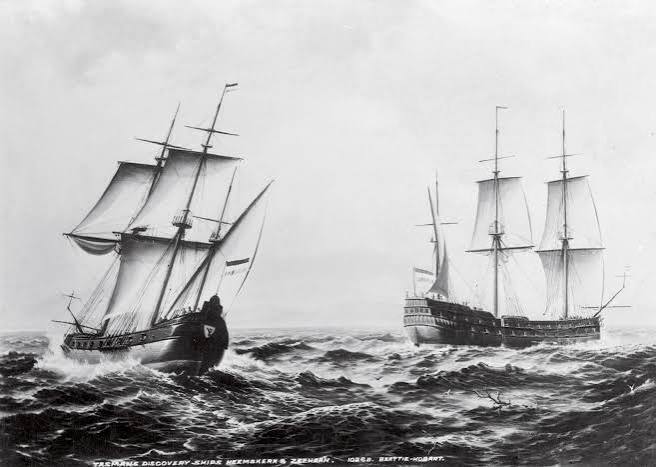
1778: Captain James Cook reaches Maui
During his third Pacific voyage (aboard HMS Resolution and Discovery), Cook’s expedition sighted and visited Maui in the Hawaiian Islands around 26 November 1778. This was the first recorded European contact with Maui (the archipelago as a whole had first been reached in January 1778, when Cook landed on Kauaʻi and named the group the Sandwich Islands). The ships traded with locals for provisions while exploring the coasts of Maui and Hawaiʻi Island before later anchoring at Kealakekua Bay. Cook was killed there in February 1779 during a conflict after returning for repairs.
1789: First national Thanksgiving Day in the United States
At Congress’s request, President George Washington proclaimed Thursday, 26 November 1789, as a day of public thanksgiving and prayer. Issued on 3 October 1789 in New York City (then the capital), the proclamation thanked God for the successful establishment of the Constitution and the new federal government, for protection during the Revolution, and for peace and liberty. Washington attended services at St. Paul’s Chapel and gave food and beer to debtors in prison. This was the first national Thanksgiving under the Constitution (earlier colonial and Continental Congress observances had occurred). It was a one-time event; the annual late-November tradition was later formalized by Abraham Lincoln in 1863.
These episodes span medieval succession struggles, early gunpowder naval warfare, Balkan resistance to the Ottomans, European exploration of the Pacific, and the founding of American national traditions.