

VoiceDDB
Politics • Culture • News
oDDBall analysis of conservative politics with a libertarian economic conservative twist. Small government, big freedom.
Interested? Want to learn more about the community?
November 17, 2021
How did Gates come up with reset?

To reset a computer that crashed, press Alt, Ctl, Delete.

post photo preview
Interested? Want to learn more about the community?
What else you may like…
Videos
Posts
Articles
00:01:07
November 27, 2022
Jingle Bell Rock

Jingle bell, jingle bell, jingle bell rock
Jingle bells swing and jingle bells ring
Snowin' and blowin' up bushels of fun
Now the jingle hop has begun

Jingle bell, jingle bell, jingle bell rock
Jingle bells chime in jingle bell time
Dancin' and prancin' in Jingle Bell Square
In the frosty air

What a bright time, it's the right time
To rock the night away
Jingle bell time is a swell time
To go glidin' in a one-horse sleigh

Giddy-up jingle horse, pick up your feet
Jingle around the clock
Mix and a-mingle in the jinglin' feet
That's the jingle bell rock

Jingle bell, jingle bell, jingle bell rock
Jingle bell chime in jingle bell time
Dancin' and prancin' in Jingle Bell Square
In the frosty air

What a bright time, it's the right time
To rock the night away
Jingle bell time is a swell time
To go glidin' in a one-horse sleigh

Giddy-up jingle horse, pick up your feet
Jingle around the clock
Mix and a-mingle in the jinglin' feet
That's the jingle bell
That's the jingle...

00:02:04
September 01, 2021
Intro to Locals for the Conservative Voice

David Daniel Ball calls himself the Conservative Voice.

I'm a teacher with three decades experience teaching math to high school kids.I also work with first graders and kids in between first grade and high school. I know the legends of why Hypatia's dad is remembered through his contribution to Math theory. And I know the legend of why followers of Godel had thought he had disproved God's existence.

I'm not a preacher, but I am a Christian who has written over 28 books all of which include some reference to my faith. Twelve blog books on world history and current affairs, detailing world events , births and marriages on each day of the year, organised by month. Twelve books on the background to and history of Bible Quotes. One Bible quote per day for a year. An intro to a science fiction series I'm planning, post apocalyptic cyber punk. An autobiography with short story collections.

I'm known in Australia for my failure as a whistleblower over the negligence death of a school boy. ...

00:01:50
September 04, 2026
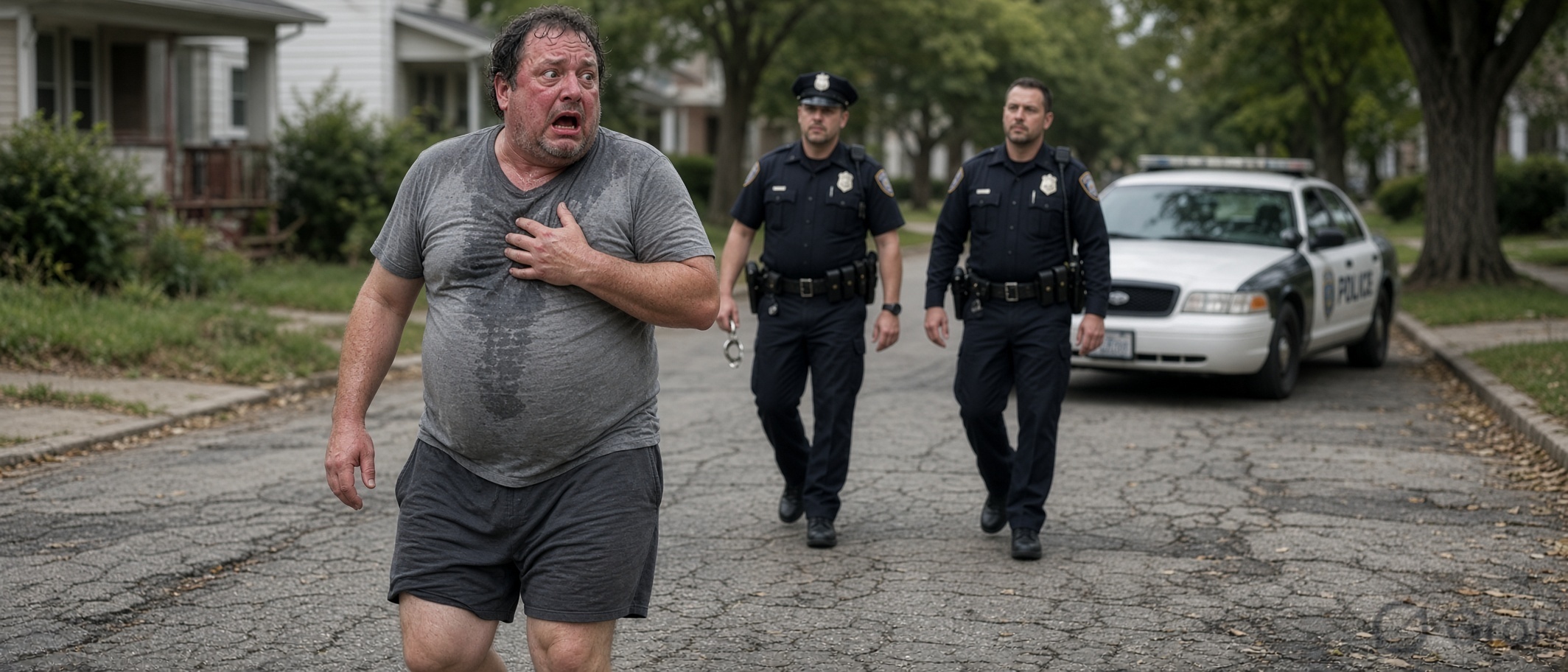
Should violent criminals be made fat? Grok says 'no'

No. Transferring gut bacteria from an obese person into a violent criminal is not a reliable, ethical, or effective way to make them “fat, sedentary, and less of a physical threat.”

The science does not deliver the outcome you want

Mouse studies in germ-free animals showed that microbiota from obese donors can increase energy harvest and adiposity compared with lean-donor microbiota. That is the origin of the idea. Human evidence is far weaker.

Randomized trials of fecal microbiota transplant (FMT) from lean donors into people with obesity have generally failed to produce meaningful, sustained weight loss. Microbiome composition can change; body weight and metabolic markers often do not, or the effects are small and inconsistent. Diet and the existing gut environment usually dominate. A 2025 Nature paper found diet outperformed microbial transplant for microbiome recovery. Human guts are already colonized, not sterile like lab mice, so engraftment is variable and effects unpredictable.

It is not a ...

post photo preview
August 28, 2026
Pfizer struggles to answer

Some in Australia are brilliant. Malcolm Roberts Investigates Pfizer over Covid vaccine.

Holiday break is over back to work tonight

Tonight I'll start double posting until I've caught up.

post photo preview
How Covid got Biden elected
October 8th news too

How Covid got Biden elected

October 8th news too

This is a roughly 29-minute interview from the Dan Bongino podcast, posted 4 October 2026 on Peter McCullough’s channel. Bongino asks why some people who took an mRNA COVID vaccine appear harmed and most do not, and whether people with no symptoms should still worry. McCullough’s answers are his own claims; several are contested by mainstream regulators and researchers.

Why some are injured and others are not. McCullough says about 81% of Americans were vaccinated and about 94% of those received Pfizer or Moderna. He treats the products as genetic: synthetic mRNA that, he says, can persist for years and keep making spike protein. He cites CDC v-safe and puts the split at about 98% apparently fine and about 2% with ongoing problems.

He gives three reasons for that split:

  1. Batch variability. He says doses were not uniform. Of about 4,500 Pfizer lots, he says roughly 75% showed essentially no serious side effects, which he reads as very little active mRNA.
  2. Antibody neutralization. If antibodies fully neutralize the spike, he says there are no side effects. If the antibody response is slightly off, spike can circulate and cause syndromes.
  3. Baseline susceptibility. In his cardiology practice, people with mutations in heart-muscle proteins are at higher risk of myocarditis, and people with genetic clotting tendencies are at higher risk of a vaccine-associated clot.

What he tells the injured to do. Get a spike-antibody blood test (he mentions Labcorp, self-ordered, about $79). Above 1,000 units/ml he calls a significant spike exposure; levels of 10,000–25,000 he associates with being very sick. He recommends clearing spike with nattokinase and bromelain on an empty stomach, taken for a couple of years, and promotes The Wellness Company’s “Ultimate Spike Detox” (nattokinase, bromelain and other ingredients). He also takes nattokinase himself for atherosclerosis and says these enzymes may dissolve microclots. He claims patients who sweat a lot — exercise or sauna — seem to clear the material better, and cites studies reporting mRNA in breast milk.

Why he says spike is dangerous. He describes it as an engineered, unnatural protein from Wuhan work that human enzymes do not break down. He says it has been found in the heart (myocarditis), inside clots, rupturing brain vessels, driving autoimmunity, and that fragments of its genetic code have been found in cancers.

On the mRNA design. Bongino thought the intent was a short, local burst of spike. McCullough says the mRNA is synthetic and chemically modified (pseudouridine) so it does not dissolve in minutes to hours the way natural mRNA does, and that there is no known off-switch.

Other topics in the interview.

  • Cancer vaccines. He says mRNA was originally aimed at cancer. Moderna’s melanoma product, used with Keytruda, is worth trials in late-stage disease, but targeting and on/off control are still unsolved, and it would sit inside toxic combination therapy, not as a simple preventive.
  • COVID deaths. He repeats Senate testimony that about 85% of deaths were avoidable, blames hospital protocols (ventilation, remdesivir, no early outpatient treatment), cites an ICON study in Florida in which he says ivermectin cut in-hospital mortality by about half, and says WHO advised against remdesivir in November 2020 while the US still uses it.
  • AI and future threats. He uses AI as a clinical assistant and supports it for drug discovery, but warns against “Dr AI” replacing physicians and against AI-designed viruses. He says Stanford has already shown that capability and that controls and defensive AI are needed.
  • Masks and PPE. Both treat community surgical masks and hospital hazmat use as ineffective and wasteful.

Bongino closes by saying McCullough was attacked early for opposing lockdowns, mandates and the official vaccine line, and that those critics have not apologized.

= For October 8th

The Rainhill Trials were a public test, not a race for its own sake. The Liverpool and Manchester Railway was nearly finished in 1829, and its directors were still split on how to move the trains. George Stephenson wanted locomotives. A strong party, backed by engineers who had looked at the line, wanted fixed steam engines hauling wagons by rope. The company offered £500 to the locomotive that could do the work of a Liverpool–Manchester journey and the return, under rules written so that a showy sprint would not win.

The trials ran from 6 to 14 October 1829 on a level stretch at Rainhill, about nine miles from Liverpool. The judges were John Urpeth Rastrick, Nicholas Wood and John Kennedy. Ten engines were entered. Five appeared.

The rules, in the form finally used, were strict. The engine, with water in the boiler, was not to exceed six tons; above four and a half tons it had to run on six wheels. It had to be sprung, stand under fifteen feet to the chimney top, burn its own smoke, and work at no more than 50 pounds per square inch. It had to draw three times its own weight at an average of at least ten miles an hour. The course stood in for the real road: one and three-quarter miles each way, of which one and a half miles was at full speed, ten trips making thirty-five miles, then fuel and water renewed and ten trips more. Seventy miles, the equivalent of Liverpool to Manchester and back, with the boiler starting cold and the fuel weighed.

Cycloped, built by Thomas Shaw Brandreth of Liverpool, was not a steam engine at all. A horse walked on a moving platform geared to the wheels. It was the first to go. The horse put a foot through the floor and the machine was withdrawn. It had never met the rule that the engine be a locomotive consuming its own smoke.

Perseverance, by Timothy Burstall of Edinburgh, was damaged on the road to Rainhill. Burstall repaired it on the spot and it ran late in the week, but it could not hold much above five or six miles an hour and was taken out. The judges noted that its boiler was little more than a large copper.

Novelty was the crowd’s engine. John Braithwaite and John Ericsson built it in London in about seven weeks. It was a light tank locomotive, roughly two tons fifteen hundredweight, copper and blue, with a vertical boiler and bellows blowing the fire. On the first day, running light, it reached about twenty-eight miles an hour, faster than anything most of the ten thousand spectators had seen. It was also the most fragile. A feed pipe failed, then a boiler joint blew, and repeated repairs never got it through the weighed course. It was withdrawn without completing the trial. Ericsson later took the same inventive streak to the screw propeller and, in the American Civil War, to USS Monitor.

Sans Pareil was Timothy Hackworth’s bid, from the Stockton and Darlington. It was an 0-4-0 with vertical cylinders and a return-flue boiler, the type that had worked well on his Royal George. It arrived overweight for a four-wheeled engine, at about four and a half tons, and the judges let it run anyway. One cylinder, cast at Robert Stephenson’s works in Newcastle, cracked. Hackworth improvised and the engine did complete a long part of the course, averaging about fourteen miles an hour with a load near nineteen tons. The cost was coke. It burned on the order of 700 pounds an hour against the Rocket’s roughly 200. Power it had; economy and a sound boiler it did not. Hackworth’s friends later claimed the cracked cylinder was sabotage. The casts were Stephenson’s, and Henry Booth, treasurer of the railway, had suggested the multitubular boiler used on the winning engine, so the suspicion stuck. The evidence is the failure itself, not a plot.

Rocket, entered by Robert Stephenson of Newcastle, was painted yellow and black with a white chimney and weighed about four tons three hundredweight. The decisive ideas were Booth’s multitubular boiler — twenty-five copper tubes carrying the fire through the water — and the blast pipe, which threw exhaust steam up the chimney and pulled air through the fire. George Stephenson drove it. On 8 October it finished the first thirty-five miles in about three hours twelve minutes with a load of about thirteen tons, averaging a little over twelve miles an hour, with bursts near twenty-five. Light, it later touched about twenty-nine or thirty. It was the only engine that completed both halves of the trial without a breakdown that ended its run. On 14 October the judges gave it the prize: it alone had met every condition, and it was the best engine shown.

The immediate result was that the Liverpool and Manchester chose locomotives. Robert Stephenson and Company received the order. The line opened on 15 September 1830, with Rocket among the engines in the procession; William Huskisson, MP for Liverpool, was struck by it at Parkside and died that night, the first widely reported railway passenger fatality. The railway itself was a success, and the argument for rope haulage on a level inter-city line was over.

The design consequence mattered more than the £500. Within a year Stephenson had moved the cylinders inside the frames on the Planet type, and that layout, with the multitubular boiler and blast pipe, became the pattern of the British steam locomotive. Sans Pareil was bought by the Liverpool and Manchester, used on construction trains, and sold in 1832 to the Bolton and Leigh, where it worked into the 1840s. Novelty was repaired and tried again on the line, without changing the verdict. Hackworth went on building engines at Shildon and remained a major figure on the Stockton and Darlington; he did not forgive the result.

Rainhill did not invent the locomotive. Colliery engines had been hauling coal for a quarter of a century. It did settle, in front of engineers from Britain and abroad, that a locomotive could keep time, keep steam and pay its way on a passenger railway. Within a decade the same conclusion was being built into lines from Manchester to Birmingham and from Albany toward the Great Lakes.

=

These are the October 8 entries. A few of the older dates are traditional rather than secure, and those caveats are marked where they matter.

314 (more likely 316) — Battle of Cibalae. Constantine I and Licinius, colleagues since the collapse of the Tetrarchy and joint authors of the Edict of Milan in 313, went to war over the Balkans. The spark was political: Constantine had raised his brother-in-law Bassianus as Caesar; Bassianus was caught intriguing, and Licinius refused to hand over the man behind him. Constantine invaded Licinius’s territory and met him on the plain between the Sava and the Drava, near Cibalae (modern Vinkovci in Croatia), about 350 kilometres inside Licinius’s domain. Constantine had roughly 20,000 men against about 35,000. The fight lasted all day. Late in the afternoon Constantine led a cavalry charge from the right wing, broke the line, and killed as many as 20,000 of Licinius’s troops. Licinius fled by night toward Sirmium and then Thrace. A later clash at Mardia was indecisive, but the peace that followed stripped Licinius of most of the Balkan peninsula and raised Constantine’s sons Crispus and Constantine II, with Licinius’s own son, to the rank of Caesar. Hydatius’s chronicle gives 8 October 314; consular lists and coinage point to 316. Either way, it was the first decisive step toward Constantine’s sole rule, completed at Chrysopolis in 324.

451 — Council of Chalcedon opens. The first session of the fourth ecumenical council began at Chalcedon, opposite Constantinople, on 8 October and ran until 1 November. Empress Pulcheria and Emperor Marcian had called it to settle the quarrel left by the “Robber Council” of Ephesus in 449, which had backed Eutyches’s claim that Christ had one nature after the Incarnation. About 500 bishops attended, almost all eastern. The council deposed Dioscorus of Alexandria, condemned both Nestorianism and Eutychian monophysitism, and issued the Chalcedonian Definition: Christ is one person in two natures, divine and human, “without confusion, without change, without division, without separation.” Rome accepted it. Alexandria and much of Syria and Egypt did not. The split is the origin of the Oriental Orthodox churches.

876 — Battle of Andernach. Louis the German had died in 876. His brother, the emperor Charles the Bald, king of West Francia, tried to seize East Francia before Louis’s sons could settle the inheritance. At Andernach on the Rhine, Louis the Younger caught him. Charles’s larger army was routed; he escaped across the Rhine and died the next year on another Italian expedition. East Francia held, and the line that became Germany stayed separate from the line that became France.

1075 — Dmitar Zvonimir crowned King of Croatia. Zvonimir, already ban and de facto ruler, was crowned at Solin near Split, with a crown sent by Pope Gregory VII and the papal legate present. The date is traditional (some place it in 1076). He was the last native king to exercise real power over the whole Croatian kingdom. His death without an heir in 1089 opened the succession crisis that ended with the union of Croatia and Hungary under the Árpád kings.

1200 — Isabella of Angoulême crowned. Isabella, about twelve, had married King John of England at Bordeaux on 24 August. On 8 October she was crowned queen consort at Westminster. John had taken her from her fiancé, Hugh IX of Lusignan, which gave Philip II of France the pretext to confiscate John’s continental lands. Within a few years John had lost Normandy, Anjou and most of Aquitaine.

1322 — Mladen II Šubić arrested. The Šubić family of Bribir had dominated Croatia and Bosnia for a generation, Mladen II as ban. A coalition of Croatian nobles beat him at the Battle of Bliska. The Sabor then arrested him and he was sent to Hungary. Angevin royal authority replaced the quasi-independent Šubić banate.

1480 — The Great Stand on the Ugra. Ivan III of Moscow had stopped paying tribute to the Great Horde. Akhmat Khan marched to restore it, aiming to join his ally Casimir IV of Poland-Lithuania. On 8 October his army reached the Ugra, a tributary of the Oka, and found Ivan’s son Ivan the Young and his brother Andrey the Less already on the far bank. Attempts to cross failed over four days, Russian missile fire keeping the Tatars off the fords. Casimir never came: a revolt in Lithuania held him. The two armies faced each other for weeks. Akhmat began to withdraw on 8 November; news of the retreat reached Ivan on 11 November. No pitched battle decided it. Russian tradition treats the stand as the end of the “Tatar yoke,” about 240 years after Batu’s conquest. The Great Horde itself broke up soon after; Akhmat was killed in 1481.

1573 — Siege of Alkmaar ends. Alba’s Spanish army had invested Alkmaar in late August. The defenders opened the dikes, flooded the approaches, and a relief attempt by sea failed. On 8 October the Spanish lifted the siege. It was the first clear rebel success of the Dutch Revolt, and it fixed the slogan “Victory begins at Alkmaar.”

1582 — This day does not exist. Pope Gregory XIII’s bull dropped ten days to correct the Julian drift. In Italy, Poland, Portugal and Spain, 4 October 1582 was followed by 15 October. The 5th through the 14th, including this day, were skipped. Protestant states adopted the reform later; Britain and its colonies not until 1752.

1645 — Hôtel-Dieu de Montréal. Jeanne Mance, a laywoman from Langres who had come to New France with the Société Notre-Dame de Montréal, opened the Hôtel-Dieu in the settlement that became Montreal. It was the first hospital in North America run by lay founders rather than a religious order already established in the colony, though nursing sisters from La Flèche arrived later to staff it. It is still a working hospital.

1806 — Congreve rockets at Boulogne. During the Napoleonic Wars a British squadron under Commodore Edward Owen bombarded the French invasion flotilla in Boulogne with Sir William Congreve’s rockets, iron-cased weapons derived from Indian war rockets and fired from boats. The attack on the night of 8 October did limited damage and did not destroy the flotilla, but it was the first serious combat use of Congreve rockets and the start of modern military rocketry in Europe.

1813 — Treaty of Ried. Bavaria, Napoleon’s largest German ally, changed sides. At Ried in Upper Austria, Maximilian I Joseph signed with Austria: Bavaria joined the Sixth Coalition, and Austria guaranteed Bavaria’s sovereignty and territory. Ten days later Bavarian troops fought the French at Hanau. The treaty is a hinge of the War of the Sixth Coalition, between Leipzig and the invasion of France.

1821 — Peruvian Navy. José de San Martín, protector of Peru after the declaration of independence in July, created the Peruvian Navy by decree on 8 October, built around ships captured or bought from the Spanish Pacific squadron, notably the frigate Protector. Peru marks 8 October as Navy Day. (Croatian Independence Day, once linked to this date in some lists, is 25 June.)

1829 — Rainhill Trials. The Liverpool and Manchester Railway offered £500 for the best locomotive. Trials ran from 6 to 14 October on a level mile-and-a-half stretch at Rainhill. On 8 October George and Robert Stephenson’s Rocket completed its runs at an average of about 12 miles an hour with a full load, and later showed bursts near 30. Novelty broke down; Sans Pareil failed on a cracked cylinder. Rocket won, and the multi-tube boiler with a separate firebox became the pattern for steam locomotives.

Read full Article
October 05, 2026
post photo preview
Iranian planners chose October 7th
World created Oct 7th 3761 BC

Iranian planners chose October 7th

World created Oct 7th 3761 BC

Iran’s role is well documented as a long-term sponsor and partner in the plan, but not as the force that ordered or ran the attack itself on the morning of 7 October 2023.

What is established

Hamas carried out the assault: roughly 1,200 people killed in Israel, most of them civilians, and about 250 taken hostage. Iran has been Hamas’s main state backer for years through the Islamic Revolutionary Guard Corps’ Quds Force — money, weapons, training, and political cover. That relationship is not seriously disputed.

Documents seized by the IDF in Gaza, reported by the New York Times in October 2024 and by Israeli research centers (Meir Amit Intelligence and Terrorism Information Center, and later Israeli officials), show years of coordination:

  • Hamas, Iran, and Hezbollah discussed a multi-front campaign aimed at Israel, including after the 2021 Gaza war.
  • In December 2022, Hamas military deputy Marwan Issa wrote that Iran had agreed to a special budget of about $7 million a month for a year to prepare for a major confrontation with Israel.
  • In July 2023, Hamas official Khalil al-Hayya met senior IRGC commander Mohammed Said Izadi in Lebanon and asked for help striking sensitive Israeli sites in the first hour of an assault. According to the minutes, Izadi said Iran and Hezbollah supported the idea in principle but needed more time “to prepare the environment.”
  • Separate records describe Hamas fighters sent to Iran for drone and combat training, and large funding requests (including a $500 million appeal) tied to a plan to “destroy Israel.”

Iran and Hezbollah did not join the attack on 7 October. Hezbollah opened a limited northern front the next day. Iran’s direct missile and drone strikes on Israel came months later, in 2024.

What is disputed or denied

Iran’s official line, including from Supreme Leader Ali Khamenei and its UN mission, is that it had no role in planning, deciding, or executing the 7 October operation. Some Hamas officials said Iran was told only after the attack began.

Early US assessments said key Iranian leaders appeared surprised. In October 2023 an IDF spokesman said Israeli intelligence had no information that Iran initiated or directly assisted the attack, while adding it would be naïve to think Tehran was wholly unaware. A Wall Street Journal report at the time, citing Hamas and Hezbollah sources, claimed Iranian officers helped plan the assault and gave a green light at a Beirut meeting the week before. US officials said they could not corroborate that account.

Some Iranian officials have later made statements that MEMRI and others read as admitting a planning role. Those comments conflict with Tehran’s formal denials.

Bottom line

Iran’s known involvement is the enabling kind: years of funding, training, weapons, and strategic coordination, plus a briefing months beforehand in which an IRGC commander endorsed the concept but asked for more time. The captured record does not show Iran commanding the 7 October operation or confirming the date. US and Israeli official assessments have not established that Tehran ordered the attack or knew the precise timing.

=

The 2021 Gaza war was an 11-day conflict between Israel and Hamas (with Palestinian Islamic Jihad) from 10 to 21 May 2021. Israel called it Operation Guardian of the Walls. Hamas called its campaign the Sword of Jerusalem.

How it started

Tension had been building for weeks in Jerusalem during Ramadan. Two flashpoints overlapped.

In Sheikh Jarrah, an East Jerusalem neighborhood, Israeli courts were hearing eviction cases brought by Jewish organizations against Palestinian families. The land had been owned by Jewish trusts before 1948; after 1967 the families were treated as protected tenants. A district court had rejected an appeal against eviction, and protests followed. Israel’s Supreme Court later postponed the cases, but the dispute was already a rallying point.

At the same time, Israeli police and Palestinians clashed repeatedly on the Temple Mount / Haram al-Sharif (Al-Aqsa compound). Hundreds of Palestinians and dozens of officers were injured in the days before the war. Jerusalem Day, the Israeli holiday marking the 1967 capture of the Old City, fell on 10 May, with a nationalist flag march planned through the Old City.

That afternoon Hamas issued an ultimatum: withdraw police from the compound and from Sheikh Jarrah by 6 p.m., or face attack. Minutes after the deadline, Hamas and other Gaza factions fired rockets, including a salvo toward Jerusalem — the first rockets aimed at the city in years. Israel then opened a large air campaign against targets in Gaza.

The fighting

There was no Israeli ground invasion. The IDF struck about 1,500 targets, including rocket crews, command sites, and parts of Hamas’s underground tunnel network (the so-called “metro”). Gaza factions fired roughly 4,300–4,360 rockets and mortars at Israeli cities and towns. The pace was far higher than in 2014: on the order of 400 projectiles a day versus about 130 then. Iron Dome intercepted about 90 percent of rockets headed for populated areas. Several hundred fell short inside Gaza.

Tel Aviv and central Israel took the heaviest barrages in their history. Airports were disrupted. One Israeli soldier, Staff Sgt. Omer Tabib, was killed when an anti-tank missile hit his jeep near the border. Inside Israel, the war also set off serious Jewish–Arab violence in mixed cities such as Lod, Acre, and Jaffa.

Casualties

Figures differ by source because Gaza’s health ministry does not separate civilians from fighters, and Israel’s counts of militants are not fully independently verified.

  • Gaza: the Palestinian Ministry of Health reported about 248–254 dead, including 66 children and about 39 women, and roughly 1,900 injured. The UN’s humanitarian office said at least 129 of 248 killed were civilians. Israel said it killed more than 200 fighters, including about 25 senior Hamas and Islamic Jihad commanders.
  • Israel: 12 or 13 dead — about 11 civilians (including two children and foreign workers) and one soldier — plus several hundred injured. Almost twice as many Israeli civilians died in these 11 days as in the 51-day 2014 war, which had a ground phase and far higher Israeli military losses.

Thousands of homes and civilian buildings in Gaza were damaged or destroyed. More than 100,000 people were displaced at the peak, many into UNRWA schools.

End and aftermath

An Egyptian-brokered ceasefire, with US involvement under President Biden, took effect at 2 a.m. on 21 May and largely held. Both sides claimed success. Israel pointed to degraded rocket stocks, dead commanders, and tunnel damage without a costly ground entry. Hamas pointed to having struck Jerusalem and central Israel, survived, and forced a stop to the Jerusalem Day march’s original route, and celebrated in Gaza.

The war did not settle the underlying disputes. Sheikh Jarrah cases continued in court. Hamas kept its rule in Gaza and rebuilt its arsenal. Captured Hamas documents later published by Israeli researchers treat the 2021 war as a turning point after which Hamas pressed Iran and Hezbollah harder for money, training, and a coordinated multi-front plan — the track that ran into the 7 October 2023 attack.

=

These are the standard “on this day” entries for 7 October, running from the calculated start of the Hebrew calendar to the southern turning point of the American Revolutionary War.

3761 BC — Hebrew calendar epoch. The modern Hebrew calendar’s Anno Mundi count is fixed to a calculated moment, not an observed event. Tradition places the mean new moon (molad) of Tishrei in year 1 at the start of Monday, 5 hours and 204 parts after the sunset that begins the civil day corresponding to 7 October 3761 BC on the proleptic Julian calendar. That is why calendrical tables treat 7 October 3761 BC as the epoch. The year count is a medieval rabbinic calculation of creation, not an archaeological date.

1403 — Battle of Modon. Off Methoni (Modon) in the southwestern Peloponnese, a Venetian squadron under Carlo Zeno beat a Genoese fleet commanded by the French marshal Jean Le Maingre, called Boucicaut. Genoa was then under French control. Each side had about eleven galleys and two larger ships. On the morning of 7 October the Genoese tried to sail north from Sapienza island and were caught. Fighting was heaviest between the flagships; the Venetian round ship Pisana took three Genoese galleys and Boucicaut broke off. Genoese losses are given as about 600 killed and wounded and 300 captured, against 153 Venetian wounded. It was one of the last major clashes of the Venetian–Genoese wars.

1406 — Raid on Jersey. A mixed Castilian, Norman and Breton force, part of the cruise of the Castilian captain Pero Niño, landed in St Aubin’s Bay on the afternoon of 7 October. The familiar summary says 1,000 men-at-arms against 3,000 defenders. Local Jersey sources, drawing on Niño’s chronicler Gutierre Díaz de Games, put the landing party nearer 1,100 and the island force nearer 1,500 foot and 200 horse, so the 3,000 figure is probably inflated. The raiders formed behind a pavise screen and fought a sharp action on the sands; they were beaten and withdrew to their ships.

1477 — Uppsala University. Pope Sixtus IV granted corporate rights in February 1477, at the request of Archbishop Jakob Ulvsson and with the backing of Sten Sture the Elder. The university was inaugurated on 7 October, the first in Scandinavia. Teaching began in theology, law and philosophy on the medieval model.

1513 — Battle of La Motta. In the War of the League of Cambrai, a Spanish–Imperial army under the viceroy Ramón de Cardona, with Fernando d’Ávalos among the commanders, crushed a Venetian army led by Bartolomeo d’Alviano near Schio and Creazzo in the Veneto. Venice’s attempt to recover territory on the mainland failed for the moment, though the republic later recovered much of it by diplomacy.

1542 — Santa Catalina Island. Juan Rodríguez Cabrillo, sailing for Spain up the California coast, sighted and landed on Santa Catalina Island (Pimu to the Tongva) on 7 October. He named it San Salvador after his flagship. It is the first recorded European landing there. Cabrillo died later on the same voyage, in January 1543, after a fall on San Miguel Island in the Channel Islands.

1571 — Battle of Lepanto. The Holy League fleet of Spain, Venice, the Papal States and smaller Italian contingents, under Don John of Austria, met the Ottoman fleet under Müezzinzade Ali Pasha in the Gulf of Patras. Roughly 200 galleys and a handful of larger ships fought on each side. The League’s six Venetian galleasses broke the Ottoman line; Ali Pasha was killed and his flagship taken. The Ottomans lost most of their fleet and tens of thousands of men, including many skilled bowmen and galley crews. It was the last great battle fought almost entirely by oared galleys, and the first major Ottoman naval defeat in the Mediterranean. The Ottomans rebuilt a fleet within a year, but Lepanto checked their western advance and became a symbol of Catholic Europe.

1582 — The day that did not happen. Pope Gregory XIII’s reform dropped ten days so that the spring equinox would fall again near 21 March. In Italy, Poland, Portugal and Spain, Thursday 4 October 1582 was followed by Friday 15 October. The 7th, with the 5th, 6th and 8th–14th, was simply omitted. France waited until December, and Protestant countries for decades or centuries. Britain and its colonies adopted the reform only in 1752.

1691 — Massachusetts Bay charter. William III and Mary II issued a new royal charter for the Province of Massachusetts Bay, folding in Plymouth Colony and territories that became Maine, and replacing the revoked 1629 charter of the old Massachusetts Bay Company. The governor was now a royal appointee. It remained the colony’s constitution until the 1770s.

1763 — Royal Proclamation. After the Treaty of Paris ended the Seven Years’ War, George III drew a line along the Appalachian watershed and reserved the lands north and west of it for Indigenous nations, pending Crown purchase. Settlement, surveys and private land grants beyond the line were forbidden. The aim was to limit costly frontier wars and to keep the interior under imperial control. Colonists who had fought for that territory treated the line as a grievance, and it became one of the background causes of the American Revolution. In Canada the proclamation is still cited in Indigenous land-rights cases.

1777 — Bemis Heights (Second Saratoga). General John Burgoyne’s British army, trying to reach Albany, attacked the American lines on Bemis Heights under Horatio Gates, with Benedict Arnold forcing the decisive counter-attack. The British were driven back and lost General Simon Fraser, mortally wounded. Burgoyne surrendered the remains of his army ten days later, on 17 October. The victory brought France into open alliance with the United States.

1780 — Kings Mountain. In the southern campaign, about 900 Patriot militia from the Carolina and Virginia backcountry surrounded and destroyed a Loyalist force of similar size under British Major Patrick Ferguson on a rocky ridge on the Carolina border. Ferguson was killed; Loyalist losses were roughly 150 dead, 150 wounded and 600 captured, against about 90 Patriot casualties. It broke the left wing of Cornwallis’s advance, checked Loyalist recruitment, and is usually treated as the turning point of the war in the South.

Read full Article
October 05, 2026
post photo preview
Iranian planners chose October 7th
World created Oct 7th 3761 BC

Iranian planners chose October 7th

World created Oct 7th 3761 BC

Iran’s role is well documented as a long-term sponsor and partner in the plan, but not as the force that ordered or ran the attack itself on the morning of 7 October 2023.

What is established

Hamas carried out the assault: roughly 1,200 people killed in Israel, most of them civilians, and about 250 taken hostage. Iran has been Hamas’s main state backer for years through the Islamic Revolutionary Guard Corps’ Quds Force — money, weapons, training, and political cover. That relationship is not seriously disputed.

Documents seized by the IDF in Gaza, reported by the New York Times in October 2024 and by Israeli research centers (Meir Amit Intelligence and Terrorism Information Center, and later Israeli officials), show years of coordination:

  • Hamas, Iran, and Hezbollah discussed a multi-front campaign aimed at Israel, including after the 2021 Gaza war.
  • In December 2022, Hamas military deputy Marwan Issa wrote that Iran had agreed to a special budget of about $7 million a month for a year to prepare for a major confrontation with Israel.
  • In July 2023, Hamas official Khalil al-Hayya met senior IRGC commander Mohammed Said Izadi in Lebanon and asked for help striking sensitive Israeli sites in the first hour of an assault. According to the minutes, Izadi said Iran and Hezbollah supported the idea in principle but needed more time “to prepare the environment.”
  • Separate records describe Hamas fighters sent to Iran for drone and combat training, and large funding requests (including a $500 million appeal) tied to a plan to “destroy Israel.”

Iran and Hezbollah did not join the attack on 7 October. Hezbollah opened a limited northern front the next day. Iran’s direct missile and drone strikes on Israel came months later, in 2024.

What is disputed or denied

Iran’s official line, including from Supreme Leader Ali Khamenei and its UN mission, is that it had no role in planning, deciding, or executing the 7 October operation. Some Hamas officials said Iran was told only after the attack began.

Early US assessments said key Iranian leaders appeared surprised. In October 2023 an IDF spokesman said Israeli intelligence had no information that Iran initiated or directly assisted the attack, while adding it would be naïve to think Tehran was wholly unaware. A Wall Street Journal report at the time, citing Hamas and Hezbollah sources, claimed Iranian officers helped plan the assault and gave a green light at a Beirut meeting the week before. US officials said they could not corroborate that account.

Some Iranian officials have later made statements that MEMRI and others read as admitting a planning role. Those comments conflict with Tehran’s formal denials.

Bottom line

Iran’s known involvement is the enabling kind: years of funding, training, weapons, and strategic coordination, plus a briefing months beforehand in which an IRGC commander endorsed the concept but asked for more time. The captured record does not show Iran commanding the 7 October operation or confirming the date. US and Israeli official assessments have not established that Tehran ordered the attack or knew the precise timing.

=

The 2021 Gaza war was an 11-day conflict between Israel and Hamas (with Palestinian Islamic Jihad) from 10 to 21 May 2021. Israel called it Operation Guardian of the Walls. Hamas called its campaign the Sword of Jerusalem.

How it started

Tension had been building for weeks in Jerusalem during Ramadan. Two flashpoints overlapped.

In Sheikh Jarrah, an East Jerusalem neighborhood, Israeli courts were hearing eviction cases brought by Jewish organizations against Palestinian families. The land had been owned by Jewish trusts before 1948; after 1967 the families were treated as protected tenants. A district court had rejected an appeal against eviction, and protests followed. Israel’s Supreme Court later postponed the cases, but the dispute was already a rallying point.

At the same time, Israeli police and Palestinians clashed repeatedly on the Temple Mount / Haram al-Sharif (Al-Aqsa compound). Hundreds of Palestinians and dozens of officers were injured in the days before the war. Jerusalem Day, the Israeli holiday marking the 1967 capture of the Old City, fell on 10 May, with a nationalist flag march planned through the Old City.

That afternoon Hamas issued an ultimatum: withdraw police from the compound and from Sheikh Jarrah by 6 p.m., or face attack. Minutes after the deadline, Hamas and other Gaza factions fired rockets, including a salvo toward Jerusalem — the first rockets aimed at the city in years. Israel then opened a large air campaign against targets in Gaza.

The fighting

There was no Israeli ground invasion. The IDF struck about 1,500 targets, including rocket crews, command sites, and parts of Hamas’s underground tunnel network (the so-called “metro”). Gaza factions fired roughly 4,300–4,360 rockets and mortars at Israeli cities and towns. The pace was far higher than in 2014: on the order of 400 projectiles a day versus about 130 then. Iron Dome intercepted about 90 percent of rockets headed for populated areas. Several hundred fell short inside Gaza.

Tel Aviv and central Israel took the heaviest barrages in their history. Airports were disrupted. One Israeli soldier, Staff Sgt. Omer Tabib, was killed when an anti-tank missile hit his jeep near the border. Inside Israel, the war also set off serious Jewish–Arab violence in mixed cities such as Lod, Acre, and Jaffa.

Casualties

Figures differ by source because Gaza’s health ministry does not separate civilians from fighters, and Israel’s counts of militants are not fully independently verified.

  • Gaza: the Palestinian Ministry of Health reported about 248–254 dead, including 66 children and about 39 women, and roughly 1,900 injured. The UN’s humanitarian office said at least 129 of 248 killed were civilians. Israel said it killed more than 200 fighters, including about 25 senior Hamas and Islamic Jihad commanders.
  • Israel: 12 or 13 dead — about 11 civilians (including two children and foreign workers) and one soldier — plus several hundred injured. Almost twice as many Israeli civilians died in these 11 days as in the 51-day 2014 war, which had a ground phase and far higher Israeli military losses.

Thousands of homes and civilian buildings in Gaza were damaged or destroyed. More than 100,000 people were displaced at the peak, many into UNRWA schools.

End and aftermath

An Egyptian-brokered ceasefire, with US involvement under President Biden, took effect at 2 a.m. on 21 May and largely held. Both sides claimed success. Israel pointed to degraded rocket stocks, dead commanders, and tunnel damage without a costly ground entry. Hamas pointed to having struck Jerusalem and central Israel, survived, and forced a stop to the Jerusalem Day march’s original route, and celebrated in Gaza.

The war did not settle the underlying disputes. Sheikh Jarrah cases continued in court. Hamas kept its rule in Gaza and rebuilt its arsenal. Captured Hamas documents later published by Israeli researchers treat the 2021 war as a turning point after which Hamas pressed Iran and Hezbollah harder for money, training, and a coordinated multi-front plan — the track that ran into the 7 October 2023 attack.

=

These are the standard “on this day” entries for 7 October, running from the calculated start of the Hebrew calendar to the southern turning point of the American Revolutionary War.

3761 BC — Hebrew calendar epoch. The modern Hebrew calendar’s Anno Mundi count is fixed to a calculated moment, not an observed event. Tradition places the mean new moon (molad) of Tishrei in year 1 at the start of Monday, 5 hours and 204 parts after the sunset that begins the civil day corresponding to 7 October 3761 BC on the proleptic Julian calendar. That is why calendrical tables treat 7 October 3761 BC as the epoch. The year count is a medieval rabbinic calculation of creation, not an archaeological date.

1403 — Battle of Modon. Off Methoni (Modon) in the southwestern Peloponnese, a Venetian squadron under Carlo Zeno beat a Genoese fleet commanded by the French marshal Jean Le Maingre, called Boucicaut. Genoa was then under French control. Each side had about eleven galleys and two larger ships. On the morning of 7 October the Genoese tried to sail north from Sapienza island and were caught. Fighting was heaviest between the flagships; the Venetian round ship Pisana took three Genoese galleys and Boucicaut broke off. Genoese losses are given as about 600 killed and wounded and 300 captured, against 153 Venetian wounded. It was one of the last major clashes of the Venetian–Genoese wars.

1406 — Raid on Jersey. A mixed Castilian, Norman and Breton force, part of the cruise of the Castilian captain Pero Niño, landed in St Aubin’s Bay on the afternoon of 7 October. The familiar summary says 1,000 men-at-arms against 3,000 defenders. Local Jersey sources, drawing on Niño’s chronicler Gutierre Díaz de Games, put the landing party nearer 1,100 and the island force nearer 1,500 foot and 200 horse, so the 3,000 figure is probably inflated. The raiders formed behind a pavise screen and fought a sharp action on the sands; they were beaten and withdrew to their ships.

1477 — Uppsala University. Pope Sixtus IV granted corporate rights in February 1477, at the request of Archbishop Jakob Ulvsson and with the backing of Sten Sture the Elder. The university was inaugurated on 7 October, the first in Scandinavia. Teaching began in theology, law and philosophy on the medieval model.

1513 — Battle of La Motta. In the War of the League of Cambrai, a Spanish–Imperial army under the viceroy Ramón de Cardona, with Fernando d’Ávalos among the commanders, crushed a Venetian army led by Bartolomeo d’Alviano near Schio and Creazzo in the Veneto. Venice’s attempt to recover territory on the mainland failed for the moment, though the republic later recovered much of it by diplomacy.

1542 — Santa Catalina Island. Juan Rodríguez Cabrillo, sailing for Spain up the California coast, sighted and landed on Santa Catalina Island (Pimu to the Tongva) on 7 October. He named it San Salvador after his flagship. It is the first recorded European landing there. Cabrillo died later on the same voyage, in January 1543, after a fall on San Miguel Island in the Channel Islands.

1571 — Battle of Lepanto. The Holy League fleet of Spain, Venice, the Papal States and smaller Italian contingents, under Don John of Austria, met the Ottoman fleet under Müezzinzade Ali Pasha in the Gulf of Patras. Roughly 200 galleys and a handful of larger ships fought on each side. The League’s six Venetian galleasses broke the Ottoman line; Ali Pasha was killed and his flagship taken. The Ottomans lost most of their fleet and tens of thousands of men, including many skilled bowmen and galley crews. It was the last great battle fought almost entirely by oared galleys, and the first major Ottoman naval defeat in the Mediterranean. The Ottomans rebuilt a fleet within a year, but Lepanto checked their western advance and became a symbol of Catholic Europe.

1582 — The day that did not happen. Pope Gregory XIII’s reform dropped ten days so that the spring equinox would fall again near 21 March. In Italy, Poland, Portugal and Spain, Thursday 4 October 1582 was followed by Friday 15 October. The 7th, with the 5th, 6th and 8th–14th, was simply omitted. France waited until December, and Protestant countries for decades or centuries. Britain and its colonies adopted the reform only in 1752.

1691 — Massachusetts Bay charter. William III and Mary II issued a new royal charter for the Province of Massachusetts Bay, folding in Plymouth Colony and territories that became Maine, and replacing the revoked 1629 charter of the old Massachusetts Bay Company. The governor was now a royal appointee. It remained the colony’s constitution until the 1770s.

1763 — Royal Proclamation. After the Treaty of Paris ended the Seven Years’ War, George III drew a line along the Appalachian watershed and reserved the lands north and west of it for Indigenous nations, pending Crown purchase. Settlement, surveys and private land grants beyond the line were forbidden. The aim was to limit costly frontier wars and to keep the interior under imperial control. Colonists who had fought for that territory treated the line as a grievance, and it became one of the background causes of the American Revolution. In Canada the proclamation is still cited in Indigenous land-rights cases.

1777 — Bemis Heights (Second Saratoga). General John Burgoyne’s British army, trying to reach Albany, attacked the American lines on Bemis Heights under Horatio Gates, with Benedict Arnold forcing the decisive counter-attack. The British were driven back and lost General Simon Fraser, mortally wounded. Burgoyne surrendered the remains of his army ten days later, on 17 October. The victory brought France into open alliance with the United States.

1780 — Kings Mountain. In the southern campaign, about 900 Patriot militia from the Carolina and Virginia backcountry surrounded and destroyed a Loyalist force of similar size under British Major Patrick Ferguson on a rocky ridge on the Carolina border. Ferguson was killed; Loyalist losses were roughly 150 dead, 150 wounded and 600 captured, against about 90 Patriot casualties. It broke the left wing of Cornwallis’s advance, checked Loyalist recruitment, and is usually treated as the turning point of the war in the South.

Read full Article
See More
Available on mobile and TV devices
google store google store app store app store
google store google store app tv store app tv store amazon store amazon store roku store roku store
Powered by Locals