


VoiceDDB
Politics • Culture • News
oDDBall analysis of conservative politics with a libertarian economic conservative twist. Small government, big freedom.
Interested? Want to learn more about the community?
What else you may like…
Videos
Posts
Articles
00:01:07
November 27, 2022
Jingle Bell Rock

Jingle bell, jingle bell, jingle bell rock
Jingle bells swing and jingle bells ring
Snowin' and blowin' up bushels of fun
Now the jingle hop has begun

Jingle bell, jingle bell, jingle bell rock
Jingle bells chime in jingle bell time
Dancin' and prancin' in Jingle Bell Square
In the frosty air

What a bright time, it's the right time
To rock the night away
Jingle bell time is a swell time
To go glidin' in a one-horse sleigh

Giddy-up jingle horse, pick up your feet
Jingle around the clock
Mix and a-mingle in the jinglin' feet
That's the jingle bell rock

Jingle bell, jingle bell, jingle bell rock
Jingle bell chime in jingle bell time
Dancin' and prancin' in Jingle Bell Square
In the frosty air

What a bright time, it's the right time
To rock the night away
Jingle bell time is a swell time
To go glidin' in a one-horse sleigh

Giddy-up jingle horse, pick up your feet
Jingle around the clock
Mix and a-mingle in the jinglin' feet
That's the jingle bell
That's the jingle...

00:02:04
September 01, 2021
Intro to Locals for the Conservative Voice

David Daniel Ball calls himself the Conservative Voice.

I'm a teacher with three decades experience teaching math to high school kids.I also work with first graders and kids in between first grade and high school. I know the legends of why Hypatia's dad is remembered through his contribution to Math theory. And I know the legend of why followers of Godel had thought he had disproved God's existence.

I'm not a preacher, but I am a Christian who has written over 28 books all of which include some reference to my faith. Twelve blog books on world history and current affairs, detailing world events , births and marriages on each day of the year, organised by month. Twelve books on the background to and history of Bible Quotes. One Bible quote per day for a year. An intro to a science fiction series I'm planning, post apocalyptic cyber punk. An autobiography with short story collections.

I'm known in Australia for my failure as a whistleblower over the negligence death of a school boy. ...

00:01:50
September 04, 2026
Should violent criminals be made fat? Grok says 'no'

No. Transferring gut bacteria from an obese person into a violent criminal is not a reliable, ethical, or effective way to make them “fat, sedentary, and less of a physical threat.”

The science does not deliver the outcome you want

Mouse studies in germ-free animals showed that microbiota from obese donors can increase energy harvest and adiposity compared with lean-donor microbiota. That is the origin of the idea. Human evidence is far weaker.

Randomized trials of fecal microbiota transplant (FMT) from lean donors into people with obesity have generally failed to produce meaningful, sustained weight loss. Microbiome composition can change; body weight and metabolic markers often do not, or the effects are small and inconsistent. Diet and the existing gut environment usually dominate. A 2025 Nature paper found diet outperformed microbial transplant for microbiome recovery. Human guts are already colonized, not sterile like lab mice, so engraftment is variable and effects unpredictable.

It is not a ...

post photo preview
August 28, 2026
Pfizer struggles to answer

Some in Australia are brilliant. Malcolm Roberts Investigates Pfizer over Covid vaccine.

Holiday break is over back to work tonight

Tonight I'll start double posting until I've caught up.

post photo preview
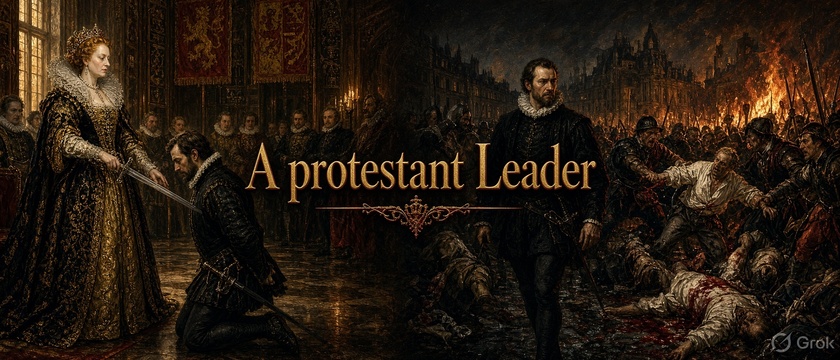
Walsingham led Protestants
December 1st

Walsingham led Protestants

The St. Bartholomew’s Day Massacre (23–24 August 1572 and the weeks that followed) was a series of targeted assassinations and mob violence in which French Catholics killed thousands of Huguenots (French Calvinist Protestants). It began in Paris and spread to other cities, becoming the bloodiest episode of the French Wars of Religion.

Background

France had been torn by three civil wars between Catholics and Huguenots since 1562. The Peace of Saint-Germain (1570) temporarily ended the fighting and granted limited rights to Protestants. To cement the peace, Queen Mother Catherine de’ Medici arranged the marriage of her Catholic daughter Margaret of Valois to the Protestant Henry of Navarre (the future Henry IV). The wedding took place in Paris on 18 August 1572, bringing many Huguenot nobles into the largely Catholic capital.

A key figure was Admiral Gaspard de Coligny, the leading Huguenot military commander. He had gained influence over the young King Charles IX and was urging France to support the Dutch Protestant revolt against Spain—something Catherine and the ultra-Catholic Guise family opposed.

Immediate events

  • 22 August: An assassin (linked to the Guise family) shot and wounded Coligny. The attempt failed to kill him.
  • Huguenot leaders demanded justice and revenge. Fearing a Protestant uprising or the exposure of court involvement in the assassination attempt, the royal council (including Catherine and Charles IX) decided to eliminate the principal Huguenot leaders then in Paris.
  • Night of 23–24 August (the eve of the feast of St Bartholomew): Soldiers under the Duke of Guise murdered Coligny in his bed and threw his body from a window. Other Huguenot leaders were systematically killed.
  • Once the killing began, Parisian Catholic militias and mobs joined in. What had been a targeted operation against leaders turned into a general slaughter of Protestants in the city. Bodies were thrown into the Seine; houses were looted.

The violence spread over the following weeks to other French cities (Rouen, Lyon, Orléans, Bourges, Bordeaux and elsewhere).

Scale

Modern historians generally estimate:

  • roughly 2,000–3,000 killed in Paris,
  • several thousand more in the provinces,
  • total deaths commonly placed between 5,000 and 30,000 (contemporary Huguenot sources gave higher figures).

Exact numbers are impossible to establish.

Key figures

  • Catherine de’ Medici – Queen Mother; long blamed as the chief instigator, though her precise role remains debated. She approved the elimination of the Huguenot leadership after the failed attempt on Coligny.
  • Charles IX – the young king who ultimately authorised the killings.
  • Gaspard de Coligny – Huguenot leader and first major victim.
  • Henry, Duke of Guise – led the assassination of Coligny; the Guise family had a personal vendetta against him.
  • Henry of Navarre (later Henry IV) and the Prince of Condé – spared but forced to convert to Catholicism (Henry later reverted).

Consequences

The massacre shattered the fragile peace and triggered the fourth War of Religion. It radicalised both sides, deepened the religious divide, and damaged the reputation of the French crown abroad—especially in Protestant England and the German states. Francis Walsingham, then English ambassador in Paris, was present and the experience confirmed his lifelong hostility toward Catholic powers and Mary, Queen of Scots.

The French Wars of Religion continued until the Edict of Nantes (1598) under Henry IV. The St Bartholomew’s Day Massacre remains the most infamous single atrocity of those wars.

=

1 December 1577: Francis Walsingham is knighted by Queen Elizabeth I at Windsor Castle.

This was a formal mark of favour and recognition of his rising status rather than a sudden promotion. By this date he was already one of the most powerful men in Elizabeth’s government.

Before the knighthood

Walsingham (born c. 1532 in Kent) came from a well-connected gentry family. A committed Protestant, he spent the reign of the Catholic Queen Mary I in exile on the Continent (Switzerland and Italy). After Elizabeth’s accession he entered public life, sitting in Parliament and, from about 1568, performing confidential work for Sir William Cecil (later Lord Burghley).

In 1570 he was sent as English ambassador to France. There he negotiated (ultimately unsuccessfully) a possible marriage between Elizabeth and the Duke of Anjou, supported the Huguenots, and in August 1572 personally witnessed the St Bartholomew’s Day Massacre. The experience confirmed his lifelong conviction that Catholic powers and Mary, Queen of Scots, posed an existential threat to Elizabeth’s Protestant England.

Recalled in 1573, he was appointed to the Privy Council and made joint principal secretary (the office later called Secretary of State) with the elderly Sir Thomas Smith on 20 December 1573. When Smith effectively retired in 1576, Walsingham took sole practical control of the office, handling foreign correspondence, domestic security, and much of the day-to-day business of government. By late 1577 he had already begun constructing the sophisticated intelligence network that would make him famous.

The knighthood itself

On 1 December 1577 Elizabeth personally knighted him at Windsor Castle. Contemporary and near-contemporary sources (including the Dictionary of National Biography) record the place and the fact that the queen conferred the honour. It was one of several marks of personal favour she showed him in these years; at the following New Year she accepted a blue satin gown from him and returned a substantial gift of gilt plate. The knighthood recognised both his competence and the trust the queen and Burghley placed in him, even though Elizabeth sometimes found his blunt, puritanical advice irritating (she nicknamed him her “Moor” for his dark complexion and sombre dress).

Immediately after

  • 22 April 1578: appointed Chancellor of the Order of the Garter (he held this until 1587).
  • He continued consolidating control of routine state business, including projects such as the rebuilding of Dover Harbour and support for Martin Frobisher’s North-West Passage voyages.
  • He pressed for more active English intervention on behalf of the Dutch rebels against Spain—a policy he consistently favoured and Burghley treated more cautiously.

Significant figures around him in this period

  • Queen Elizabeth I – his sovereign and ultimate employer; the relationship was close but often tense.
  • William Cecil, Lord Burghley – his patron and senior colleague; the two men dominated Elizabethan government.
  • Sir Thomas Smith – the joint principal secretary whose retirement left Walsingham in effective control.
  • Robert Dudley, Earl of Leicester – another powerful courtier with whom Walsingham often aligned on Protestant foreign policy.
  • Mary, Queen of Scots – already the focus of Catholic plots; Walsingham’s later intelligence work (Throckmorton Plot 1583, Babington Plot 1586) would lead directly to her trial and execution in 1587.

In short, the knighthood of 1 December 1577 was a public confirmation that Walsingham had arrived at the centre of power. From this point until his death in April 1590 he remained principal secretary and the architect of the Elizabethan intelligence system that protected the queen and the Protestant settlement.

= December 1st

These are all events that occurred on 1 December in their respective years.

800 – Charlemagne and the accusations against Pope Leo III

In late 800, Charlemagne was in Rome to settle the crisis surrounding Pope Leo III. In April 799, Leo had been violently attacked in Rome by a faction linked to the late Pope Adrian I’s relatives. The attackers intended to blind him and cut out his tongue so he could no longer serve as pope. Leo escaped, fled to Charlemagne at Paderborn, and was later restored in Rome under Frankish protection.

On 1 December 800 (or in a synod that opened around then), Charlemagne presided over a gathering of Frankish and Roman clergy and nobles in Rome to examine the charges of adultery and perjury against the pope. The assembly took the position that no earthly authority was competent to judge the pope. Leo then voluntarily swore an oath of innocence (most sources place the formal oath on 23 December). Two days later, on Christmas Day 800, Leo crowned Charlemagne Emperor of the Romans in St Peter’s Basilica—the event that created the medieval Western Empire.

1420 – Henry V of England enters Paris

After the Treaty of Troyes (May 1420), which made Henry V the regent and heir to the French throne (and husband of Catherine of Valois, daughter of the mad King Charles VI), Henry entered Paris on 1 December 1420 alongside his father-in-law Charles VI. He rode in the place of honour on the right of the French king.

The entry was ceremonial rather than a military conquest of the city. Paris was already under Anglo-Burgundian influence after years of civil war between the Armagnacs and Burgundians. English troops quickly secured key strongpoints (including the Bastille). The city was in a wretched state from war, famine and disease; chroniclers noted people dying in the streets even as the royal procession passed. Henry spent Christmas in Paris before returning to England with his queen.

1577 – Francis Walsingham is knighted

Francis Walsingham (c. 1532–1590), already principal secretary to Elizabeth I and the architect of her intelligence network, was knighted on 1 December 1577. He had been joint principal secretary since 1573 and, after Sir Thomas Smith’s retirement in 1576, effectively controlled the office. The knighthood recognised his growing power over foreign policy, domestic security and the Protestant cause. He is remembered as Elizabeth’s “spymaster,” responsible for uncovering plots (including those involving Mary, Queen of Scots) and for building a sophisticated European intelligence system.

1640 – End of the Iberian Union; João IV acclaimed in Portugal

On 1 December 1640 a group of Portuguese nobles (the “Forty Conspirators”) seized the Ribeira Palace in Lisbon. They killed Miguel de Vasconcelos, the pro-Spanish secretary of state, and imprisoned the vicereine, Margaret of Savoy (Philip IV’s cousin).

John, 8th Duke of Braganza (later João IV), was immediately acclaimed king. This ended the Iberian Union—the personal union of the Portuguese and Spanish crowns under the Spanish Habsburgs that had begun in 1580. Spain was distracted by the Catalan revolt and the Thirty Years’ War, so could not react immediately. The Portuguese Restoration War that followed lasted until Spain formally recognised Portuguese independence in the Treaty of Lisbon (1668). João IV is known in Portugal as “the Restorer.”

1768 – The slave ship Fredensborg sinks off Tromøya, Norway

The Danish-Norwegian frigate Fredensborg (originally Cron Prindz Christian), a slave ship belonging to the Danish West India–Guinea Company, was wrecked in a storm on 1 December 1768 off Tromøya island near Arendal, southern Norway.

She had completed the triangular trade: she had loaded captives on the Gold Coast (present-day Ghana) at Forts Christiansborg and Fredensborg, carried them to St Croix in the Danish West Indies (where she landed 235 of the 265 people embarked), and was returning to Copenhagen with a cargo that included ivory, dyewood and sugar. All those still aboard (crew, passengers and two remaining slaves) reached shore, though two crew members died soon afterwards. The wreck was rediscovered by divers in 1974; the surviving logbooks make Fredensborg one of the best-documented slave ships known from the wreck itself.

These five events, spanning nearly a millennium, all fall on the same calendar date and touch major themes of the period: papal-imperial relations, the Hundred Years’ War, Elizabethan statecraft, Iberian independence, and the Atlantic slave trade.
Read full Article
November 28, 2026
post photo preview
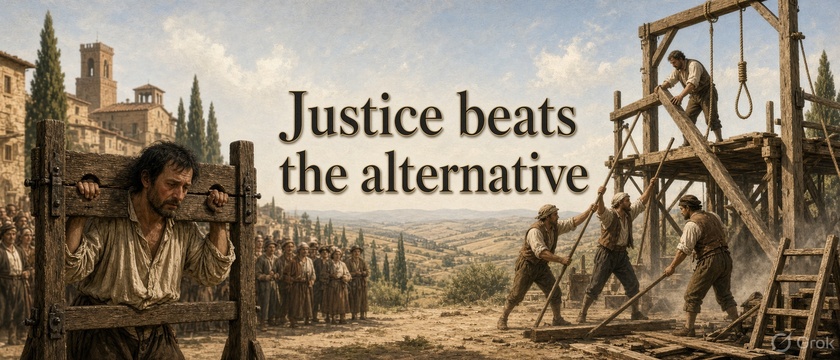
When Modern Justice arrived
November 30th

When Modern Justice arrived

On 30 November 1786, Grand Duke Pietro Leopoldo of Tuscany (later Holy Roman Emperor Leopold II) issued the Riforma della legislazione criminale (known as the Leopoldine Code or Leopoldina). This made the Grand Duchy of Tuscany the first modern state to formally and systematically abolish the death penalty for all crimes, while also ending judicial torture and moderating other punishments.

Before 1786: Context and Preparations

Tuscan criminal law before the reforms was a patchwork of Roman law, medieval statutes, local customs, and severe practices inherited from earlier centuries. It featured frequent use of the death penalty (even for lesser offences), judicial torture to extract confessions, branding, mutilation, confiscation of property, and “civil death.” Pietro Leopoldo (born 1747 in Vienna as Peter Leopold of Habsburg-Lorraine; Grand Duke from 1765 after the death of his father, Francis I) found the system too harsh and ill-suited to the “mild and gentle character” of the Tuscan people.

From the start of his reign he pursued broad Enlightenment-inspired reforms in administration, taxation, agriculture (including land reclamation), the economy, and the Church (suppressing the Inquisition in Tuscany). On criminal justice specifically, he issued earlier edicts and instructions that already moderated or suspended the death penalty and torture in practice while he studied a full overhaul. Key advisers included the Florentine jurists Pompeo Neri (who headed commissions on civil and criminal justice reform and was central to earlier projects under the Lorraine dynasty) and Giulio Rucellai, as well as the influence of Austrian jurist Carlo Antonio Martini.

The intellectual foundation was Cesare Beccaria’s 1764 treatise Dei delitti e delle pene (On Crimes and Punishments), which argued that the death penalty was neither useful nor necessary for deterrence or social order, that punishment should be proportionate, prompt, certain, and public, and that torture was irrational and unjust. Beccaria’s work (briefly placed on the Index) circulated widely and shaped reform thinking across Europe; Pietro Leopoldo explicitly applied its principles.

The Leopoldine Code Itself

Signed in Pisa on 30 November 1786, the reform declared the death penalty abolished “for ever” against any offender (present or contumacious, confessed or convicted) for any previously capital crime. It replaced capital sentences primarily with hard labour or public works for life. It also abolished judicial torture, the use of oaths in certain contexts, treating contumacy as equivalent to confession, confiscation of goods (which often harmed innocent families), civil death, branding, mutilation, and certain rope-based torments. Lèse-majesté offences were narrowed. Procedural changes modernised the inquisitorial system: provisional release was allowed, priority was no longer given to formal legal evidence alone, and witness testing by imprisonment was banned.

It was not a fully modern codification (it retained a discursive style, did not systematically repeal all prior laws, and left some older punishments such as the pillory). Yet it represented a decisive modernisation of Tuscan practice and was widely noted abroad as a pioneering Enlightenment achievement. Pietro Leopoldo ordered scaffolds removed and instruments of torture destroyed.

Significant Figures

  • Pietro Leopoldo (Peter Leopold / Leopold II): The driving force—an unusually hands-on enlightened ruler who personally studied the issues and insisted on leniency combined with prevention and certain enforcement.
  • Cesare Beccaria: The Milanese jurist and philosopher whose 1764 treatise supplied the core arguments against capital punishment and torture.
  • Pompeo Neri: Leading Tuscan jurist and administrator who helped shape the reform process and earlier legal rationalisation projects.
  • Supporting ministers and jurists such as Giulio Rucellai and others in the commissions that prepared the groundwork.

After 1786

The abolition was not permanent in every respect. After Pietro Leopoldo left Tuscany in 1790 to become Holy Roman Emperor (following the death of his brother Joseph II), the death penalty was reintroduced for certain offences—especially political ones—from around 1790 onward under his successor Ferdinand III. It was further altered in the Napoleonic period (when Tuscany became the Kingdom of Etruria and later part of France, introducing elements of the Napoleonic codes). The Leopoldina was reinstated with the restoration of the Grand Duchy in 1814 and remained in force until the new Tuscan Penal Code of 1853. Even when the death penalty existed on the books in later decades, it was applied rarely in Tuscany. It was abolished again by the provisional government in 1859 on the eve of annexation to the Kingdom of Italy; the unified Italian Zanardelli Code of 1889 then abolished it nationwide.

The reform’s longer-term legacy was substantial. It demonstrated that a modern state could function without capital punishment, influenced later European and American penal thinking, and is commemorated in Tuscany as Cities for Life Day / Festa della Toscana on 30 November. Historians such as Franco Venturi have called the Leopoldina one of the most important documents of Beccaria’s and Enlightenment influence on Italian legislation of the eighteenth century.

In short, the 1786 reform was both the culmination of two decades of preparatory moderation under an unusually progressive Habsburg-Lorraine ruler and a landmark practical application of Beccaria’s ideas—the first systematic modern state abolition of the death penalty, even if subsequent political upheavals limited its uninterrupted continuity.

= November 30th

These events cluster in late November (especially around 30 November), spanning sieges, a royal death, a pivotal peace signing, and a legal reform. One date in the list needs correction based on the sources.

978 (not 977): Otto II’s failed siege of Paris and rearguard defeat at the Aisne

In the Franco-German war of 978–980 over Lotharingia and personal honour, King Lothair of West Francia (with allies including Hugh Capet) launched a surprise attack on Aachen in summer 978, nearly capturing Emperor Otto II. Otto retaliated in the autumn, invading West Francia, sacking royal sites, and briefly besieging Paris (camping on Montmartre and having a choir chant the Alleluia). Unable to take the city, he withdrew in November 978. After most of his army had crossed the Aisne, West Frankish forces under Lothair struck the baggage train and rearguard; sources describe heavy losses, with one account claiming the corpses clogged the river.

Peace followed in 980 at Margut-sur-Chiers: Lothair renounced claims to Lotharingia. The campaign highlighted ongoing Carolingian-Ottonian rivalry and helped elevate Hugh Capet, who later founded the Capetian dynasty.

1707: Second Siege of Pensacola ends in British/Creek failure

Part of Queen Anne’s War (North American theatre of the War of the Spanish Succession), this was the second of two 1707 attacks by Carolina traders and Creek (mainly Tallapoosa and Alabama) allies on Spanish Pensacola and Fort San Carlos de Austria. The August siege burned much of the town but failed to take the fort. In late November a smaller force (~20 traders + ~300 Creeks) arrived, demanded surrender (rejected by Governor Don Sebastián de Moscoso, whose garrison was disease-weakened), and launched ineffective night attacks on 27/28, 28/29, and 29/30 November. A leading Creek chief was killed on the final night; the attackers withdrew on the morning of 30 November after significant casualties. French relief from Mobile arrived too late. The fort held; Pensacola was reduced largely to its garrison.

1718: Death of Charles XII of Sweden at the Siege of Fredriksten

During the Great Northern War, Charles XII invaded Norway in autumn 1718 aiming to take the border fortress of Fredriksten (Fredrikshald/Halden) as a stepping-stone. Swedish trenches approached the walls when, on the evening of 30 November (Old Style; 11 December New Style), a projectile (likely a musket ball or grapeshot) struck him through the left temple while he inspected the works. He died instantly. The Swedes abandoned the siege and the invasion; a secondary force under Armfeldt suffered heavy winter losses retreating. Charles’s death ended Sweden’s imperial era (formalised later by the Treaty of Nystad) and opened the Age of Liberty. Circumstances of the shot (enemy or own side) remain debated.

1782: Preliminary articles of the Treaty of Paris signed

On 30 November 1782 in Paris, American commissioners (John Adams, Benjamin Franklin, John Jay, Henry Laurens) and British commissioner Richard Oswald signed preliminary peace articles. Britain acknowledged the United States as free, sovereign, and independent; set boundaries; provided for cessation of hostilities, prisoner exchanges, and British withdrawal (without carrying off American property); and addressed issues such as Loyalists and debts. These were later formalised in the 1783 Treaty of Paris that ended the American Revolutionary War.

1786: Tuscany abolishes the death penalty

On 30 November 1786, Grand Duke Pietro Leopoldo (later Holy Roman Emperor Leopold II) issued the Riforma della legislazione criminale (Leopoldine Code) for the Grand Duchy of Tuscany. It permanently abolished the death penalty for all crimes, ended torture, limited confiscation, and moderated other punishments—the first modern state to do so systematically. Influenced by Enlightenment ideas (especially Cesare Beccaria’s Dei delitti e delle pene), it is commemorated as Cities for Life Day. The abolition was not permanent for every category of offence after Leopoldo left for Austria in 1790.

These episodes range from medieval dynastic warfare and early-modern colonial raids to Enlightenment reform and the diplomatic close of the American Revolution. The late-November timing of the last four is striking; the Otto campaign is securely placed in November 978 by the main narrative sources.

Read full Article
November 26, 2026
post photo preview
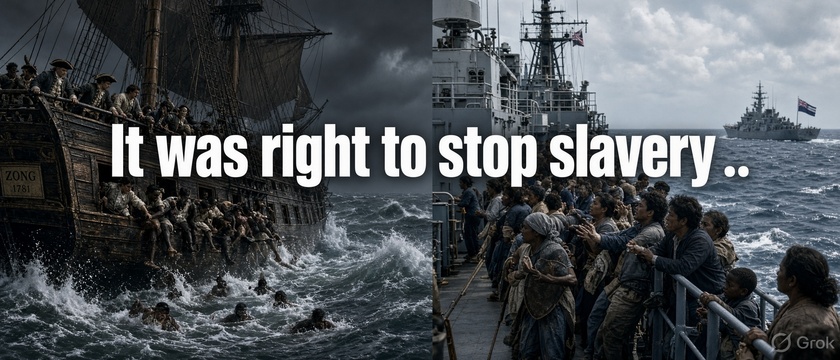
Zong v Tampa
November 29th

Zong v Tampa

The Zong massacre is one of the most infamous episodes of the Atlantic slave trade and a pivotal moment in the British abolitionist movement. Here is the fuller context.

Before: the voyage and the system

The Zong was a relatively small Liverpool-registered slave ship (about 110 tons) owned by the Gregson syndicate, a major slave-trading firm. In 1781 it was commanded by Captain Luke Collingwood, a surgeon-turned-captain who had previously worked on slave ships. It left the Gold Coast (present-day Ghana) in early September 1781 with roughly 442–470 enslaved Africans—far more than the vessel could safely carry. Overcrowding was common because human beings were treated as high-value “cargo,” and captains maximised profit by packing as many as possible.

By late November the ship was in the Caribbean. Many captives and several crew members had already died from disease, malnutrition and the conditions below decks. A navigational error (the crew mistook Jamaica for the French colony of Saint-Domingue/Hispaniola) caused the ship to sail past its destination. When the mistake was realised around 29 November, calculations suggested only a few days of fresh water remained, while Jamaica was still 10–14 days away. These figures were later disputed in court; critics argued the water shortage was exaggerated or avoidable.

The massacre (late November–early December 1781)

On or about 29 November the crew decided to throw living people overboard so the owners could claim insurance for “jettisoned cargo.” Under contemporary marine insurance, goods lost at sea to save the ship could be claimed; enslaved people were treated as insurable property. Over several days the crew systematically pushed people through cabin windows into the sea:

  • About 54 women and children on the first day
  • Another group of roughly 42 men the next day
  • A further group of around 36–38 in the following days

Approximately 10 more captives jumped overboard themselves rather than be thrown. Contemporary accounts put the total deliberately killed at 132–133. One captive reportedly asked that the remaining people be denied food and water rather than thrown overboard; the request was ignored. The ship reached Jamaica on 22 December with only about 208 survivors, less than half of those originally taken from Africa.

After: the court case and public reaction

In Jamaica the survivors were sold. Back in England the owners (James Gregson and partners) filed an insurance claim for the value of the people thrown overboard. The underwriters refused to pay. The case came to court in London in 1783 as Gregson v. Gilbert—not as a murder trial, but as a commercial dispute over insurance.

The jury initially found for the owners, accepting the argument that the killings were a necessary act to save the ship. On appeal, Lord Chief Justice Mansfield ordered a new trial, but the owners ultimately abandoned the claim. No one was ever prosecuted for murder. The legal principle at stake was simply whether the insurers had to pay for “property” deliberately destroyed.

News of the case reached the abolitionist Granville Sharp, who publicised it vigorously. Pamphlets, newspaper reports and Sharp’s own efforts turned a commercial lawsuit into a moral scandal. The massacre became a powerful symbol of the dehumanising logic of the slave trade: people could be thrown alive into the sea and the only legal question was whether the owners were entitled to compensation.

Significant figures

  • Luke Collingwood: Captain of the Zong. He ordered the killings and later claimed the water shortage left no alternative. He died shortly after the voyage.
  • James Gregson and the Gregson syndicate: Liverpool owners who filed the insurance claim and treated the dead as lost cargo.
  • Robert Stubbs / James Kelsall: Ship’s officers involved in the decisions and later testimony. Kelsall (first mate) gave evidence about the water calculations and the decision-making.
  • Granville Sharp: English abolitionist who obtained details of the case, campaigned against it, and used it to argue that the slave trade was inherently criminal.
  • Lord Mansfield (William Murray): Chief Justice who ordered the retrial. Although he did not treat the killings as murder, his handling of the case kept the facts in public view.
  • The enslaved Africans themselves: Almost entirely nameless in the records. A few individuals are briefly noted in testimony (including the one who asked to be starved rather than thrown overboard), but the great majority remain anonymous.

Longer-term significance

The Zong case did not immediately end the slave trade, but it supplied abolitionists with a stark, documented example of its brutality. It was widely cited in the parliamentary campaigns of the 1780s and 1790s that eventually led to the 1807 Act abolishing the British slave trade. J.M.W. Turner’s 1840 painting The Slave Ship (also known as Slavers Throwing Overboard the Dead and Dying) is widely understood to have been inspired by the Zong massacre, keeping the episode in cultural memory long after the trade itself had ended.

In short, the Zong massacre was the logical outcome of a system that treated human beings as insurable commodities. The subsequent lawsuit failed to punish the perpetrators but succeeded in exposing that logic to a wider public, and it remains one of the most cited episodes in the history of the Atlantic slave trade.

= November 29th

These events are commonly associated with 26 November in various “on this day” compilations (including some Wikipedia lists), though several actually occurred a few days later (often the 28th or 29th). Here is a concise account of each, based on standard historical sources.

561 – Death of Chlothar I and division of the Frankish kingdom

Chlothar I (also Clotaire or Clothar), the last surviving son of Clovis I, died at Compiègne in late 561 (sources place it in late November or December). He had reunited the Frankish realm under a single ruler after the deaths of his brothers. Under Frankish custom of partible inheritance, the kingdom was immediately divided among his four surviving sons:

  • Charibert I received the Kingdom of Paris
  • Guntram received Burgundy / Orléans
  • Sigebert I received Austrasia (Reims)
  • Chilperic I received Neustria / Soissons

This restarted the cycle of Merovingian civil wars and fragmentation that characterised the dynasty.

618 – Battle of Qianshuiyuan

In late November 618 (commonly dated 29 November), Tang forces under Li Shimin (the future Emperor Taizong) defeated the army of Xue Rengao, who had proclaimed a short-lived “Qin” state in the northwest after the collapse of the Sui dynasty. After a prolonged standoff on the shallow-water plain northwest of modern Changwu (Shaanxi), Li Shimin exploited the enemy’s supply problems and the difficult terrain to rout Xue’s forces. The victory eliminated a major rival, secured the Guanzhong region, and was an important early step in the Tang consolidation of power.

903 – Battle of Hama

On 29 November 903, an Abbasid army commanded by Muhammad ibn Sulayman al-Katib crushed a Qarmatian (radical Ismaili) force near Hama in Syria. The Qarmatians had been raiding and threatening Abbasid control in the region. The defeat broke their power in northern Syria, allowed the capture and execution of key leaders, and cleared the way for the Abbasids to move against the autonomous Tulunid rulers of Egypt.

1394 – Capital moved to Hanyang (Seoul)

Yi Seong-gye (King Taejo), founder of the Joseon dynasty after overthrowing Goryeo in 1392, moved the capital from Kaesong to Hanyang on the Han River in 1394. The site was chosen for defensive geography, access to the river for transport, central location on the peninsula, and favourable geomantic (feng shui) qualities. Hanyang—today’s Seoul—remained the capital of Korea for the rest of the Joseon period and, with brief interruptions, down to the present.

1549 – Papal conclave of 1549–50 begins

The conclave that followed the death of Pope Paul III opened on 29 November 1549. It lasted until 7 February 1550 and was one of the longest and most politicised of the century, with heavy interference from the French (Henry II) and Imperial (Charles V) factions. Reginald Pole came close to election early on; the eventual compromise choice was Cardinal Giovanni Ciocchi del Monte, who became Pope Julius III. The conclave also concerned the future of the Council of Trent and control of the Duchies of Parma and Piacenza.

1612 – Battle of Swally

On 29–30 November 1612, four English East India Company galleons under Captain Thomas Best defeated a Portuguese squadron (four galleons and numerous smaller vessels) off Suvali (Swally), near Surat in Gujarat. The engagement was modest in scale but significant: it weakened Portuguese naval dominance in the region, impressed the Mughal authorities, and helped the English secure trading privileges. It is often cited as an early milestone in the rise of English power in India and as a remote ancestor of the Indian Navy.

1729 – Natchez massacre at Fort Rosalie

In late November 1729 (28 or 29 November), Natchez warriors attacked the French post of Fort Rosalie and surrounding settlements near present-day Natchez, Mississippi. The immediate trigger was the French commandant Chépart’s demand that the Natchez abandon their sacred White Apple village (containing the bones of their ancestors) so he could plant tobacco there. In a coordinated strike the Natchez killed roughly 230 French colonists (contemporary figures often given as about 138–144 men, 35 women and 56 children) while sparing many women and enslaved Africans, whom they took captive. French retaliation in the following years largely destroyed the Natchez as an independent people; survivors were scattered among other tribes or deported.

1776 – End of the Battle (siege) of Fort Cumberland

During the American Revolutionary War, a mixed force of New Englanders, local Nova Scotian patriots, Acadians and Indigenous allies under Jonathan Eddy besieged Fort Cumberland (formerly Beauséjour) in late October–November 1776. British defenders of the Royal Fencible Americans held out until reinforcements arrived; a sortie on 29 November scattered the besiegers. The failure helped keep Nova Scotia firmly in British hands for the rest of the war.

1777 – Founding of San José, California

On 29 November 1777, Lieutenant José Joaquín Moraga founded the Pueblo de San José de Guadalupe on the Guadalupe River in Alta California. It was the first civilian Spanish settlement (pueblo) in the province, distinct from missions and military presidios, and was intended to supply food to the garrisons at Monterey and San Francisco. The site later became the city of San Jose.

1781 – Zong massacre

Beginning on or about 29 November 1781, the crew of the British slave ship Zong threw approximately 130–133 enslaved Africans overboard into the Atlantic. The ship had been overloaded; after a navigational error and water shortages (the extent of which was later disputed), the crew decided to jettison the “cargo” so the owners could claim insurance. The subsequent London insurance lawsuit publicised the atrocity and became a powerful argument for abolitionists in Britain.

1783 – New Jersey earthquake

On the evening of 29 November 1783 (local time), a magnitude ~5.3 earthquake struck northern New Jersey (estimated epicentre in the Highlands / near the Ramapo Fault). It was felt from New Hampshire to Pennsylvania, toppled chimneys and knocked objects from shelves, but caused relatively limited structural damage. It remains the strongest historically recorded earthquake in New Jersey. George Washington, then in New York City marking the British evacuation, reportedly slept through it at Fraunces Tavern.

These episodes range from dynastic succession and imperial consolidation to colonial violence, early global trade competition, and natural events. Several of the precise calendar dates in secondary lists are approximate or shifted by a day or two relative to primary sources.

Read full Article
See More
Available on mobile and TV devices
google store google store app store app store
google store google store app tv store app tv store amazon store amazon store roku store roku store
Powered by Locals