

VoiceDDB
Politics • Culture • News
oDDBall analysis of conservative politics with a libertarian economic conservative twist. Small government, big freedom.
Interested? Want to learn more about the community?
November 26, 2021
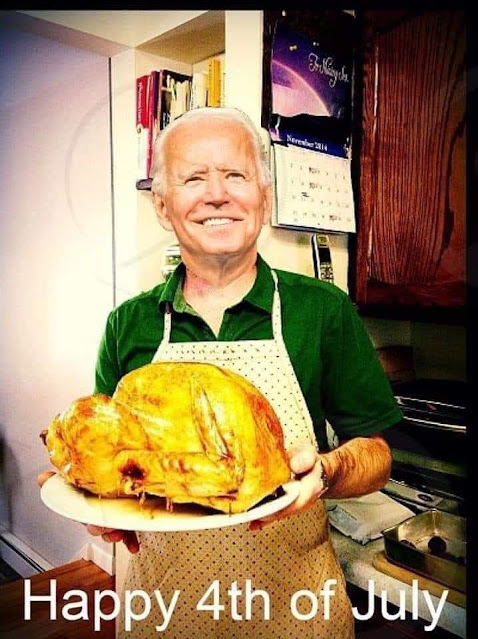
Biden season greetings
post photo preview
Interested? Want to learn more about the community?
What else you may like…
Videos
Posts
Articles
00:01:07
November 27, 2022
Jingle Bell Rock

Jingle bell, jingle bell, jingle bell rock
Jingle bells swing and jingle bells ring
Snowin' and blowin' up bushels of fun
Now the jingle hop has begun

Jingle bell, jingle bell, jingle bell rock
Jingle bells chime in jingle bell time
Dancin' and prancin' in Jingle Bell Square
In the frosty air

What a bright time, it's the right time
To rock the night away
Jingle bell time is a swell time
To go glidin' in a one-horse sleigh

Giddy-up jingle horse, pick up your feet
Jingle around the clock
Mix and a-mingle in the jinglin' feet
That's the jingle bell rock

Jingle bell, jingle bell, jingle bell rock
Jingle bell chime in jingle bell time
Dancin' and prancin' in Jingle Bell Square
In the frosty air

What a bright time, it's the right time
To rock the night away
Jingle bell time is a swell time
To go glidin' in a one-horse sleigh

Giddy-up jingle horse, pick up your feet
Jingle around the clock
Mix and a-mingle in the jinglin' feet
That's the jingle bell
That's the jingle...

00:02:04
September 01, 2021
Intro to Locals for the Conservative Voice

David Daniel Ball calls himself the Conservative Voice.

I'm a teacher with three decades experience teaching math to high school kids.I also work with first graders and kids in between first grade and high school. I know the legends of why Hypatia's dad is remembered through his contribution to Math theory. And I know the legend of why followers of Godel had thought he had disproved God's existence.

I'm not a preacher, but I am a Christian who has written over 28 books all of which include some reference to my faith. Twelve blog books on world history and current affairs, detailing world events , births and marriages on each day of the year, organised by month. Twelve books on the background to and history of Bible Quotes. One Bible quote per day for a year. An intro to a science fiction series I'm planning, post apocalyptic cyber punk. An autobiography with short story collections.

I'm known in Australia for my failure as a whistleblower over the negligence death of a school boy. ...

00:01:50
September 04, 2026
Should violent criminals be made fat? Grok says 'no'

No. Transferring gut bacteria from an obese person into a violent criminal is not a reliable, ethical, or effective way to make them “fat, sedentary, and less of a physical threat.”

The science does not deliver the outcome you want

Mouse studies in germ-free animals showed that microbiota from obese donors can increase energy harvest and adiposity compared with lean-donor microbiota. That is the origin of the idea. Human evidence is far weaker.

Randomized trials of fecal microbiota transplant (FMT) from lean donors into people with obesity have generally failed to produce meaningful, sustained weight loss. Microbiome composition can change; body weight and metabolic markers often do not, or the effects are small and inconsistent. Diet and the existing gut environment usually dominate. A 2025 Nature paper found diet outperformed microbial transplant for microbiome recovery. Human guts are already colonized, not sterile like lab mice, so engraftment is variable and effects unpredictable.

It is not a ...

post photo preview
August 28, 2026
Pfizer struggles to answer

Some in Australia are brilliant. Malcolm Roberts Investigates Pfizer over Covid vaccine.

Holiday break is over back to work tonight

Tonight I'll start double posting until I've caught up.

post photo preview
Allison Inquiry shows where questions need to be asked regarding Covid 19 response.
The questions Ottawa still will not sit for

Allison Inquiry shows where questions need to be asked regarding Covid 19 response.

The questions Ottawa still will not sit for

The Allison Inquiry was not a court and did not pretend to be one. Dean Allison and Shawn Buckley said so every day: they were there to listen, not to find facts. Health Canada did not come. That absence is the story as much as anything said under oath.

What filled the room for four days on Parliament Hill was a single, stubborn pattern. The people who testified were not the cartoon “anti-vaxxer.” They were paramedics, soldiers, parents who needed a shot so a boy could play hockey, workers who took the product because the state and the employer said it was safe, effective, and necessary. They used the same phrase, again and again: they took one for the team.

Then the team was gone.

What they described is not exotic. Heart injury. Clots. Nerves on fire. A face that would not move. A young man dead on the floor thirty-three days after a first dose. Files rewritten so the word “vaccine” never appears. Serving members told they cannot speak. Families of the dead told the complete medical record is not theirs to have. Doctors who noticed a cluster found the regulator at their door instead of a research desk. A compensation scheme that exists in press releases and starves in practice: thousands of claims, a few hundred cheques, years of appeals, letters that do not even carry the claimant’s name.

That is the shared account of the people who sat in that room. It is not Health Canada’s account. Those two accounts have not been put in the same room on purpose.

The experts who were invited went further — persistence of product in the body, surveillance that cannot see what it is not allowed to count, a product they say should not still be on offer to healthy children while the injured wait. Patients mostly did not come for that argument. They came because a neurologist finally wrote the words no emergency department would, or because no one would write them at all.

Jamie Daniel’s testimony is the part that should end the pretence that this is only a quarrel about “misinformation.” She was an advanced-care paramedic and a young mother. She asked for help in hospital. What arrived was a psychologist talking about medical assistance in dying. She was not suicidal. She was in pain and she wanted treatment. If that is what “care” looks like when the diagnosis is politically expensive, then the question is no longer medical. It is civic.

Canada has a vocabulary for almost everything except this. We can debate carbon, housing, and foreign interference until the lights go out. We cannot, officially, sit still while a citizen says: I did what you asked, I am not the person I was, and the program that was supposed to catch me did not. More than thirty democracies have held some form of pandemic inquiry. Canada’s federal government has not. An MP had to rent the shadow of Parliament and fill it with volunteers.

An unofficial hearing cannot settle causation. It can do something regulators have refused to do: put the injured in the record without first requiring them to apologise for existing. Timing is not proof. Dismissal is not proof either. Both have to be tested in public, with Health Canada in the chair, with the CAF records on the table, with the compensation contractor’s books open, and with doctors free to say what they see without a college file opening behind them.

Those are not radical demands. They are the minimum a country owes people it conscripted into a medical campaign by mandate, by employment, and by moral pressure.

The alternative on offer, if we are honest about Daniel’s hospital room, is quieter and uglier: do not name the injury, do not fund the research, do not fix the scheme — and if the pain does not stop, discuss death as a service. That is not compassion. It is administrative convenience wearing a soft voice.

Allison said the four days shattered a ceiling on silence. Ceilings grow back if nobody walks through the hole. The questions are now on the record. They are ordinary questions. What happened to these people? Who decided not to look? Why does a “no-fault” program fault the claimant at every turn? Why were doctors punished for counting? Why was a mother in a pain crisis offered an exit instead of a diagnosis?

Answer them in a real inquiry, with the departments present, or admit that the policy is to stop asking. There is no third option that still deserves to be called a public health system.

Read full Article
September 16, 2026
post photo preview
Terrorism needs no reason
Reasons still underpin it.

Terrorism needs no reason. Reasons still underpin it.

On 16 September 1920 a horse wagon exploded on Wall Street. Thirty-eight dead. Hundreds wounded. No one was convicted. We still do not know, as a matter of court record, who lit the fuse. We do know there were reasons. Flyers signed “American Anarchist Fighters” had already been dropped nearby: free the political prisoners, or it will be sure death for all of you. Five days earlier Sacco and Vanzetti had been indicted. Historians point to Mario Buda and the Galleanists. The Bureau of Investigation never closed the circle. Wall Street swept the glass, reopened the Exchange, and went back to work. The scars are still in the marble at 23 Wall Street. There is no plaque.

On the same calendar date, 219 years earlier, James II and VII died in exile at Saint-Germain-en-Laye. His only surviving legitimate son, thirteen-year-old James Francis Edward Stuart, inherited the Jacobite claim to England, Scotland and Ireland. His friends called him James III and VIII. His enemies called him the Pretender; later, the Old Pretender. That was not a mystery. It was a reason. A Catholic heir had been born in 1688; the Glorious Revolution followed; Parliament barred Catholics from the throne; the Act of Settlement of 1701 settled the crown on the Protestant house of Hanover so that this boy and every Catholic Stuart after him would never wear it. Louis XIV recognised him as king. Spain and the Pope followed. England attainted him. From that inheritance came the risings of 1715 and 1745, foreign intrigue, and a generation that toasted “the king over the water.” James himself was cautious, devout, and unsuccessful. He never sat on those thrones. The claim still produced armies.

Two 16ths of September. One unsolved bombing. One dynastic claim that never became a reign. In both cases the violence, or the threat of it, had a politics underneath. Anarchists wanted prisoners freed and capitalism punished. Jacobites wanted a king they believed had been stolen by statute. Terrorism does not require a reason that we find respectable. It requires a reason that someone finds sufficient.

That is the first half of the argument, and it is the easy half. History is full of men who killed for a pamphlet, a creed, a succession, or a grievance that would not survive a quiet afternoon in a court of law. The hard half is now.

Today we often have both the identity and the reason. Manifestos are posted. Organisations claim the dead. Intelligence services name networks. Cameras record the act. And still the convictions do not arrive, or they arrive so late that the word justice has already gone cold. Khalid Sheikh Mohammed has been in custody for a generation as the alleged architect of 11 September 2001. A trial date has been pushed toward 2028. A confession was thrown out because of how it was obtained. Victim families are still waiting. That is not an unsolved wagon on Wall Street. That is a known man, a known plot, and a system that cannot finish the case.

So the question is not whether terrorism has reasons. Of course it does. The question that has to be asked, without theatre, is whether terrorism is, in practice, legal.

The law on the page says no. Murder is murder. Conspiracy is conspiracy. Material support is an offence. States write statutes, fund agencies, and hold anniversary speeches. Then the machinery stalls: torture taints evidence; jurisdiction fights last decades; pleas are signed and unsigned; defendants age out; some are deported instead of tried; others serve terms that look like ordinary crime while the political costume is quietly folded away. When the identity is known and the motive is published and the court still cannot produce a verdict the public can trust, the prohibition becomes a sermon. Sermons do not deter men who already have a reason.

The Jacobites at least forced Parliament to say what it was doing. The Act of Settlement was an open choice: religion and politics over blood. You can argue with that choice. You cannot pretend it was hidden. The Wall Street bombers hid and ran. The modern failure is different again. We advertise the names and then fail to close the book.

A society that will not convict what it can identify has not legalised terrorism by statute. It has legalised it by neglect. Reasons will keep arriving. They always have. The only question left is whether the law still means what it says when the reason is already on the table.

Read full Article
September 15, 2026
post photo preview
Cakewalk, where did the expression come from?
'It was supposed to be a cakewalk'

Cakewalk, where did the expression come from? 'It was supposed to be a cakewalk' a soldier might complain, feeling a simple mission wasn't. But the word is not from war.

The soldier’s complaint is the modern meaning. The word is older, and it is not military.

A cakewalk was a dance. Enslaved African Americans in the antebellum South created it. They did not import it from Africa as a finished form. They took the European grand promenade they saw in the big house — the Grand March, the minuet, the stiff carriage of formal wear — and turned it into a high-stepping, backward-leaning, inventively comic parody. Couples dressed in borrowed or handed-down finery. They added shuffles, kicks and African-derived movement. The couple judged most elegant or most inventive won a decorated cake. That prize is why we still say someone “takes the cake.”

Exact dates and places are lost. Oral histories collected from formerly enslaved people describe Sunday “prize walks” in the quarters. Owners often watched and even judged. Many missed the joke. The ragtime musician Shepard Edmonds, whose parents had been enslaved, put it plainly: they “did a take-off on the high manners of the white folks… but their masters… missed the point.”

After emancipation the dance moved into Black community gatherings, then onto the minstrel stage. White performers in blackface inverted the satire into caricature. African American professionals later reclaimed it. Bert Williams and George Walker (with Aida Overton Walker) made it a theatrical specialty and took it to Broadway. Championship contests filled Madison Square Garden in the 1890s. The dance reached Europe; Paris had a brief “folie du cake-walk.” John Philip Sousa’s band carried cakewalk numbers abroad. The music — 2/4 march bass under a syncopated strut — fed directly into ragtime. Kerry Mills’s “At a Georgia Camp Meeting,” Abe Holzmann’s “Smoky Mokes,” Scott Joplin’s “Swipesy Cakewalk,” and Debussy’s joking “Golliwogg’s Cake-Walk” all sit on that line.

The idiom “it was a cakewalk” did not arise because the dance was simple. The strut demanded skill and stamina. What spectators saw was ease. That impression of effortless elegance is what the phrase kept. “Piece of cake” is a later cousin of the same prize-and-leisure association.

The craze faded after about 1905 as the one-step, tango and foxtrot arrived. Fragments survived in later vernacular dance. The circular “cakewalk” still played at school fairs is a distant, sanitized game that has almost nothing to do with the original promenade.

The history is layered: enslaved people mocking their owners, white minstrels mocking those dancers, Black professionals reclaiming the form, white composers and socialites adopting it in turn. One historian’s summary still holds: Blacks imitating whites who were imitating Blacks who were imitating whites.

That is where the expression comes from. Not from a battlefield that looked easy. From a dance that looked easy while it was doing something else.

Read full Article
See More
Available on mobile and TV devices
google store google store app store app store
google store google store app tv store app tv store amazon store amazon store roku store roku store
Powered by Locals