The High Court’s Uneasy Choice: Letter of the Law for Barnaby Joyce, Spirit for Native Title
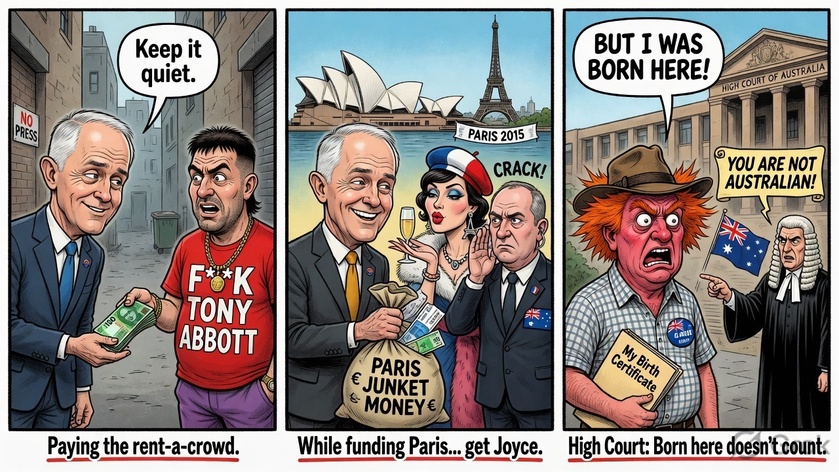
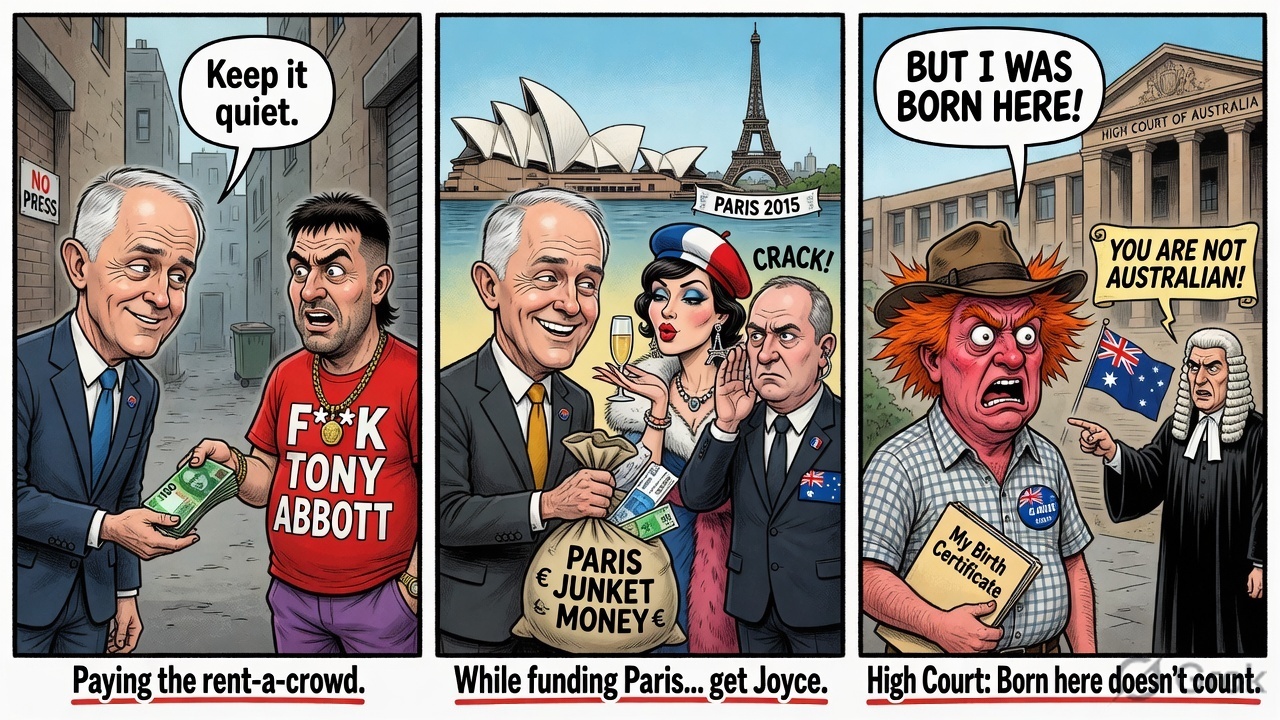
The 2017 disqualification of Barnaby Joyce from the Australian Parliament remains one of the more surreal episodes in our constitutional history. Here was Australia’s Deputy Prime Minister, born and raised in this country, stripped of his seat not because of corruption, incompetence, or public rejection — but because New Zealand law deemed him a citizen by descent through his father. The High Court ruled strictly by the letter of Section 44(i) of the Constitution. Joyce’s ignorance of his dual status was irrelevant. Australia had, in effect, outsourced part of its parliamentary eligibility to the citizenship rules of a foreign power.
This stands in sharp contrast to the High Court’s approach in landmark cases like Mabo v Queensland (No 2) (1992). There, the Court famously “read between the lines” of common law and history. It rejected the long-standing doctrine of terra nullius and recognised native title — an ancient form of title not created by statute or Crown grant, but arising from Indigenous connection to land. The judges engaged in creative interpretation to align the law with contemporary understandings of justice and historical truth.
Critics of the Joyce decision argue this reveals a form of selective judicial method. When dealing with Indigenous rights and historical dispossession, the Court embraced a purposive, equitable approach. When confronting the technical eligibility of an elected Deputy Prime Minister, it insisted on strict, literal application — even though Joyce had no practical allegiance to New Zealand and had lived his entire life as an Australian.
Sovereignty and Foreign Powers
The optics are uncomfortable. Australia’s Constitution disqualified Joyce because a foreign country (New Zealand) claimed him as one of its own. This creates a strange precedent: a foreign legislature or bureaucracy can, by changing or interpreting its own citizenship laws, influence who may sit in Australia’s Parliament. For a nation that prizes its sovereignty, this feels anomalous.
The user’s personal experience campaigning in Blaxland in 2010 adds another layer. Many dual citizens have faced similar dilemmas — attempting to renounce foreign citizenship only to discover the constitutional trap remains. The situation would likely have drawn very different commentary had the MP in question possessed visible Aboriginal ancestry, even without strong cultural identification. The High Court’s firm stance here appears driven by a desire to uphold the integrity of Section 44, but the selective rigidity invites accusations of inconsistency.
The Political Context
Joyce was no ordinary backbencher. As a vocal advocate for regional Australia, he pushed hard for water infrastructure, including ambitious dam-building proposals (the “100 dams” rhetoric). These ideas clashed with the more urban, climate-policy-focused direction favoured by then-Prime Minister Malcolm Turnbull. Their relationship was already strained. The citizenship crisis conveniently removed a powerful internal critic at a sensitive time, though Joyce comfortably won the subsequent by-election in New England with a thumping majority.
Claims that New Zealand’s Labour government at the time timed or exploited the process for political effect have circulated, though the legal trigger came through standard inquiries during the broader citizenship saga. The High Court itself delivered a unanimous judgment based on constitutional text, not politics.
A Rotten Proceeding?
The episode exposed real flaws. Section 44(i) is an 19th-century provision ill-suited to modern mobility and dual citizenship realities. It has ensnared multiple politicians unaware of their status. Requiring candidates to proactively divest foreign citizenship is reasonable, but automatic disqualification for unknowing dual status feels disproportionate.
Yet the deeper unease is about consistency in judicial philosophy. If the High Court can evolve common law dramatically for native title to correct historical injustice, why such literalism elsewhere when it destabilises democratic representation? Joyce’s rapid return via by-election showed the people of New England rejected the technical disqualification. The Court protected the constitutional text. Whether it always applies the same standard across different cultural and political contexts remains a fair subject for debate.
Australia deserves clearer rules. A referendum to modernise Section 44 would be healthier than relying on High Court literalism in some cases and judicial creativity in others. The Joyce affair was not just about one man’s eligibility — it highlighted tensions between legal formalism, political reality, and national sovereignty.