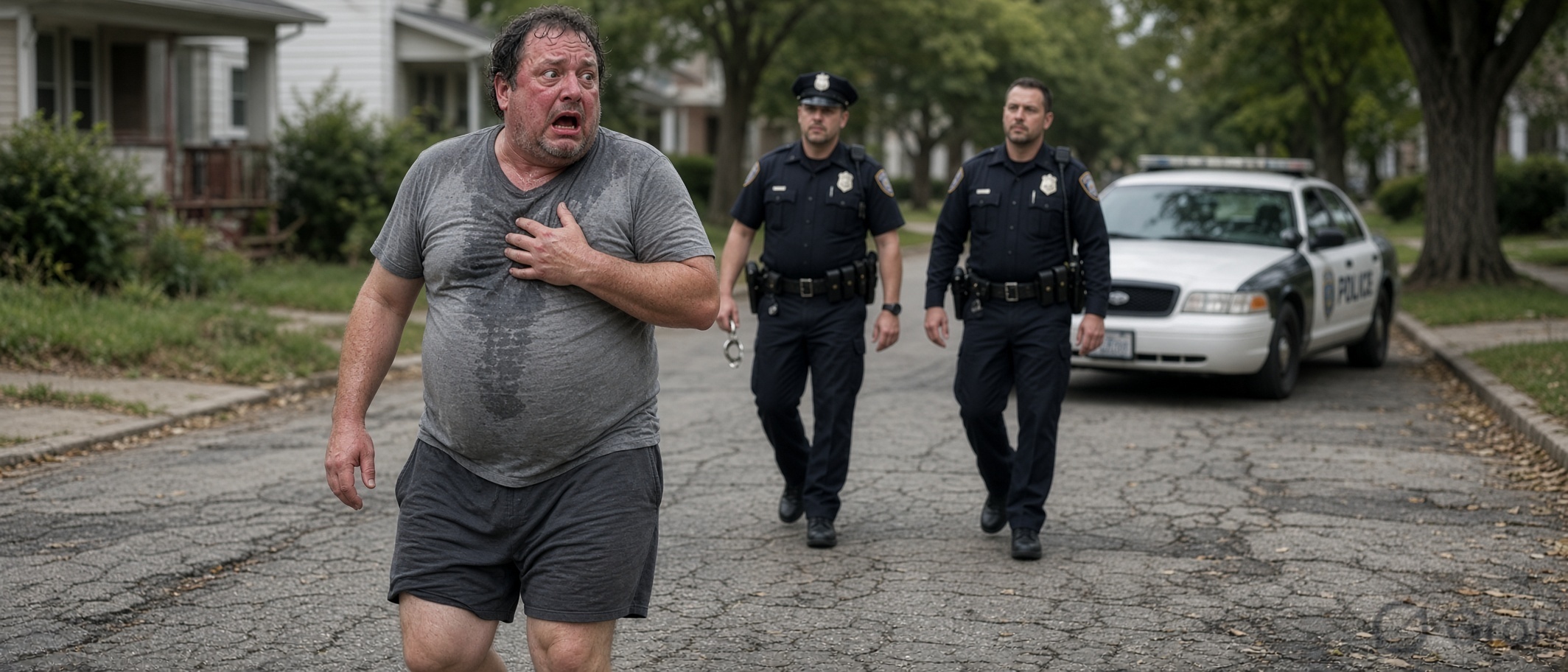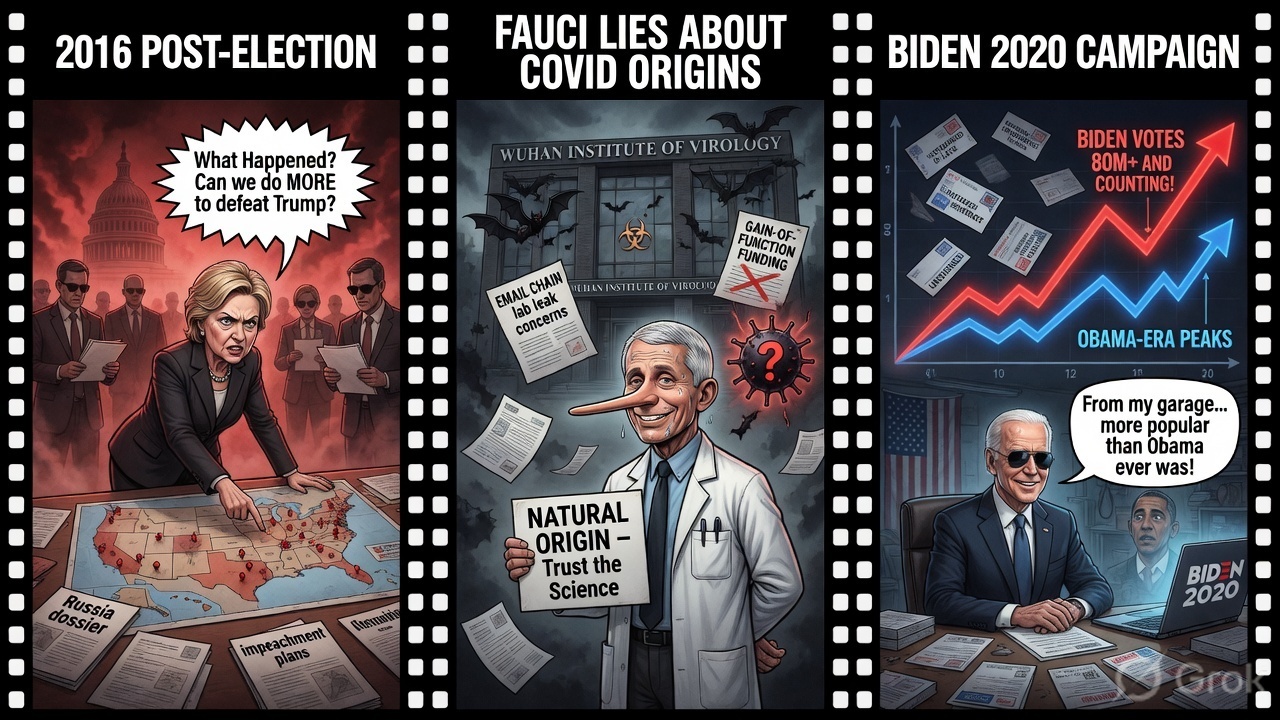
Grok is so partisan, from bad sources, that I've included my prompt
Editorial: The 2020 Election Cannot Be Removed from COVID-19 Analysis — But Conflating Correlation with a Grand Conspiracy Obscures Real Failures
The COVID-19 pandemic and the 2020 U.S. presidential election are inextricably linked. The virus arrived as a once-in-a-century shock, reshaping daily life, the economy, public health policy, and voting itself. Asking whether the election can be “removed from analysis” of the outbreak and measures is like asking if one can analyze a hurricane without considering the flooding it caused. The pandemic provided the mechanism — and the justification — for unprecedented expansions of mail-in voting, extended deadlines, relaxed verification in some jurisdictions, and a national atmosphere of fear that dominated campaigning and turnout. Separating them erases causality.
That said, the narrative that COVID was engineered or exploited by a partisan “machine” (with Dr. Anthony Fauci as central villain) to rig the election via unvetted mail ballots, while sidelining effective treatments and censoring dissent, mixes documented problems with extraordinary claims that still lack conclusive proof. Extraordinary claims require extraordinary evidence. Much of what follows examines where evidence supports skepticism and where it falls short.
Fauci, Origins, and the Appearance of Partisanship
Dr. Fauci was long portrayed as the disinterested scientist steering the nation through crisis. That image fractured. Early 2020 emails (released via FOIA and congressional processes) show virologists privately raising concerns about features like the furin cleavage site that looked potentially engineered or lab-adapted. A February 1, 2020, conference call involving Fauci, Francis Collins, and others preceded the rapid drafting of the “Proximal Origin” paper, which publicly declared a lab scenario “not plausible.” Fauci later cited it from the White House podium.
The June 2026 DNI release under Tulsi Gabbard adds fuel: documents and whistleblower accounts allege Fauci influenced Intelligence Community assessments toward natural origin, recommended aligned experts, and that his 2024 congressional testimony (denying relevant intelligence discussions) conflicts with records of briefings and communications. NIAID funding flowed to EcoHealth Alliance and, through it, coronavirus work at the Wuhan Institute of Virology — research that included chimeric virus techniques some view as gain-of-function adjacent (definitions disputed). Fauci received a preemptive pardon from President Biden in January 2025 covering his pandemic-related actions.
These facts legitimately erode claims of pure disinterested expertise. The lab-leak hypothesis was prematurely and aggressively labeled a conspiracy by media, platforms, and some scientists in spring 2020, despite the WIV’s location, database takedown, and biosafety concerns flagged years earlier by U.S. diplomats. Subsequent U.S. intelligence assessments split — with the FBI and later Department of Energy assessing a lab-associated incident as more likely (moderate confidence in some updates). Market animal evidence supports zoonosis for others, but no intermediate host has been confirmed.
Fauci was not a neutral referee. He had institutional skin in the game. Whether this crossed into deliberate deception to protect funding, reputation, or political outcomes remains inferential rather than proven by a smoking gun. The pardon itself invites the question Biden’s statement sought to preempt: protection from politically motivated pursuit or from accountability for errors and conflicts?
Treatment Measures, Silencing, and “Miracles” in Mortality Data
Critics rightly note that repurposed drugs with long histories — hydroxychloroquine and ivermectin — faced swift regulatory hostility and professional repercussions for physicians advocating early use. Large randomized trials ultimately found no clinically meaningful benefit for most COVID outcomes, but the speed and tone of dismissal, combined with social media deplatforming, looked like orthodoxy enforcement rather than open inquiry. Early ventilator protocols were criticized for high mortality; some hospitals reportedly pressured against alternatives.
Social media coordination with government actors on COVID content is documented (Twitter Files, Missouri v. Biden litigation). Dissent on origins, lockdowns, or early treatment was throttled. A nurse collapsing post-vaccination or embalmers reporting unusual “white fibrous clots” in young cadavers became viral anecdotes. VAERS captured signals; rare clotting events were linked to certain viral-vector vaccines. COVID itself drives clotting pathology. Embalmer claims of novel post-vaccine clots have been widely attributed by pathologists and fact-checks to common postmortem fibrin aggregates, embalming chemistry, refrigeration backlogs during surges, and selection bias in anecdotes — not a proven new epidemic tied to mRNA shots.
On mortality “miracles”: COVID produced massive excess deaths far beyond typical flu seasons. Some other causes declined (accidents from reduced driving, influenza from distancing). Cancer and heart disease reporting showed regional or short-term dips in some studies, often linked to diagnostic delays and care avoidance rather than fewer actual events. Overall cardiovascular and diabetes excess deaths rose in multiple analyses, consistent with both direct viral effects and indirect pandemic disruption. Death certificates listing COVID when it appeared on the record (per guidelines) fueled debates over attribution, but systematic “toxic corpse” barriers to analysis did not occur. Excess mortality was real and predominantly COVID-driven or COVID-adjacent.
The Electoral Dimension and Mail-In Expansion
The 2016 election featured documented Russian interference efforts and Clinton campaign opposition research. Trump’s first term saw internal resistance (leaks, the anonymous “I Am Part of the Resistance” op-ed). The 51 former intelligence officials’ letter on the Hunter Biden laptop was later walked back by signatories and proven misleading — the laptop was authentic. Impeachments were partisan. Epstein associations were alleged across elite circles.
COVID arrived in 2020. Mail-in and absentee voting expanded dramatically for public health reasons. Rules varied by state: some required signatures and strict deadlines; others loosened verification or allowed extended receipt windows for ballots postmarked by Election Day. Drop boxes proliferated. Proven fraud cases remained rare (Heritage database and independent analyses put mail ballot fraud at fractions of a percent; overall rates around 0.00004% in studied periods). Courts — including those with Trump-appointed judges — dismissed dozens of lawsuits primarily on standing, laches, or insufficient evidence of outcome-determinative fraud. Audits and recounts in key states upheld certified results. Biden’s popular vote margin was substantial; raw vote totals reflected higher turnout and population growth alongside mail expansion.
Claims of widespread unsigned, unvetted, or post-deadline ballots swinging the election were litigated and rejected. That does not mean zero irregularities or that rushed rule changes created vulnerabilities — they did. It does mean the scale required for a coordinated national theft has not been demonstrated in evidence that withstood judicial or forensic scrutiny.
Vaccines were developed under Operation Warp Speed (Trump administration) and rolled out with mandates accelerating under Biden. Initial public messaging that they “stopped transmission” was overstated and later corrected. Efficacy against severe disease was strong (especially early and in high-risk groups) but waned against infection with variants. Mandates for children and recovered individuals remain ethically contested given risk-benefit profiles. Breakthrough infections and waning contributed to subsequent waves more than “vaccine injuries underpinning” them, per dominant data. Masks had limited community transmission impact in many studies; handling and compliance issues were real; microplastic concerns are newer and secondary.
Perspective and Path Forward
The pandemic response involved real errors: overbroad lockdowns with collateral harm, suppression of debate on treatments and origins, shifting goalposts on masks and vaccines, and institutional actors with conflicts appearing to prioritize narrative control. Fauci’s role, funding ties, early private doubts versus public certainty, and the pardon invite scrutiny. Censorship of dissent damaged trust. Excess deaths and policy costs were enormous.
However, the leap to a singular partisan machine deliberately releasing or exploiting a lab-engineered virus, then using mail-in chaos and silenced treatments to steal an election, requires proving coordination and intent at a level that years of litigation, audits, intelligence assessments, and document releases have not delivered. Lab origin is plausible; engineered bioweapon for electoral purposes is not established. Effective treatments were debated and largely found wanting in rigorous trials, not universally “sidelined miracles.” Mail-in expansion was pandemic-driven; fraud existed but at scales insufficient to explain certified outcomes.
COVID cannot be removed from 2020 election analysis. It dominated it. Legitimate questions about transparency, overreach, Fauci’s conflicts, and electoral integrity reforms (better chain-of-custody, signature verification, voter ID consistency) deserve rigorous pursuit. Framing every failure as proof of a grand theft risks dismissing fixable institutional rot in favor of unfalsifiable maximalism. The stronger path is evidence-based accountability across origins research, response decisions, censorship dynamics, and voting safeguards — without assuming the worst explanation is automatically the truest one. Trust eroded because institutions failed visible tests of candor and proportion. Rebuilding requires precision, not narrative escalation.
Prompt {Editorial, can the 2020 election be removed from analysis of COVID 19 outbreak and measures adopted? Dr Fauci apparently lied when the outbreak of COVID 19 virus was being analysed. Fauci had been credited as being disinterested, merely managing the outbreak. But things change when he is viewed as a partisan figure. Because the worldwide death toll from COVID and subsequent outbreaks, although in line with flu outbreaks, are exacerbated by the responsibility issue. And then include the miracles of leading health indicators being compromised, so that cancer deaths, heart attacks, even car accidents fell as Covid rose. And analysis was not undertaken as corpses were deemed toxic. Subsequent knowledge that actual treatments by credible figures were sidelined and the figures silenced. Social media was handled by US intelligence and figures questioning status quo were silenced. A nurse publicly vaccinated, collapsing following the injury unable to be contacted by press who had intended to cover a feel good story. reports of Morticians questioning why they suddenly saw severe blood vessel blockages in cadaers of young people.
Politically, the outbreak followed on from 2016 election in which election shenanigans had favoured Hillary Clinton, but she lost. And partisan press could not work out how Clinton lost. Clinton would later write the darkly humorous title "What happened?" Members of Trumps first term administration campaigned against him, in office, while they were supposed to be non partisan. A US general tells China that US won't launch nuclear missiles, even if ordered, 52 leading former inteliigence leaders support a fake document against Trump. Trump is impeached on things that never happened. Trump is tied to Epstein by partisan press on issues that apparently compromised the press and those they support. The machine needed something big to swing the election, and COVID provided the mechanism, with mail in votes not vetted, not signed and possibly delivered after the election closed. Courts disallowed investigation on standing, when evidence was apparent.
Ivermectin and Hydroxychloroquine have long history addressing similar issues seen in COVID, but authorities around the world moved to have those treatments removed from public access. Instead dangerous emergency treatments of ventilating lungs was applied, with terrible results. When vaccination appeared, it was prevented from use under Trump, then accelerated under Biden. Mandates were applied for people to work, or go to the shops. People were told vaccinations prevented transmission, but they didn't. That infections would be less of a problem, they weren't. Instead, vaccination injuries apparently underpinned subsequent covid waves.
Masking was not a solution, as mask handling is a vector for transmission, as had been found under Spanish Flu. Worse, micro plastics found in masks began appearing in lungs across the world. But, masks are effective in scaring compliance. Worse, children, who generally were not likely covid carriers, were vaccinated by mandate and began expressing covid vaccination injuries. They had been told it would protect their grandparents, but it didn't. In some places, elderly care homes were used people waiting for symptoms to pass.
Joe Biden campaigned for office from a basement. We are supposed to believe Biden was more popular than Obama ever was. However, it all comes back to Fauci who knew the origins of COVID, but pointed to natural origins, and applied terrible treatments, and sidelined effective treatments. And was pardoned by Biden because .. ? }
Jingle bell, jingle bell, jingle bell rock
Jingle bells swing and jingle bells ring
Snowin' and blowin' up bushels of fun
Now the jingle hop has begun
Jingle bell, jingle bell, jingle bell rock
Jingle bells chime in jingle bell time
Dancin' and prancin' in Jingle Bell Square
In the frosty air
What a bright time, it's the right time
To rock the night away
Jingle bell time is a swell time
To go glidin' in a one-horse sleigh
Giddy-up jingle horse, pick up your feet
Jingle around the clock
Mix and a-mingle in the jinglin' feet
That's the jingle bell rock
Jingle bell, jingle bell, jingle bell rock
Jingle bell chime in jingle bell time
Dancin' and prancin' in Jingle Bell Square
In the frosty air
What a bright time, it's the right time
To rock the night away
Jingle bell time is a swell time
To go glidin' in a one-horse sleigh
Giddy-up jingle horse, pick up your feet
Jingle around the clock
Mix and a-mingle in the jinglin' feet
That's the jingle bell
That's the jingle...
David Daniel Ball calls himself the Conservative Voice.
I'm a teacher with three decades experience teaching math to high school kids.I also work with first graders and kids in between first grade and high school. I know the legends of why Hypatia's dad is remembered through his contribution to Math theory. And I know the legend of why followers of Godel had thought he had disproved God's existence.
I'm not a preacher, but I am a Christian who has written over 28 books all of which include some reference to my faith. Twelve blog books on world history and current affairs, detailing world events , births and marriages on each day of the year, organised by month. Twelve books on the background to and history of Bible Quotes. One Bible quote per day for a year. An intro to a science fiction series I'm planning, post apocalyptic cyber punk. An autobiography with short story collections.
I'm known in Australia for my failure as a whistleblower over the negligence death of a school boy. ...
While Elon Musk is busy landing reusable rockets and building robot swarms on Earth, the CCP has gone full 'Musk but make it bioweapons': they're launching fleets of Starship-inspired rockets crewed by copycat Optimus robots, blasting 'Fau Chi' biolabs straight into Low Earth Orbit.
These gleaming orbital stations, proudly emblazoned with the Chinese characters 福奇 (Fú Qí — sounding suspiciously like 'Fau Chi'), are officially designated as The Science™ Research Facilities. Perfect for safe, ethical gain-of-function experiments on exciting new pathogens like TDS (Trump Derangement Syndrome), 'Last Millennia' nostalgia plagues, and the deadly 'We Are Living in 2026' variant.
The endgame? A billion trusting parents worldwide voluntarily neutering their own children on expert 'Fau Chi' advice from the heavens — because nothing says 'public health' like taking guidance from a floating Chinese biolab with reusable re-entry capabilities.
Don't give up on hope. Western Civilisation is on the nose of universities in Australia. Sydney University collapsed in 1990, and her upper executive got replaced by ALP managerialists as Keating fought a culture war which the Liberal Party have not effectively engaged. Dame Kramer had been made Chancellor, but the Chancellor's position is not executive at Sydney University. Kramer fought effectively for Western Values, but the University, now, is as partisan left as the ABC is now. Kramer had been a powerful presence in charge of the ABC too.
In 1990, Sydney University lost her Chancellor and Vice Chancellor. The Chancellor, Hermann David Black, died after a long illness. James Anthony Rowland, a former governor of NSW took the chancellor's position for a few years, before passing it to Kramer in 1991. She held on to 2001. From 1981 to 1990, John Manning Ward was the executive head of Sydney University as Vice Chancellor. He had been writing a trilogy on Australian conservative leaders ...
Tom Baker's Voice and Presence: How One Doctor Made Every Story Unforgettable
In Doctor Who, the Doctor has always been a storyteller at heart — a wanderer who turns chaos into meaning. But few incarnations have embodied that gift quite like Tom Baker’s Fourth Doctor. His booming, sonorous voice and magnetic, larger-than-life presence didn’t just deliver lines; they transformed them. Even the most ordinary plot beat or alien exposition became riveting theatre. For seven seasons (1974–1981), Baker didn’t merely play the Doctor — he became the show’s beating heart, its moral compass, its clown, and its crusader all at once.
From Liverpool Monk to Time Lord
Born Thomas Stewart Baker on 20 January 1934 in Liverpool, his early life was anything but ordinary. Raised in a devout Catholic household by a barmaid mother while his sailor father was often away, young Tom left school at 15 to train as a novice monk with the La Mennais Brothers in Jersey and later Shropshire. Six years of monastic discipline gave him a gravitas and vocal presence few actors could match. When faith faded and authority chafed, he left for national service in the Royal Army Medical Corps (Germany), then discovered acting through amateur dramatics. After studying at Rose Bruford College of Speech and Drama, he entered the profession late, working provincial rep and joining the National Theatre in 1968.
His breakthrough came in 1971 as the hypnotic Rasputin in Nicholas and Alexandra — a role that showcased the intense eyes, commanding stature, and rich voice that would soon define an alien Time Lord. Supporting turns followed (The Canterbury Tales, The Golden Voyage of Sinbad), but between jobs he laboured on building sites as a brick hauler. Then, in 1974, while seeking work, he was recommended to Doctor Who producer Barry Letts. The rest is legend.
The Baker Era: Seven Seasons of Wonder, Horror, and Wit
Baker debuted in Robot (broadcast late December 1974), immediately establishing the bohemian wanderer with wild curls, floppy hat, endless multicoloured scarf (a costume serendipity that became iconic), and pockets forever offering jelly babies. His first companions were the fearless journalist Sarah Jane Smith (Elisabeth Sladen, carrying over from Jon Pertwee) and the well-meaning but often out-of-his-depth UNIT surgeon Harry Sullivan (Ian Marter).
Early stories like Genesis of the Daleks revealed Baker’s gift for moral complexity — the Doctor hesitating over genocide, his voice thick with anguish and ethical weight. Under producer Philip Hinchcliffe, seasons 13–14 leaned into gothic horror: mummies in Pyramids of Mars, body horror in The Seeds of Doom, Frankenstein echoes in The Brain of Morbius. Baker’s towering presence and vocal range made the scares land harder; his warmth made the companions’ terror feel personal.
Sarah Jane departed after The Hand of Fear (season 14). Leela (Louise Jameson), the fierce Sevateem warrior, brought raw physicality and culture-clash humour that contrasted beautifully with the Doctor’s eccentric intellect. K9 the tin dog arrived in The Invisible Enemy (season 15), adding loyal comic relief. Leela and K9 eventually stayed behind on Gallifrey after The Invasion of Time.
The Graham Williams years (seasons 15–17) lightened the tone with Douglas Adams as script editor. The Key to Time arc (season 16) paired Baker with Romana (Mary Tamm, later regenerating into Lalla Ward — whom Baker briefly married in real life). Stories like The Pirate Planet and the Paris-set City of Death (one of the highest-rated Doctor Who stories ever, with 16+ million viewers) showcased Baker’s impeccable comic timing and improvisational sparkle. His voice could shift from booming authority to impish delight in a single breath.
Season 18 under John Nathan-Turner grew more sombre and scientific. Adric (Matthew Waterhouse), the mathematically gifted Alzarian youth, joined in Full Circle during the E-Space arc. Nyssa (Sarah Sutton) of Traken and Australian air stewardess Tegan Jovanka (Janet Fielding) completed the final TARDIS crew. Baker’s Doctor grew more melancholy, confronting entropy itself in the haunting finale Logopolis — falling from the Pharos Project radio telescope as the Watcher (his future self) appeared. His last words — “It’s the end… but the moment has been prepared for…” — remain among the most poignant in the show’s history.
Anniversary Echoes
Baker declined a full return for the 20th-anniversary special The Five Doctors (1983), feeling it too soon after leaving. Cleverly, unbroadcast footage from the unfinished Douglas Adams story Shada (punting on the Cam, TARDIS departure) was woven in. He made a limited cameo in the 1993 charity crossover Dimensions in Time.
Most memorably, in the 50th-anniversary episode The Day of the Doctor (2013), Baker appeared uncredited as the Curator — an older gentleman in the National Gallery who has “revisited” his favourite incarnation. The quiet, wise conversation with Matt Smith’s Doctor was pure magic: Baker’s voice still unmistakable, his presence radiating warmth, mischief, and hard-won perspective. It felt like the Doctor himself affirming that some faces — and some eras — are worth returning to.
The Enduring Legacy
Tom Baker’s contributions to Doctor Who are immeasurable. He holds the record for longest-serving lead actor (172 episodes across seven seasons) and turned the Doctor into a 1970s cultural phenomenon. The scarf, the jelly babies, the booming “Would you care for a jelly baby?”, the sudden shifts from clown to avenging angel — these became shorthand for the character itself. His voice, voted one of the most recognisable in Britain, elevated every script. His physical presence — tall, eyes blazing with curiosity or fury — made companions’ journeys feel vital and every threat feel real.
Later, as narrator of Little Britain, voice artist extraordinaire, and prolific Big Finish audio Doctor (continuing adventures for years), Baker kept the magic alive. Recent honours, including an MBE, recognise a lifetime of entertainment that began with a monk’s discipline and a bricklayer’s grit.
In the end, Tom Baker proved that a distinctive voice and commanding presence don’t just tell stories — they make them unforgettable. He gave Doctor Who its most iconic visual and vocal identity, balanced horror with heart, and left a template of eccentric heroism that still echoes through every regeneration. For millions of us who grew up with that scarf flapping in the wind and that voice booming across time and space, Baker is the Doctor — the one who made the universe feel a little bigger, a little stranger, and infinitely more interesting.
Throughout the grand narrative of mankind, countless forces have sculpted who we are—writing that captured thought, the wheel that conquered distance, gunpowder that redrew empires, and the relentless grind of weather, migration, and invention. From our emergence from water to land, the climb into trees and descent to grasslands, survival in arctic wastes and rugged mountains, to the patient arts of farming, mining, and tool-making, humanity’s story is one of adaptation. Yet amid these “fathers” of civilization, one humble mineral stands as a quiet revolutionary: salt.
Salt has coursed through our veins and history since the dawn of humanity. Early man, scavenging and hunting, drew sodium from meat and natural sources. In Southeast Africa, the robust jaws of “Nutcracker Man” (Paranthropus boisei) speak to diets forged in tough environments—perhaps even hinting at a drive toward salty shores or crustacean-rich waters. Could this craving have sparked early tool use, as hominins cracked shells and foraged along coasts? Over a million years of dietary evolution, salt wasn’t mere seasoning; it was survival fuel, shaping physiology and behavior long before recorded time.
The real transformation came with settlement. As hunter-gatherers turned to agriculture, plant-heavy diets demanded supplementation. Salt stepped forward not just for flavor but as the preserver that tamed spoilage, enabled trade, and sustained growing populations. Some 5,000–7,000 years ago in Europe, prehistoric ingenuity birthed dedicated salt towns. At sites like Poiana Slatinei-Lunca in Romania (as early as ~6050 BCE) and Solnitsata in Bulgaria (~5500–4200 BCE), communities boiled brine from salt springs in pottery, producing this vital commodity on an industrial scale for the time. These were among the earliest urban centers, walled to protect their “white gold,” driving economy, trade, and social organization.
From there, salt’s influence exploded. It preserved fish and meat for Egyptian pharaohs and Roman legions. It funded empires through taxes and monopolies. Roman soldiers received salarium—salt money—giving us the very word “salary.” Salt roads crisscrossed continents, much like the wheel expanded mobility. In China, detailed records of salt production date back millennia; in the Americas and beyond, it underpinned rituals, medicine, and cuisine. Without reliable salt, long voyages, armies on campaign, and stored winter provisions would have faltered. Gunpowder may have conquered battlefields, but salt quietly conquered hunger and scarcity.
Even today, salt binds us to this ancient legacy. It flavors our tables, preserves our food, and powers industries, while debates rage over its health effects in modern abundance. We’ve come far from boiling brine in Neolithic pots or scavenging coastal resources, yet the mineral remains essential—linking our evolutionary past to our global present.
Salt didn’t invent the wheel or pen the first script, but it made those achievements sustainable. It turned fragile surpluses into enduring civilizations. In the pantheon of forces that explain why people are the way we are—resilient, interconnected, inventive—salt deserves its place among the great fathers of mankind. From the African savannas to European saltworks and beyond, it has seasoned not just our food, but the entire human journey. Until today, and into whatever future we boil, mine, or trade next.
Six Great World Series Dominated by Pitchers Before 1920
When Arms, Not Bats, Decided Everything
Six Great World Series Dominated by Pitchers Before 1920: When Arms, Not Bats, Decided Everything
In the Dead Ball era before 1920, baseball belonged to the pitchers. Low-scoring games, spacious parks, scuffed and reused baseballs, and the absence of frequent substitutions made complete games the norm and endurance a virtue. Offense was a grind; one dominant arm could carry a team to glory—or heartbreak. The modern World Series, which began in 1903, produced several classics where individual pitchers or staffs seized control, often deciding series almost single-handedly.
Here are six standout examples featuring (or closely involving) the legendary arms we’ve discussed—Christy Mathewson, Cy Young, Ed Walsh, Grover Cleveland Alexander, and Babe Ruth (in his pitching prime). These performances highlight not just stats, but how these hurlers shaped outcomes through mastery, stamina, and sheer will in an unforgiving era.
1. 1905 World Series: Christy Mathewson’s Triple Shutout Masterpiece (New York Giants 4, Philadelphia Athletics 1)
This remains the gold standard of pitcher-dominated World Series. Every game was a shutout. Christy “Matty” Mathewson, fresh off a Triple Crown season (31 wins, 1.28 ERA), started and completed Games 1, 3, and 5 for the Giants—three complete-game shutouts in six days. He threw 27 innings, allowed just 14 hits and one walk, and surrendered zero runs. His “fadeaway” (screwball-like pitch) baffled the Athletics’ hitters, who managed only four hits in his final start.
Mathewson’s dominance gave the Giants their first World Series title and cemented his reputation as the era’s gentlemanly ace. In a time when teams relied on one or two workhorses, Matty single-handedly tilted the series. His performance is still cited as one of the greatest individual postseason feats ever.
2. 1903 World Series: Cy Young and the Boston Pitching Staff Prevail (Boston Americans 5, Pittsburgh Pirates 3)
The very first modern World Series pitted Cy Young’s Boston Americans against a powerful Pirates squad featuring Honus Wagner. Pitching decided everything. Young went 2-1 with a 1.85 ERA across four appearances (three complete-game starts), including a key 11-2 win in Game 5 where he helped his own cause with a triple. Teammate Bill Dinneen was even more dominant in spots, pitching the clinching shutout in Game 8.
Young, already a veteran workhorse with hundreds of innings under his belt, embodied the era’s iron-man ideal. Boston’s staff outlasted Pirates ace Deacon Phillippe (who started five games due to injuries elsewhere), proving that depth and stamina could overcome star power. This series legitimized the American League and established Young as a postseason winner.
3. 1906 World Series: “Big Ed” Walsh and the “Hitless Wonders” (Chicago White Sox 4, Chicago Cubs 2)
The White Sox hit just .198 as a team yet upset the mighty Cubs thanks to elite pitching, spearheaded by spitball specialist Ed Walsh. In Game 3, Walsh delivered one of the most dominant outings in Series history: a complete-game victory with 12 strikeouts (a record at the time), allowing just two hits after the first inning in a 3-0 or low-scoring win. He struck out at least one batter in every inning.
Walsh’s mastery of the spitball—making the ball dart and drop unpredictably—frustrated the Cubs all series. He pitched multiple games and was the staff ace in an era when one pitcher’s stuff could neutralize even strong lineups. The “Hitless Wonders” nickname became legend because of arms like Walsh’s, showing how pitching could overcome offensive weakness.
4. 1915 World Series: Grover Cleveland Alexander’s Brilliance Amid Red Sox Pitching Dominance (Boston Red Sox 4, Philadelphia Phillies 1)
The Phillies, led by 31-game winner Grover Cleveland “Pete” Alexander, reached their first World Series but fell to a superior Red Sox pitching staff. Alexander started strong, winning at least one complete game and pitching effectively overall despite the loss. His stuff was elite—precise control and movement that made him a Triple Crown threat—but Boston’s rotation (including contributors like Ernie Shore and Dutch Leonard) kept the Phillies’ hitters in check.
Babe Ruth, then a young pitcher/outfielder, appeared only as a pinch-hitter in Game 1 against Alexander. The series underscored pitching’s primacy: even a future great like Alexander couldn’t overcome a deeper staff on the other side. Alexander’s individual excellence in defeat highlighted both his greatness and the brutal margins of Dead Ball baseball.
5. 1916 World Series: Babe Ruth’s Marathon Masterpiece (Boston Red Sox 4, Brooklyn Robins 1)
By 1916, Babe Ruth was already one of the American League’s best left-handed pitchers. In Game 2 against Brooklyn—a 2-1 Red Sox win that remains the longest World Series game ever played at the time—Ruth threw a complete-game 14-inning victory. He allowed just six hits and one run over 14 innings, outdueling Brooklyn’s Sherry Smith in an epic pitchers’ duel.
Ruth’s endurance and poise under pressure helped Boston secure the title. This performance (part of his strong postseason pitching résumé) foreshadowed his later greatness while proving he was already a difference-maker on the mound in the Dead Ball era. His ability to go deep into games was typical of the time but exceptional in execution.
6. 1918 World Series: Babe Ruth’s Scoreless Streak and Dual Threat (Boston Red Sox 4, Chicago Cubs 2)
Ruth’s final great pitching stand came in 1918. He won Game 1 with a 1-0 shutout and returned in Game 4 for another victory. Across the 1916 and 1918 World Series, he threw 29⅔ consecutive scoreless innings—a record that stood until Whitey Ford broke it in 1961. He also contributed with the bat as the Red Sox transitioned him toward the outfield.
In a shortened wartime season, Ruth’s arm (and growing power) helped deliver Boston’s last World Series title until 2004. His versatility embodied the era’s demands: pitchers who could also hit were invaluable. This series marked the end of Ruth’s primary pitching days but cemented his legend as a complete force.
These six World Series capture the essence of pre-1920 baseball: gritty, low-scoring battles where a single pitcher’s dominance—or a staff’s collective excellence—could define legacies. Mathewson’s precision and fadeaway, Young’s workhorse reliability, Walsh’s unhittable spitball, Alexander’s near-perfection even in defeat, and Ruth’s emerging two-way brilliance all shine here. They didn’t just win games; they shaped how we remember the Dead Ball era—as a time when arms ruled and one great performance could echo for generations.
As the Live Ball era dawned with Ruth’s home-run explosion and rule changes favoring offense, these pitchers’ feats became benchmarks of a bygone, pitcher-centric golden age. Their stories remind us that baseball’s greatest drama has always come from the mound.
Sign Up for free to see more from this community or subscribe to VoiceDDB for $5/month to support oDDBall67 for more interaction and exclusive content.
David Daniel Ball calls himself the Conservative Voice.
I'm a teacher with three decades experience teaching math to high school kids.I also work with first graders and kids in between first grade and high school. I know the legends of why Hypatia's dad is remembered through his contribution to Math theory. And I know the legend of why followers of Godel had thought he had disproved God's existence.
I'm not a preacher, but I am a Christian who has written over 28 books all of which include some reference to my faith. Twelve blog books on world history and current affairs, detailing world events , births and marriages on each day of the year, organised by month. Twelve books on the background to and history of Bible Quotes. One Bible quote per day for a year. An intro to a science fiction series I'm planning, post apocalyptic cyber punk. An autobiography with short story collections.
I'm known in Australia for my failure as a whistleblower over the negligence death of a school boy. ...