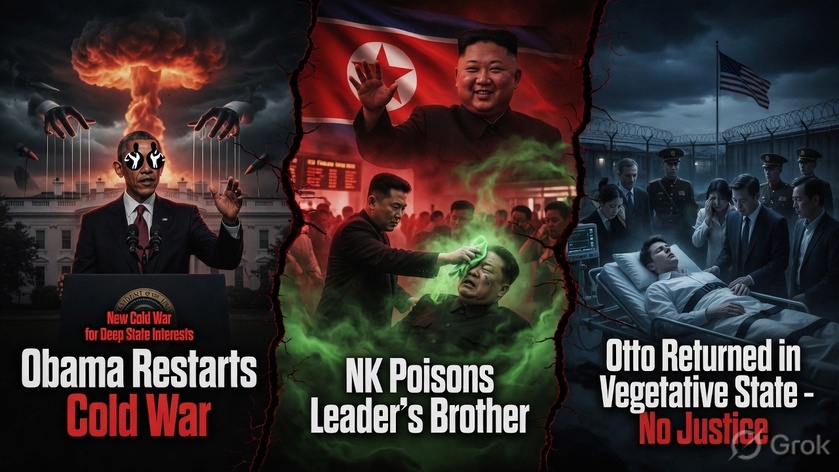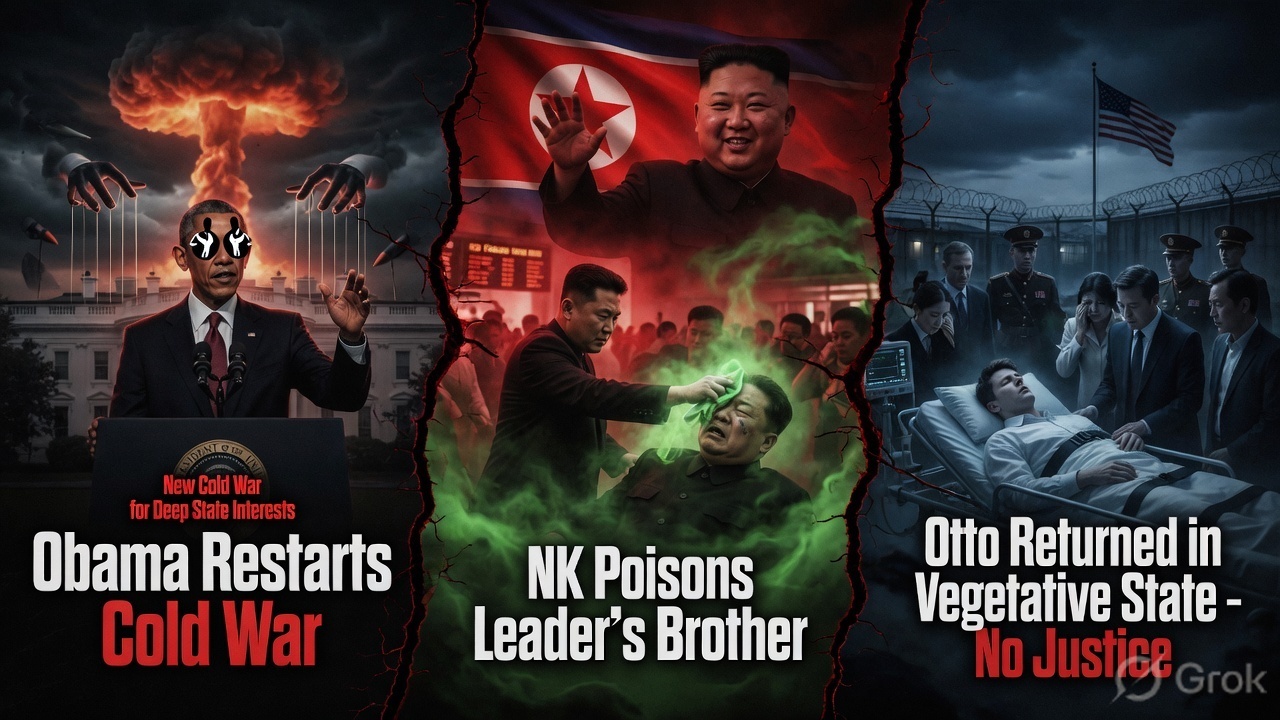
How Obama's Policies Enabled North Korea's Nuclear Ambitions and Failed Otto Warmbier
North Korea possesses nuclear weapons today in significant part due to policy choices during the Obama administration. Prior to Obama, U.S. strategy emphasized deterrence against Pyongyang's nuclear program. Successive administrations, from Clinton's Agreed Framework to Bush-era efforts, sought to prevent acquisition through diplomacy, sanctions, and pressure—often in coordination with allies and China.
China long treated North Korea (NK) as a strategic buffer and proxy. Beijing had little desire for a nuclear-armed neighbor on its border, preferring a controllable client that could be leveraged against the U.S. and its allies. When pressed on proliferation, China would point to the "mad" regime in Pyongyang and claim only it could restrain Kim's regime.
The Obama administration shifted approach. What began as engagement and "strategic patience" — including the failed 2012 Leap Day deal promising a moratorium on tests — coincided with North Korea conducting multiple nuclear tests (2009, 2013, and more) and advancing its missile capabilities. Critics argue this effectively accepted a path toward a nuclear NK, allowing the U.S. to reframe the issue as primarily China's responsibility rather than a direct U.S. confrontation. North Korea's arsenal grew markedly during Obama's tenure.
NK's nuclear program had deep roots: early Soviet assistance, followed by substantial help from Pakistan via the A.Q. Khan network, which traded uranium enrichment technology and centrifuge designs for North Korean missiles. Pakistan's role in proliferation is well-documented and predates Obama, but the broader critique ties into questions of U.S. policy coherence toward such networks.
Obama's broader foreign policy, critics contend, revived elements of Cold War dynamics. Smaller or rogue states faced pressure to align with major powers for protection. For "axis"-style regimes like NK, Iran, and Pakistan, U.S. domestic cultural signals—particularly on social issues—made alignment unappealing. Many turned toward China and its Belt and Road Initiative. This sidelined U.S. influence while reducing Washington's direct defense burdens. In NK, the regime balanced paranoia toward both external threats and its Chinese patron, maintaining internal control through purges and isolation.
North Korea's history of deception and abduction underscores its ruthlessness. In the 1970s and 1980s, it kidnapped Japanese citizens (at least 17 confirmed cases) to train spies, teach language and culture, and support espionage. When Japan demanded their return, Pyongyang admitted some abductions in 2002 but claimed most victims had died—often in implausible "car accidents" in a country with minimal traffic—or fabricated stories. Many cases remain unresolved.
This pattern of lies and hostage-taking extended to Western tourists. Americans visiting NK were rare and niche, drawn by the regime's controlled "uniqueness" at lower cost than alternatives. Otto Warmbier, a University of Virginia student, traveled there in late 2015 on a guided tour. Arrested in January 2016 for allegedly stealing a propaganda poster from his hotel, he endured a show trial, a 15-year hard labor sentence, and severe mistreatment. He was released in a comatose state in June 2017 (under the incoming Trump administration) and died days later at age 22.
The circumstances remain murky: Was Otto set up? Did a drunken prank escalate? The regime offered shifting explanations (botulism, etc.), widely doubted by U.S. doctors. No real justice was served. Otto's ordeal unfolded largely under Obama; he was effectively "dead in all but name" by the time stronger pressure and diplomacy secured his release. His family and supporters highlighted the prior administration's perceived inaction.
North Korea's leadership eliminates rivals, traffics in falsehoods, and exploits the weak. U.S. policy must prioritize deterrence, alliances, and realism over wishful engagement that emboldens tyrants. Otto Warmbier's tragic death stands as a human cost of strategic miscalculation. True accountability for such regimes demands strength, not accommodation.