Salt: The Unsung Architect of Human Destiny
Throughout the grand narrative of mankind, countless forces have sculpted who we are—writing that captured thought, the wheel that conquered distance, gunpowder that redrew empires, and the relentless grind of weather, migration, and invention. From our emergence from water to land, the climb into trees and descent to grasslands, survival in arctic wastes and rugged mountains, to the patient arts of farming, mining, and tool-making, humanity’s story is one of adaptation. Yet amid these “fathers” of civilization, one humble mineral stands as a quiet revolutionary: salt.
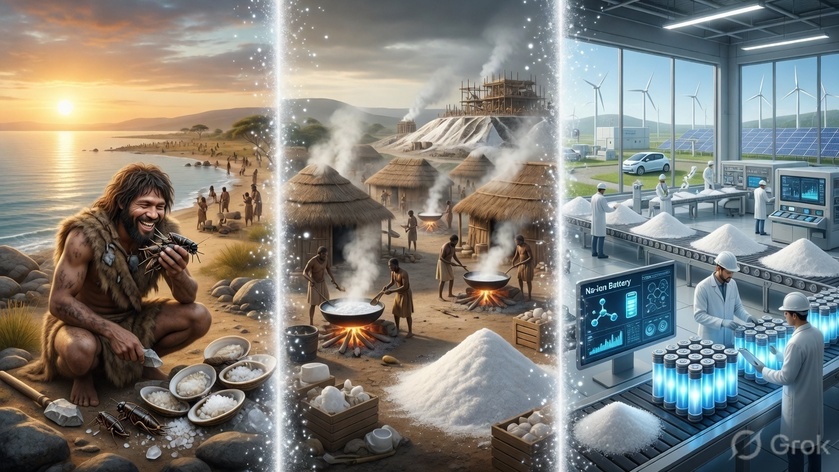
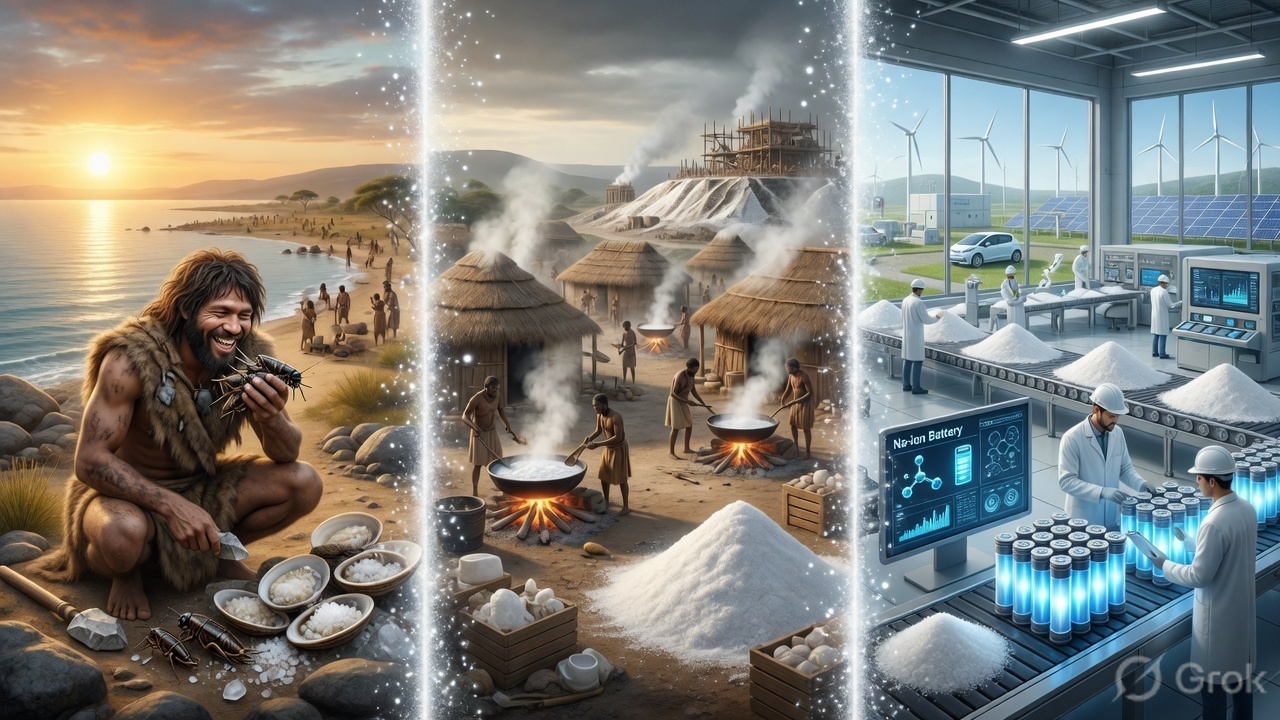
Salt has coursed through our veins and history since the dawn of humanity. Early man, scavenging and hunting, drew sodium from meat and natural sources. In Southeast Africa, the robust jaws of “Nutcracker Man” (Paranthropus boisei) speak to diets forged in tough environments—perhaps even hinting at a drive toward salty shores or crustacean-rich waters. Could this craving have sparked early tool use, as hominins cracked shells and foraged along coasts? Over a million years of dietary evolution, salt wasn’t mere seasoning; it was survival fuel, shaping physiology and behavior long before recorded time.
The real transformation came with settlement. As hunter-gatherers turned to agriculture, plant-heavy diets demanded supplementation. Salt stepped forward not just for flavor but as the preserver that tamed spoilage, enabled trade, and sustained growing populations. Some 5,000–7,000 years ago in Europe, prehistoric ingenuity birthed dedicated salt towns. At sites like Poiana Slatinei-Lunca in Romania (as early as ~6050 BCE) and Solnitsata in Bulgaria (~5500–4200 BCE), communities boiled brine from salt springs in pottery, producing this vital commodity on an industrial scale for the time. These were among the earliest urban centers, walled to protect their “white gold,” driving economy, trade, and social organization.
From there, salt’s influence exploded. It preserved fish and meat for Egyptian pharaohs and Roman legions. It funded empires through taxes and monopolies. Roman soldiers received salarium—salt money—giving us the very word “salary.” Salt roads crisscrossed continents, much like the wheel expanded mobility. In China, detailed records of salt production date back millennia; in the Americas and beyond, it underpinned rituals, medicine, and cuisine. Without reliable salt, long voyages, armies on campaign, and stored winter provisions would have faltered. Gunpowder may have conquered battlefields, but salt quietly conquered hunger and scarcity.
Even today, salt binds us to this ancient legacy. It flavors our tables, preserves our food, and powers industries, while debates rage over its health effects in modern abundance. We’ve come far from boiling brine in Neolithic pots or scavenging coastal resources, yet the mineral remains essential—linking our evolutionary past to our global present.
Salt didn’t invent the wheel or pen the first script, but it made those achievements sustainable. It turned fragile surpluses into enduring civilizations. In the pantheon of forces that explain why people are the way we are—resilient, interconnected, inventive—salt deserves its place among the great fathers of mankind. From the African savannas to European saltworks and beyond, it has seasoned not just our food, but the entire human journey. Until today, and into whatever future we boil, mine, or trade next.
What a crystalline thread running through it all.