The Great Shift: How African Americans Moved from the Party of Lincoln to the Democrats
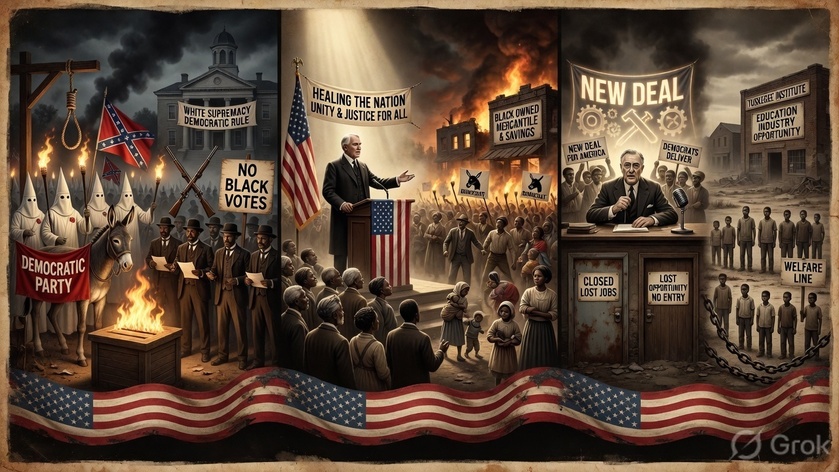
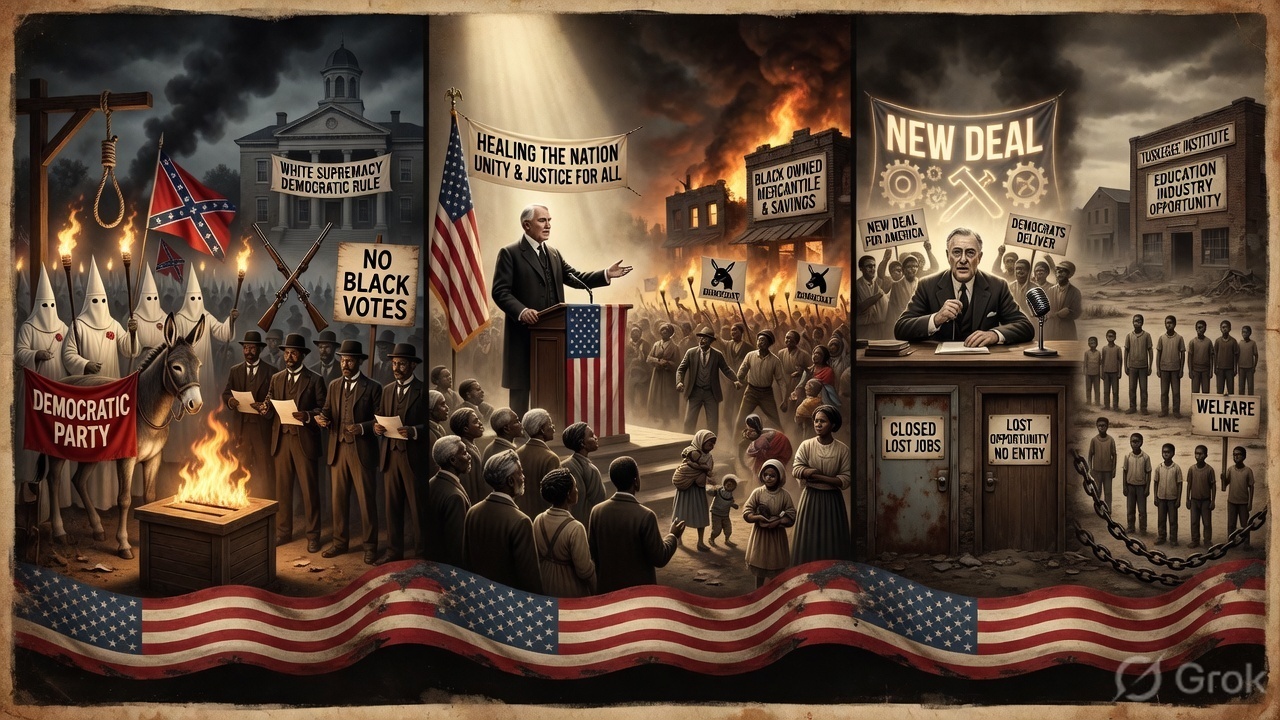
The Republican Party, founded in opposition to the expansion of slavery and led by Abraham Lincoln, who signed the Emancipation Proclamation, was the natural home for newly freed African Americans after the Civil War. Black voters overwhelmingly supported the GOP for decades, associating it with Union victory, constitutional amendments abolishing slavery (13th), granting citizenship (14th), and voting rights (15th), and the promise of Reconstruction. Democrats, particularly in the South, were the party of secession, the Confederacy, and later Jim Crow.
Yet by the mid-1930s, a decisive realignment had begun. In the 1936 presidential election, Franklin D. Roosevelt captured roughly 71% of the Black vote nationally (even higher in some Northern cities), marking the start of a long-term shift that solidified in subsequent decades. What drove this transition? Was it policy reality, aspirational promises, key influencers, or broader economic despair?
Post-Civil War Foundations and Broken Promises
Immediately after the Civil War, freedmen faced enormous challenges: disrupted families (many without stable two-parent structures due to slavery), limited education, and economic dislocation in a dysfunctional post-slavery society. The aspirational promise of “40 acres and a mule”—stemming from General Sherman’s Special Field Order No. 15 in 1865—symbolized hopes for land redistribution and economic independence. It was never broadly implemented. President Andrew Johnson overturned much of it, returning land to former Confederate owners.
Reconstruction brought real gains—Black officeholders, schools, and political participation under Republican-backed federal protection—but it was halting and incomplete. The Compromise of 1877, which resolved the disputed 1876 election by awarding Rutherford B. Hayes the presidency in exchange for withdrawing federal troops from the South, effectively ended Reconstruction. Southern “Redeemer” Democrats regained control, leading to disenfranchisement, Jim Crow segregation, and widespread violence. Promises of protection for Black civil and political rights went unfulfilled.
Republicans did not abandon Black Americans overnight, but Northern weariness, Southern resistance, and competing priorities (industrialization, westward expansion) reduced federal enforcement. Democrats in the South actively suppressed Black rights, while national Democratic machines often catered to urban ethnic voters but remained tied to Southern segregationists.
Early 20th Century: Accommodation and Emerging Cracks
Booker T. Washington, principal of the Tuskegee Institute, embodied a conservative, self-reliance approach. He emphasized industrial education, moral character, and economic advancement over immediate political confrontation—views aligned more with traditional Republican ideals than radical demands. His influence was profound in promoting practical uplift.
Woodrow Wilson (Democrat, 1913–1921) accelerated federal segregation in the civil service, reversing some post-Reconstruction gains and embedding a bureaucracy some describe as a “deep state” aligned with his administration. This was not a party friendly to Black advancement.
Herbert Hoover, a brilliant engineer and humanitarian who fed millions during and after World War I, faced accusations of mishandling aid during the catastrophic 1927 Mississippi River Flood. Black refugees reportedly faced discrimination in relief camps—forced labor, unequal supplies—with reports of Democratic operatives allegedly diverting aid. Hoover enlisted Robert Russa Moton (Washington’s successor at Tuskegee) to head a Colored Advisory Commission and help manage fallout, reportedly with promises of future reforms. Many Blacks felt betrayed by Republican inaction.
Moton, whose own background included complex family history tied to slavery (grandson of a slaver who had been enslaved), observed Black troops in World War I and pragmatically shifted toward Democrats. He played a role in criticizing Hoover and supporting FDR’s New Deal appeal.
The New Deal Pivot: Promise Over Policy?
The pivotal shift crystallized during the Great Depression. Black Americans, hit hard by economic collapse and often last hired/first fired, were drawn to FDR’s energetic promises of relief. In 1932 and especially 1936, Roosevelt built the New Deal coalition, incorporating urban Blacks, labor, and minorities alongside the Solid South.
The New Deal delivered material aid—jobs programs, housing initiatives, agricultural supports—that many Blacks accessed, though often discriminatorily (e.g., exclusions in Social Security for domestic/agricultural workers, segregated facilities). It was less a comprehensive civil rights agenda (FDR relied on Southern Democrats and avoided bold anti-lynching legislation to preserve his coalition) and more economic pragmatism amid desperation. Historians note it as a “MacGuffin”—a plot device driving allegiance more through hope and visible federal activity than transformative racial justice.
By 1936, Black voters in the North, empowered by the Great Migration, rewarded perceived responsiveness. Republican “Lily-White” efforts in the South and perceived apathy further eroded loyalty. The transition was less a sudden Democratic behavioral change—Southern Democrats remained segregationist—than a response to Depression-era suffering and skillful Democratic outreach.
Material Benefits and Long-Term Outcomes
Did the shift yield material benefits? Short-term relief helped many survive the Depression. However, critics argue the New Deal and subsequent welfare expansions entrenched dependency. Black prosperity had been rising in the 1920s through entrepreneurship, family formation, and community institutions (churches, businesses, mutual aid societies). Post-New Deal trends included higher welfare reliance, fractured families (rising single motherhood rates), and erosion of some independent institutions—patterns some attribute to incentive structures in expanded government programs rather than self-reliance emphasized by Washington.
GOP behavior evolved unevenly: some continued civil rights support (e.g., Eisenhower, later Goldwater-era shifts), but national focus moved elsewhere. Democrats’ national embrace of civil rights in the 1960s under LBJ cemented the modern alignment, even as Southern realignment brought conservative Whites into the GOP.
Reflections
The transition was driven by economic crisis, broken Republican promises (or perceptions thereof, as with Hoover), aspirational New Deal rhetoric, and influencers like Moton navigating limited options. It was more promise and relief than a fundamental change in Democratic Southern behavior toward Blacks post-Civil War. Republicans, the party of emancipation, saw their hold weaken as federal activism shifted.
History shows politics as coalitions of interest, not unchanging moral poles. Black Americans, like all groups, responded to immediate needs amid systemic failures—slavery’s legacy, Reconstruction’s end, Depression hardship. True progress has come more from cultural resilience, education, family stability, and entrepreneurship than any single party’s patronage. The 40 acres promise remains a potent symbol of unfulfilled aspirations; sustainable advancement requires confronting root causes beyond electoral realignment.