VoiceDDB
Politics • Culture • News
Apolitical Integrity
Not a Double Standard
2 hours ago
post photo preview

Apolitical Integrity Is Not a Double Standard

In an age of intense polarisation, the principle of being apolitical—remaining neutral, impartial, and focused on duty rather than ideology—has been misunderstood and maligned. Far from embodying a double standard, true apolitical conduct demands consistency, fairness, and service above partisanship. Double standards belong to the partisan, not the principled neutral.

The British television series Foyle’s War offers a compelling portrait of this ideal. Detective Chief Superintendent Christopher Foyle is a sharp, loyal, and effective investigator during World War II. He holds the line against crime and injustice even as colleagues and superiors succumb to wartime pressures and political expediency. In one memorable episode, Foyle’s driver delivers a humorous aside: if some people “hadn’t double standards, they’d have no standards at all.” The line resonates because it exposes the selective outrage that undermines justice. Foyle succeeds precisely because he refuses to take sides; his loyalty is to truth, law, and his country, not to factions.

This ethos is a basic tenet of public service in Australia. Under the Westminster tradition, public servants are expected to provide impartial advice and deliver services without fear or favour, regardless of which party holds power. When this standard erodes—whether through politicised mainstream media that blends editorialising into basic reporting, or through frontline agencies that pressure clients toward activism—the public suffers. An unemployed person at a Centrelink office should not face expectations of paid political activism, nor should a volunteer’s contribution to an “unwelcome” political group be dismissed while others receive credit. Such inconsistencies reveal partisan bias masquerading as principle.

Charlie Kirk exemplified how an apolitical approach to civic engagement can thrive. He maintained that individuals could support any candidate they wished, provided they were informed. Through public debates and sharp reasoning, he engaged opponents on the merits of ideas rather than tribal loyalty. For this, he was branded partisan and dangerous by critics. The labels may have contributed to the tragic end of his life, highlighting how quickly principled debate is reframed as threat in today’s climate.

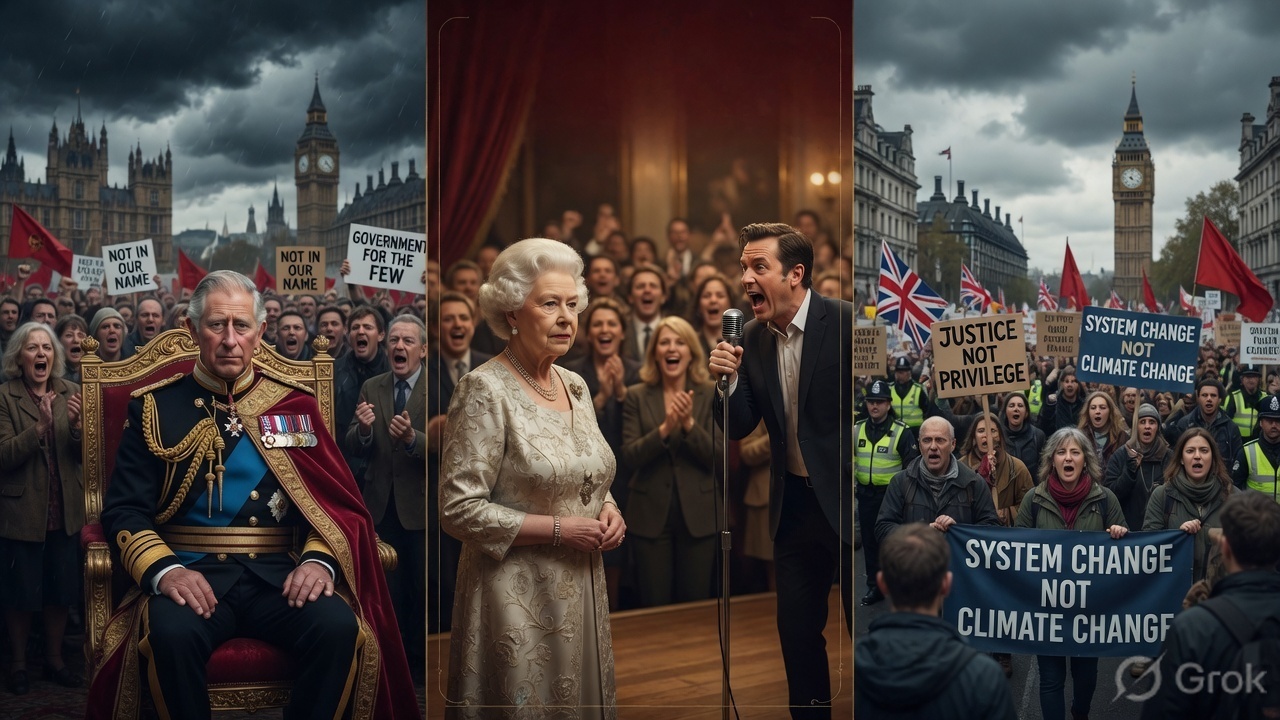
Even the monarchy illustrates the value of apolitical restraint. Queen Elizabeth II was widely admired for her disciplined neutrality. She famously avoided overt smiles in certain contexts to prevent any appearance of endorsing positions. By contrast, King Charles III has faced criticism for perceived departures from that strict impartiality. The Crown’s strength historically lies in its role as a stable, non-partisan symbol above the political fray.

Education remains one of the most contested minefields. It is fundamentally wrong to use teaching positions as vehicles for proselytising personal political views. Students, especially in vulnerable or remote communities, deserve instruction grounded in skills, knowledge, and cultural respect—not ideological indoctrination. Creative arts stand as a partial exception: artists have long exercised freedom to present uncompromising visions. Yet even here, recent years have seen troubling reversals. Statues and public art face censorship, while public institutions adopt overt political stances. This inversion—where neutrality is punished and activism rewarded—turns the world upside down.

My own work as an author and teacher in the Northern Territory reflects a deliberate commitment to the apolitical. Books such as Bambi of the Jukurrpa adapt timeless fairy tales and stories for Warlpiri and Indigenous students. Choices are guided by age-appropriateness, popularity, and cultural sensitivity, not political agendas. The goal is straightforward: explain cultural elements respectfully and make quality literature accessible. I use tools like Grok to support this creative process and take pride in the results.

Yet presenting this work to education curriculum officers often meets resistance. Comments range from dismissive—“How many seconds did it take you to write?”—to pointed critiques of the AI tool itself: “Grok is too American/Chinese,” or suggestions to switch to alternatives like ChatGPT or Copilot. Some claim mispronunciations or culturally inappropriate images. These objections echo earlier complaints to a Minister that led to six months of my work being discarded. Meanwhile, materials reaching my students frequently carry inappropriate political charge. The double standard is evident: scrutiny falls selectively on neutral tools and adaptations, while partisan content passes with less examination.

This experience is not isolated. It reflects broader institutional drift away from apolitical standards toward enforced conformity. Recommitting to impartiality—in public service, media, education, and cultural institutions—would restore fairness and effectiveness. Apolitical does not mean apathetic; it means consistent standards applied without favour. Only then can we judge work on its merits, serve communities effectively, and protect the space for genuine debate and creativity.

David Daniel Ball is a teacher, author, and long-time advocate for principled public service and Indigenous education in remote Australia.

community logo
Join the VoiceDDB Community
To read more articles like this, sign up and join my community today
0
What else you may like…
Videos
Posts
Articles
00:01:07
November 27, 2022
Jingle Bell Rock

Jingle bell, jingle bell, jingle bell rock
Jingle bells swing and jingle bells ring
Snowin' and blowin' up bushels of fun
Now the jingle hop has begun

Jingle bell, jingle bell, jingle bell rock
Jingle bells chime in jingle bell time
Dancin' and prancin' in Jingle Bell Square
In the frosty air

What a bright time, it's the right time
To rock the night away
Jingle bell time is a swell time
To go glidin' in a one-horse sleigh

Giddy-up jingle horse, pick up your feet
Jingle around the clock
Mix and a-mingle in the jinglin' feet
That's the jingle bell rock

Jingle bell, jingle bell, jingle bell rock
Jingle bell chime in jingle bell time
Dancin' and prancin' in Jingle Bell Square
In the frosty air

What a bright time, it's the right time
To rock the night away
Jingle bell time is a swell time
To go glidin' in a one-horse sleigh

Giddy-up jingle horse, pick up your feet
Jingle around the clock
Mix and a-mingle in the jinglin' feet
That's the jingle bell
That's the jingle...

00:02:04
September 01, 2021
Intro to Locals for the Conservative Voice

David Daniel Ball calls himself the Conservative Voice.

I'm a teacher with three decades experience teaching math to high school kids.I also work with first graders and kids in between first grade and high school. I know the legends of why Hypatia's dad is remembered through his contribution to Math theory. And I know the legend of why followers of Godel had thought he had disproved God's existence.

I'm not a preacher, but I am a Christian who has written over 28 books all of which include some reference to my faith. Twelve blog books on world history and current affairs, detailing world events , births and marriages on each day of the year, organised by month. Twelve books on the background to and history of Bible Quotes. One Bible quote per day for a year. An intro to a science fiction series I'm planning, post apocalyptic cyber punk. An autobiography with short story collections.

I'm known in Australia for my failure as a whistleblower over the negligence death of a school boy. ...

00:01:50
Holiday break is over back to work tonight

Tonight I'll start double posting until I've caught up.

Chinese Space Bio Labs

While Elon Musk is busy landing reusable rockets and building robot swarms on Earth, the CCP has gone full 'Musk but make it bioweapons': they're launching fleets of Starship-inspired rockets crewed by copycat Optimus robots, blasting 'Fau Chi' biolabs straight into Low Earth Orbit.

These gleaming orbital stations, proudly emblazoned with the Chinese characters 福奇 (Fú Qí — sounding suspiciously like 'Fau Chi'), are officially designated as The Science™ Research Facilities. Perfect for safe, ethical gain-of-function experiments on exciting new pathogens like TDS (Trump Derangement Syndrome), 'Last Millennia' nostalgia plagues, and the deadly 'We Are Living in 2026' variant.

The endgame? A billion trusting parents worldwide voluntarily neutering their own children on expert 'Fau Chi' advice from the heavens — because nothing says 'public health' like taking guidance from a floating Chinese biolab with reusable re-entry capabilities.

post photo preview
Editorial from 2018 for June 9th

Don't give up on hope. Western Civilisation is on the nose of universities in Australia. Sydney University collapsed in 1990, and her upper executive got replaced by ALP managerialists as Keating fought a culture war which the Liberal Party have not effectively engaged. Dame Kramer had been made Chancellor, but the Chancellor's position is not executive at Sydney University. Kramer fought effectively for Western Values, but the University, now, is as partisan left as the ABC is now. Kramer had been a powerful presence in charge of the ABC too. 

In 1990, Sydney University lost her Chancellor and Vice Chancellor. The Chancellor, Hermann David Black, died after a long illness. James Anthony Rowland, a former governor of NSW took the chancellor's position for a few years, before passing it to Kramer in 1991. She held on to 2001. From 1981 to 1990, John Manning Ward was the executive head of Sydney University as Vice Chancellor. He had been writing a trilogy on Australian conservative leaders ...

post photo preview
post photo preview
Katherine
Iconic Outback Town Turns 100

Katherine – Iconic Outback Town Turns 100

One hundred years ago, in July 1926, the Northern Territory town of Katherine was officially gazetted. What began as a dusty railway outpost on the Katherine River has grown into a vibrant crossroads where the outback meets the tropics – a true Australian icon.

This month, the Katherine Show and Rodeo 2026 drew thousands from across the region, including many from remote communities like Lajamanu. For a few days, school numbers in places such as Lajamanu plummeted as families made the long pilgrimage south. The journey – roughly 560 km, often 9–10 hours each way – involves long stretches of dirt track with few stops, followed by sections of highway. It is a commitment, but one well worth making. The Show delivered classic country fun: agricultural displays, rodeo action, rides, competitions, local produce, and family entertainment. In many ways, it would feel familiar to residents of Midwestern American farming towns – yet Katherine’s story is distinctly Australian.

Katherine’s genesis lies not in pioneering homesteaders from Europe seeking new worlds in the Americas, but in the practical needs of a vast, harsh continent. The town emerged around the Overland Telegraph Line and took solid form with the completion of the Katherine railway bridge in early 1926. The first train crossed in January that year, and the present townsite was formally established soon after. Early infrastructure was basic: a telegraph station, post office, simple hotel, and rudimentary police presence.

Life in 1926 was rugged. Most residents lived in shanties, enduring the tropical heat with no air conditioning, no fans, and almost no refrigeration. Meals relied on salted beef, dampers, home-grown vegetables, and bush tucker. Yet the town quickly became a cultural melting pot. Chinese migrants brought gardening and cooking skills to nearby stations. Russian Cossacks, displaced by the Russian Civil War, arrived in the 1920s – many first to work on the railway, then to try their hand at peanut farming along the river. The peanut venture ultimately faltered due to mould and erratic rainfall, but the cultural imprint endured (suburb names like Cossack still echo that chapter). Nearby goldfields added to the mix, drawing fortune-seekers and workers.

A century on, Katherine stands as a resilient regional hub and a magnet for smaller outback communities. It serves as a service centre, tourism gateway to Nitmiluk Gorge, and gathering place for events like the Show. Its story weaves together Aboriginal custodianship (Jawoyn and others), migrant enterprise, pastoral grit, and modern adaptation.

Katherine’s first 100 years reflect the broader Australian experience: endurance in a challenging land, cultural blending, and community spirit that draws people together across vast distances. As the town celebrates its centenary, it reminds us that outback towns are not just stops on the map – they are living testaments to those who built them and those who continue to journey toward them.

Congratulations, Katherine. Here’s to the next hundred years.

Read full Article
post photo preview
Roger Casement, Leopold’s Congo, and the Long Shadow of AIDS
The Tangled Threads of Empire, Exposure, and Epidemic

The Tangled Threads of Empire, Exposure, and Epidemic — Roger Casement, Leopold’s Congo, and the Long Shadow of AIDS

History loves neat narratives: the heroic diplomat who topples a tyrannical king, only to die in disgrace, while the very lands he exposed seed a global plague that crosses the ocean. The story linking Roger Casement, King Leopold II’s Congo Free State, and the origins of HIV/AIDS offers drama, moral outrage, and cautionary lessons. But as with so many compelling tales, the precise headlines simplify and mislead. Truth lies in the nuances, the unintended consequences of empire, and the persistent human tendency to seek single villains or saviors.

Casement did not single-handedly “expose” Leopold. By the time he investigated the Congo in 1903 as a British consul, scandals had already surfaced. George Washington Williams’ 1890 open letter had decried crimes against humanity. The Stokes Affair (1895) highlighted arbitrary executions. Missionaries and traders whispered horrors. Casement knew the terrain—he had prior African experience—and understood the likely findings. His meticulous report documented forced labor, mutilations, hostage-taking, and systemic brutality under Leopold’s personal rule, confirming what reformers like E.D. Morel had begun publicizing. It lent official weight and galvanized the Congo Reform Association, contributing to pressure that forced Belgium to annex the territory from Leopold in 1908. Casement’s work was courageous and impactful, building on existing evidence rather than discovering the unknown.

Casement’s later fate was not simple “disgrace” tied to his Congo heroism. A committed Irish nationalist, he viewed British rule in Ireland through the lens of colonial exploitation he had witnessed in Africa. During World War I, he sought German aid for an Irish rising against Britain—a technically treasonous act in wartime. Captured after the 1916 Easter Rising, he was convicted and hanged. Clemency appeals (from figures like Arthur Conan Doyle) faltered partly due to the circulation of the notorious “Black Diaries,” which detailed homosexual encounters. In an era when homosexuality was criminalized, this personal revelation was weaponized to undermine sympathy. Casement was executed as a traitor, not punished for exposing Congo abuses. His Congo legacy remained celebrated by reformers even as his Irish republicanism divided opinions.

The link to AIDS is even more indirect. HIV-1 group M, the pandemic strain, originated from a chimpanzee virus in Central Africa, with early human transmission likely in the early 20th century around what is now the DRC. Social dislocations from Leopold’s era—forced labor, urbanization, migration, disrupted communities, and possibly unsterile medical practices—created conditions that may have facilitated the virus’s establishment and early spread in human populations. Congo (then the Belgian Congo after 1908) saw significant upheaval. However, proximity is not causation, and Casement played no role in the virology or epidemiology. The virus’s jump predated or coincided with colonial disruptions, but pinning AIDS origins neatly on “Leopold’s atrocities” oversimplifies complex zoonotic and social factors.

By the time HIV reached the United States (likely via Haiti and other routes in the 1960s–1970s), it had evolved far from its African roots. The early 1980s crisis in the U.S. revived old scapegoating patterns. Gaëtan Dugas, the infamous “Patient Zero” (actually coded as Patient O), was wrongly portrayed as the spark of the American epidemic—a myth debunked by genetic evidence showing the virus circulated earlier. This echoes broader tendencies to personalize epidemics and blame individuals rather than systemic failures in public health response.

Critiques of Anthony Fauci’s early handling of AIDS (as a senior NIH official) often center on bureaucratic delays, emphasis on certain research paths, and contested approaches to treatment and prevention amid uncertainty. The crisis was unprecedented in modern times, blending scientific unknowns with stigma and politics. Forty-five years on, debates persist about lessons learned in balancing caution, innovation, and rapid response—issues relevant to later pandemics. Patient O’s story reminds us how quickly narratives fill voids when fear outpaces facts.

Casement’s life illustrates empire’s contradictions: a servant of the British Crown exposing one colonial horror while rebelling against another. Leopold’s Congo left deep scars, including social conditions that may have amplified an emerging virus. AIDS crossed oceans through global mobility, not conspiracy or direct colonial plotting. These threads connect through human ambition, suffering, and resilience—but resist tidy moral fables. Understanding them demands rejecting oversimplification in favor of evidence, context, and humility about causation. Only then can we honor the exposers like Casement without mythologizing their roles or the epidemics that followed.

Read full Article
post photo preview
Vale Garfield Sobers
The Complete Cricketer, a Humble Man

Vale Garfield Sobers: The Complete Cricketer, a Humble Man

In the rich tapestry of cricket history, few figures loom as large as Sir Garfield St. Aubrun Sobers. The news of his passing at the age of 89 marks the end of a great innings — one defined not only by unparalleled skill but by quiet dignity, resilience, and an enduring love for the game. Sobers was the complete cricketer: an all-rounder who could spin the ball, deliver medium pace, field brilliantly anywhere (especially close to the wicket), and bat with grace, power, and purpose. Batting, ultimately, stood as his greatest strength.

Born in Bridgetown, Barbados, on July 28, 1936, young Garfield faced hardship early. His father, a merchant seaman, was killed in World War II when Garfield was just five, leaving his mother, Thelma, to raise the family with simple means and steadfast strength. Selected initially for his bowling as a teenager, Sobers taught himself the finer arts of the game through endless street and beach cricket. He made his Test debut at 17 in 1954 and quickly evolved into a master.

His feats came remarkably young. In the Third Test against Pakistan at Sabina Park, Kingston, in 1958, the 21-year-old turned his maiden Test century into a world-record 365 not out — surpassing Len Hutton’s 364. It was a contained yet dominant masterclass: 38 fours in over 10 hours, built on a 446-run partnership with Conrad Hunte (260). Unlike some who batted for personal glory, Sobers’ epic helped West Indies declare at 790/3 and win by an innings and 174 runs. That knock stood as the Test record for 36 years.

Sobers could also accelerate dramatically, most famously striking six sixes in an over off Malcolm Nash in 1968 — a feat of audacious brilliance. He captained West Indies from 1965, leading with enterprise and success, including historic wins over Australia and England. The baton later passed to Clive Lloyd, helping establish a golden era of West Indies excellence.

Retirement in 1974 did not distance Sobers from cricket. Knighted in 1975, he coached (including Sri Lanka), promoted youth development through tournaments bearing his name, and took on administrative and ambassadorial roles. He gained dual citizenship through marriage to an Australian, Pru Kirby, and remained a bridge between eras and nations. Humble to the end, he inspired generations not through boastfulness but through example.

Cricket aficionados of his era — and every era since — waxed lyrical about Sobers. Don Bradman and Wisden’s experts ranked him among the greatest. He leaves behind 8,032 Test runs at 57.78, 235 wickets, and a legacy of versatility few have matched. More importantly, he embodied humility, community, and the joy of the game.

Sir Garfield Sobers achieved the extraordinary and gave even more in return. A national hero of Barbados and a global icon, his spirit will endure in every young cricketer dreaming on a beach or street. The game — and the world — is richer for his life. May he rest in peace.

Read full Article
See More
Available on mobile and TV devices
google store google store app store app store
google store google store app tv store app tv store amazon store amazon store roku store roku store
Powered by Locals