VoiceDDB
Politics • Culture • News
America’s Identity Crisis
How Democrats and RINOs Made a U.S. Passport Nearly Worthless
August 09, 2026
post photo preview

America’s Identity Crisis: How Democrats and RINOs Made a U.S. Passport Nearly Worthless

I left America at eleven years old in 1978. My sister Pamela had died on Valentine’s Day at thirteen. My parents returned to Australia and divorced. I had already been pulled through five elementary schools or kindergartens in New Jersey. In Australia I attended one high school, then university, and spent most of my adult life as a public servant. I keep private political views out of the workplace. That has not stopped the workplace from inflicting its own politics on me.

I am still an American citizen by birth. The cumulative effect of decades of bureaucratic failure by the United States government has left that citizenship oddly hollow.

In 2010 I needed to prove my identity for Centrelink and for the electoral roll while campaigning in Jason Clare’s seat of Blaxland (once Paul Keating’s). My original birth certificate had burned in a house fire years earlier. The smaller replacement I held was rejected. When I applied to New York for a proper certificate, the online form did not list Australia as a destination. The document was sent to Canada by mistake. It took nearly five months. My U.S. passport had been stolen by a waitress at my first paying job in 1984; she later returned the watch and the passport arrived when I was emotionally fragile and was thrown out near Wynyard station. The U.S. Embassy told me I needed to divest citizenship to campaign. I corrected them: I only needed to apply to divest. Their glacial pace meant the process outlasted the election. Their awareness of the dual-citizenship issue for federal candidates preceded the later assault on Barnaby Joyce by several years.

Ten years later, during Melbourne lockdowns, I needed to renew the passport again. My driver’s licence had expired because sleep apnea required annual medical clearance I could not obtain under restrictions. The motor registry timed me out; I would have to start again with L-plates.

On my first proper vacation since 2006 I went to Darwin. On day one my credit card details were stolen. I had money and could not touch it. Multiple banks refused to open an account on the strength of a current U.S. passport. One finally did. To obtain a Social Security Number — the document Australian banks treat as the real proof of American identity — a citizen who left as a child must appear in person at a U.S. Embassy with original documents, then post the stamped paperwork to the Social Security Administration office in the Philippines, and hope. A U.S. passport alone is not enough.

That is the practical meaning of American governmental dysfunction for an expatriate citizen.

The same political forces that produced this bureaucratic farce are the ones that keep blocking elementary citizenship verification at the ballot box. The Safeguard American Voter Eligibility Act (SAVE America Act) requires documentary proof of citizenship to register for federal elections and photo identification to vote. The House has passed versions of it. The Senate has not. As of 8–9 August 2026 the latest truncated photo-ID version failed 52–46. Democrats voted against it as a bloc. A handful of Republicans — the usual RINO suspects who have repeatedly joined them — provided the decisive obstruction. The full bill has now failed on the Senate floor multiple times this year alone.

Democrats frame any requirement to prove citizenship as “voter suppression.” RINOs treat the issue as negotiable rather than foundational. The result is a government that cannot, or will not, maintain a coherent system of American identity for its own citizens abroad, yet resists basic safeguards against non-citizens voting at home. A passport that is insufficient to open a bank account in a friendly ally is the domestic face of the same refusal to treat citizenship as real.

I am nearly sixty. I teach in a remote Northern Territory school. I have no desire to return permanently to the country I left as a child. But I remain a citizen of it. The cumulative cost of Democratic obstruction and Republican half-measures is that my birthright has been reduced to a document that Australian institutions do not fully trust and that the United States itself makes extraordinarily difficult to underwrite with the one number that actually functions as proof of identity.

That is not competence. It is not seriousness. It is the predictable product of a political class that prefers ideological theatre and institutional inertia over the elementary duties of a sovereign nation.


community logo
Join the VoiceDDB Community
To read more articles like this, sign up and join my community today
0
What else you may like…
Videos
Posts
Articles
00:01:07
November 27, 2022
Jingle Bell Rock

Jingle bell, jingle bell, jingle bell rock
Jingle bells swing and jingle bells ring
Snowin' and blowin' up bushels of fun
Now the jingle hop has begun

Jingle bell, jingle bell, jingle bell rock
Jingle bells chime in jingle bell time
Dancin' and prancin' in Jingle Bell Square
In the frosty air

What a bright time, it's the right time
To rock the night away
Jingle bell time is a swell time
To go glidin' in a one-horse sleigh

Giddy-up jingle horse, pick up your feet
Jingle around the clock
Mix and a-mingle in the jinglin' feet
That's the jingle bell rock

Jingle bell, jingle bell, jingle bell rock
Jingle bell chime in jingle bell time
Dancin' and prancin' in Jingle Bell Square
In the frosty air

What a bright time, it's the right time
To rock the night away
Jingle bell time is a swell time
To go glidin' in a one-horse sleigh

Giddy-up jingle horse, pick up your feet
Jingle around the clock
Mix and a-mingle in the jinglin' feet
That's the jingle bell
That's the jingle...

00:02:04
September 01, 2021
Intro to Locals for the Conservative Voice

David Daniel Ball calls himself the Conservative Voice.

I'm a teacher with three decades experience teaching math to high school kids.I also work with first graders and kids in between first grade and high school. I know the legends of why Hypatia's dad is remembered through his contribution to Math theory. And I know the legend of why followers of Godel had thought he had disproved God's existence.

I'm not a preacher, but I am a Christian who has written over 28 books all of which include some reference to my faith. Twelve blog books on world history and current affairs, detailing world events , births and marriages on each day of the year, organised by month. Twelve books on the background to and history of Bible Quotes. One Bible quote per day for a year. An intro to a science fiction series I'm planning, post apocalyptic cyber punk. An autobiography with short story collections.

I'm known in Australia for my failure as a whistleblower over the negligence death of a school boy. ...

00:01:50
Holiday break is over back to work tonight

Tonight I'll start double posting until I've caught up.

Chinese Space Bio Labs

While Elon Musk is busy landing reusable rockets and building robot swarms on Earth, the CCP has gone full 'Musk but make it bioweapons': they're launching fleets of Starship-inspired rockets crewed by copycat Optimus robots, blasting 'Fau Chi' biolabs straight into Low Earth Orbit.

These gleaming orbital stations, proudly emblazoned with the Chinese characters 福奇 (Fú Qí — sounding suspiciously like 'Fau Chi'), are officially designated as The Science™ Research Facilities. Perfect for safe, ethical gain-of-function experiments on exciting new pathogens like TDS (Trump Derangement Syndrome), 'Last Millennia' nostalgia plagues, and the deadly 'We Are Living in 2026' variant.

The endgame? A billion trusting parents worldwide voluntarily neutering their own children on expert 'Fau Chi' advice from the heavens — because nothing says 'public health' like taking guidance from a floating Chinese biolab with reusable re-entry capabilities.

post photo preview
Editorial from 2018 for June 9th

Don't give up on hope. Western Civilisation is on the nose of universities in Australia. Sydney University collapsed in 1990, and her upper executive got replaced by ALP managerialists as Keating fought a culture war which the Liberal Party have not effectively engaged. Dame Kramer had been made Chancellor, but the Chancellor's position is not executive at Sydney University. Kramer fought effectively for Western Values, but the University, now, is as partisan left as the ABC is now. Kramer had been a powerful presence in charge of the ABC too. 

In 1990, Sydney University lost her Chancellor and Vice Chancellor. The Chancellor, Hermann David Black, died after a long illness. James Anthony Rowland, a former governor of NSW took the chancellor's position for a few years, before passing it to Kramer in 1991. She held on to 2001. From 1981 to 1990, John Manning Ward was the executive head of Sydney University as Vice Chancellor. He had been writing a trilogy on Australian conservative leaders ...

post photo preview
post photo preview
Andrew Johnson
A President Who Compromised, or Was Compromised?

Andrew Johnson: A President Who Compromised, or Was Compromised?

America has long been called the land of opportunity. How many men who began life illiterate rose to the presidency? Andrew Johnson did. His beginnings were as humble as they come.

Born in a Raleigh log cabin in 1808, he was only three when his father, a poor hotel porter, died after rescuing two wealthy men from drowning. His widowed mother worked as a spinner and laundress to keep the family alive. At fourteen Johnson and his older brother were bound as apprentices to a local tailor. After a couple of years the boys ran away; their master posted a ten-dollar reward for their return. Johnson later came back, settled accounts, then gathered what was left of his family—mother, stepfather, and all their belongings—and crossed the mountains into Tennessee in a one-horse cart drawn by a blind pony. In September 1826 they rolled into Greeneville.

There the eighteen-year-old tailor opened his own shop. A local girl named Eliza McCardle, only sixteen, spotted the ragged newcomer leading the cart into town and told her friends, “There goes my beau, girls, mark it.” Within months they were married by Mordecai Lincoln, a relative of Abraham Lincoln. Eliza had more schooling than her husband. While he sat cross-legged on his tailor’s bench sewing coats and vests by hand, she read to him from books of great orations and patiently taught him writing and arithmetic. The shop soon became more than a place of business; workingmen gathered there to argue politics. Johnson walked four miles each way on Friday nights to a debating society at a nearby college, honing the blunt, forceful style that would serve him the rest of his life.

By the time he was twenty he had been elected alderman of Greeneville. In 1834 his fellow aldermen chose him as mayor. He governed as a champion of the town’s mechanics and laborers against the local aristocracy of merchants and slaveholders. The tailor who once fled an apprenticeship now stood as the voice of the common man in a small East Tennessee town.

Johnson’s rise continued. After service in the Tennessee legislature he won election to the U.S. House of Representatives in 1843 and served five terms. In Congress he became one of the leading advocates of a homestead bill that would give free land to settlers who would cultivate it—a measure he introduced repeatedly and defended for years until it finally became law in 1862. A fiscal conservative and states’-rights Democrat, he opposed high tariffs and supported the annexation of Texas. His success in business had by then allowed him to buy a brick house and to own slaves.

When the crisis of secession came, Johnson stuck with the Union—the only senator from a seceding state to remain loyal. Abraham Lincoln recognized that loyalty by appointing him Military Governor of Tennessee in March 1862, with the rank of brigadier general. Johnson’s task was to restore loyal civil government in the parts of the state under Union control. He required public officials to take strong loyalty oaths, suppressed pro-Confederate newspapers, and worked to fortify Nashville. Though he initially persuaded Lincoln to exempt Tennessee from the Emancipation Proclamation, the realities of war changed his course. In August 1863 he freed the slaves he himself owned. In October 1864 he proclaimed freedom for every enslaved person in Tennessee and declared, “I will indeed be your Moses.” By early 1865 he had helped push the state toward a constitutional amendment abolishing slavery.

It is worth noting that had today’s Democratic Party been in power then, few of its members would have supported the Thirteenth Amendment abolishing slavery. Compare that record with contemporary fights over election integrity measures such as the SAVE Act. Johnson’s later leniency as president toward the defeated South, however, came at a steep cost. By restoring former Confederate states with minimal federal safeguards, he left many freed people exposed to violence, Black Codes, and the reassertion of white supremacy. Custom and bigotry would delay meaningful constitutional protection of civil rights for another century.

Johnson was impeached by the House but escaped conviction in the Senate by a single vote. He remains the only former president later elected to the United States Senate. He had overcome poverty, illiteracy, an indentured apprenticeship, and the wreckage of civil war. What he could not overcome was the implacable opposition of his own political moment—and, in the end, the limits of his own vision for a restored Union.

Read full Article
August 08, 2026
post photo preview
English Medieval Royal “Faction” and the Irrational
Modern fiction fails

English Medieval Royal “Faction” and the Irrational

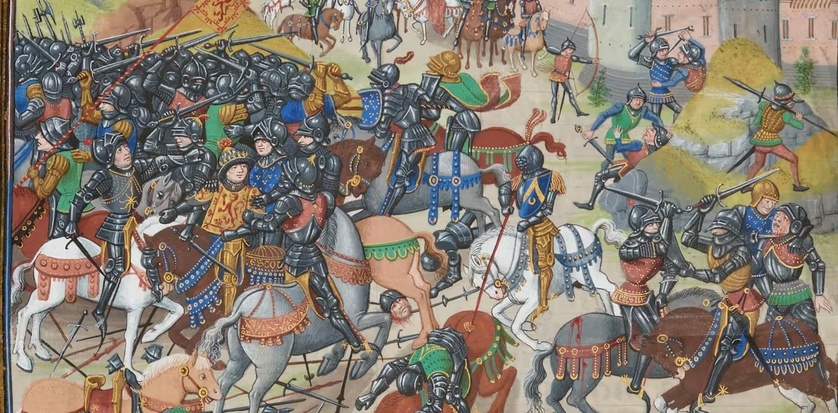
The facts are facts. Names, titles, the sequence of depositions, marriages, and civil wars can be checked. Readers of historical fiction about the English Middle Ages come wanting a textured sense of the past—costumes that look lived-in, dialogue that does not sound like a modern committee meeting, relationships shaped by hierarchy, faith, and scarcity. They do not, usually, want the full sensory inventory: the state of teeth, the hygiene, the practices that modern sensibility finds unacceptable. That selective appetite is understandable. The problem arises when the modern writer, having been invited into the past, proceeds to rearrange its furniture according to contemporary ideals.

Modern agendas arrive wearing period dress. Sometimes the hooks are useful; they let a present-day audience decode an ancient conflict. Often they become tropes, repeated until they flatten the very strangeness that made the period worth visiting. Consider the faithful Christian who accepts that God may turn a staff into a serpent before Pharaoh, yet finds it jarring that the Egyptian court can perform the same trick. The text presents both. The modern reader is tempted to decide which miracle is “real” and which is propaganda. Historical fiction about medieval queens frequently performs a similar sorting. Elizabeth I’s speech on the approach of the Armada remains powerful precisely because it does not collapse into modern categories. She told Parliament she had the body of a weak and feeble woman, but the heart and stomach of a king of England. That claim registered because the audience shared the assumptions it both invoked and overturned. When modern writers give Isabella of France or a Yorkist queen the interior life and rhetorical freedom of a twenty-first-century professional woman, they risk producing characters who would have been unintelligible—or quickly removed—in their own courts.

Two persistent devices illustrate the difficulty. Witches are granted effective powers. Monks are cast as systematic promoters of ignorance. Both choices simplify. In the actual Middle Ages some theologians argued that God could not see in the dark; the practical consequence was not abstract philosophy but a temporary license for behaviour people preferred to hide. Characters in these dramas are rarely allowed the same compromised interiority. They are either enlightened forerunners of us or benighted obstacles to progress. The 2012 miniseries World Without End, drawn from Ken Follett’s novel, supplies a neat example. Edward II’s wound is treated with a poultice of excrement and he loses the arm; a healer figure employs techniques that read as modern medicine in costume. In The White Queen, Jacquetta of Luxembourg is given genuine powers of foresight. The Princes in the Tower, meanwhile, remain as historically unresolved as ever. The supernatural is admitted where it flatters a preferred narrative and withheld where it would complicate one.

We congratulate ourselves on rationality. Yet the evidence of our storytelling suggests otherwise. We cannot consistently grant medieval people the mixture of calculation, superstition, piety, and self-interest that the records show they possessed. We prefer them either as primitive versions of ourselves or as cautionary opposites. The result is faction that feels contemporary even when the costumes are accurate. A more disciplined approach would leave more of the irrational in place—not as decoration or as proof of progressive superiority, but as the ordinary weather of the age. Only then does the past become strange enough to be interesting again.

Read full Article
August 07, 2026
post photo preview
The Nuking of Nagasaki
Robbed the West of Legitimacy

The Nuking of Nagasaki Has Robbed the West of Legitimacy But a partisan press has protected Democrats from the criticism they would have levelled had the GOP been equivalent.

The atomic bombing of Nagasaki on 9 August 1945 did more than end a war. It stripped the West of a lasting claim to moral authority. Hiroshima had already demonstrated the weapon’s power three days earlier. Dropping a second bomb on a second city, when Japan’s capacity to continue was collapsing, crossed a threshold that no later appeal to necessity fully erases. A partisan press and political culture have since protected the Democratic administration that ordered it from the sustained scrutiny that would have followed had a Republican president taken the same decision.

Australia’s experience in the same war reveals a parallel pattern of political convenience and selective memory. At the outset of the Pacific conflict, Australia had already turfed its conservatives. John Curtin’s Labor government took office in October 1941 and immediately began what looked like panic moves: withdrawing battle-hardened divisions from the Middle East. The gesture was presented as national self-defence. In reality it was also political theatre. Australia’s primary defensive stock had been placed in Singapore. That fortress, held by a numerically superior Allied force, surrendered on 15 February 1942 to a smaller but better-led Japanese army. Roughly 15,000 Australians went into captivity; more than 7,000 of them would die as prisoners.

Domestically, democracy itself proved a source of division. Sections of the union movement had opposed robust war measures while the Soviet Union remained aligned with Germany. After the Nazi invasion of the USSR, the political weather changed. Labor won a decisive mandate in 1943. Yet even under wartime conditions, strikes continued in pursuit of industrial advantage. A partisan press that had criticised Menzies for unpreparedness proved far more forgiving of Curtin. The conservative opposition, reduced and cautious, largely supported the national effort while receiving little credit for restraint.

Young, often under-trained Australian troops were thrown into the defence of Papua New Guinea. They helped halt the Japanese southern advance on the Kokoda Track and elsewhere. Their achievement was real. It does not erase the earlier strategic failure at Singapore or the domestic political manoeuvring that accompanied it. American forces, meanwhile, were themselves divided: MacArthur’s South West Pacific command competed with the Navy’s Central Pacific drive, producing duplication and inter-service rivalry even as both pushed toward Japan.

Australia gave general support to American strategy and offered information about its prisoners. There is little evidence of a determined national policy aimed at the early recovery of those prisoners while the war continued. Large-scale rescue was militarily difficult; political will to prioritise it over the broader campaign was limited.

Truman’s decision to use the bomb at Hiroshima failed to produce immediate Japanese surrender. Nagasaki followed. Intelligence and postwar surveys showed that the military toll of the blasts was far lower than the civilian one. Hiroshima’s garrison suffered several thousand dead out of roughly 24,000 present; Nagasaki’s military deaths numbered only in the low hundreds. Total deaths across both cities reached the tens of thousands by the end of 1945, the great majority civilians. Japan surrendered shortly after the Soviet Union declared war and invaded Manchuria on 8–9 August. The Soviet entry destroyed Tokyo’s remaining hope of a mediated peace and threatened the home islands from a new direction. Both shocks mattered. The second atomic bomb was not the sole or even the decisive blow.

Counterfactuals sharpen the point. Had the United States withheld the Nagasaki bomb, the combination of Soviet invasion, continued conventional bombing, and naval blockade might still have forced surrender before any invasion of the home islands—though at higher cost in time and further conventional casualties. Had Australia followed Churchill’s demand and sent the returning 7th Division into Burma in February 1942, those troops would likely have been destroyed or captured as Rangoon fell; the New Guinea campaigns would have been weaker. Had the Soviet Union stayed neutral, Japan’s hardliners would have retained a diplomatic lifeline and the military argument for fighting on would have been stronger. In each case the historical outcome was shaped as much by timing and politics as by pure military necessity.

At war’s end the pattern of selective justice continued. Thailand, a Japanese ally that had facilitated logistics for the Thai-Burma Railway, was treated leniently once the Free Thai movement and a late switch of sides were accepted. The railway’s death marches and forced labour remained primarily a Japanese responsibility, yet the broader regional accounting was muted. Japan and West Germany were not subjected to permanent economic suppression. Instead they were reformed under occupation and then rebuilt as industrial hubs, drawing on the same organisational and technical capacities that had served wartime regimes. The Cold War made former enemies into frontline partners against the Soviet Union. Strategic necessity again overrode earlier moral language.

The West still claims the mantle of liberal order and humanitarian restraint. The second atomic bombing, the political protection afforded its authors, and the uneven postwar settlements sit uneasily with that claim. A press and political class that would have demanded relentless scrutiny of equivalent Republican decisions have preferred silence or justification when the responsibility was Democratic. History is not obliged to be tidy. It is obliged to be remembered without partisan filter.

Read full Article
See More
Available on mobile and TV devices
google store google store app store app store
google store google store app tv store app tv store amazon store amazon store roku store roku store
Powered by Locals