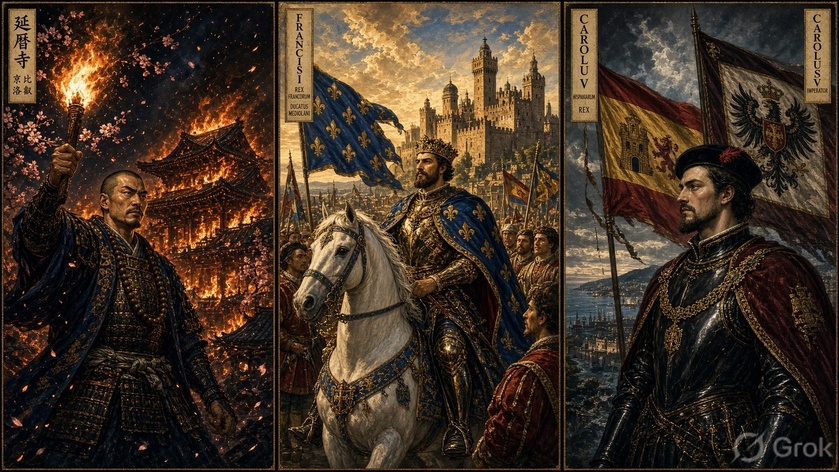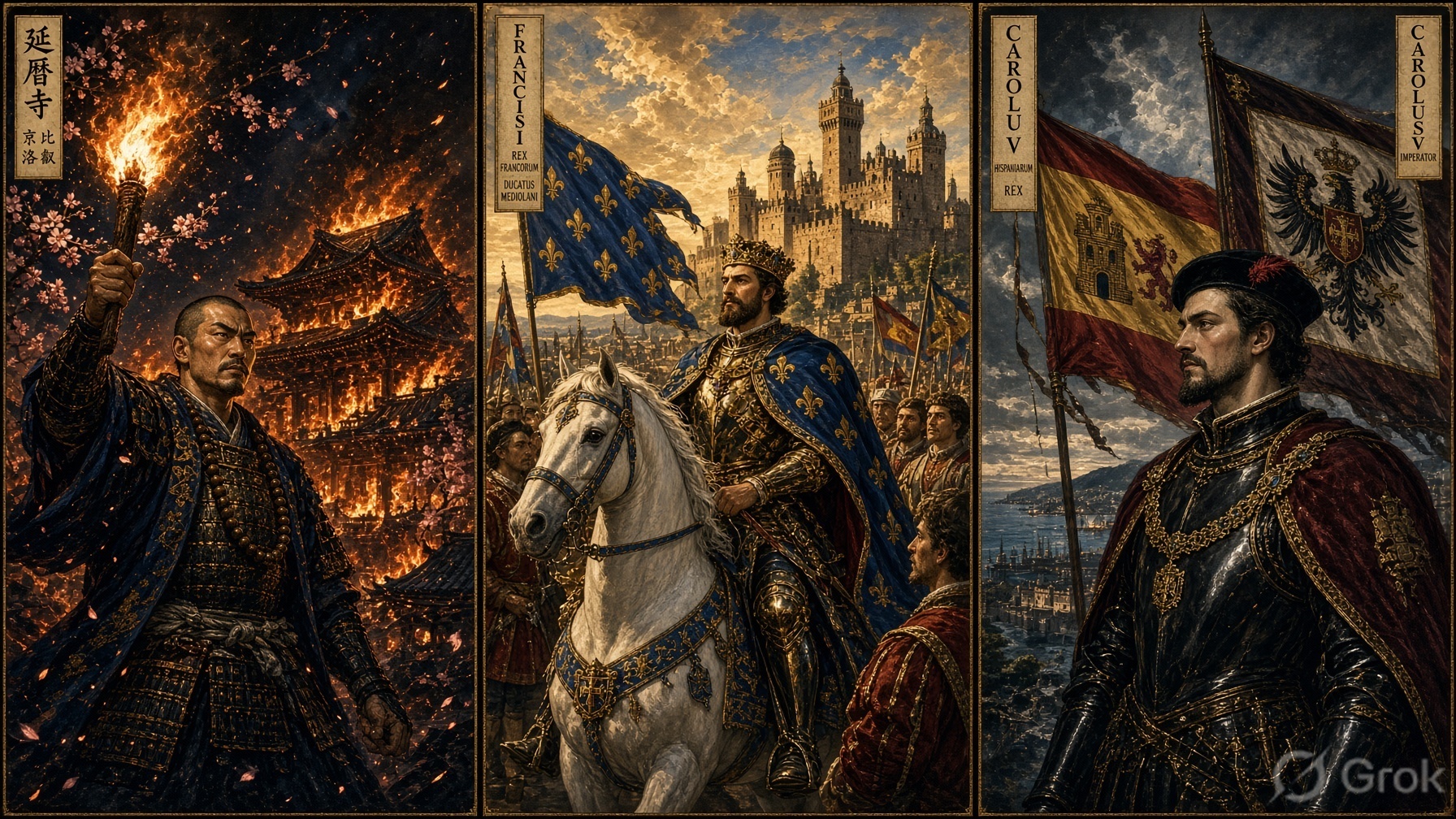
Religious values clashed on this day, twenty years apart and a world away. In the West, centuries of sectarian bloodshed had already begun forging pragmatic rules that allowed rivals to agree to disagree. Eastern religious conflicts often followed a sharper, less compromising path. The European example of 1516 pitted Catholic France against Catholic Spain, with pieces of Italy as the prize. The Japanese example of 1536 saw one Buddhist tradition attempt to erase another by fire.
Treaty of Noyon (13 August 1516)
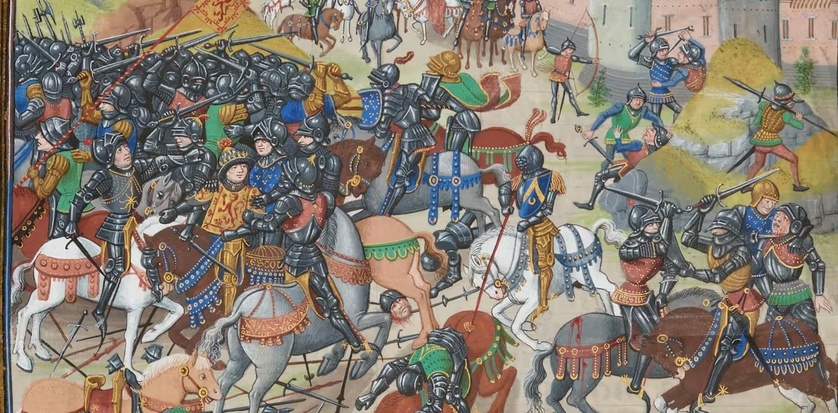
After Francis I’s victory at Marignano in 1515 secured French control of Milan, the young Charles of Habsburg (newly King of Spain after Ferdinand’s death) preferred consolidation over further Italian war. Negotiations produced a settlement: Charles recognised French possession of Milan; Francis recognised Spanish title to Naples, transferring the French claim via a projected marriage of Charles to Francis’s infant daughter Louise (who later died, leaving the arrangement incomplete). Pensions and mutual non-interference clauses accompanied the core territorial recognition. The treaty, followed by the Treaty of Brussels with Emperor Maximilian, ended the War of the League of Cambrai and restored a rough status quo of 1508. It proved only a temporary truce. Charles’s election as Holy Roman Emperor in 1519 reignited the Franco-Habsburg struggle, which continued for decades.
Tenbun Hokke Disturbance (27 July 1536, traditional calendar)
Nichiren (Hokke) Buddhism had gained strong influence among Kyoto’s townspeople, with twenty-one major temples exercising near-autonomous power after helping defeat the Ikkō-ikki in 1532. A public debate humiliation of Tendai monks from Enryaku-ji on Mount Hiei in early 1536 provoked the older establishment. Enryaku-ji demanded the Nichiren temples become subordinate branches and pay tribute. When refused, warrior monks and allies under Rokkaku Sadayori of Ōmi blockaded the city and, on 27–28 July, systematically burned all twenty-one temples, destroying large parts of Kyoto in the process. Thousands died or fled; survivors scattered, many to Sakai. The shogunate banned Nichiren practice in the capital for six years. Permission to return came in 1542, with a formal peace in 1547 allowing roughly fifteen temples to be rebuilt—yet the sect never recovered its former political autonomy in Kyoto.
Religious observance carries different subtleties. Western Christianity, even when Catholics fought Catholics over dynastic spoils, operated within a shared framework that eventually permitted negotiated coexistence and recognition of rival claims. Eastern Buddhist traditions in this instance showed less appetite for such compromise: doctrinal and institutional rivalry ended in physical annihilation of the opponent’s presence. God and Buddha are not the same, and are expressed differently. Tradition records that the Buddha himself declined to be regarded as God. These two episodes, viewed with hindsight, illustrate how profoundly those differences shape the ways religious communities resolve—or refuse to resolve—conflict.