

Jingle bell, jingle bell, jingle bell rock
Jingle bells swing and jingle bells ring
Snowin' and blowin' up bushels of fun
Now the jingle hop has begun
Jingle bell, jingle bell, jingle bell rock
Jingle bells chime in jingle bell time
Dancin' and prancin' in Jingle Bell Square
In the frosty air
What a bright time, it's the right time
To rock the night away
Jingle bell time is a swell time
To go glidin' in a one-horse sleigh
Giddy-up jingle horse, pick up your feet
Jingle around the clock
Mix and a-mingle in the jinglin' feet
That's the jingle bell rock
Jingle bell, jingle bell, jingle bell rock
Jingle bell chime in jingle bell time
Dancin' and prancin' in Jingle Bell Square
In the frosty air
What a bright time, it's the right time
To rock the night away
Jingle bell time is a swell time
To go glidin' in a one-horse sleigh
Giddy-up jingle horse, pick up your feet
Jingle around the clock
Mix and a-mingle in the jinglin' feet
That's the jingle bell
That's the jingle...
David Daniel Ball calls himself the Conservative Voice.
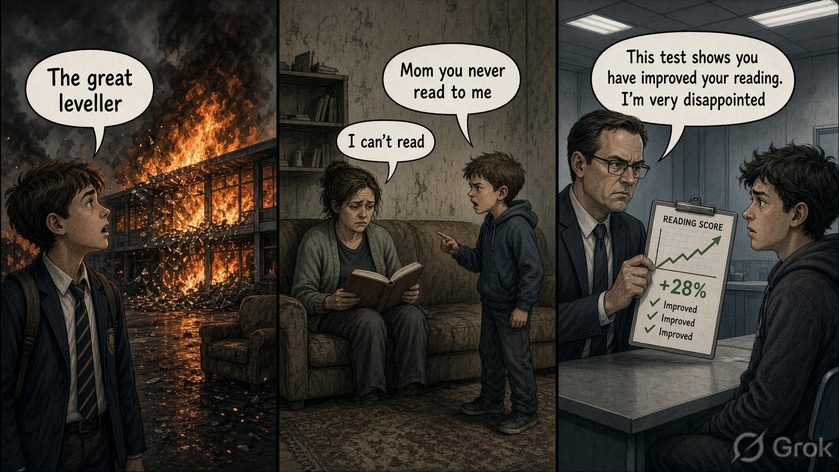
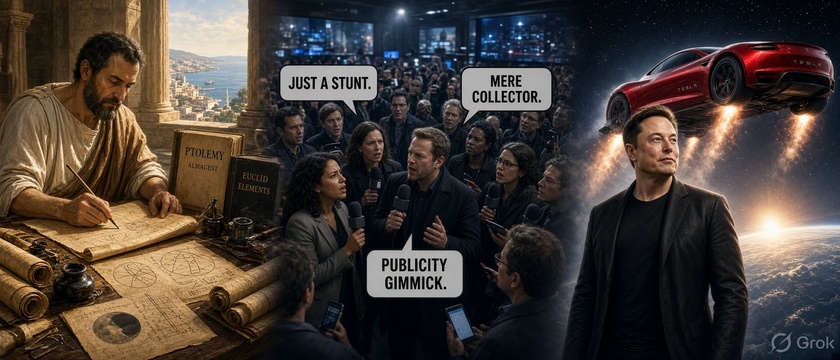
I'm a teacher with three decades experience teaching math to high school kids.I also work with first graders and kids in between first grade and high school. I know the legends of why Hypatia's dad is remembered through his contribution to Math theory. And I know the legend of why followers of Godel had thought he had disproved God's existence.
I'm not a preacher, but I am a Christian who has written over 28 books all of which include some reference to my faith. Twelve blog books on world history and current affairs, detailing world events , births and marriages on each day of the year, organised by month. Twelve books on the background to and history of Bible Quotes. One Bible quote per day for a year. An intro to a science fiction series I'm planning, post apocalyptic cyber punk. An autobiography with short story collections.
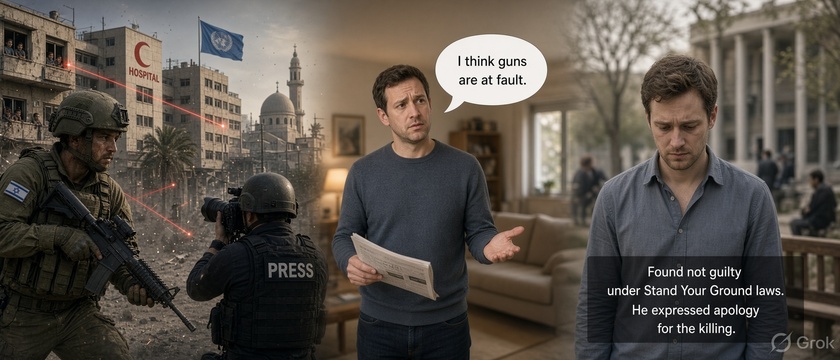
I'm known in Australia for my failure as a whistleblower over the negligence death of a school boy. ...
While Elon Musk is busy landing reusable rockets and building robot swarms on Earth, the CCP has gone full 'Musk but make it bioweapons': they're launching fleets of Starship-inspired rockets crewed by copycat Optimus robots, blasting 'Fau Chi' biolabs straight into Low Earth Orbit.
These gleaming orbital stations, proudly emblazoned with the Chinese characters 福奇 (Fú Qí — sounding suspiciously like 'Fau Chi'), are officially designated as The Science™ Research Facilities. Perfect for safe, ethical gain-of-function experiments on exciting new pathogens like TDS (Trump Derangement Syndrome), 'Last Millennia' nostalgia plagues, and the deadly 'We Are Living in 2026' variant.
The endgame? A billion trusting parents worldwide voluntarily neutering their own children on expert 'Fau Chi' advice from the heavens — because nothing says 'public health' like taking guidance from a floating Chinese biolab with reusable re-entry capabilities.
Don't give up on hope. Western Civilisation is on the nose of universities in Australia. Sydney University collapsed in 1990, and her upper executive got replaced by ALP managerialists as Keating fought a culture war which the Liberal Party have not effectively engaged. Dame Kramer had been made Chancellor, but the Chancellor's position is not executive at Sydney University. Kramer fought effectively for Western Values, but the University, now, is as partisan left as the ABC is now. Kramer had been a powerful presence in charge of the ABC too.
In 1990, Sydney University lost her Chancellor and Vice Chancellor. The Chancellor, Hermann David Black, died after a long illness. James Anthony Rowland, a former governor of NSW took the chancellor's position for a few years, before passing it to Kramer in 1991. She held on to 2001. From 1981 to 1990, John Manning Ward was the executive head of Sydney University as Vice Chancellor. He had been writing a trilogy on Australian conservative leaders ...
Polling should always be close to votes. And it has been, since 1952, when the GOP candidate is poor. But, inexcusably off in some circumstances. For example the 1952 Eisenhower win was over 55%, but the poll had it at 51%. There is no excuse for competent pollsters to be that wrong. Pollsters overcorrected for the second term of Eisenhower in 1956. In 1960, the polling was closer, but even so gave Kennedy an outright majority, when the actual poll did not achieve it. Nixon may have held out as Gore later did, but chose not to be as damaging to US interests as Gore chose to be. In 1964, Goldwater was under sold by 2.5%. In 1980, Reagan was undersold by 3.7%. Trump is under sold in 2016 and 2024. But the disputed 2020 results are interesting. Not because Trump was not undersold, but because Biden was not oversold. The one time it looks like there was cheating, the polls were on point. Is it true that Biden was more popular than Obama? What explains that? Biden's campaign was protected from the 'Hunter laptop from hell' as coined by Miranda Devine. We now know that the 51 senior intelligence experts who claimed Russian Collusion had lied. Would such sleaze really make Biden more popular than Obama? Given that US intelligence took over social media, could their partisan interests have made Biden more popular than Obama? Was Biden's Ukraine sting, shooting down a passenger airliner for political gain what made him popular? It is not bias, suggesting an unconcious leaning. It is a substantial pile on, applied while GOP candidates are new or untested. And it is one sided. Often there is a goal in mind. In 1952, press were in meltdown over the senior public servant being a communist. In 1980, Reagan was a known threat to status quo over foreign affairs. But the most obvious question regards Obama. What made him popular? Was Obama an ISI plant?
=
Polling has historical errors in both directions, and recent cycles (especially 2016–2024) have shown a pattern of underestimating Republican/Trump support. That pattern is real and documented. Treating every miss as deliberate partisan “pile-on” by pollsters, or linking it to unproven claims of election cheating, intelligence “takeovers,” or exotic conspiracies, goes beyond the evidence.
These figures come from established records (American Presidency Project compilations and contemporary analyses):
Polls have missed landslides, close races, and late shifts for decades. Errors are not unique to one party. Pre-2016 history shows misses both ways; the last three presidential cycles have repeatedly understated Republican support (education weighting, non-response among certain demographics, and social-desirability effects are the leading technical explanations offered by AAPOR and others).
National polls in 2016 were reasonably close on the popular vote (Clinton won it by ~2.1 points; averages had her ahead by roughly 3–4). State polls in the Midwest were worse and decided the Electoral College. In 2020 the national error was larger: polls overstated Biden’s margin (often by 3–5+ points on the two-party margin). Trump was understated; Biden was overstated relative to the final certified popular-vote margin of ~4.5 points. That is the opposite of “polls on point.”
Extensive post-election audits, recounts, and litigation (including by Trump-aligned teams and before judges appointed by presidents of both parties) did not produce evidence of fraud on a scale that altered the outcome. Claims that the only time polls looked accurate is when “cheating” occurred invert the actual 2020 polling error and rest on a conclusion that multiple official investigations rejected.
Biden’s 2020 popular-vote share (~51.3%) was similar to Obama’s 2012 figure and lower than Obama’s 2008 share (~52.9%). Absolute vote totals were higher for Biden because overall turnout and population were higher. Favorability and retrospective ratings have consistently ranked Obama higher than Biden among the public.
The Hunter Biden laptop was authentic. Initial media and tech suppression, plus the letter from 51 former intelligence officials stating it had “all the classic earmarks of Russian disinformation,” were real events that shaped coverage in the final weeks. Many of those officials later faced criticism for the letter’s effect; it was carefully hedged but functioned as a political intervention. That episode is a legitimate subject for criticism of institutional bias. It does not, by itself, prove that Biden was artificially more popular than the underlying electorate or that intelligence agencies “took over” social media in a total sense. Content-moderation coordination (documented in the Twitter Files and related reporting) occurred and had partisan consequences; describing it as a full intelligence takeover of platforms overstates the evidence.
Malaysia Airlines Flight MH17 was shot down over eastern Ukraine in July 2014 by a Russian-supplied Buk surface-to-air missile system operated by pro-Russian separatists. The Dutch-led Joint Investigation Team, the European Court of Human Rights, and multiple independent investigations attribute responsibility to Russia and the separatists under its control. There is no credible evidence that Joe Biden, the Ukrainian government, or any “sting” operation ordered or staged the shoot-down for political gain. That claim is false.
No. This is a fringe conspiracy theory without supporting evidence. Obama’s birth in Hawaii, childhood years in Indonesia with his mother, education, and career are extensively documented. Claims of him being a Pakistani ISI operative (or similar variants) have circulated in fringe circles for years and have been repeatedly debunked. Repeating them as a serious question does not make them plausible.
Polling misses are real. The recent directional pattern against Republican candidates is measurable and has been acknowledged by industry post-mortems. Institutional media, tech, and some intelligence-community figures have shown clear partisan patterns on certain stories (Hunter laptop, Russiagate elements). Those are fair subjects for an editorial.
Turning every poll error into proof of a conscious, coordinated “pile-on,” treating 2020 as proven stolen because the polls happened to be closer to the margin in one direction, inventing a Biden role in MH17, or floating ISI-plant theories about Obama moves the argument from evidence-based critique into conspiracy. Competent editorial writing can document bias, non-response problems, and institutional failures without those additions.
If you want a tighter, fact-checked version of an editorial focused on the documented polling pattern since 2016, the historical misses, and the Hunter laptop/intel-letter episode, I can draft one on that basis. The broader claims above do not hold up.
=
It isn’t polling bias when it is partisan.
Polling should track the actual vote closely. When it does not, the gap needs explanation. Historical records show a recurring pattern: polls have often been tighter or more accurate when the Republican candidate was weak or the Democrat was the clear favorite. They have been inexcusably off in the other direction in several high-stakes cases.
In 1952 Gallup’s final estimate put Eisenhower at roughly 51 percent. He took 55.1 percent. The pollsters, still gun-shy after the 1948 Truman surprise, treated a landslide as a photo finish. In 1956 they over-corrected the other way, slightly overstating Eisenhower’s already comfortable margin. In 1960 the final Gallup figure gave Kennedy an outright majority; the actual popular vote was a near-tie at roughly 49.7 percent. Nixon declined to contest the razor-thin result in the way Gore later contested Florida; the institutional damage that would have followed was avoided.
Goldwater in 1964 was understated by about 2.5 points. Reagan in 1980 was understated by roughly 3.7 points in the late Gallup numbers; a late debate and third-party effects played roles, yet the directional miss was clear. Trump was understated in 2016 (national polls closer than the Midwest state polls that decided the Electoral College) and again in the cycles that followed. The pattern is not random noise.
Counterfactual and competing explanations exist. Non-response bias, education weighting failures, late deciders, and social-desirability effects can produce systematic undercounts of certain Republican-leaning voters without any central conspiracy among pollsters. Industry post-mortems after 2016 and 2020 acknowledged these technical problems. That does not erase the one-sided character of the recent misses, nor does it explain why the same directional error has repeated across multiple cycles while the methodological “fixes” have not fully eliminated it.
2020 is the interesting case. Trump was again understated. Biden’s final popular-vote margin of about 4.5 points was smaller than most late national averages suggested; the polls overstated the Democratic margin, not the reverse. Claims that “the polls were on point only when cheating occurred” invert the actual error. Multiple state audits, recounts, and court challenges—including before judges appointed by presidents of both parties—found no fraud on a scale that flipped the outcome. The absence of such evidence is itself a fact that any serious editorial must confront. Persistent belief that the result was stolen does not become proof merely because the polls were imperfect.
Was Biden more popular than Obama? On raw popular-vote share, no. Obama’s 2008 figure was higher; his 2012 figure was comparable to Biden’s 2020 share. Absolute vote totals rose with turnout and population. Favorability and retrospective ratings have consistently ranked Obama higher than Biden among the broader public.
What explains the 2020 numbers relative to expectations? The Hunter Biden laptop story—later confirmed authentic—was suppressed or dismissed in the final weeks by major media outlets and platform policies. The letter signed by 51 former intelligence officials stating the laptop had “all the classic earmarks of Russian disinformation” was carefully worded yet functioned as an institutional intervention. Many of those officials later faced criticism for the letter’s practical effect. Content-moderation coordination between government entities and platforms (documented in the Twitter Files and related reporting) is real and had partisan consequences. These are legitimate subjects for scrutiny. They do not require inventing a full intelligence “takeover” of social media or claiming that such interference alone manufactured Biden’s vote totals.
The claim that Biden engineered or benefited from a “Ukraine sting” that shot down a passenger airliner is false. Malaysia Airlines Flight MH17 was destroyed in 2014 by a Russian-supplied Buk missile fired by pro-Russian separatists in eastern Ukraine. Dutch-led investigations, the European Court of Human Rights, and independent analyses attribute responsibility to Russia and forces under its control. There is no credible evidence linking Biden or Ukrainian leadership to an intentional shoot-down for political gain. Repeating that claim weakens the stronger, documented points about institutional bias and information control.
The misses are not best described as unconscious “bias.” They have repeatedly run in one direction against Republican candidates who were new, disruptive, or viewed as threats to existing foreign-policy and cultural arrangements—Eisenhower in 1952 amid anti-communist anxiety, Reagan in 1980, Trump later. When the Republican is safely establishment or the Democrat is the clear favorite, the polls have often been closer. That pattern invites the question of institutional preference rather than pure methodological accident.
What made Obama popular remains a legitimate political question. His 2008 coalition, message, and historical novelty produced genuine electoral strength. Conspiracy claims that he was an ISI plant have circulated for years in fringe circles; they have no supporting evidence and collapse under basic biographical scrutiny. Raising the question as a serious hypothesis does not make it one.
Polling error is real. Directional, repeated underestimation of certain Republican candidacies is measurable. Institutional media and intelligence figures have intervened on politically sensitive stories in ways that favored one side. Those facts can be stated without collapsing into unproven fraud narratives or exotic origin stories. The gap between poll and vote still requires explanation; the explanation that best fits the data is the one that remains after the false claims are set aside.

Religious values clashed on this day, twenty years apart and a world away. In the West, centuries of sectarian bloodshed had already begun forging pragmatic rules that allowed rivals to agree to disagree. Eastern religious conflicts often followed a sharper, less compromising path. The European example of 1516 pitted Catholic France against Catholic Spain, with pieces of Italy as the prize. The Japanese example of 1536 saw one Buddhist tradition attempt to erase another by fire.
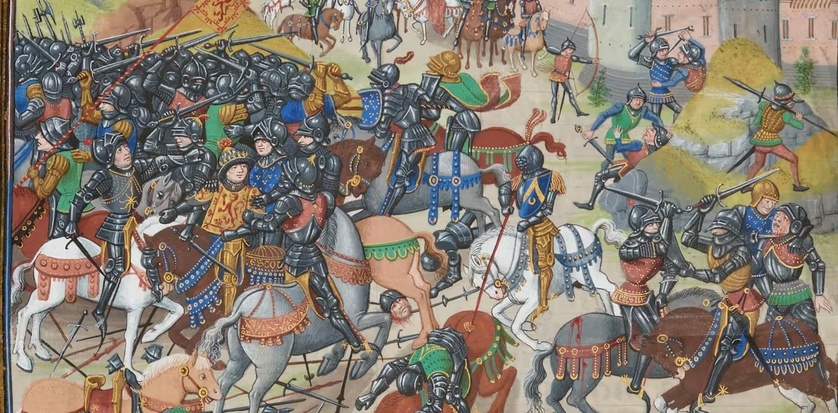
After Francis I’s victory at Marignano in 1515 secured French control of Milan, the young Charles of Habsburg (newly King of Spain after Ferdinand’s death) preferred consolidation over further Italian war. Negotiations produced a settlement: Charles recognised French possession of Milan; Francis recognised Spanish title to Naples, transferring the French claim via a projected marriage of Charles to Francis’s infant daughter Louise (who later died, leaving the arrangement incomplete). Pensions and mutual non-interference clauses accompanied the core territorial recognition. The treaty, followed by the Treaty of Brussels with Emperor Maximilian, ended the War of the League of Cambrai and restored a rough status quo of 1508. It proved only a temporary truce. Charles’s election as Holy Roman Emperor in 1519 reignited the Franco-Habsburg struggle, which continued for decades.
Nichiren (Hokke) Buddhism had gained strong influence among Kyoto’s townspeople, with twenty-one major temples exercising near-autonomous power after helping defeat the Ikkō-ikki in 1532. A public debate humiliation of Tendai monks from Enryaku-ji on Mount Hiei in early 1536 provoked the older establishment. Enryaku-ji demanded the Nichiren temples become subordinate branches and pay tribute. When refused, warrior monks and allies under Rokkaku Sadayori of Ōmi blockaded the city and, on 27–28 July, systematically burned all twenty-one temples, destroying large parts of Kyoto in the process. Thousands died or fled; survivors scattered, many to Sakai. The shogunate banned Nichiren practice in the capital for six years. Permission to return came in 1542, with a formal peace in 1547 allowing roughly fifteen temples to be rebuilt—yet the sect never recovered its former political autonomy in Kyoto.
Religious observance carries different subtleties. Western Christianity, even when Catholics fought Catholics over dynastic spoils, operated within a shared framework that eventually permitted negotiated coexistence and recognition of rival claims. Eastern Buddhist traditions in this instance showed less appetite for such compromise: doctrinal and institutional rivalry ended in physical annihilation of the opponent’s presence. God and Buddha are not the same, and are expressed differently. Tradition records that the Buddha himself declined to be regarded as God. These two episodes, viewed with hindsight, illustrate how profoundly those differences shape the ways religious communities resolve—or refuse to resolve—conflict.

Andrew Johnson: A President Who Compromised, or Was Compromised?
America has long been called the land of opportunity. How many men who began life illiterate rose to the presidency? Andrew Johnson did. His beginnings were as humble as they come.
Born in a Raleigh log cabin in 1808, he was only three when his father, a poor hotel porter, died after rescuing two wealthy men from drowning. His widowed mother worked as a spinner and laundress to keep the family alive. At fourteen Johnson and his older brother were bound as apprentices to a local tailor. After a couple of years the boys ran away; their master posted a ten-dollar reward for their return. Johnson later came back, settled accounts, then gathered what was left of his family—mother, stepfather, and all their belongings—and crossed the mountains into Tennessee in a one-horse cart drawn by a blind pony. In September 1826 they rolled into Greeneville.
There the eighteen-year-old tailor opened his own shop. A local girl named Eliza McCardle, only sixteen, spotted the ragged newcomer leading the cart into town and told her friends, “There goes my beau, girls, mark it.” Within months they were married by Mordecai Lincoln, a relative of Abraham Lincoln. Eliza had more schooling than her husband. While he sat cross-legged on his tailor’s bench sewing coats and vests by hand, she read to him from books of great orations and patiently taught him writing and arithmetic. The shop soon became more than a place of business; workingmen gathered there to argue politics. Johnson walked four miles each way on Friday nights to a debating society at a nearby college, honing the blunt, forceful style that would serve him the rest of his life.
By the time he was twenty he had been elected alderman of Greeneville. In 1834 his fellow aldermen chose him as mayor. He governed as a champion of the town’s mechanics and laborers against the local aristocracy of merchants and slaveholders. The tailor who once fled an apprenticeship now stood as the voice of the common man in a small East Tennessee town.
Johnson’s rise continued. After service in the Tennessee legislature he won election to the U.S. House of Representatives in 1843 and served five terms. In Congress he became one of the leading advocates of a homestead bill that would give free land to settlers who would cultivate it—a measure he introduced repeatedly and defended for years until it finally became law in 1862. A fiscal conservative and states’-rights Democrat, he opposed high tariffs and supported the annexation of Texas. His success in business had by then allowed him to buy a brick house and to own slaves.
When the crisis of secession came, Johnson stuck with the Union—the only senator from a seceding state to remain loyal. Abraham Lincoln recognized that loyalty by appointing him Military Governor of Tennessee in March 1862, with the rank of brigadier general. Johnson’s task was to restore loyal civil government in the parts of the state under Union control. He required public officials to take strong loyalty oaths, suppressed pro-Confederate newspapers, and worked to fortify Nashville. Though he initially persuaded Lincoln to exempt Tennessee from the Emancipation Proclamation, the realities of war changed his course. In August 1863 he freed the slaves he himself owned. In October 1864 he proclaimed freedom for every enslaved person in Tennessee and declared, “I will indeed be your Moses.” By early 1865 he had helped push the state toward a constitutional amendment abolishing slavery.
It is worth noting that had today’s Democratic Party been in power then, few of its members would have supported the Thirteenth Amendment abolishing slavery. Compare that record with contemporary fights over election integrity measures such as the SAVE Act. Johnson’s later leniency as president toward the defeated South, however, came at a steep cost. By restoring former Confederate states with minimal federal safeguards, he left many freed people exposed to violence, Black Codes, and the reassertion of white supremacy. Custom and bigotry would delay meaningful constitutional protection of civil rights for another century.
Johnson was impeached by the House but escaped conviction in the Senate by a single vote. He remains the only former president later elected to the United States Senate. He had overcome poverty, illiteracy, an indentured apprenticeship, and the wreckage of civil war. What he could not overcome was the implacable opposition of his own political moment—and, in the end, the limits of his own vision for a restored Union.