Airplane Safety Presages a Revolution in Car Safety
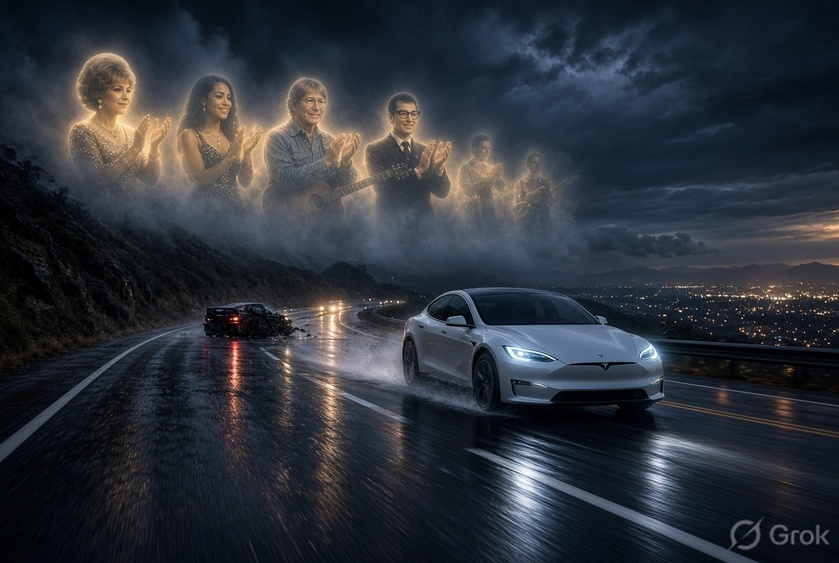
On this day in 1961, Patsy Cline recorded her signature hit “Crazy.” Only weeks earlier she had survived a near-fatal head-on car collision in Nashville, being thrown through the windshield. Broken ribs and other injuries still affected her breathing and range, yet she delivered the vocal in a single take over a pre-recorded instrumental track. The song became one of the most enduring recordings in country music.
Less than two years later, on 5 March 1963, Cline was dead at the age of 30. The small Piper PA-24 Comanche carrying her, Cowboy Copas, Hawkshaw Hawkins and pilot-manager Randy Hughes crashed near Camden, Tennessee, while returning from a benefit concert in Kansas City. Flying into deteriorating weather without an instrument rating, Hughes lost control. The crash was ruled pilot error under visual flight rules in instrument conditions. More hits followed posthumously.
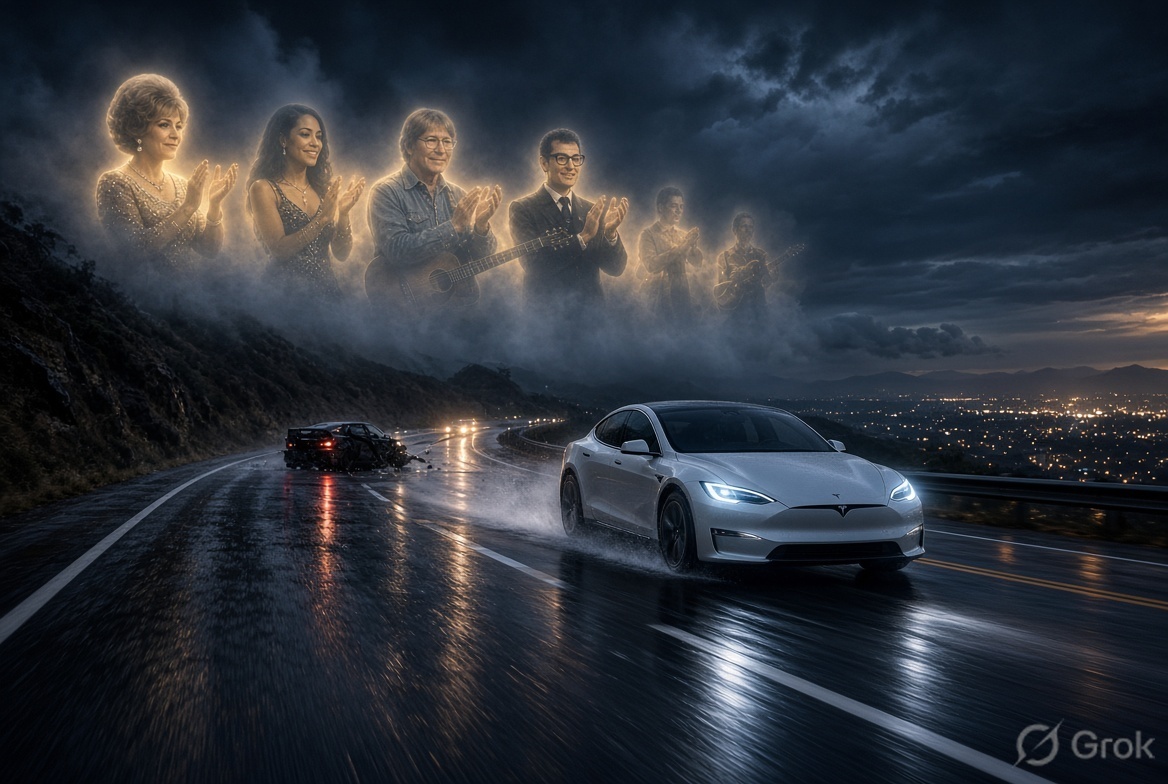
Cline’s story forms part of a longer list of musicians lost to aviation accidents while travelling between performances. Buddy Holly, Ritchie Valens and J.P. “The Big Bopper” Richardson died together on 3 February 1959 when their chartered Beechcraft Bonanza crashed in a cornfield near Clear Lake, Iowa, in poor weather — the tragedy later called “The Day the Music Died.” Otis Redding, only 26, perished with members of his band when their plane crashed into Lake Monona near Madison, Wisconsin, in 1967. Jim Croce died at 30 in a takeoff crash in Louisiana in 1973. Lynyrd Skynyrd’s Ronnie Van Zant, Steve Gaines and Cassie Gaines were killed in 1977 when their Convair ran out of fuel and went down in a Mississippi swamp. Randy Rhoads, Ricky Nelson, John Denver and Aaliyah met similar fates in later decades.
Cars have claimed their own share of celebrated lives, often with less lasting public myth-making than the dramatic plane crashes.
James Dean, 24, was killed on 30 September 1955 when his Porsche 550 Spyder collided almost head-on with another vehicle near Cholame, California, while he was driving to a sports-car race. Jayne Mansfield, 34, died in the early hours of 29 June 1967 when the Buick she was travelling in struck the rear of a slow-moving tractor-trailer on a Louisiana highway; her young children, including future actress Mariska Hargitay, survived in the back seat. Grace Kelly, the Hollywood star who became Princess of Monaco, suffered a stroke while driving in 1982; her car left a mountain road and she died the following day at 52. Paul Walker, 40, was a passenger in a Porsche Carrera GT that crashed at high speed in Santa Clarita, California, in 2013 after a charity event; both he and the driver died. Anton Yelchin, 27, was fatally crushed in 2016 when his own vehicle rolled backward on a steep driveway due to a defective gear-shift design.
These losses, whether by air or by road, underline a simple statistical truth: aviation is far safer per passenger-mile than driving. Yet the absolute number of deaths and catastrophic injuries on the roads remains vastly higher. Cars do not have to stay as dangerous as they still are.
Recent technology is beginning to change the odds. Tesla’s Full Self-Driving (FSD) system, based on vision AI trained on real-world driving behaviour rather than pre-mapped courses, has produced striking safety data. Tesla’s own large-scale telemetry reports that vehicles under FSD Supervised travel several times farther between major collisions than the U.S. average. In its first European safety report from the Netherlands, Tesla stated FSD was 3.5 times safer than manual driving; later expanded data covering more than 65 million kilometres across several countries showed the advantage rising to 5.2 times safer overall, with an even larger margin on highways.
While fully unsupervised operation is still developing and independent analyses continue to examine methodology and early robotaxi results, the supervised system’s recorded reduction in collisions is significant. Nations such as France and Germany have so far resisted broader licensing, citing safety concerns and preferring slower EU-wide processes. Domestic industry interests also play a role. Meanwhile regulations lag, and ordinary drivers and passengers — along with the occasional celebrated figure — continue to die or suffer permanent injury in accidents that better technology is already capable of reducing.
I am still Crazy for more Cline.