US Legal Fraternity: Compromised Over Actions Against Trump and the 2020 Election
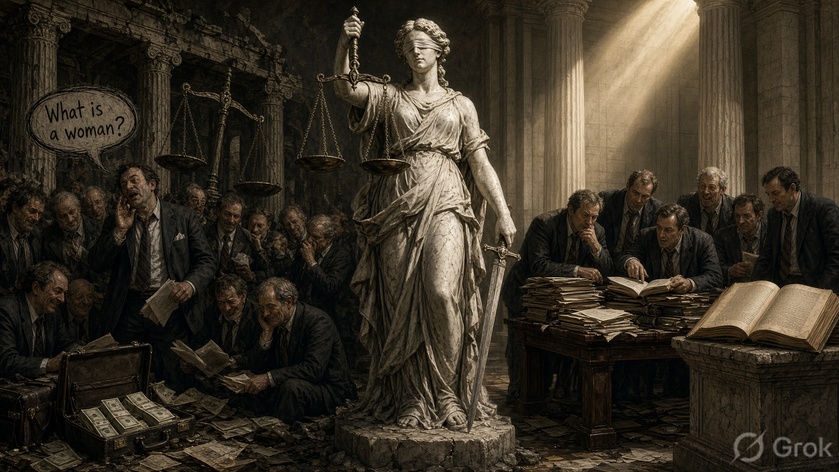
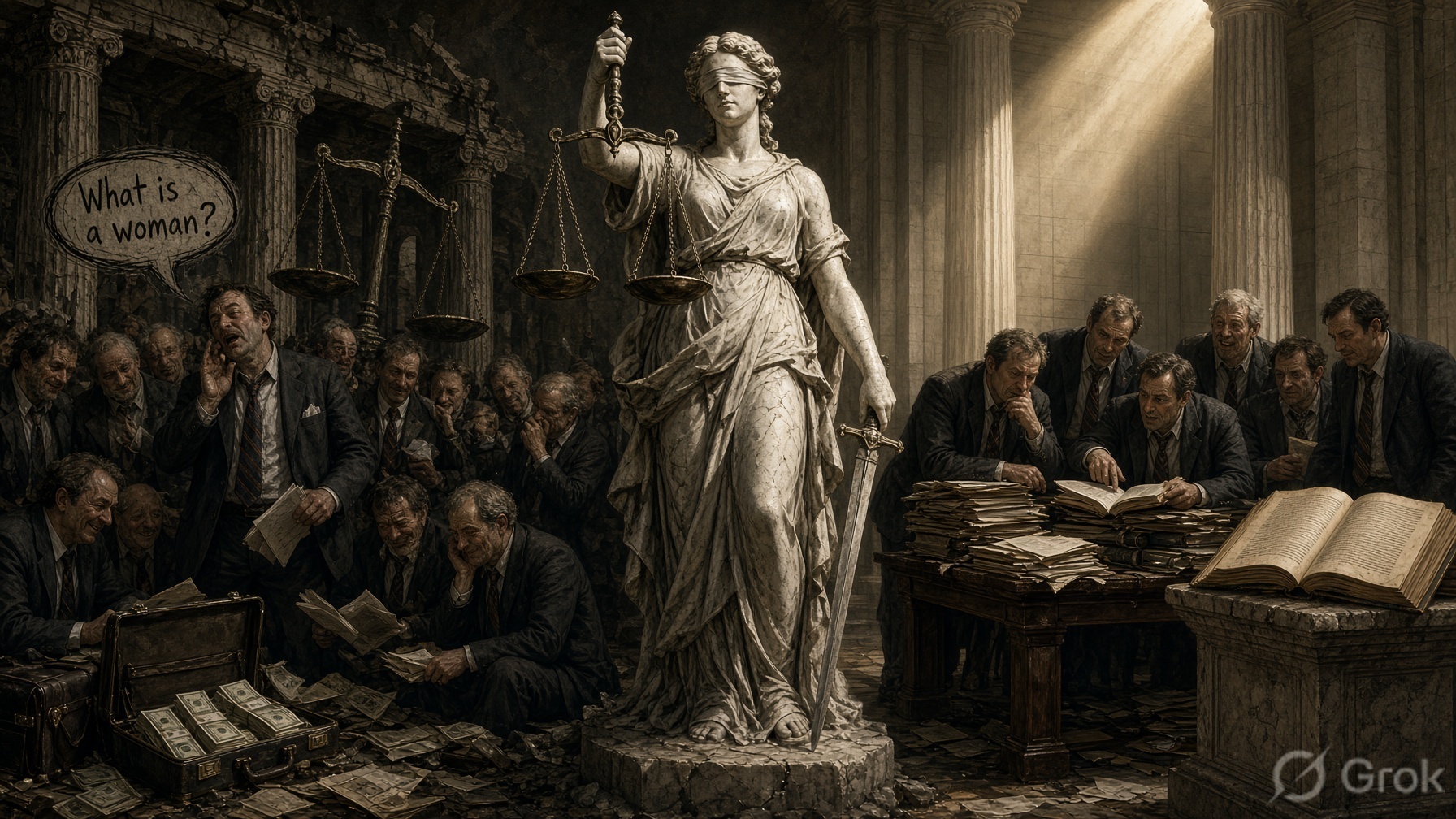
Has the legal profession ever been more than organised self-interest dressed in robes? Has it ever consistently adhered to the higher principle of blind justice—the ideal of the Lady with the scales, eyes covered, weighing evidence without regard to power or popularity? What happens when partisanship and corruption hold the reins?
The Scopes “Monkey Trial” of 1925 offers a useful contrast. Clarence Darrow defended John Scopes, who had openly admitted violating Tennessee’s Butler Act by teaching evolution. The judge kept the proceedings focused on facts rather than vague cultural anxieties. Scopes was convicted; the judge imposed the minimum fine of one hundred dollars. The Butler Act itself was upheld, yet the trial performed a public service: it forced a national conversation about science, evidence, and the proper limits of law. That science of the 1920s included discredited ideas later embraced by the Nazis—race theory, phrenology, and crude biological hierarchies. The principle of evolution by natural selection has stood the test of time; those racialist accretions have not. The Butler Act’s attempt to enforce a particular reading of Scripture was clumsy and inconsistent with the broader Christian claim that salvation rests on faith and righteous conduct, not on defending the precise geometry of the cosmos. Pi is not three. Digging does not lead to hell, nor flying to heaven. The trial nevertheless demonstrated what law can do at its best: compel argument, clarify terms, and inform the public even when the statute itself was flawed.
Today the legal profession shows a different pattern. Campaign contribution data consistently show that roughly eighty percent of lawyers and law firms lean Democratic. That imbalance is not neutral. When a profession that staffs prosecutors’ offices, law faculties, bar associations, and much of the judiciary leans so heavily in one direction, the risk of selective enforcement rises. The 2020 election remains a legitimate subject of factual and legal dispute. Opposing interpretations of election administration, mail-in procedures, and certification processes can and should be tested in court and in public argument. Denial that any serious question exists is not the same as resolving the question.
The January 6 Select Committee was bipartisan in name only. Its composition, investigative priorities, and public presentation were overwhelmingly partisan. The later pardons of certain senior figures associated with related events only deepened the appearance of selective justice. More troubling still has been the aggressive prosecution of lawyers who represented Donald Trump or advanced legal arguments on his behalf. Several of those lawyers were prominent, experienced practitioners. Treating zealous advocacy itself as a prosecutable offence risks chilling the very adversarial process the legal system claims to protect.
Judicial activism compounds the problem. Courts have blocked or delayed a series of presidential actions by the second Trump administration on grounds that often stretch statutory or constitutional language beyond recognition. The spectacle of a Supreme Court nominee unable or unwilling to offer a straightforward biological definition of “woman” during confirmation hearings crystallised a deeper loss of confidence: if basic categories can be treated as ideological traps rather than ordinary facts, the claim to neutral judging looks increasingly hollow.
A free society requires robust legal argument on contested elections, executive power, and cultural questions. What it cannot afford is a legal fraternity that functions as an extension of one political coalition. When the guardians of process become participants in the culture war, the scales tip, the blindfold slips, and public trust erodes. The remedy is not the replacement of one orthodoxy with another, but the recovery of institutional restraint: judges who stay within their lane, prosecutors who apply the law evenly, and lawyers who remember that their first duty is to the integrity of the system rather than the victory of their tribe.