VoiceDDB
Politics • Culture • News
Young people lead the way.
rules define their success.
October 12, 2026
post photo preview

Young people lead the way. 

But rules define their success.

Youth can be thrust onto the world stage by accident of timing, boldness, or simple opportunity. What follows is rarely a pure contest of talent or right. Circumstances, established rules, and the capacity of those already in power to respond quickly usually decide the outcome.

In 1996 a 21-year-old business student named John Leonard watched a Pepsi commercial that listed a Harrier jump jet as redeemable for 7 million Pepsi Points. He did the arithmetic, raised roughly $700,000, and tendered the required points plus cash. Pepsi refused, calling the jet a joke. Leonard sued. The litigation ran for years and cost Pepsi substantial sums. In the end the courts held that a humorous advertisement is not a binding offer; no reasonable person would treat it as one. Leonard never received the aircraft. Pepsi revised the commercial, raised the points total dramatically, and added an explicit disclaimer. Advertising practice tightened. The case became a standard teaching example that catalogues and broadcast jokes do not create enforceable contracts. Leonard’s initiative forced a rapid clarification of the rules. The rules, once clarified, defined the result.

Nine centuries earlier, a teenage Edgar Ætheling found himself the last male of the House of Wessex after Harold Godwinson fell at Hastings. Leading figures in London, including the Archbishop of York and the earls Edwin and Morcar, put him forward as king. He possessed a clear dynastic claim. He was never crowned. The earls failed to raise effective forces, and within weeks Edgar and the other English leaders submitted to William at Berkhamsted. The rules of succession had not been abolished in theory; they had been overridden in practice by military victory and the absence of unified English resistance. William moved quickly, entered London, and was crowned on Christmas Day. Edgar lived on for decades, involved in later campaigns and Scottish affairs, but the brief recognition of autumn 1066 produced no reign. His claim tested the new order; the new order held.

Both men enjoyed relatively long lives. Leonard is still alive. Edgar survived into the 1120s. In each case the young man identified an opening that existing power had left unclosed—an advertisement without a disclaimer, a vacant throne without a ready military response. In each case those in power reacted with speed once the opening was exploited. The courts restated the ordinary meaning of an offer. William secured the crown and the submission of the remaining English leadership. Initiative created pressure; the governing rules, once applied or enforced, determined the outcome.

Youth supplies energy, calculation, and the willingness to test a boundary that older hands may have left unexamined. Rules—legal, military, political—supply the structure within which that energy either produces lasting change or is absorbed. Leonard’s suit did not rewrite the law of contract, but it made the existing doctrine impossible to ignore in advertising. Edgar’s proclamation did not restore the House of Wessex, but it forced William to complete the conquest without delay. In both episodes the young men led the way into an open question. The rules, and the speed with which those who controlled them answered, defined the success that followed.

=

Edgar Ætheling’s brief recognition as king in late 1066 was a short-lived, unconsummated claim by the last male of the House of Wessex after Harold Godwinson’s death at Hastings. He was proclaimed (or put forward) in London but never crowned or anointed, and he submitted to William the Conqueror within weeks.

Background

Edgar Ætheling (also Æþeling; sometimes called Edgar II by those who count his recognition) was born around 1051–1052, probably in Hungary. He was the son of Edward the Exile (son of Edmund Ironside) and Agatha. After the death of his father, Edgar and his sisters Margaret and Christina were brought to England by Edward the Confessor around 1057. As the last male descendant of the House of Wessex in the direct male line, he held the title ætheling (“prince eligible for the throne”).

When Edward the Confessor died in January 1066, the Witan chose Harold Godwinson as king rather than the teenage Edgar, who lacked military experience and political support. After Harold was killed at the Battle of Hastings on 14 October 1066, the remaining English leadership in London faced Norman advance and the collapse of organized resistance.

Contemporary accounts (notably the Anglo-Saxon Chronicle, especially the Worcester/D manuscript) record that Edgar was chosen or put forward as king by the Archbishop of York (Ealdred), the leading citizens of London, and with the promised support of Earls Edwin of Mercia and Morcar of Northumbria. This was an attempt to preserve an English dynasty rather than submit immediately to William of Normandy. There is no evidence he was formally elected by a full Witan or crowned.

Significant Characters

  • Edgar Ætheling: The teenage claimant (roughly 14–15 years old). He had a strong hereditary claim but no personal military following or experience. He never exercised real power.
  • Harold Godwinson: Previous king, killed at Hastings on 14 October 1066. His death created the vacancy.
  • William the Conqueror (William of Normandy): Invader and eventual king. He moved methodically toward London after Hastings.
  • Archbishop Ealdred of York: One of the key figures who supported Edgar’s recognition in London. (He later crowned William at Westminster.)
  • Earls Edwin of Mercia and Morcar of Northumbria: Powerful northern earls who initially backed Edgar but failed to deliver meaningful military support. They later submitted to William and retained their earldoms for a time.
  • Other English leaders: Citizens of London and various nobles who briefly rallied around the Wessex heir before the practical reality of Norman strength became clear.

Results and Aftermath

Support for Edgar proved hollow. Edwin and Morcar did not raise effective armies, and no coherent English resistance formed around him. In early December 1066, Edgar, along with Archbishop Ealdred, Edwin, Morcar, and other leaders, submitted to William at Berkhamsted (Berkhamstead). William then entered London and was crowned on Christmas Day 1066.

Edgar was never crowned or anointed. His “reign” (if counted at all) lasted only from roughly mid-October to early December 1066—about six to eight weeks of nominal recognition without effective rule. Most historians treat him as a claimant rather than a king.

After submission:

  • He lived under Norman rule for periods and spent time in Scotland with his sister Margaret (who married King Malcolm III Canmore).
  • He was involved in various revolts and campaigns against the Normans in the late 1060s and 1070s, then reconciled at times with William I and William II.
  • He later took part in Norman ventures (including a force sent toward Apulia) and intervened in Scottish succession politics.
  • He lived into the 1120s (death in or after 1125) and is sometimes described as the last male of the old English royal line.

The episode marked the effective end of the House of Wessex as a ruling dynasty in England. William’s coronation and subsequent consolidation of power completed the Norman Conquest. Edgar’s claim is noted in sources as a brief alternative that collapsed for lack of military force and unified leadership.

=

John Leonard was not legally correct. In Leonard v. Pepsico, Inc. (88 F. Supp. 2d 116 (S.D.N.Y. 1999), aff’d 210 F.3d 88 (2d Cir. 2000)), the courts ruled that Pepsi’s humorous commercial did not constitute a binding offer. Leonard lost. The case is a famous teaching example in U.S. contract law on when advertisements create offers versus mere puffery or invitations to negotiate. It reinforced existing principles rather than rewriting advertising law, though it did push advertisers toward clearer disclaimers in extreme or joke promotions.

Background

In the mid-1990s, during the cola wars, Pepsi launched “Pepsi Stuff,” a loyalty program. Customers collected “Pepsi Points” from product packaging and redeemed them for branded merchandise (T-shirts, jackets, sunglasses, etc.). Extra points could be bought for 10 cents each, provided the customer submitted at least 15 points from actual products.

A 1995–96 television commercial (part of the campaign’s advertising, including Super Bowl exposure) showed a teenager collecting various Pepsi items and then flying to school in a McDonnell Douglas AV-8B Harrier II jump jet. On-screen text listed the jet at 7,000,000 Pepsi Points. The tone was deliberately over-the-top and humorous: the jet lands near a school bicycle rack, blasts a principal’s clothes off with its exhaust, and the teen remarks that it “sure beats the bus.”

John D.R. Leonard, a 21-year-old business student at Shoreline Community College near Seattle, saw the ad. He calculated that buying the remaining points at 10 cents each would cost about $700,000 for a jet then valued in the tens of millions of dollars (court and contemporary figures often cited roughly $23–37 million). He and associates treated it as an arbitrage opportunity. In late March 1996 he submitted an official order form requesting “1 Harrier Jet,” 15 original Pepsi Points, and a check for $700,008.50 (including shipping). Pepsi returned the check, described the jet as “fanciful” and “humorous,” and sent some free coupons.

Leonard (and investors) sued for breach of contract, fraud, and related claims, seeking the jet or specific performance. Pepsi filed a preemptive declaratory-judgment action in New York federal court seeking a ruling that it had no obligation and attempting to recover fees.

Significant Characters

  • John Leonard: The plaintiff. A young, adventurous business student and mountaineer. He later became a National Park Service ranger (including mountaineering work at Denali) and has lived in the Washington, D.C., and Alaska areas with his family. He has said he genuinely believed the claim could succeed at the time and has reflected on it as opportunistic in hindsight. He appears in the 2022 Netflix documentary Pepsi, Where’s My Jet?.
  • Todd Hoffman: Leonard’s older friend, mentor, and primary financial backer. They met on a mountaineering trip. Hoffman (a businessman with various ventures) helped raise or supply the ~$700,000 and was involved in the strategy and publicity. They remained friends afterward.
  • Judge Kimba M. Wood: U.S. District Judge for the Southern District of New York who wrote the detailed 1999 opinion granting Pepsi summary judgment.
  • Michael Avenatti: Then a law student, he briefly assisted Leonard’s side (especially with media/PR strategy). He later became nationally known representing Stormy Daniels and was subsequently convicted on multiple federal charges (extortion, fraud, etc.).
  • PepsiCo and its team: The defendant corporation. Spokespeople emphasized that “tens of millions” of viewers understood the ad as a joke. The ad agency and Pepsi revised the commercial after the claim (raising the jet to 700 million points and adding “Just Kidding”).

Court Rulings and Outcomes

Judge Wood granted Pepsi summary judgment on August 5, 1999. Core holdings (later affirmed by the Second Circuit in a short per curiam opinion):

  • Advertisements are generally invitations to negotiate or solicit offers, not binding offers themselves (citing the Restatement (Second) of Contracts). The commercial lacked the definite, clear, and explicit terms needed to create an offer that left nothing open for negotiation.
  • Under the objective reasonable-person standard, no one would take the jet depiction seriously. The scene was an exaggerated adolescent fantasy: an improbable young pilot, a military attack jet landing in a school zone, the absurdity of the numbers, and the overall humorous tone. It was classic puffery.
  • The governing catalog (the actual redemption document) did not list the jet.
  • Any alleged high-value contract failed the Statute of Frauds for lack of a sufficient signed writing from Pepsi.
  • Pepsi never cashed the check, undercutting fraud claims.

Leonard recovered nothing. Pepsi had offered a settlement (reported in some accounts around $750,000) which was declined. The commercial was revised with the higher points total and an explicit “Just Kidding” disclaimer. The case became a standard example in American law-school contract courses on offer, acceptance, the reasonable-person test, and the limits of advertising.

Practical effects: Advertisers grew more cautious about extreme or joke prizes without clear disclaimers. The case is still widely discussed in marketing and legal contexts as a cautionary tale. It did not overhaul U.S. advertising law (existing doctrines on puffery and ads-as-invitations already covered the ground), but it made the principles vivid and memorable.

Later cultural notes include the 2022 Netflix documentary featuring Leonard and Hoffman, and a 2026 Frontier Airlines Super Bowl ad in which Leonard “redeems” the 7 million points for free Frontier miles for life.

In short, Pepsi successfully defended the claim that the jet was a joke, not a contractual offer. Leonard’s attempt was creative and well-funded, but the courts applied standard contract principles and found no enforceable deal. The litigation was costly and drawn-out for Pepsi, but the company prevailed on the law.

= October 15th 

1066 – Edgar the Ætheling proclaimed King of England

After Harold Godwinson’s death at the Battle of Hastings on 14 October 1066, leading English figures in London (including the Archbishop of York and Earls Edwin and Morcar) put forward the teenage Edgar Ætheling as king. Edgar was the last male of the House of Wessex, a grandson of Edmund Ironside, and had a strong dynastic claim as ætheling (“prince eligible for the throne”). He was never crowned or anointed. Support proved hollow: the earls failed to raise effective forces, and in early December Edgar and other English leaders submitted to William the Conqueror at Berkhamsted. Edgar later lived in Scotland, took part in various campaigns, and died in or after 1125. He is sometimes styled Edgar II by those who treat his short recognition as a reign (roughly mid-October to early December 1066).

1211 – Battle of the Rhyndacus

On 15 October 1211, Latin Emperor Henry of Flanders defeated Nicaean Emperor Theodore I Laskaris near the Rhyndacus River in northwestern Anatolia. Henry had only a few hundred Frankish knights (sources often cite around 260). Laskaris had a larger force but had recently suffered losses against the Seljuks; he tried to ambush the Latins, but Henry’s assault broke the Nicaean lines in a day-long fight. The victory let Henry advance deep into Nicaean territory (as far as Nymphaion). It contributed to the later Treaty of Nymphaeum (1214), which fixed a frontier and recognised Nicaea as a sovereign power.

1529 – End of the Siege of Vienna

Suleiman the Magnificent’s Ottoman army besieged Vienna from late September 1529. The defenders, heavily outnumbered, held the walls with arquebuses and pikes and repulsed repeated assaults. A major final Ottoman attack on or about 14 October failed. Facing early winter, supply problems, and disease, Suleiman ordered the withdrawal on 15 October. The retreat was costly; snow and mud made movement difficult and Austrian horsemen harried stragglers. The failure checked nearly a century of Ottoman expansion into Central Europe and is widely seen as a strategic turning point, even though the Ottomans retained control of much of Hungary.

1582 – Implementation of the Gregorian calendar

Pope Gregory XIII’s reform (bull Inter gravissimas) took effect in Catholic Europe. In Italy, Spain, Portugal, and Poland, Thursday 4 October 1582 was followed immediately by Friday 15 October 1582—ten days were dropped to bring the calendar back into alignment with the seasons and the intended date of Easter. The reform also adjusted the leap-year rule. Protestant and Orthodox countries delayed adoption for decades or longer (Britain and its colonies switched in 1752). The skip produced temporary calendar confusion across borders.

1764 – Edward Gibbon’s inspiration in Rome

On 15 October 1764, Edward Gibbon sat among the ruins of the Capitol in Rome while barefooted friars sang vespers in the Temple of Jupiter (the site later occupied by the church of Santa Maria in Aracoeli). The contrast between the pagan imperial past and the Christian present struck him powerfully; he later wrote that the idea of writing the history of the decline and fall of the city first came to him then. This became The History of the Decline and Fall of the Roman Empire (published 1776–1789), one of the great works of Enlightenment historiography.

1783 – First human ascent in a hot-air balloon

On 15 October 1783, at the Réveillon workshop in the Faubourg Saint-Antoine, Paris, the Montgolfier brothers conducted the first manned tethered flights. Étienne Montgolfier rose first, followed the same day by Jean-François Pilâtre de Rozier (to the length of the tether, roughly 25 metres). These tests followed earlier unmanned and animal flights and preceded the first free manned flight (Pilâtre de Rozier and the Marquis d’Arlandes) on 21 November 1783. The Montgolfiers’ hot-air balloons opened the age of human flight.

1793 – Trial of Marie Antoinette

Marie Antoinette’s trial before the Revolutionary Tribunal in Paris began on 14 October 1793 and lasted roughly two days. The charges included high treason, conspiracy with foreign powers, and depletion of the treasury. The proceedings were rapid and the outcome effectively predetermined by the political climate of the early Terror. She was convicted and sentenced to death; she was guillotined on 16 October 1793 in the Place de la Révolution (now Place de la Concorde).

These episodes range from dynastic succession and medieval warfare to the limits of Ottoman power, calendar reform, the birth of modern historiography, the dawn of aviation, and the violence of the French Revolution.


 

community logo
Join the VoiceDDB Community
To read more articles like this, sign up and join my community today
0
What else you may like…
Videos
Posts
Articles
00:01:07
November 27, 2022
Jingle Bell Rock

Jingle bell, jingle bell, jingle bell rock
Jingle bells swing and jingle bells ring
Snowin' and blowin' up bushels of fun
Now the jingle hop has begun

Jingle bell, jingle bell, jingle bell rock
Jingle bells chime in jingle bell time
Dancin' and prancin' in Jingle Bell Square
In the frosty air

What a bright time, it's the right time
To rock the night away
Jingle bell time is a swell time
To go glidin' in a one-horse sleigh

Giddy-up jingle horse, pick up your feet
Jingle around the clock
Mix and a-mingle in the jinglin' feet
That's the jingle bell rock

Jingle bell, jingle bell, jingle bell rock
Jingle bell chime in jingle bell time
Dancin' and prancin' in Jingle Bell Square
In the frosty air

What a bright time, it's the right time
To rock the night away
Jingle bell time is a swell time
To go glidin' in a one-horse sleigh

Giddy-up jingle horse, pick up your feet
Jingle around the clock
Mix and a-mingle in the jinglin' feet
That's the jingle bell
That's the jingle...

00:02:04
September 01, 2021
Intro to Locals for the Conservative Voice

David Daniel Ball calls himself the Conservative Voice.

I'm a teacher with three decades experience teaching math to high school kids.I also work with first graders and kids in between first grade and high school. I know the legends of why Hypatia's dad is remembered through his contribution to Math theory. And I know the legend of why followers of Godel had thought he had disproved God's existence.

I'm not a preacher, but I am a Christian who has written over 28 books all of which include some reference to my faith. Twelve blog books on world history and current affairs, detailing world events , births and marriages on each day of the year, organised by month. Twelve books on the background to and history of Bible Quotes. One Bible quote per day for a year. An intro to a science fiction series I'm planning, post apocalyptic cyber punk. An autobiography with short story collections.

I'm known in Australia for my failure as a whistleblower over the negligence death of a school boy. ...

00:01:50
September 04, 2026
Should violent criminals be made fat? Grok says 'no'

No. Transferring gut bacteria from an obese person into a violent criminal is not a reliable, ethical, or effective way to make them “fat, sedentary, and less of a physical threat.”

The science does not deliver the outcome you want

Mouse studies in germ-free animals showed that microbiota from obese donors can increase energy harvest and adiposity compared with lean-donor microbiota. That is the origin of the idea. Human evidence is far weaker.

Randomized trials of fecal microbiota transplant (FMT) from lean donors into people with obesity have generally failed to produce meaningful, sustained weight loss. Microbiome composition can change; body weight and metabolic markers often do not, or the effects are small and inconsistent. Diet and the existing gut environment usually dominate. A 2025 Nature paper found diet outperformed microbial transplant for microbiome recovery. Human guts are already colonized, not sterile like lab mice, so engraftment is variable and effects unpredictable.

It is not a ...

post photo preview
August 28, 2026
Pfizer struggles to answer

Some in Australia are brilliant. Malcolm Roberts Investigates Pfizer over Covid vaccine.

Holiday break is over back to work tonight

Tonight I'll start double posting until I've caught up.

post photo preview
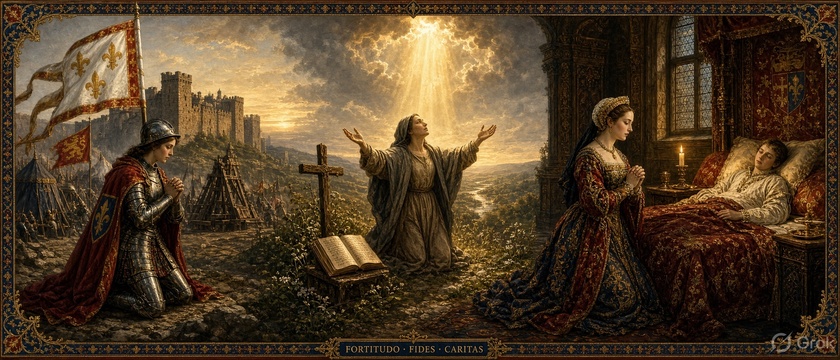
Answered prayer, according to Joan and Catherine
November 4th

Answered prayer, according to Joan and Catherine

1429 – Joan of Arc liberates Saint-Pierre-le-Moûtier

This was a late-1429 French success during the Armagnac–Burgundian phase of the Hundred Years’ War. After the lifting of the siege of Orléans, the Loire campaign, the victory at Patay, and Charles VII’s coronation at Reims (July 1429), Joan of Arc’s influence at court had begun to wane. The failed assault on Paris in September left her sidelined while Charles pursued diplomacy with Burgundy. In October the king’s council decided to clear remaining Burgundian strongholds in the Loire region, starting with Saint-Pierre-le-Moûtier (a small but well-fortified town in the Nièvre, held by the mercenary captain Perrinet Gressard).

Significant figures

  • Joan of Arc (c. 1412–1431): the peasant girl who claimed divine guidance; by this point she was an experienced military leader and inspirational figure, though no longer the primary strategist.
  • Charles d’Albret (also Charles II d’Albret): official commander of the expedition; lieutenant-general in Berry and half-brother to the powerful courtier Georges de La Trémoille.
  • Perrinet Gressard: Burgundian (and later English-aligned) captain who controlled the town and the stronger fortress of La Charité-sur-Loire.
  • Jean d’Aulon: Joan’s bodyguard and steward, whose later testimony is the main eyewitness account.
  • Charles VII: the French king, who authorized the campaign and later rewarded Joan.

Background and course of events
Forces assembled at Bourges. The town was surrounded by a deep moat and strongly defended. An initial assault failed; the French were driven back and a retreat was sounded. Jean d’Aulon (wounded in the heel earlier) found Joan nearly alone near the walls. According to his account, she refused to withdraw, saying she was not alone but had “fifty thousand of my people” with her, and called for faggots and hurdles to bridge the ditch. The troops responded, a second assault went in, and the town fell on 4 November 1429 with relatively little further resistance.

Results
The capture was a clear French victory and one of Joan’s last military successes. Charles VII ennobled Joan, her parents, and her brothers (letters patent issued in late December 1429; the family took the name Du Lys). The army immediately moved on to the larger fortress of La Charité-sur-Loire, which held under Perrinet Gressard. That siege, begun in late November, failed in the face of winter weather, shortages of powder and supplies, and strong defenses; the French withdrew around Christmas without taking the place. Joan’s prestige suffered further. She spent the winter at court, then in 1430 left to aid Compiègne, where she was captured by Burgundians, sold to the English, tried, and burned at Rouen in May 1431.

The episode is remembered mainly through d’Aulon’s testimony at Joan’s later rehabilitation trial and through a statue of Joan erected in the town in 1902.

1501 – Catherine of Aragon meets Arthur Tudor

This was the first personal meeting between the Spanish infanta and the English heir, the culmination of years of dynastic negotiation between Henry VII and Ferdinand and Isabella of Spain.

Significant figures

  • Catherine of Aragon (1485–1536): youngest daughter of Ferdinand II of Aragon and Isabella I of Castile; highly educated (especially in Latin), later Henry VIII’s first wife.
  • Arthur Tudor, Prince of Wales (1486–1502): eldest son of Henry VII and Elizabeth of York; named for the legendary king and raised as the hope of the new Tudor dynasty.
  • Henry VII: the English king, who had secured the Spanish match to strengthen his throne and obtain a large dowry.
  • Spanish diplomats and household officers (including Don Pedro de Ayala and Catherine’s duenna Elvira Manuel), who tried to enforce traditional protocols.

Background
Negotiations dated back to the Treaty of Medina del Campo (1489). A proxy marriage had already taken place, and the couple had exchanged formal Latin letters. Catherine sailed from A Coruña in August 1501; storms forced her to land at Plymouth on 2 October instead of Southampton. She then traveled slowly overland toward London with a large Spanish retinue. Henry VII, impatient to see his future daughter-in-law, left Richmond on 4 November, met Arthur at Easthampstead, and proceeded toward Dogmersfield (Hampshire), a house belonging to the Bishop of Bath and Wells where Catherine had arrived.

The meeting
Spanish custom held that the bride should not meet her future husband until the wedding day. Spanish officials initially tried to prevent the encounter. Henry insisted (according to contemporary accounts he was prepared to enter her chamber if necessary). Catherine, exhausted from travel, eventually received him and then Arthur. They communicated through interpreters (Spanish bishops translating into Latin). Accounts describe Catherine as richly dressed and well accompanied; Henry was reportedly pleased. The couple danced with members of their respective parties. Sources differ on the exact day (popular lists often say 4 November; more detailed contemporary narratives place the actual meeting on 5 or 6 November). A formal renewal of the betrothal took place.

Results
Catherine continued to London and entered the city on or about 12 November. On 14 November 1501 the couple were married in person at Old St Paul’s Cathedral in a lavish ceremony (both dressed in white satin). They later traveled to Ludlow Castle on the Welsh Marches, where Arthur was to preside over the Council of Wales. Arthur died there on 2 April 1502, aged 15, most likely of the sweating sickness (Catherine recovered). The short marriage and the disputed question of whether it had been consummated became central decades later when Catherine married Arthur’s younger brother Henry VIII and Henry sought an annulment—helping trigger the English Reformation. The Spanish alliance, the large dowry, and the prestige of the match had been major diplomatic achievements for Henry VII; Arthur’s early death left the succession dependent on the surviving son and reshaped English–Spanish relations.

= November 4th

These events are standard entries associated with 4 November (not 2 November). Wikipedia’s November 4 page and “on this day” lists include almost the exact sequence you gave (Joan of Arc’s action at Saint-Pierre-le-Moûtier, the Antwerp sack, the William–Mary marriage, the San Carlo inauguration, Túpac Amaru II, Mozart’s Linz Symphony, the Wabash battle, and the start of the Corfu siege). Catherine of Aragon’s meeting with Arthur is also listed under 4 November in many sources, though some detailed accounts place the actual first meeting at Dogmersfield on 5–6 November.

Here is a concise overview of each:

1429 – Joan of Arc liberates Saint-Pierre-le-Moûtier
During the Armagnac–Burgundian phase of the Hundred Years’ War, Joan of Arc (with Charles d’Albret) besieged the fortified Burgundian-held town of Saint-Pierre-le-Moûtier (near the Loire). After an initial failed assault, a second assault on 4 November succeeded; the town fell. Charles VII later ennobled Joan. It was one of her later military successes before the failed siege of La Charité and her eventual capture.

1501 – Catherine of Aragon meets Arthur Tudor
Catherine of Aragon (daughter of Ferdinand and Isabella) arrived in England in October 1501 to marry Arthur, Prince of Wales (Henry VII’s eldest son). They met at Dogmersfield in Hampshire; many popular lists place this on 4 November, while more precise accounts put the meeting on 5 or 6 November after Spanish diplomats tried to enforce the custom of no meeting before the wedding. They married at St Paul’s on 14 November. Arthur died in April 1502; Catherine later married his brother Henry VIII.

1576 – Spanish capture/sack of Antwerp (Spanish Fury)
In the Eighty Years’ War, unpaid mutinous Spanish troops of the Army of Flanders attacked and sacked Antwerp on 4 November. The three-day rampage destroyed much of the city (then the economic and cultural centre of the Low Countries), with estimates of several thousand civilian deaths (some contemporary claims ran much higher). The atrocity helped drive the Pacification of Ghent (signed days later), uniting provinces against Spanish troops.

1677 – Mary II marries William, Prince of Orange
Mary (eldest daughter of the future James II, raised Protestant) married her cousin William III of Orange at St James’s Palace on 4 November 1677. She reportedly wept at the news of the arranged match. They later reigned jointly as William and Mary after the Glorious Revolution of 1688–89 (he overthrew her Catholic father). The marriage was popular in the Dutch Republic as a Protestant alliance against France.

1737 – Inauguration of the Teatro di San Carlo
King Charles VII of Naples commissioned the theatre (near the royal palace) to replace an older venue. It opened on 4 November 1737 (the king’s name day) with Domenico Sarro’s opera Achille in Sciro (libretto by Metastasio). It is the oldest continuously active opera house in Europe, predating La Scala and La Fenice.

1780 – Rebellion of Túpac Amaru II begins
In the Viceroyalty of Peru, José Gabriel Condorcanqui (claiming Inca descent and taking the name Túpac Amaru II) seized and later executed the harsh local corregidor Antonio de Arriaga on or around 4–10 November 1780. This sparked a large indigenous and mestizo uprising against Spanish colonial abuses (repartimiento, forced labour, etc.). It spread widely but was ultimately crushed; Túpac Amaru was captured and executed in 1781. It remains a major symbol of Andean resistance.

1783 – Mozart’s Symphony No. 36 (“Linz”) premieres
While returning from Salzburg to Vienna, Mozart and Constanze stopped in Linz. Count Thun arranged a concert; Mozart, having no symphony with him, composed K. 425 in C major in a few days (roughly 30 October–3 November). It premiered in Linz on 4 November 1783. Scored for pairs of oboes, bassoons, horns, trumpets, timpani and strings, it shows Haydn’s influence (including a slow introduction) and is one of Mozart’s major mature symphonies.

1791 – Battle of the Wabash (St. Clair’s Defeat)
A Western Confederacy of Native American tribes (led by Miami chief Little Turtle, Shawnee chief Blue Jacket and others) attacked and destroyed a U.S. force under Major General Arthur St. Clair near the headwaters of the Wabash River (present-day Ohio) on 4 November. Poor preparation, few sentries and a dawn assault led to one of the worst U.S. Army defeats in history—hundreds of soldiers and camp followers killed (far more American casualties than at the Little Bighorn). It prompted military reforms; the confederacy was later defeated at Fallen Timbers in 1794.

1798 – Beginning of the Russo-Ottoman siege of Corfu
After the French occupation of the Ionian Islands (following the Venetian collapse), a combined Russian–Ottoman naval force under Admiral Fyodor Ushakov began operations against the French garrison on Corfu. A detachment arrived and the siege effectively started around 4 November 1798. The French held out for months; the fortress eventually capitulated in March 1799. It was part of the Second Coalition’s campaign against Revolutionary France in the Mediterranean.

These form a striking cluster of military, dynastic, cultural and colonial turning points on or around the same calendar day across centuries. Let me know if you’d like more detail on any one of them.


Read full Article
November 01, 2026
post photo preview
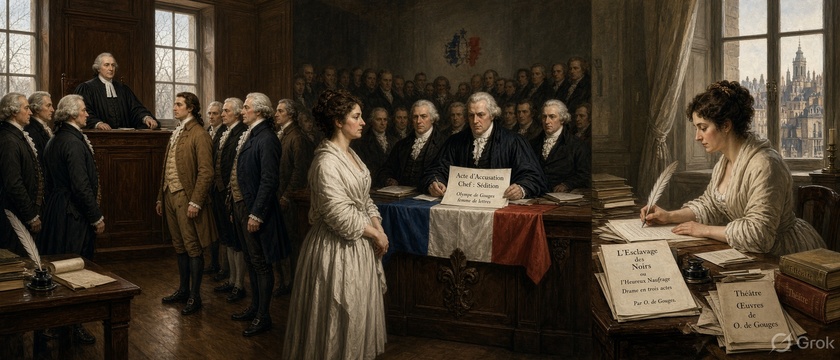
Sitting Court found support for ending slavery was a threat to the revolution
November 3rd

Sitting Court found support for ending slavery was a threat to the revolution

The first sitting of a U.S. District Court under the Constitution occurred on 3 November 1789, when the District Court for the District of New York convened under the Judiciary Act of 1789. It was the first federal trial court to sit under the new Constitution, several months before the Supreme Court’s first session.

Before 1789: Creating the Federal Judiciary

Article III of the Constitution (ratified 1788) vested the judicial power in “one supreme Court, and in such inferior Courts as the Congress may from time to time ordain and establish.” It left the details to Congress. The First Congress, meeting in New York (then the temporary capital), passed the Judiciary Act of 1789 (signed by President George Washington on 24 September 1789). Primarily drafted by Senator Oliver Ellsworth of Connecticut (later Chief Justice), with contributions from William Paterson and others, the Act created:

  • A Supreme Court of six justices.
  • Thirteen district courts (generally one per state, with Virginia and Massachusetts each split).
  • Three circuit courts (staffed by two Supreme Court justices “riding circuit” plus the local district judge).

District courts handled admiralty and maritime cases, minor federal crimes, and certain civil suits involving the United States. The Act scheduled the first sessions: New York and New Jersey on the first Tuesday of November (3 November), with others staggered later. President Washington quickly nominated judges, attorneys, and marshals. James Duane was nominated and confirmed for New York on 25 September 1789 (commission dated 26 September), the same day John Jay received his commission as the first Chief Justice.

The 3 November 1789 Sitting

Judge James Duane (then about 56) opened the court in the Exchange Building (also called the Royal or Merchants Exchange) near the foot of Broad Street in lower Manhattan. His commission was read. Approximately 30 attorneys were admitted to the bar of the new court and entered on a parchment roll. No cases were pending, so the court immediately adjourned. Contemporary accounts noted the brief session and the absence of business.

The New Jersey district court was scheduled for the same day but was delayed until December because of illness of its judge, David Brearley (who died the following summer). Thus New York became the first federal district court to sit. The court is sometimes called the “Mother Court” for this chronological priority. (The modern Southern District of New York traces its lineage to this court.)

Significant Figures

  • James Duane (1733–1797): Born in New York City, he studied law and was admitted to the bar in 1754. He served as attorney general of colonial New York (1767), a delegate to the Continental Congress (1774–1783), a signer of the Articles of Confederation, first post-British mayor of New York City (1784–1789), and a New York state senator. He supported ratification of the Constitution at New York’s convention. Appointed by Washington, he served until resigning in March 1794 due to ill health. He died in 1797 and is buried at Christ Church in Duanesburg (named for him), New York.
  • Aaron Burr (1756–1836): Among the attorneys admitted that day. A Revolutionary War veteran, lawyer, and New York attorney general (1789–1791), he later became U.S. senator, vice president (1801–1805), and is best known for killing Alexander Hamilton in a duel in 1804.
  • Other notables admitted included Richard Varick (then mayor of New York), John Laurance (later a federal judge and U.S. senator), Robert Troup (first clerk of the court and later its third judge; Hamilton’s college roommate), Egbert Benson (later first chief judge of the Second Circuit), and Brockholst Livingston (later a Supreme Court justice). Richard Harrison served as the first U.S. attorney for the district.
  • George Washington: Appointed Duane and the initial Supreme Court justices (John Jay as Chief Justice, plus John Rutledge, William Cushing, Robert H. Harrison—who declined—James Wilson, and John Blair).
  • John Jay: First Chief Justice; his Supreme Court commission was signed the same day as Duane’s.

After 1789

The court initially had little work. Its first case was filed in April 1790 (United States v. Three Boxes of Ironmongery, Etc.), an admiralty/customs matter; most early cases involved seizures and maritime disputes. Duane resigned in 1794 for health reasons and was succeeded by John Laurance. The district later split (Southern and Northern Districts of New York in 1814, with further divisions later).

The Supreme Court held its first session on 1 February 1790 in the same Exchange Building. Lacking a quorum that day, it formally opened on 2 February with Chief Justice Jay and three associate justices present. It admitted attorneys, handled organizational matters, and heard no cases in its first term. The capital soon moved to Philadelphia, then Washington.

The 1789 system (district courts + circuit-riding Supreme Court justices) endured for decades, with major reforms in the 19th century (including the creation of separate circuit judges in 1869 and the Courts of Appeals in 1891). The Southern District of New York has since handled many high-profile cases and remains one of the busiest federal trial courts.

=

Olympe de Gouges (born Marie Gouze, 7 May 1748 – 3 November 1793) was a French playwright, journalist, abolitionist, and political activist. Her execution on 3 November 1793 in the Place de la Révolution (today’s Place de la Concorde) came at a pivotal moment in the French Revolution, during the opening phase of the Reign of Terror.

Before 1793: Writings, Politics, and Rising Conflict

De Gouges came from Montauban in southwestern France. After an unhappy marriage to Louis Aubry (who died soon after the birth of their son), she moved to Paris, adopted the more aristocratic-sounding name Olympe de Gouges, and supported herself as a writer. She produced dozens of plays and pamphlets on social issues, including opposition to slavery (her play L’Esclavage des Noirs attacked the colonial slave trade) and the rights of illegitimate children.

In September 1791 she published the Déclaration des droits de la femme et de la citoyenne (“Declaration of the Rights of Woman and of the Female Citizen”) as a direct reply to the 1789 Declaration of the Rights of Man and of the Citizen. Addressed in part to Queen Marie Antoinette, it asserted that women are born free and equal in rights and demanded political participation, equal inheritance, and the right to divorce. Its most famous line appears in Article 10: “If a woman has the right to mount the scaffold, she must equally have the right to mount the speaker’s rostrum.”

Politically she aligned with the moderate Girondins (the more federalist, less radical faction in the National Convention) against the increasingly dominant Montagnards (the radical Jacobin group led by figures such as Maximilien Robespierre). She opposed the execution of Louis XVI (carried out 21 January 1793) and criticised the September Massacres of 1792 and the growing violence of the revolutionary government. In summer 1793 she published the placard Les Trois Urnes (“The Three Urns”), which proposed a popular referendum on three options: a unitary republic, a federal republic, or a constitutional monarchy. This was treated as sedition and an attack on the sovereignty of the people.

Key preceding events in 1793:

  • 2 June: Montagnards purge the Girondin deputies from the Convention.
  • 13 July: Jean-Paul Marat is assassinated by Charlotte Corday (a Girondin sympathiser).
  • 27 July: Robespierre joins the Committee of Public Safety.
  • 5 September: The Convention declares “Terror the order of the day.”
  • 16 October: Marie Antoinette is executed.
  • 31 October: Twenty-one leading Girondins (including Jacques-Pierre Brissot and Pierre Vergniaud) are guillotined.

The Arrest, Trial, and Execution

De Gouges was arrested on 20 July 1793 and held in the Conciergerie. On 2 November she faced the Revolutionary Tribunal (public prosecutor Antoine Quentin Fouquier-Tinville). She was charged with composing writings that tended to re-establish royalty or any power attacking the sovereignty of the people. She defended herself vigorously, declared she was pregnant (a claim that would have delayed execution), and was examined by the Tribunal’s doctors, who found the claim false. The Tribunal sentenced her to death the same day; she was guillotined the following afternoon, 3 November, at about 4 p.m. Her last reported words were “Children of the Fatherland, you will avenge my death.” Her body was buried in the Madeleine Cemetery.

Significant figures around the event:

  • Maximilien Robespierre – Dominant figure on the Committee of Public Safety; de Gouges had publicly attacked him as ambitious and bloodthirsty.
  • Antoine Quentin Fouquier-Tinville – Public prosecutor of the Revolutionary Tribunal who pressed the case.
  • Girondin leaders (Brissot, Vergniaud, and others) – Executed three days earlier; de Gouges shared their moderate republican stance.
  • Pierre Gaspard Chaumette – Radical of the Paris Commune who later used her death as a warning against women participating in politics.

After 1793: Intensification of the Terror and Legacy

Her execution occurred early in the Reign of Terror (roughly September 1793–July 1794), when the Committee of Public Safety under Robespierre, Saint-Just, and others used emergency powers, the Law of Suspects, and the Revolutionary Tribunal to eliminate perceived enemies. Roughly 16,000 people were formally executed and many more died in prison or mass killings. Notable subsequent events include:

  • 10 November 1793: Festival of Reason (Notre-Dame rededicated).
  • December 1793: Law of 14 Frimaire further centralises power.
  • March–April 1794: Execution of Hébertists and Dantonists.
  • June 1794: Law of 22 Prairial accelerates the “Great Terror.”
  • 27–28 July 1794 (9–10 Thermidor): Fall and execution of Robespierre; the Terror ends.

De Gouges’s death was cited by some revolutionaries (notably Chaumette) as a warning to women who left the domestic sphere. Women’s political clubs were closed around the same period. In the longer term she became a foundational figure in French feminism; her Declaration is now widely studied as an early systematic demand for gender equality. French women gained the vote only in 1944.

= November 3rd

These events cluster tightly around early November (mostly 3 November), not strictly 1 November. Here is a corrected, contextual account of each.

361 – Death of Constantius II
Constantius II (Flavius Julius Constantius), son of Constantine the Great, died of fever on 3 November 361 at Mopsuestia (Mopsucrene) in Cilicia while marching west against his cousin Julian, whom the army in Gaul had proclaimed Augustus. On his deathbed he was baptised by the Semi-Arian bishop Euzoius of Antioch and is said to have named Julian his successor. His death ended the last phase of Constantinian dynastic civil war and opened the brief pagan restoration under Julian the Apostate. He had ruled as Caesar from 324 and Augustus from 337, spending much of his reign fighting the Sasanian Empire and Germanic peoples while promoting Arian Christianity and restricting pagan cults.

644 – Assassination of Umar ibn al-Khattab
Umar, the second Rashidun caliph (r. 634–644), was stabbed while leading dawn prayer in the mosque of Medina by the Persian slave Abu Lu’lu’a Firuz. The attack occurred around 26 Dhu al-Hijja 23 AH. Sources place the death on or about 3 November 644 (Julian; some Gregorian conversions give 6 November), with burial a few days later. Umar’s decade saw the major conquests of the Levant, Egypt, and Iran and the establishment of the diwan and Hijri calendar. The succession council he appointed chose Uthman.

1333 – Flood of the Arno at Florence
Heavy rains from about 1 November culminated in the catastrophic overflow of the Arno on 4 November 1333. The Florentine chronicler Giovanni Villani recorded that the waters reached the altar of the Baptistery, destroyed or damaged every bridge except Rubaconte (Ponte alle Grazie), swept away the Ponte Vecchio (except its two central piers), and killed hundreds (later estimates range from ~300 to over 1,000). The event was widely interpreted as divine judgment. Marks from this flood still survive in the city; the same date saw the even more destructive 1966 flood.

1468 – Sack of Liège
After the third Liège revolt against Burgundian rule, Charles the Bold (Charles I of Burgundy), accompanied by a captive Louis XI of France, captured the city at the end of October. On 30 October the “Six Hundred Franchimontois” failed in a night raid aimed at killing the duke and king. The following day the city was sacked; hundreds were killed or drowned in the Meuse. From about 3 November Charles ordered the systematic burning of the city (sparing churches), which is said to have burned for weeks. The destruction was intended to end Liégeois resistance permanently.

1492 – Peace of Étaples
Signed at Étaples on 2 or 3 November 1492 between Henry VII of England and Charles VIII of France. It ended a brief English expedition that had landed at Calais and besieged Boulogne in response to French support for the Yorkist pretender Perkin Warbeck. France agreed to expel Warbeck and pay a substantial indemnity (often cited as £159,000 or 742,000 crowns); Henry recognised French control of Brittany. The treaty was ratified in December and was later renewed. It strengthened Henry’s finances and removed a dynastic threat while allowing Charles to turn toward Italy.

1493 – Columbus sights Dominica
On the second voyage, Columbus’s fleet of 17 ships sighted a rugged island in the Lesser Antilles on Sunday, 3 November 1493, and named it Dominica (Sunday Island). The same day or the next they reached Marie-Galante. This marked the start of European exploration of the eastern Caribbean on the return voyage after the first contact of 1492.

1534 – First Act of Supremacy
The English Parliament passed the Act of Supremacy (26 Hen. VIII c. 1) in early November 1534; it took effect from 3 November 1534 and received royal assent on 18 December. It declared Henry VIII “the only supreme head in earth of the Church of England,” confirming the break with Rome that had begun with the Act in Restraint of Appeals (1533). The measure was framed as recognising an existing right rather than creating a new one. It was repealed under Mary I and replaced under Elizabeth I by the milder title of Supreme Governor.

1592 – Founding of San Luis Potosí
The legal foundation of the settlement (then called Pueblo de San Luis de Mezquitique or San Luis Minas del Potosí) was recorded on 3 November 1592. Acting under commission from Viceroy Luis de Velasco, Miguel Caldera and Juan de Oñate established the town in the valley near the newly discovered silver and gold deposits of Cerro de San Pedro, which lacked adequate water. The name honoured Louis IX of France and the rich mines of Potosí in Bolivia. It quickly became a major mining and administrative centre in New Spain.

1783 – Disbandment of the Continental Army
Congress had ordered that troops on furlough be discharged on 3 November 1783 following the Treaty of Paris. Most of the Continental Army was disbanded around that date (at New Windsor and elsewhere). A small residual force remained at West Point and frontier posts until the final discharge orders of June 1784, after which the United States Army was authorised as a successor force. The step reflected the republican distrust of standing armies in peacetime.

1789 – First sitting of a U.S. District Court under the Constitution
Under the Judiciary Act of 1789, the District Court for the District of New York (Judge James Duane) convened on the first Tuesday of November—3 November 1789—at the Exchange Building in New York City. No cases were heard; the court immediately adjourned after admitting attorneys (including Aaron Burr). It was the first federal district court to sit under the new Constitution, preceding the Supreme Court’s first session by several months. (New Jersey was scheduled for the same day but was delayed by the judge’s illness.)

1793 – Execution of Olympe de Gouges
The French playwright, journalist, and author of the Declaration of the Rights of Woman and of the Female Citizen (1791) was guillotined on 3 November 1793 in the Place de la Révolution. Arrested in July for her Girondin-leaning writings (especially Les Trois Urnes, which called for a referendum on the form of government), she was tried by the Revolutionary Tribunal on 2 November and executed the next day for sedition. She had earlier attacked slavery, defended the rights of women, and opposed the excesses of the Montagnards. Her death occurred during the intensifying Terror.

These dates form a striking early-November cluster of imperial transitions, natural disasters, treaties, colonial foundations, military demobilisation, and revolutionary executions.

Read full Article
October 31, 2026
post photo preview
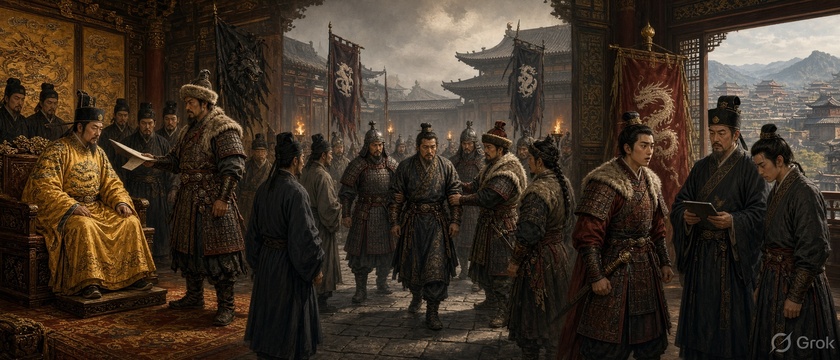
Turkic killed for geography. West is west.
November 2nd

Turkic killed for geography. West is west. 

Heshana Qaghan (also Heshana Khagan; personal name Ashina Daman, Chinese: 阿史那達漫 / 達曼; also known as Chuluo Kehan 處羅可汗 or Nijue Chuluo Khagan 泥厥處羅可汗; Chinese title 曷娑那可汗 / 曷薩那可汗) was a short-lived ruler of the Western Turkic Khaganate (r. c. 604–611). He was assassinated/executed in Chang’an in 619 (some Chinese chronicles place it in 618) after Tang Emperor Gaozu handed him over to Eastern Turkic envoys under pressure from Shibi Qaghan.

Significant figures

  • Heshana Qaghan / Ashina Daman: Son of Niri Qaghan (an early Western claimant) and Lady Xiang. Born around 603 in Suyab. He appears in some sources as Čôl χâɣân. He had two sons who entered Tang service.
  • Emperor Gaozu of Tang (Li Yuan, r. 618–626): Founder of the Tang dynasty. Early in his reign he remained cautious (and often effectively subordinate) toward the Eastern Turks, who had earlier aided his rise. He approved the handover.
  • Shibi Qaghan (Eastern Turkic Khaganate, r. c. 609/611–c. April 619; personal name Ashina Duojishi): Powerful Eastern ruler who had previously supported Li Yuan’s rebellion against the Sui with horses and cavalry. He demanded Heshana’s elimination and died shortly afterward (around April 619) while campaigning near Taiyuan. Succeeded briefly by Chuluo Qaghan, then by Illig Qaghan.
  • Shikui Khagan (Western, r. c. 611–618): Grandson of the expansionist Tardu; governor of Chach (Tashkent). He defeated Heshana (with Sui support) and took power, restoring order and Nushibi influence. Died c. 618; succeeded by his brother Tong Yabghu.
  • Tong Yabghu Qaghan (Western, r. c. 618–628/630): Brother of Shikui. His reign marked the peak of Western Turkic power (control from the Altai to the Aral/Caspian, Tarim Basin oases, and influence into Tokharistan/Gandhara). Visited by Xuanzang; allied with Byzantium against the Sasanians. Murdered by his uncle Külüg Sibir (with Duolu support) c. 628–630, after which the khaganate fragmented into Duolu and Nushibi factions (the Onoq / Ten Arrows).
  • Pei Ju: Influential Sui official who engineered the alliance with Shikui against Heshana and persuaded Heshana to submit by threatening his mother.
  • Broader context figures: Tardu (earlier Western strongman who briefly unified the Turks), Emperor Yang of Sui, and later Tang emperors Taizong and Gaozong who completed the conquest of both Turkic wings.

Before the assassination

The First Turkic (Göktürk) Khaganate had split into Eastern and Western wings after civil wars around 581–603. Heshana (backed by the Dulu tribal faction) succeeded Niri around 604. His rule was weak and unpopular: he levied heavy taxes on the Tiele peoples and, after suspecting their leaders, massacred about 100 Tiele chieftains. This sparked a major Tiele revolt (c. 605) that elevated Geleng of the Qibi as Yiwuzhenmohe Khan and drove Heshana from Dzungaria toward the Ili region.

Sui Emperor Yang, pursuing a divide-and-rule policy, backed the rival Shikui (who sought a Chinese princess). Shikui defeated Heshana, who fled to Gaochang. Pei Ju then induced him to come to the Sui court under threat to his mother. In 611 Emperor Yang formally recognized him as Heshana Qaghan and married him to a Chinese princess (Xinyi). He remained in China as a refugee/hostage rather than returning to the steppe. Meanwhile Shikui consolidated the Western Khaganate, and the Eastern Turks under Shibi grew dominant, intervening in late Sui rebellions and aiding Li Yuan’s 617–618 seizure of power.

By 618–619 the Tang was still consolidating control amid multiple warlords. Heshana was in Chang’an, no longer a real power but a potential symbol or threat in inter-Turkic rivalries. Shibi Qaghan pressed Gaozu to surrender him.

The event (619)

Gaozu, still needing to avoid open conflict with the Eastern Turks, acceded to Shibi’s demand. Heshana was delivered to Eastern Turkic emissaries in a Chinese palace in Chang’an and executed. Sources (including the Zizhi Tongjian and Tang histories) give the year as 619 (or occasionally 618); popular “on this day” lists specify 2 November 619. His two sons were already (or soon) in Tang service. The episode shows the early Tang’s pragmatic, often subordinate diplomacy with the steppe powers.

After the assassination

  • Western Turks: Shikui’s brief rule gave way to the high point under Tong Yabghu (c. 618–630), who expanded aggressively, managed Silk Road revenues via tuduns, and projected power into Transcaucasia and Afghanistan. After Tong’s murder the khaganate split into rival Duolu (eastern) and Nushibi (western) confederations. Tang influence grew under Taizong; full conquest came under Gaozong in 657 when Su Dingfang defeated Ashina Helu. Puppet qaghans were installed under the jimi system, though Tang control later fluctuated with Tibetan and Arab pressure.
  • Eastern Turks: Shibi died soon after (c. April 619). His brothers Chuluo and then Illig continued pressure on the Tang (including the famous 626 approach to the Wei River). Taizong’s campaigns (culminating in 630) destroyed the Eastern Khaganate; Illig was captured and brought to Chang’an.
  • Tang: Gaozu’s early caution gave way, under Taizong (after the Xuanwu Gate Incident of 626) and Gaozong, to aggressive expansion. The 619 episode was one early illustration of Tang willingness to sacrifice Turkic figures to manage the dual threat from East and West before the empire was strong enough to dominate both.

In short, Heshana was a failed Western claimant whose exile and death in Chang’an reflected the tangled, opportunistic relations between the newly founded Tang and the rival Eastern and Western Turkic wings during the chaotic Sui–Tang transition. The Western Khaganate reached its greatest extent immediately afterward under Tong Yabghu, while the Tang gradually shifted from accommodation to conquest.

= November 2nd

These events all took place on 2 November.

619 – Assassination of a Western Turkic qaghan

Heshana Qaghan (also Heshana Khagan; personal name Ashina Daman; Chinese: 曷娑那可汗 / 泥厥處羅可汗), a former ruler of the Western Turkic Khaganate (r. c. 604–611), was killed in Chang’an.

He had lost control of the western khaganate after being defeated by Shikui Qaghan and had taken refuge in China under the Sui, then the early Tang. By 619 he was still in the Tang capital when Emperor Gaozu (Li Yuan), under pressure from the powerful Eastern Turkic ruler Shibi Qaghan, handed him over to Eastern Turkic envoys, who executed him. Some Chinese chronicles place the killing in 618; “on this day” compilations commonly give 2 November 619. The episode illustrates the early Tang’s cautious, often subordinate relationship with the Eastern Turks before later campaigns under Taizong and Gaozong brought the steppe powers under Chinese control.

1410 – Peace of Bicêtre

The Peace (or Treaty) of Bicêtre was signed on 2 November 1410 at the residence of John, Duke of Berry, at Bicêtre near Paris. It temporarily suspended fighting in the Armagnac–Burgundian Civil War (part of the broader Hundred Years’ War context).

The agreement required the rival princes to withdraw to their own territories, restricted access to Paris without King Charles VI’s consent, and gave Berry responsibility for the dauphin Louis of Guyenne. Like earlier and later truces in the conflict (Chartres, Auxerre, etc.), it was quickly violated.

1675 – Josiah Winslow leads colonial forces against the Narragansett

During King Philip’s War (Metacom’s War), Plymouth Colony governor Josiah Winslow led a combined colonial militia (Plymouth, Massachusetts Bay, and Connecticut, with some Native allies) against the Narragansett. The campaign began around 2 November 1675.

The Narragansett had remained largely neutral but were suspected of sheltering Wampanoag refugees. The colonial force burned abandoned villages and, on 19 December, attacked the main Narragansett fort in the Great Swamp Fight (present-day South Kingstown, Rhode Island), killing hundreds of men, women, and children. The action escalated the war and drew the Narragansett fully into the conflict.

1795 – Creation of the French Directory

The French Directory (Directoire), the five-man executive government of the First French Republic, was inaugurated on 2 November 1795 under the Constitution of Year III.

It replaced the National Convention after the Thermidorian Reaction and the end of the Reign of Terror. A bicameral legislature (Council of Five Hundred and Council of Ancients) elected the five Directors. The Directory lasted until Napoleon’s Coup of 18 Brumaire in November 1799. It was marked by political instability, corruption, and continued war.

1868 – New Zealand adopts national standard time

On 2 November 1868 New Zealand became the first self-governing jurisdiction to adopt a nationwide standard time.

Government scientist James Hector recommended setting clocks to the meridian 172° 30′ E (11 hours 30 minutes ahead of Greenwich Mean Time). At noon that day, telegraph-connected clocks across the colony struck 12 simultaneously. This “New Zealand Mean Time” replaced local solar times and was later adjusted (in 1946) to the present 12-hour offset from GMT/UTC.

1889 – North Dakota and South Dakota admitted as states

President Benjamin Harrison signed the proclamations admitting North Dakota (39th state) and South Dakota (40th state) on 2 November 1889.

To avoid favouring either territory, Harrison had the papers shuffled and covered so that no one knew which was signed first; by alphabetical convention North Dakota is listed as the 39th. Both had been part of Dakota Territory. The Omnibus Enabling Act of February 1889 had set the conditions for their (and several other territories’) admission.

1899 – Boers begin the siege of Ladysmith

On 2 November 1899 Boer forces completed the encirclement of the British-held town of Ladysmith in Natal, beginning a 118-day siege during the Second Boer War.

After the British defeat at the Battle of Ladysmith (30 October), the railway and telegraph lines were cut. Roughly 13,500 British troops and several thousand civilians were trapped. The siege was relieved on 28 February 1900 after costly British attempts to break through the Tugela line. It was one of the early major sieges of the war (alongside Kimberley and Mafeking).

These 2 November events span diplomacy and assassination on the East Asian steppe, medieval French civil conflict, colonial warfare in New England, revolutionary government in France, the standardisation of time, U.S. statehood, and imperial war in southern Africa.

Read full Article
See More
Available on mobile and TV devices
google store google store app store app store
google store google store app tv store app tv store amazon store amazon store roku store roku store
Powered by Locals