VoiceDDB
Politics • Culture • News
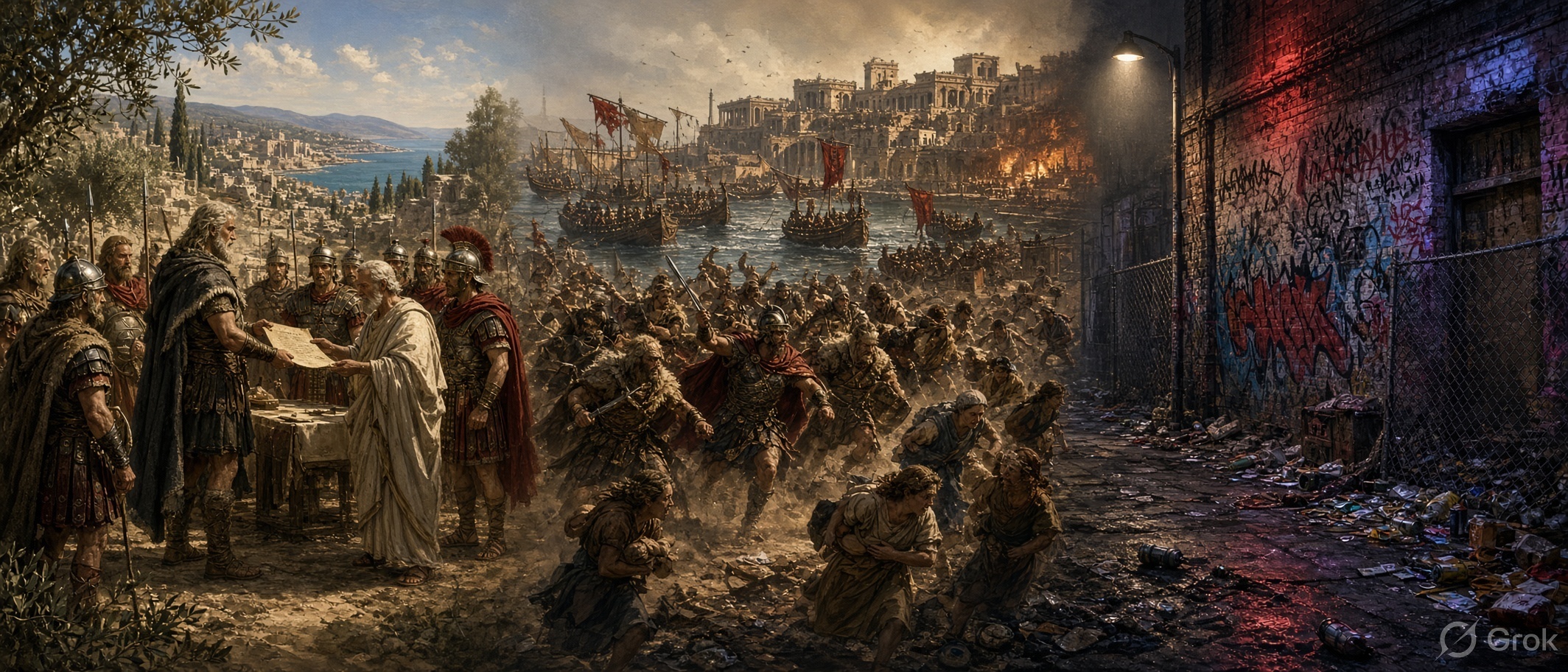
439 Vandals take Carthage
October 19th Events
October 17, 2026
post photo preview

439 Vandals take Carthage 

Background

The Vandals (primarily the Asdingi branch) and their Alan allies were a Germanic confederation that had crossed into Roman territory during the early fifth-century migrations. After years in Spain, they crossed the Strait of Gibraltar into North Africa in 429 under their king Gaiseric (also spelled Genseric or Geiseric). They exploited Roman internal divisions, including the conflict between the comes Africae Bonifatius (Boniface) and the imperial government in Ravenna under Valentinian III and the general Aetius.

They overran much of Mauretania and Numidia, defeated Roman forces, and besieged Hippo Regius (where Saint Augustine died in 430 during the siege). Hippo fell and became an early Vandal centre. In 435 a treaty with Valentinian III recognised Vandal control of parts of Numidia and Mauretania as foederati (treaty allies). Carthage and the rich province of Africa Proconsularis remained under Roman control; Gaiseric was to pay tribute and sent his son Huneric as a hostage to Rome.

Gaiseric observed the treaty only while it suited him. In 439, while Roman attention and forces were focused on Visigothic problems in Gaul, he broke the agreement without a declaration of war and moved on Carthage.

The Capture (19 October 439)

Gaiseric’s forces took Carthage by surprise and with little resistance. Contemporary accounts (including Prosper of Aquitaine) describe the seizure as achieved by stratagem or under the cover of the existing peace. One later tradition states that the Vandals entered while most inhabitants were at the races in the hippodrome. They also seized much of the Western Roman naval squadron docked in the harbour, instantly giving them a fleet and shipbuilding capacity they had previously lacked. Carthage, one of the largest and richest cities in the Western Empire and the key grain port for Rome, became the new Vandal capital. Gaiseric styled himself King of the Vandals and Alans and is said to have dated his sovereignty from this capture.

Significant Figures

  • Gaiseric (r. 428–477): The central figure. A shrewd and opportunistic leader, he turned a land-based Germanic people into a Mediterranean naval power. He remained undefeated for the rest of his long reign and repeatedly outmanoeuvred both Western and Eastern Roman attempts to dislodge him.
  • Valentinian III: Western Roman emperor. Forced into successive unfavourable treaties (435 and later 442).
  • Flavius Aetius: The dominant Western Roman general. Preoccupied with Gaul in 439, he later directed unsuccessful efforts to recover Africa.
  • Huneric: Gaiseric’s son, held as a hostage after 435 and later succeeded him as king (r. 477–484). He intensified anti-Nicene measures.
  • Quodvultdeus: Catholic (Nicene) bishop of Carthage at the time of the capture. He was exiled (to Naples) as Gaiseric preferred Arian advisors and clergy.
  • Victor of Vita: Later Nicene bishop and author of the Historia Persecutionis, the main contemporary account of Vandal religious policy (written in the 480s). His narrative emphasises persecution, though modern scholars note that intensity varied by ruler and period.

Results and Consequences

The immediate and longer-term effects were severe for the Western Roman Empire and transformative for the Vandals:

  • Economic and strategic blow: North Africa was the West’s primary grain supplier (supporting the annona system that fed Rome) and a major source of tax revenue. Its loss impoverished the imperial treasury, reduced the ability to pay armies and manage barbarian federates, and permanently shifted the balance of Mediterranean power. Historians often treat 439 as a critical step toward the West’s fiscal and political collapse.
  • Naval supremacy: With Carthage’s harbours, shipyards, and captured ships, the Vandals rapidly became the dominant naval force in the western Mediterranean. They raided Sicily, seized Sardinia, Corsica, the Balearic Islands, and at times parts of Sicily, and conducted widespread piracy and coastal raids.
  • Recognition and expansion: After further fighting (including a failed joint Roman–Eastern expedition), a 442 treaty recognised Vandal control of Africa Proconsularis, Byzacena, and parts of Numidia—far more than the 435 settlement. The Vandals held the core of their African kingdom until the Byzantine reconquest under Belisarius in 533–534.
  • Sack of Rome (455): From their African base the Vandals under Gaiseric sailed to Italy and thoroughly sacked Rome, taking vast treasure and captives (including imperial family members).
  • Religious policy: The Vandals were Homoian (“Arian”) Christians. Gaiseric and his successors promoted their own church at the expense of the Nicene (Catholic) majority. Policies included confiscation of churches, exile of Nicene bishops and clergy, bans on Nicene services in Vandal settlement areas, and pressure on officials and elites to convert. Intensity fluctuated: relatively focused under Gaiseric, more severe under Huneric (especially the 484 conference and mass exiles), and milder under some later kings (e.g., Gunthamund, Hilderic). Nicene writers (notably Victor of Vita) portrayed this as systematic persecution; the result was a prolonged ecclesiastical conflict in Africa.

In short, the 439 capture turned a previously land-based barbarian group into a durable maritime kingdom, stripped the Western Empire of its richest province, and accelerated the political and economic fragmentation of the late Roman West.

= October 19th

These are all events traditionally associated with 19 October in historical “on this day” calendars. For the earliest entries (especially 202 BC), the precise day is conventional rather than firmly fixed by contemporary sources; ancient dating and calendar conversions are imprecise.

202 BC – Battle of Zama

Roman legions under Publius Cornelius Scipio (later Scipio Africanus) decisively defeated Hannibal Barca’s Carthaginian army in what is now Tunisia. This was the final major battle of the Second Punic War (218–201 BC). Scipio had invaded North Africa, forced Hannibal’s recall from Italy, and used superior cavalry (especially Numidian allies under Masinissa) plus tactics to neutralize Hannibal’s war elephants. Carthaginian losses were heavy (roughly 20,000 killed and as many captured); Roman losses were far lighter. The defeat ended Carthage’s ability to challenge Rome and established Roman dominance in the western Mediterranean.
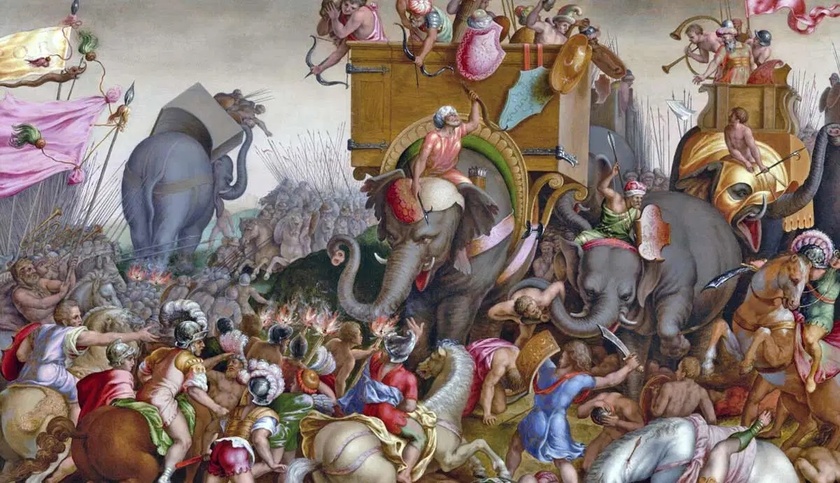
The Battle of Zama: How Scipio Gave Rome the World | TheCollector

439 – Vandals take Carthage

King Gaiseric (Genseric) of the Vandals (with Alan allies) seized Carthage, the great Roman city and grain port in North Africa, in a surprise move that broke an earlier treaty. Sources indicate the city fell with little resistance while many inhabitants were at the races. Carthage became the capital of the Vandal Kingdom. The loss deprived the Western Roman Empire of vital grain supplies and tax revenue and gave the Vandals a powerful naval base. From there they later controlled Mediterranean islands and, in 455, sacked Rome. The Vandals were Arian Christians, which led to ongoing religious tensions with the Nicene majority.

1216 – Death of King John of England

King John (reigned 1199–1216) died at Newark-on-Trent during the First Barons’ War. He was succeeded by his nine-year-old son, Henry III. John is best remembered for the sealing of Magna Carta in 1215 under baronial pressure, the loss of most of the Angevin lands in France, and prolonged conflict with the papacy and his own nobility. His death left a child king and a contested realm.

1386 – First lecture at Heidelberg University

The University of Heidelberg (Ruperto Carola), founded by Elector Palatine Rupert I with papal approval (modelled on Paris), held its first lectures. A formal opening Mass took place on 18 October in the Heiliggeistkirche; teaching began the next day in the faculties of theology, law, and the arts (medicine followed soon after). Marsilius of Inghen became the first rector. It is the oldest university in what is now Germany.

1466 – Second Treaty of Thorn (Toruń)

The Thirteen Years’ War (1454–1466) between the Kingdom of Poland (under Casimir IV Jagiellon) and the Teutonic Order ended with this treaty signed in Thorn (modern Toruń). Poland gained Royal Prussia (including Gdańsk/Danzig, Chełmno Land, and other territories), while the Teutonic Order retained eastern Prussia as a Polish fief. The Grand Master was required to swear allegiance to the Polish king. This significantly reduced Teutonic power and strengthened Poland in the Baltic region.

1469 – Marriage of Ferdinand of Aragon and Isabella of Castile

Ferdinand II of Aragon married Isabella I of Castile in Valladolid. Their union began the process of unifying the crowns of Aragon and Castile into the Kingdom of Spain. Together they completed the Reconquista, established the Spanish Inquisition, sponsored Columbus’s voyages, and laid the foundations for Spain’s rise as a major European and global power.
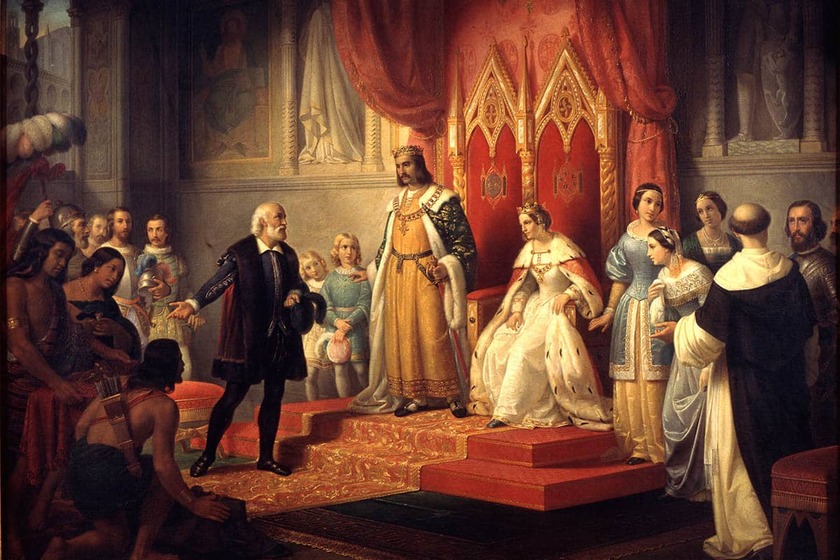
Ferdinand and Isabella: The Marriage That Unified Spain | TheCollector

1512 – Martin Luther receives his doctorate in theology

At the University of Wittenberg, Martin Luther (then an Augustinian friar) was formally promoted as Doctor of Theology (Doctor in Biblia). The ceremony took place in the Castle Church; he received the usual insignia (Bible, biretta, ring) and took the customary oaths. The doctorate gave him the right and duty to lecture on Scripture. He later frequently cited this office when challenging Church teachings, making the degree a key step toward the Reformation.
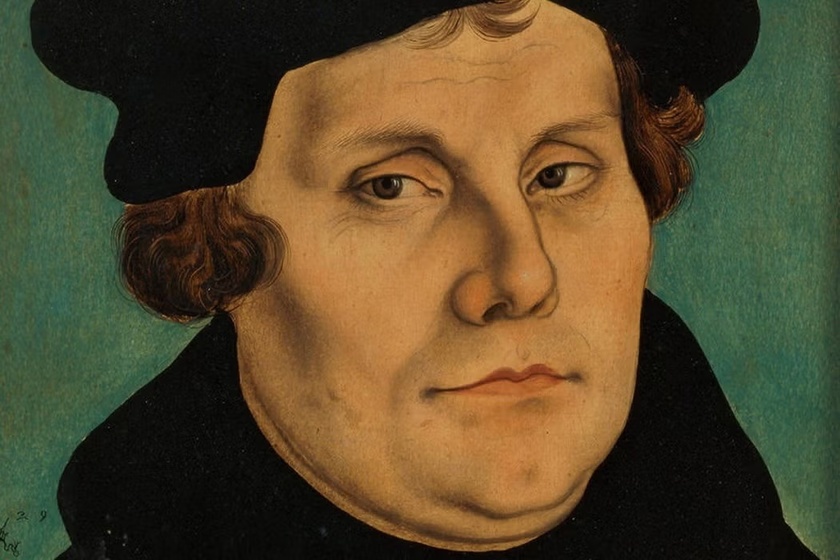
Why Martin Luther's Body Type Mattered - JSTOR Daily

1649 – New Ross surrenders to Oliver Cromwell

During the Cromwellian conquest of Ireland, the town of New Ross (County Wexford) surrendered to Oliver Cromwell’s forces. After the severe treatment of Drogheda and Wexford, the governor (Lucas Taaffe) accepted terms that allowed the garrison to march out with arms and colours. The surrender gave Cromwell control of a useful crossing of the River Barrow and demonstrated that towns which yielded promptly could receive relatively lenient terms.

1781 – Surrender at Yorktown

At Yorktown, Virginia, the British army under Lord Cornwallis formally surrendered to the combined American and French forces under George Washington and the comte de Rochambeau. Cornwallis himself did not attend the ceremony (claiming illness); a subordinate handed over the sword. The siege and surrender effectively ended major land operations in the American Revolutionary War and opened the way for the Treaty of Paris (1783).

1789 – John Jay sworn in as first Chief Justice

John Jay took the oaths of office as the first Chief Justice of the United States Supreme Court. Nominated by President George Washington and confirmed by the Senate, he swore the judicial and constitutional oaths before Richard Morris, Chief Justice of New York. Jay, a key Founding Father and co-author of The Federalist, served until 1795.

A curious historical coincidence noted by some chroniclers is that Gaiseric’s capture of Carthage in 439 fell on the anniversary of the Roman victory at Zama in 202 BC—the same city, centuries apart, marking the rise and later decline of Roman power in North Africa.



community logo
Join the VoiceDDB Community
To read more articles like this, sign up and join my community today
0
What else you may like…
Videos
Posts
Articles
00:01:07
November 27, 2022
Jingle Bell Rock

Jingle bell, jingle bell, jingle bell rock
Jingle bells swing and jingle bells ring
Snowin' and blowin' up bushels of fun
Now the jingle hop has begun

Jingle bell, jingle bell, jingle bell rock
Jingle bells chime in jingle bell time
Dancin' and prancin' in Jingle Bell Square
In the frosty air

What a bright time, it's the right time
To rock the night away
Jingle bell time is a swell time
To go glidin' in a one-horse sleigh

Giddy-up jingle horse, pick up your feet
Jingle around the clock
Mix and a-mingle in the jinglin' feet
That's the jingle bell rock

Jingle bell, jingle bell, jingle bell rock
Jingle bell chime in jingle bell time
Dancin' and prancin' in Jingle Bell Square
In the frosty air

What a bright time, it's the right time
To rock the night away
Jingle bell time is a swell time
To go glidin' in a one-horse sleigh

Giddy-up jingle horse, pick up your feet
Jingle around the clock
Mix and a-mingle in the jinglin' feet
That's the jingle bell
That's the jingle...

00:02:04
September 01, 2021
Intro to Locals for the Conservative Voice

David Daniel Ball calls himself the Conservative Voice.

I'm a teacher with three decades experience teaching math to high school kids.I also work with first graders and kids in between first grade and high school. I know the legends of why Hypatia's dad is remembered through his contribution to Math theory. And I know the legend of why followers of Godel had thought he had disproved God's existence.

I'm not a preacher, but I am a Christian who has written over 28 books all of which include some reference to my faith. Twelve blog books on world history and current affairs, detailing world events , births and marriages on each day of the year, organised by month. Twelve books on the background to and history of Bible Quotes. One Bible quote per day for a year. An intro to a science fiction series I'm planning, post apocalyptic cyber punk. An autobiography with short story collections.

I'm known in Australia for my failure as a whistleblower over the negligence death of a school boy. ...

00:01:50
September 04, 2026
Should violent criminals be made fat? Grok says 'no'

No. Transferring gut bacteria from an obese person into a violent criminal is not a reliable, ethical, or effective way to make them “fat, sedentary, and less of a physical threat.”

The science does not deliver the outcome you want

Mouse studies in germ-free animals showed that microbiota from obese donors can increase energy harvest and adiposity compared with lean-donor microbiota. That is the origin of the idea. Human evidence is far weaker.

Randomized trials of fecal microbiota transplant (FMT) from lean donors into people with obesity have generally failed to produce meaningful, sustained weight loss. Microbiome composition can change; body weight and metabolic markers often do not, or the effects are small and inconsistent. Diet and the existing gut environment usually dominate. A 2025 Nature paper found diet outperformed microbial transplant for microbiome recovery. Human guts are already colonized, not sterile like lab mice, so engraftment is variable and effects unpredictable.

It is not a ...

post photo preview
August 28, 2026
Pfizer struggles to answer

Some in Australia are brilliant. Malcolm Roberts Investigates Pfizer over Covid vaccine.

Holiday break is over back to work tonight

Tonight I'll start double posting until I've caught up.

post photo preview
Your faith, our belief, left wing state need
November 10th

Your faith, our belief, left wing state need

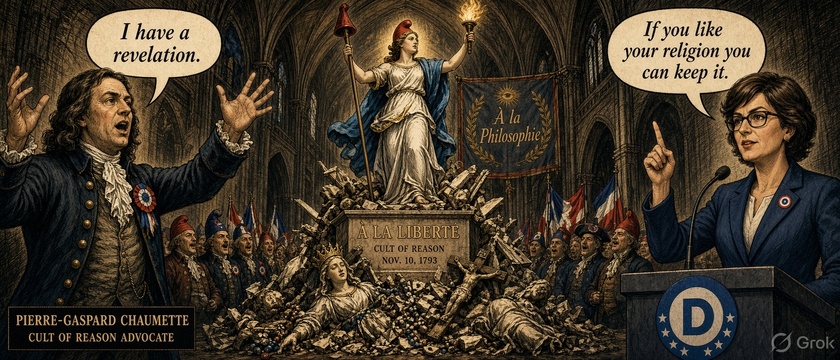
The Cult of Reason and the Festival of Reason (November 1793) marked the peak of the radical dechristianization campaign during the French Revolution’s Reign of Terror. It was a short-lived, atheistic civic religion promoted mainly by radical Parisian figures (especially the Hébertists) as a replacement for Catholicism.

Significant Figures

  • Pierre-Gaspard Chaumette (also known as Anaxagoras Chaumette after he renamed himself): Procurator of the Paris Commune. A leading organizer of the Festival of Reason and a vocal dechristianizer who viewed the Church as inherently counter-revolutionary. He pushed the Commune’s role in converting churches into Temples of Reason.
  • Jacques Hébert: Radical journalist and leader of the Hébertist faction (ultras among the sans-culottes). He supervised the official Festival of Reason alongside others and was a major proponent of aggressive dechristianization.
  • Antoine-François Momoro: Printer, Cordelier, and Hébertist. He helped organize the festival; his wife, Sophie Momoro, is widely identified as the woman who portrayed the “Goddess of Reason” in Paris (accounts sometimes mention other actresses or opera singers such as Marie-Thérèse Maillard as alternatives or for related ceremonies).
  • Other supporters included Anacharsis Cloots and, in the provinces, figures such as Joseph Fouché (who actively promoted dechristianization in areas under his control).
  • Maximilien Robespierre opposed the cult’s perceived atheism, viewing it as destabilizing and “aristocratic.” He later suppressed it in favor of his own alternative.

Before the Festival

Dechristianization had been building since the fall of the monarchy in 1792 and intensified in autumn 1793. Key precursors included:

  • The Civil Constitution of the Clergy (1790), which subordinated the Church to the state and split clergy into juring and refractory (non-juring) factions.
  • Closure of churches, exile or execution of priests, destruction of religious symbols, and adoption of the Republican calendar (October 1793), which erased Christian dating and Sunday.
  • Pressure on constitutional bishops and priests to abjure their offices (e.g., Jean-Baptiste Gobel, constitutional bishop of Paris, publicly renounced shortly before the festival).
  • Local actions by representatives on mission and popular pressure from radical sections, turning churches into civic spaces and promoting festivals of Liberty or martyrs of the Revolution.

The movement was driven by both top-down radical leadership in Paris and spontaneous or encouraged activity in the departments. It reflected Enlightenment anti-clericalism mixed with the wartime radicalism and suspicion of the Church as a royalist/counter-revolutionary force.

The Festival Itself (10 November 1793 / 20 Brumaire Year II)

The largest and most symbolic event took place at Notre-Dame Cathedral in Paris, renamed the Temple of Reason. Chaumette and the Commune organized it; Hébert and Momoro supervised aspects of the nationwide effort.

  • Christian altars and symbols were removed. An altar to Liberty was installed, a “sacred mountain” or similar structure was built, and the inscription “To Philosophy” appeared over the doors.
  • A living woman (Sophie Momoro in the best-attested accounts) appeared as the Goddess of Reason / Liberty—dressed in classical style (white tunic, blue mantle, red liberty cap in some descriptions), often carried in procession or enthroned. Young women in white Roman dress with tricolor sashes participated; a flame symbolized truth.
  • Hymns were sung (including works associated with revolutionary poets), and speeches celebrated the triumph of reason over “fanaticism.”
  • The procession went to the National Convention, which formally declared the former cathedral a Temple of Reason. Similar (if less elaborate) ceremonies occurred across France as churches were converted.

The cult was anthropocentric and civic rather than strictly theological: it honored reason, liberty, philosophy, and the people, while rejecting Christian dogma and idolatry (hence the use of living women rather than statues).

After the Festival

The Cult of Reason spread quickly in late 1793–early 1794 but collapsed almost as fast:

  • In March 1794, the Hébertist leaders (including Hébert, Momoro, and others) were arrested and guillotined on 24 March. Chaumette followed shortly afterward. Their elimination removed the cult’s main organizers.
  • Robespierre, consolidating power, denounced atheism as socially destructive. On 7 May 1794 the Convention established the Cult of the Supreme Being, a deistic civic religion affirming a creator God and the immortality of the soul (influenced by Rousseau). Its major public event was the Festival of the Supreme Being on 8 June 1794, staged by Jacques-Louis David, with Robespierre in a prominent role.
  • After Robespierre’s fall in the Thermidorian Reaction (July 1794), both cults faded. Churches gradually reopened under more tolerant policies, and Napoleon formally ended official revolutionary cults with the Law on Cults (1802) while restoring relations with the Catholic Church via the Concordat.

The episode is often cited as an extreme example of revolutionary cultural radicalism and the attempt to replace traditional religion with state-sponsored civic morality. It lasted only a few months at its height and is remembered more for its theatrical symbolism at Notre-Dame than for lasting institutional success.

= November 10th

These are notable historical events traditionally linked to November 8 (or closely associated with early-to-mid November) in various “On This Day” compilations. Several are more precisely dated to November 10 in standard sources (calendar differences, Chinese/Julian vs. Gregorian conventions, or rounding can account for the slight offsets). Here is concise context for each:

937 – Founding of Southern Tang (Five Dynasties and Ten Kingdoms period)
Li Bian (also known earlier as Xu Zhigao or Xu Gao), the powerful adopted successor of the Wu regent Xu Wen, forced the abdication of the last Wu emperor, Yang Pu. He took the throne (initially styling his state Qi, later renaming it Tang to claim continuity with the fallen Tang dynasty) and became the first ruler of Southern Tang (capital at Jinling, modern Nanjing). Southern Tang became one of the more culturally refined and relatively stable of the southern states during this fragmented era. Li Bian later formally changed his name and asserted descent from the Tang imperial house.

1202 – Siege of Zara (Zadar) begins, Fourth Crusade
The Fourth Crusade fleet (Venetian ships carrying French and other Western European crusaders) arrived at Zara (modern Zadar, Croatia), a Christian city under Hungarian protection that Venice wanted to recapture. Despite explicit papal letters from Innocent III forbidding attacks on fellow Christians and threatening excommunication, the crusaders (pressed by debts owed to Venice for transport) began the siege. It was the first major action of the crusade and the first attack by Catholic crusaders on a Catholic city; the city fell later in November after a short siege. The episode foreshadowed the later diversion to and sack of Constantinople (1204).

1293 – Raden Wijaya crowned, founding of Majapahit
After outmaneuvering the Mongol-Yuan expedition that had arrived in Java (initially allying with them against his rival Jayakatwang of Kediri, then turning on the weakened Mongols and driving them out), Raden Wijaya (Nararya Sangramawijaya) was crowned as the first monarch of the Majapahit kingdom. He took the regnal name Kertarajasa Jayawardhana. Majapahit, centered in eastern Java (around modern Trowulan/Mojokerto), grew into a major maritime and cultural power in the Indonesian archipelago.

1444 – Battle of Varna
A crusading army led by King Władysław III of Poland (also king of Hungary as Ulaszlo I), with the Hungarian commander John Hunyadi, was defeated by Ottoman forces under Sultan Murad II near Varna on the Black Sea coast (in modern Bulgaria). Władysław was killed in a charge against the Janissaries. The defeat ended the last major medieval crusading effort to roll back Ottoman power in the Balkans and helped clear the path for the later Ottoman conquest of Constantinople (1453).

1580 – Massacre at Dún an Óir (Siege of Smerwick)
After a three-day siege during the Second Desmond Rebellion, English forces under Lord Deputy Arthur Grey (Baron Grey de Wilton) captured the fort at Dún an Óir (Smerwick Harbour, County Kerry, Ireland). A mixed force of several hundred papal-backed Italian and Spanish troops (plus some Irish allies) who had landed to support the Catholic rebels surrendered; most were then executed (beheaded or otherwise killed). The episode is remembered as a particularly brutal episode in Elizabethan Ireland.

1659 – Battle of Pratapgarh (Pratapgad)
Maratha leader Chhatrapati Shivaji Maharaj killed the Bijapur (Adilshahi) general Afzal Khan during a meeting near Pratapgarh fort in Maharashtra. Shivaji’s forces then routed the larger Adilshahi army. The victory is widely regarded as the first major military success of Shivaji’s bid for independent rule (swarajya) and a key early step in the rise of Maratha power against the Deccan sultanates and later the Mughals.

1674 – Treaty of Westminster and cession of New Netherland
The Treaty of Westminster (signed 19 February 1674, effective shortly afterward) ended the Third Anglo-Dutch War. As part of the settlement, the Netherlands formally ceded the colony of New Netherland (which the Dutch had briefly retaken in 1673) back to England. The territory, centered on New Amsterdam, became the English colony of New York.

1702 – Siege of St. Augustine begins (Queen Anne’s War)
English colonial forces from Carolina under Governor James Moore, with Native American allies, arrived and began besieging Spanish St. Augustine (Castillo de San Marcos) in Spanish Florida. The Spanish withdrew civilians and supplies into the fort; English artillery failed to breach its walls. The siege was lifted in late December after a Spanish relief force arrived from Havana.

1766 – Charter of Queen’s College (later Rutgers University)
William Franklin, the last royal governor of New Jersey (and Benjamin Franklin’s son), signed the charter establishing Queen’s College in New Brunswick. Named for Queen Charlotte, consort of George III, it was the eighth college founded in the American colonies. It later became Rutgers University.

1775 – Founding of the Continental Marines (U.S. Marine Corps)
The Second Continental Congress resolved to raise two battalions of Marines. Samuel Nicholas was commissioned to raise them; tradition holds that the first recruiting took place at Tun Tavern in Philadelphia (with tavern manager Robert Mullan as chief recruiter). November 10 is still celebrated as the official birthday of the U.S. Marine Corps.

1793 – Goddess of Reason proclaimed (Cult of Reason)
During the radical phase of the French Revolution and the dechristianization campaign, the National Convention (at the urging of figures such as Pierre-Gaspard Chaumette) inaugurated the Cult of Reason. A Festival of Reason was held at Notre-Dame Cathedral in Paris (renamed the Temple of Reason), featuring a living woman as the “Goddess of Reason.” Churches across France were similarly transformed; the cult was short-lived and later replaced by Robespierre’s Cult of the Supreme Being.

Read full Article
November 06, 2026
post photo preview
Antisemitism Presaged end of nation
November 9th

Antisemitism Presaged end of nation

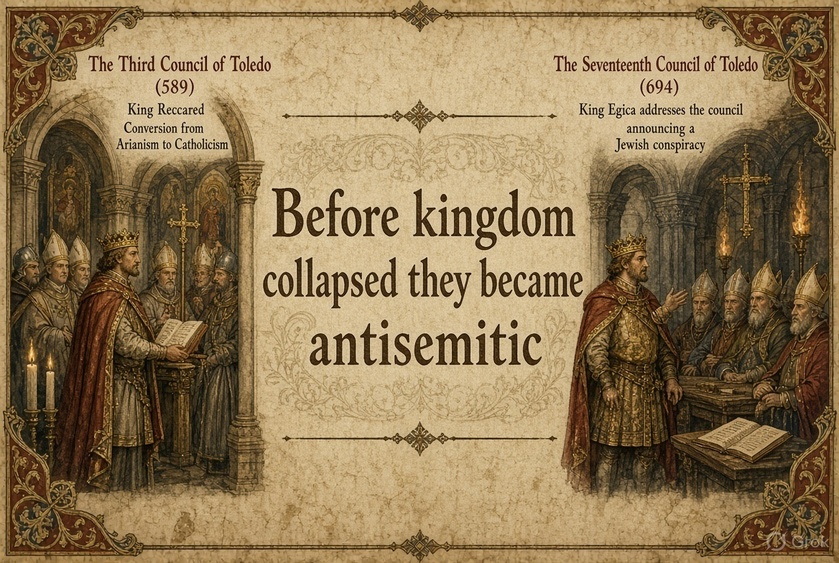
The Seventeenth Council of Toledo (9 November 694) was the climax of Visigothic anti-Jewish legislation under King Egica. It ordered the enslavement of virtually all Jews in the kingdom (except in Narbonensis/Septimania), confiscation of their property, and the removal of their children for Christian upbringing. Enforcement was uneven and short-lived because the Visigothic kingdom itself collapsed soon afterward.

Significant figures

  • Egica (Ergica; r. 687–c. 701/703): King of the Visigoths. Nephew of King Wamba and son-in-law of his predecessor Erwig (married to Cixilo/Cixilona). He ruled during a period of declining royal authority, noble conspiracies, and economic strain. He showed deep personal distrust of Jews and linked them to plots against the crown. He co-ruled with his son Wittiza toward the end of his reign and died in bed with the succession secured.
  • Erwig (r. 680–687): Immediate predecessor. He had already issued harsh anti-Jewish laws (baptism or expulsion within a year, restrictions on converts).
  • Earlier kings who shaped the policy: Reccared (converted from Arianism to Catholicism in 587/589), Sisebut (forced baptisms c. 615), Chintila, Recceswinth, and others. The pattern of escalating restrictions was well established by Egica’s time.
  • Metropolitan of Toledo and bishops: The council was an ecclesiastical body, but the king dominated the agenda. The 693 rebellion led by Bishop Sisebert of Toledo (in favor of a usurper named Suniefred) heightened Egica’s paranoia about conspiracies.

Before: The longer trajectory of Visigothic policy

The Visigoths were originally Arian Christians. King Reccared’s conversion and the Third Council of Toledo (589) made Catholicism the state religion and aligned the crown with the Catholic bishops. From that point, religious unity became a political goal.

Successive kings and councils issued anti-Jewish measures:

  • Forced or pressured conversion (Sisebut).
  • Requirements that already-baptized Jews remain Christian (Fourth Council of Toledo, 633).
  • Written professions of faith from “Judaizing” converts (under Recceswinth).
  • Erwig’s 681 laws demanding baptism of remaining Jews and their households within a year, plus severe restrictions on converts who relapsed.

By the 680s–690s the kingdom was weakening: noble revolts, fiscal problems, and external pressures. In 693 Egica faced a serious conspiracy centered on Bishop Sisebert. Around the same time he introduced stricter economic and religious controls on Jews (including new tax burdens and limits on trade with Christians). The Seventeenth Council marked the final escalation—from forced conversion to outright enslavement.

Egica opened the council by claiming he had learned of an international Jewish conspiracy: Jews in Hispania were allegedly coordinating with Jews under Muslim rule in North Africa to overthrow Christian rulers and destroy Christianity. The bishops endorsed the charge.

The council’s decisions (especially Canon 8)

The council issued eight canons. Most dealt with ecclesiastical discipline (fasting before synods, sealing baptismal fonts in Lent, restoring the washing of feet on Maundy Thursday, protecting church property, condemning Masses said to hasten someone’s death, ordering litanies for Church/king/people, and renewing laws protecting the royal family).

Canon 8 was the decisive anti-Jewish measure:

  • All Jews (except those in Narbonensis) were to be stripped of their property, which went to the crown or was given to their former Christian slaves.
  • They themselves were to be enslaved permanently and dispersed.
  • Masters (chosen by the king) were contractually bound to prevent any practice of Judaism.
  • Children reaching age seven were to be taken from their parents and raised as Christians, later married to Christians.
  • The measure targeted both open Jews and those who had been baptized but were accused of “staining” the faith by continued Jewish practice.

Other provisions protected Egica’s queen and children after his death and ordered prayers for them—reflecting the known dangers of Visigothic successions.

After: Limited enforcement and the end of the kingdom

Contemporary and later sources indicate that the decree was not uniformly enforced. In some areas it was applied; in others (especially where Jews were economically important) it was ignored or only partially carried out. By this stage Visigothic central authority was already eroding, so many local lords and towns simply did not implement it.

Egica died around 701–703. His son Wittiza succeeded him. The Visigothic kingdom collapsed in 711–714 under the Umayyad (Muslim) invasion led by Tariq ibn Ziyad and Musa ibn Nusayr. The rapid conquest was aided by internal divisions; some Visigothic nobles (including, according to tradition, a son of Egica named Oppas) cooperated with the invaders.

Under Muslim rule the remaining Jewish communities in Iberia generally fared better than they had under the late Visigoths. Many Jews who had fled earlier restrictions or who survived the enslavement order found greater religious and economic freedom under the new rulers (as dhimmis). The Seventeenth Council’s measures therefore marked the end of organized Jewish life under Visigothic Catholic rule rather than a permanent demographic catastrophe. The broader pattern of forced conversion and persecution in late Visigothic Spain is widely seen by historians as one factor that weakened social cohesion just before the Muslim conquest.

In short, the 694 council was the most extreme expression of a century-long Visigothic policy of religious homogenization. It was driven by Egica’s combination of personal hostility, fear of conspiracy, and desire for fiscal and political control, but it was only partially implemented before the kingdom itself disappeared.

= November 9th

These are the historical events traditionally listed for 9 November.

Here is a concise overview of the ones you listed, with context:

Early medieval and medieval

  • 694 – Seventeenth Council of Toledo: Visigothic King Egica of Hispania convened the council and accused the kingdom’s Jews of conspiring with Jews under Muslim rule in North Africa to overthrow Christian rulers. The council’s eighth canon ordered that virtually all Jews (except those in Narbonensis/Septimania) be enslaved, stripped of their property (which was to go to Christian slaves or the crown), and prevented from practicing Judaism. Children over age seven were to be taken and raised as Christians. Enforcement varied by region; this was one of the harshest in a long series of Visigothic anti-Jewish measures.
  • 1313 – Battle of Gammelsdorf: Louis IV (“the Bavarian,” later Holy Roman Emperor) defeated his cousin Frederick I of Austria (“the Fair”). The fight was mainly over guardianship of the underage dukes of Lower Bavaria and control of that rich territory. Fog helped Louis’s smaller force (including urban militias fighting on foot) win what was more a skirmish than a major battle. It secured Louis’s position in Bavaria and helped set the stage for his later contested election as king.
  • 1330 – Battle of Posada (9–12 November): Basarab I of Wallachia ambushed and decisively defeated a much larger Hungarian army under King Charles I Robert in a narrow mountain pass. The Hungarians suffered heavy losses; the king barely escaped in disguise. The victory effectively secured Wallachian independence from Hungarian overlordship (though the relationship remained contested later).
  • 1456 – Assassination of Ulrich II, Count of Celje: The last male ruler of the powerful County of Cilli (Celje) was killed in Belgrade, most likely by agents or partisans of the Hunyadi family. Ulrich had become de facto regent of Hungary after John Hunyadi’s death and was a major rival; his murder ended the Celje line and contributed to the political instability that soon led to Matthias Corvinus becoming king of Hungary.

Early modern

  • 1520 – Stockholm Bloodbath: After capturing Stockholm, Danish King Christian II (supported by Archbishop Gustav Trolle) had roughly 80–100 Swedish nobles, bishops, and others executed (mostly beheaded or hanged) on 8–10 November, ostensibly for heresy but largely for political opposition to the Kalmar Union. The massacre outraged Sweden, galvanized resistance under Gustav Vasa, and helped end the Kalmar Union and establish Swedish independence.
  • 1620 – Mayflower sights Cape Cod: After about two months at sea, the Mayflower (carrying the Separatist Pilgrims and others) sighted Cape Cod. They soon anchored, later signed the Mayflower Compact, and eventually founded Plymouth Colony. The late-season arrival contributed to the heavy mortality of the first winter.
  • 1688 – Glorious Revolution: William of Orange (who had landed at Torbay on 5 November) captured Exeter with little resistance as he advanced toward London. James II’s support collapsed rapidly; William and Mary soon became joint monarchs.
  • 1697 – Cervia: Pope Innocent XII founded (or re-founded/elevated) the city of Cervia in the Papal States, largely to address flooding and drainage problems in the area.
  • 1720 – Judah HeHasid synagogue: The synagogue and compound established in Jerusalem by Rabbi Judah HeHasid (Judah the Pious) and his group of Ashkenazi immigrants was burned by Arab creditors over unpaid debts and taxes. The site became known as the Hurva (“Ruin”). Ashkenazi Jews were effectively expelled from Jerusalem for roughly a century; many who remained disguised themselves as Sephardim. The synagogue was later rebuilt in the 19th century (and again after 1948).
  • 1729 – Treaty of Seville: Spain, France, and Great Britain ended the Anglo-Spanish War (1727–1729). Britain retained Gibraltar and Minorca; Spain received recognition of its claims in Italy and the return of some ships/goods.

Late 18th century

  • 1780 – Battle of Fishdam Ford (American Revolutionary War): South Carolina Patriot militia under Brigadier General Thomas Sumter repelled a surprise night attack by British regulars and Loyalists. The failure of the British/Loyalist raid was a minor but morale-boosting Patriot success in the South.
  • 1791 – Society of United Irishmen: Founded in Dublin by Theobald Wolfe Tone, Thomas Russell, and others. Initially a reformist group seeking parliamentary reform and Catholic emancipation, it later became more radical and republican, playing a central role in the 1798 Irish Rebellion.
  • 1799 – Coup of 18 Brumaire (9–10 November): Napoleon Bonaparte, with the help of his brother Lucien, Emmanuel Sieyès, and others, overthrew the French Directory. The Consulate was established with Napoleon as First Consul (effectively dictator). This ended the revolutionary Directory phase and began Napoleon’s rise to absolute power and eventual empire.

These span Visigothic religious persecution, medieval power struggles in Central and Southeastern Europe, the Swedish break from Denmark, the founding of English America, the Glorious Revolution, and the end of the French Revolutionary Directory. Several (Stockholm Bloodbath, Mayflower, 18 Brumaire, and the Council of Toledo) are especially well-known for their long-term consequences.

Read full Article
November 06, 2026
post photo preview
Over 2000 years of fighting from Persia to Greece.
November 8th

Over 2000 years of fighting from Persia to Greece.

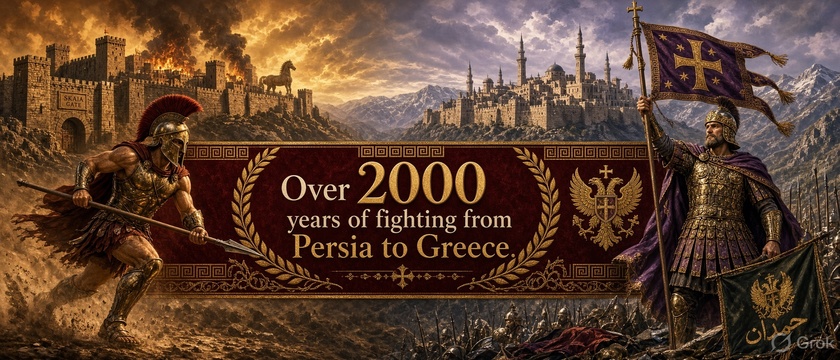
The Battle of Andrassos (or Adrassos), fought on 8 November 960, was a decisive Byzantine ambush victory that broke the offensive power of the Hamdanid Emirate of Aleppo.

Significant Figures

  • Leo Phokas the Younger (c. 915–after 971): Byzantine general and younger son of Bardas Phokas the Elder. He rose through eastern theme commands (strategos of Cappadocia, then Anatolikon). Under Emperor Romanos II he became Domestic of the Schools of the West. While his older brother Nikephoros led the main army to Crete, Leo took charge of the eastern defenses and executed the ambush. Later he served as chief minister (kouropalates and logothetes tou dromou) during Nikephoros II’s reign; after Nikephoros’s murder he rebelled against John I Tzimiskes and was blinded.
  • Sayf al-Dawla (ʿAlī ibn Abū’l-Hayjāʾ ʿAbdallāh, 916–967): Founder and emir of the Hamdanid Emirate of Aleppo (from 945). Known as the “Sword of the Dynasty,” he was the most formidable Muslim opponent of Byzantium on the eastern frontier in the mid-10th century. He conducted repeated deep raids into Anatolia, patronized poets and scholars (including al-Mutanabbi), and styled himself a leader of jihād. After Andrassos he never again mounted large-scale invasions; hemiplegia and declining authority further weakened him until his death in 967.
  • Nikephoros Phokas (later Emperor Nikephoros II, r. 963–969): Leo’s older brother and the dominant Byzantine commander of the period. In 960 he led the major expedition that reconquered Crete (fall of Chandax in 961). His absence created the opportunity Sayf exploited; his subsequent eastern campaigns after returning completed the destruction of Hamdanid power.
  • Supporting figures included Constantine Maleinos (co-commander with Leo) and, on the Byzantine side, the broader Phokas family military tradition. Sayf’s force included contingents from Aleppo, Tarsus, and volunteer ghāzīs.

Before the Battle

By the mid-10th century the Byzantine Empire under the Macedonian dynasty had regained strength after earlier losses. Earlier eastern advances under John Kourkouas had been checked by the rise of the Hamdanids. Sayf al-Dawla, based in Aleppo and controlling much of northern Syria and parts of the Jazira, launched repeated raids into Byzantine Asia Minor from the late 940s onward. He scored notable successes in the 950s against Bardas Phokas, but Byzantine fortunes improved after Nikephoros Phokas took command of the eastern armies around 955–956. Leo Phokas and other generals began scoring counter-successes, including raids into Syrian territory.

In 960 Emperor Romanos II (r. 959–963) committed the bulk of the field army—drawn largely from the Anatolian themes—to Nikephoros Phokas’s expedition against the Arab Emirate of Crete. This left the eastern frontier thinly defended. Sayf al-Dawla seized the moment, assembling a large force (contemporary estimates vary widely, often cited around 30,000 including regular troops, Tarsus contingents, and jihād volunteers). He invaded Cappadocia, sacked the fortress of Charsianon, and raided widely, gathering booty and prisoners with little opposition. Leo Phokas, reassigned to cover the east, avoided open battle against the superior numbers and instead prepared an ambush in the Taurus mountain passes through which the Hamdanids would have to return.

The Battle

On 8 November 960 the Hamdanid army, laden with plunder and prisoners, entered the narrow, rugged pass of Andrassos (also called Adrassos or associated with the pass of Kylindros; exact location in the Taurus is unidentified). Byzantine forces under Leo Phokas and Constantine Maleinos, concealed on the heights, waited until the entire column and baggage train were committed to the confined terrain. They then attacked from above and the flanks.

The result was a massacre rather than a conventional battle. The Hamdanids were trapped, their formations broken by the terrain. Byzantine sources (Leo the Deacon, John Skylitzes, and others) describe heavy slaughter; Arab sources later reported that only about 300 cavalrymen escaped with Sayf al-Dawla. The emir himself barely got away, according to Byzantine accounts by scattering coins and valuables to delay his pursuers. Large numbers of prisoners were taken, and the Byzantines recovered the plunder. Leo the Deacon later claimed the bones of the dead could still be seen in the pass years afterward.

After the Battle

Andrassos permanently broke Sayf al-Dawla’s ability to conduct deep, large-scale raids into Byzantine territory. He continued smaller operations and faced internal problems, but his military power and prestige as a jihād leader were irreparably damaged. Growing illness further limited him.

The victory allowed the Byzantines to complete the Cretan campaign without major eastern distraction. After Nikephoros returned in 961, he launched a sustained offensive. In 962 he invaded Cilicia and northern Syria, briefly occupied and sacked Aleppo itself (forcing Sayf to flee), and began the systematic conquest of Cilicia. By 969 the Byzantines controlled Cilicia and the area around Antioch; Aleppo itself was reduced to a tributary/vassal state. The Hamdanid emirate survived in diminished form under Sayf’s son Saʿd al-Dawla, but it was no longer a major independent threat.

The battle marked a clear turning point in the Arab–Byzantine wars on the eastern frontier: the initiative passed decisively to Byzantium and remained there through the campaigns of Nikephoros II and John I Tzimiskes. It also enhanced the prestige of the Phokas family, contributing to Nikephoros’s later seizure of the throne in 963.

= November 8th 

These events are a classic “on this day” list, mostly for 8 November (with a few sources dating one or two of them slightly earlier). Here’s a concise overview of each.

960 – Battle of Andrassos (usually dated 8 November)

Byzantine general Leo Phokas the Younger ambushed the Hamdanid army of Sayf al-Dawla, Emir of Aleppo, in a narrow mountain pass in the Taurus (near Kylindros/Andrassos) as the Hamdanids returned from a deep raid into Cappadocia. The Byzantines, though outnumbered, trapped the column in the defile and annihilated most of it. Sayf al-Dawla barely escaped (reportedly by scattering treasure to slow his pursuers) with only a few hundred men. The defeat permanently weakened the Hamdanids and opened the way for later Byzantine advances under Nikephoros Phokas.

1278 – Trần Thánh Tông retires (8 November)

Trần Thánh Tông (Trần Hoảng), second emperor of the Trần dynasty of Đại Việt (Vietnam), formally abdicated in favour of his son Trần Khâm (who became Trần Nhân Tông). He took the title of Retired Emperor (Thái thượng hoàng) while continuing to exercise real influence. Father and son later jointly directed the successful resistance to the second and third Mongol invasions (1285 and 1287–88).

1519 – Cortés enters Tenochtitlán (8 November)

Hernán Cortés and his small Spanish force, accompanied by large numbers of Indigenous allies (especially Tlaxcalans), crossed the causeways into the Aztec capital. Moctezuma II met them with ceremony and gifts and lodged them in the palace of Axayácatl. Within days Cortés took Moctezuma hostage. The initial peaceful entry set the stage for the later conflict that destroyed the Aztec Empire in 1521.

1520 – Stockholm Bloodbath begins (executions mainly 8–9 November)

After conquering Sweden and being crowned in Stockholm, Danish king Christian II (at the urging of Archbishop Gustav Trolle) had roughly 80–100 Swedish nobles, bishops, and burghers executed as “heretics” for their earlier opposition to the Kalmar Union. The massacre (Stockholms blodbad) alienated most of Sweden and triggered the successful revolt led by Gustav Vasa, which ended the Union.

1576 – Pacification of Ghent (8 November)

The States General of the Netherlands signed an agreement uniting the northern and southern provinces against Spanish occupation. It called for the expulsion of Spanish troops, restoration of local privileges, and a halt to religious persecution, while still formally recognising Philip II. It was a high point of national unity in the early Eighty Years’ War, though the alliance later fractured.

1602 – Bodleian Library opens (8 November)

Sir Thomas Bodley reopened and refounded Oxford’s university library (rebuilt around the earlier Duke Humfrey’s Library). With about 2,000 volumes at the start, it became one of Europe’s first truly “public” scholarly libraries and remains a major research institution today.

1605 – Robert Catesby killed (8 November)

The ringleader of the Gunpowder Plot was shot and killed at Holbeche House (Staffordshire) while resisting the Sheriff of Worcester’s forces. The remaining plotters were later executed; Catesby’s body was exhumed, his head displayed, and he was attainted. The plot’s failure is still commemorated on 5 November (Guy Fawkes Night).

1614 – Dom Justo Takayama exiled (left Nagasaki 8 November)

The Japanese Catholic daimyō Justo Takayama (Takayama Ukon), who had refused to renounce his faith, was banished by Tokugawa Ieyasu. He sailed from Nagasaki with hundreds of other Japanese Christians and arrived in Manila, where he was welcomed by the Spanish. He died there a few weeks later (early 1615) and was later beatified.

1620 – Battle of White Mountain (8 November)

Near Prague, the Catholic forces of the Emperor and the Catholic League (under Tilly and Bucquoy) routed the Bohemian and Protestant army of Frederick V (the “Winter King”) in roughly one to two hours. The victory ended the Bohemian phase of the Thirty Years’ War, allowed the Habsburgs to re-Catholicise Bohemia, and crushed the Protestant cause in the region.

1644 – Shunzhi Emperor enthroned (formal ceremony 8 November)

After the Manchus (Qing) took Beijing following the collapse of the Ming, the young Shunzhi Emperor (Fulin) was formally enthroned as the first Qing emperor to rule China proper. Real power remained with the regent Dorgon for several more years. The Qing dynasty would last until 1912.

1745 – Charles Edward Stuart invades England (crossed the border 8 November)

“Bonnie Prince Charlie,” leading the Jacobite army (mostly Highlanders, ~5,000 men), entered England via the western route toward Carlisle. The force reached Derby (about 125 miles from London) by early December before turning back after a council of war. The rising ended in defeat at Culloden in April 1746.

These episodes span Byzantine–Arab warfare, Vietnamese imperial succession, the Spanish conquest of Mexico, the Kalmar Union crisis, the Dutch Revolt, English library history, the Gunpowder Plot, Japanese Christian exile, the Thirty Years’ War, the Qing conquest of China, and the last major Jacobite rising.

Read full Article
See More
Available on mobile and TV devices
google store google store app store app store
google store google store app tv store app tv store amazon store amazon store roku store roku store
Powered by Locals