


Terrorists also use guns
“Naza: The Real Story” (2026) is a roughly 49-minute Israeli documentary featuring first-hand accounts from IDF reserve commanders and intelligence officers who served in Gaza. It is filmed at night on Tel Aviv rooftops (interviewees shown mostly from behind, identified by role). The makers (Roi Danino, Ariel Averbuch, and Hagay Gutman) describe it as an independent production funded privately, with no IDF or government involvement in its creation. It is available free online (with original Hebrew audio, dubs in 8 languages, and subtitles in many more).
It positions itself as a direct rebuttal to the other film titled NAZA (by Yuval Abraham and Rachel Szor), which focuses on IDF targeting processes and expected civilian harm (“Naza”/נז״א is the Hebrew military abbreviation for collateral damage / nezek agavi). This version argues that narratives of indiscriminate or poorly constrained IDF action omit key battlefield realities.
Core content and claims
The film centers on the operational challenges of fighting in dense urban areas against Hamas. Officers describe:
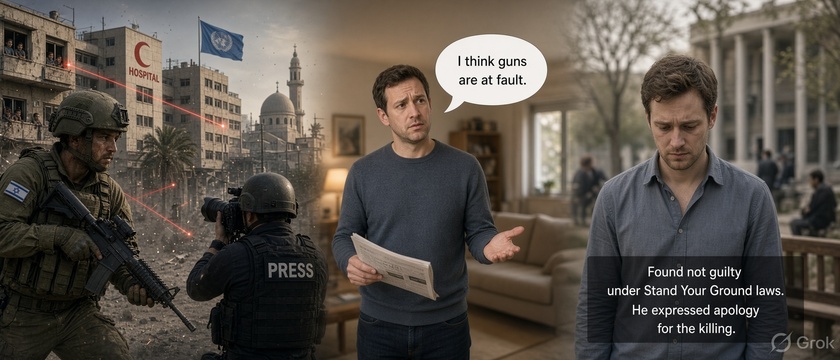
- Hamas tactics: Terrorists systematically discarded uniforms, moved among civilians in ordinary clothes (jeans, T-shirts, etc.), and used civilian homes, schools, kindergartens, mosques, clinics, and hospitals for military purposes. Weapons and equipment were routinely stored in residences (examples include an anti-tank charge under a child’s bed next to Smurf dolls, mortar shells beside a baby’s crib, and tunnel shafts in or next to children’s rooms or kindergarten yards). Uniforms were often left behind in empty homes. One account mentions a fighter wearing a Jewish tzitzit garment in an apparent attempt to pose as a hostage.
- Rules of engagement and constraints: Strict procedures requiring intelligence, legal review, and higher-level approvals for strikes (especially near sensitive sites). Evacuation warnings, designation of combat zones (e.g., areas with >75% of the population gone), and a practice of holding fire or aborting strikes when civilians were present or identification was uncertain. Officers note the difficulty of distinguishing armed threats from unarmed civilians or “messengers” in real time, and the personal cost to IDF troops of restraint (including casualties from fire coming from civilian structures).
- Hostages and aid: Hostages held in civilian homes shaped operations. Accounts of Hamas seizing or diverting aid convoys early on, and of UN-marked food sacks being used as fortification materials. The film includes claims of IDF efforts to facilitate medicine and aid while managing security risks.
- Supporting material: Alongside the interviews, the film shows photographs, bodycam/drone/aircraft footage, terrain analysis, and documents that the makers say were cleared for publication. Officers recount specific incidents (e.g., fire from a kindergarten that wounded soldiers, ceasefire periods exploited for reconnaissance by mixed groups of children and operatives).
The overall framing is that Hamas deliberately maximized the difficulty of distinguishing combatants from civilians and exploited protected sites, while the IDF operated under significant legal and procedural limits that carried real risks to its own forces. The film presents these as the officers’ direct experiences rather than abstract analysis.
Viewers are encouraged (by the makers and the film itself) to examine the on-screen evidence and compare it with other accounts. The documentary is one perspective from participants in the fighting; competing films and external reports offer different emphases and interpretations of the same conflict.
=
Yoshihiro Hattori (often called Yoshi), a 16-year-old Japanese exchange student, was fatally shot on October 17, 1992, in the Baton Rouge, Louisiana area (near Central) after he and a friend went to the wrong house looking for a Halloween party.
Hattori was from Nagoya, Japan, and had arrived in the U.S. that August through an exchange program (American Field Service). He was staying with the Haymaker family and attending school with their son, Webb Haymaker (also 16). The two were invited to a Halloween party. Hattori dressed as Tony Manero (John Travolta’s character) from Saturday Night Fever in a white tuxedo-style jacket; Webb wore a neck brace and bandages as an “accident victim” costume.
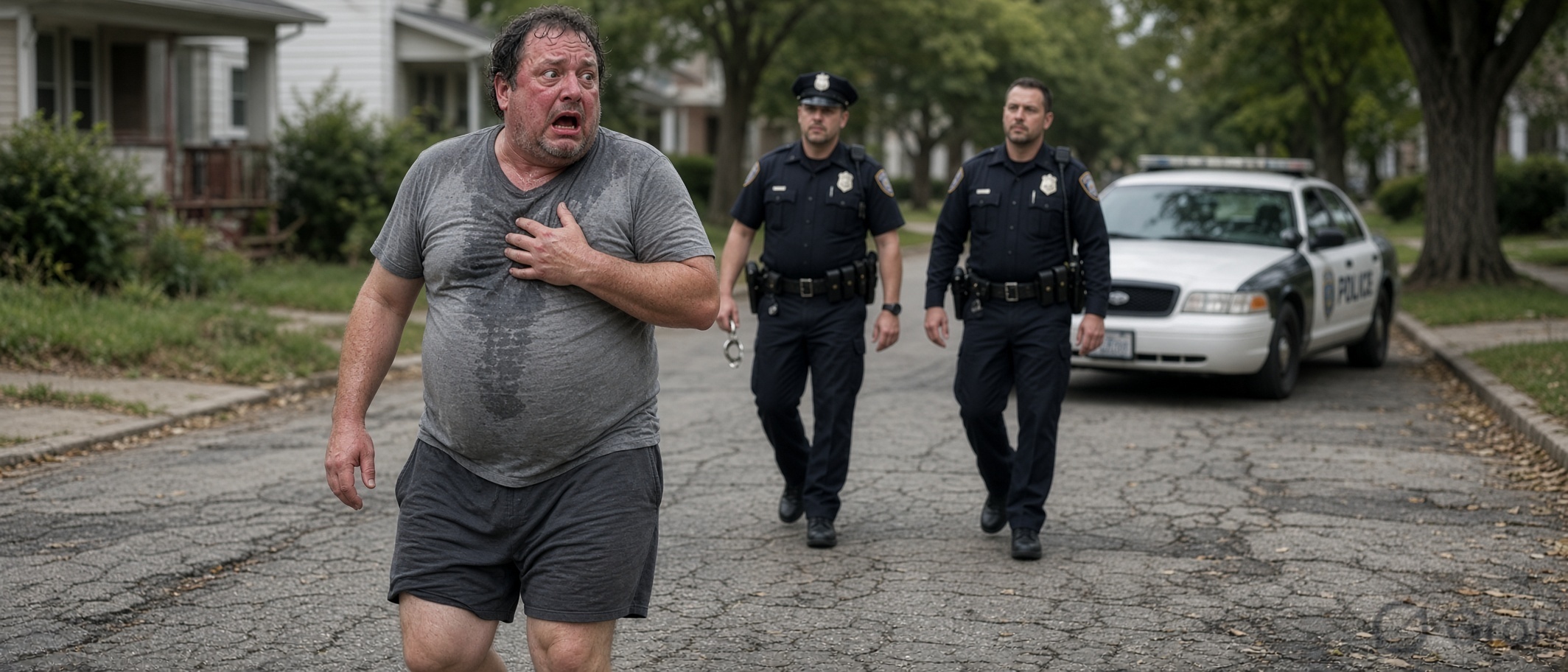
They were looking for the address 10131 but stopped at 10311, a nearby house that had Halloween decorations and cars in the driveway. They rang the front doorbell with no answer. Bonnie Peairs then opened a side/garage door, saw the teenagers (Hattori approaching), became frightened, slammed the door, and told her husband to get his gun.
Rodney Peairs (then about 30, a supermarket butcher) came out holding a .44 Magnum revolver. Hattori turned toward him and said something like “We’re here for the party!” Peairs yelled “Freeze!” Hattori, whose English was limited, was not wearing his contact lenses that night, and may have thought it was part of a Halloween prank or simply not understood the command, continued moving forward while smiling or laughing. Webb saw the gun and tried to warn him. Peairs fired once from roughly 5 feet (1.5 m) away, striking Hattori in the chest. Peairs then retreated inside. Hattori died in the ambulance shortly afterward.
Legal outcomes
Peairs was charged with manslaughter. In a May 1993 criminal trial, a jury acquitted him after about three hours of deliberation, accepting his claim of self-defense under Louisiana law. He testified that he felt threatened when Hattori kept approaching and did not stop. Some spectators applauded the verdict. Outside court, Peairs expressed sorrow that it had happened.
In a later civil wrongful-death suit brought by Hattori’s parents (Masaichi and Mieko Hattori), a judge found Peairs liable in 1994 and ordered him (and his insurer) to pay roughly $650,000–$653,000 in damages. The judge stated there was “no justification whatsoever” for the shooting.
Broader impact
The case drew intense international attention, especially in Japan, where private gun ownership is rare and the shooting was widely seen as a shocking example of American gun culture and “castle doctrine”-style self-defense rules. Hattori’s parents collected more than a million signatures calling for stricter U.S. gun controls and presented them to American officials. The episode contributed to broader U.S. debates that helped build momentum for the Brady Handgun Violence Prevention Act. It also highlighted language and cultural barriers, the risks of mistaken-identity shootings, and differences in attitudes toward firearms and property defense.
The shooting is frequently cited as a classic “wrong house / Halloween” tragedy and has been referenced in later discussions of similar mistaken-address cases.
= October 17th
These events cluster around mid-to-late October (many traditionally linked to the 17th) across nearly seven centuries. Here is a concise overview of each:
1091 – London tornado (17 October)
This is the earliest recorded tornado in England. Contemporary chroniclers (including William of Malmesbury and Florence of Worcester) described a violent whirlwind that struck the City of London. The church of St Mary-le-Bow was severely damaged—four large rafters were driven deep into the ground—and more than 600 mostly wooden houses plus other churches were destroyed or demolished. Only two deaths were reported in a city of roughly 18,000 people. Modern assessments rate it around T8 on the TORRO scale (roughly F4 equivalent), making it one of the strongest known British tornadoes, though the rating rests on accounts written decades later.
1346 – Battle of Neville’s Cross (17 October)
During the Second War of Scottish Independence and the Hundred Years’ War, King David II of Scotland invaded northern England (as required by the Auld Alliance while Edward III was campaigning in France). An English force under Ralph Neville, Lord Neville, defeated a larger Scottish army near Durham. David II was captured; he spent the next eleven years as a prisoner in the Tower of London (and elsewhere). The battle checked Scottish power in the north for years.
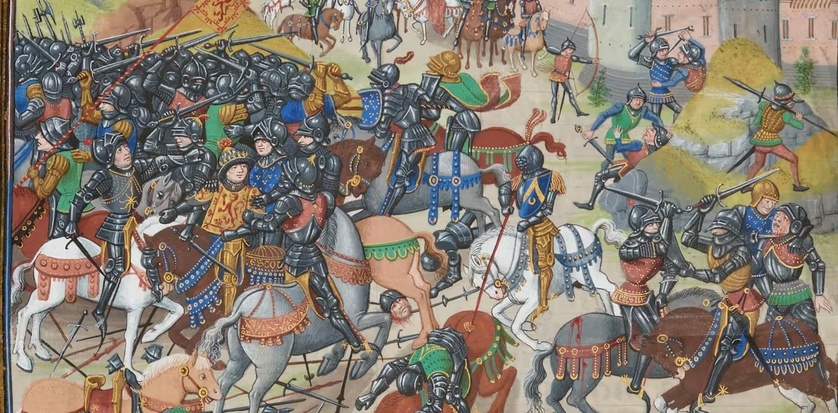
1448 – Second Battle of Kosovo (17–20 October)
John Hunyadi led a mainly Hungarian-led Crusader force against Sultan Murad II’s Ottoman army on the Kosovo field. After several days of fighting (including the use of wagon forts and firearms), the Ottomans prevailed. Wallachian troops defected late in the battle. The defeat ended the last major Christian attempt to reverse Ottoman gains in the Balkans and left Constantinople more isolated ahead of its fall in 1453.
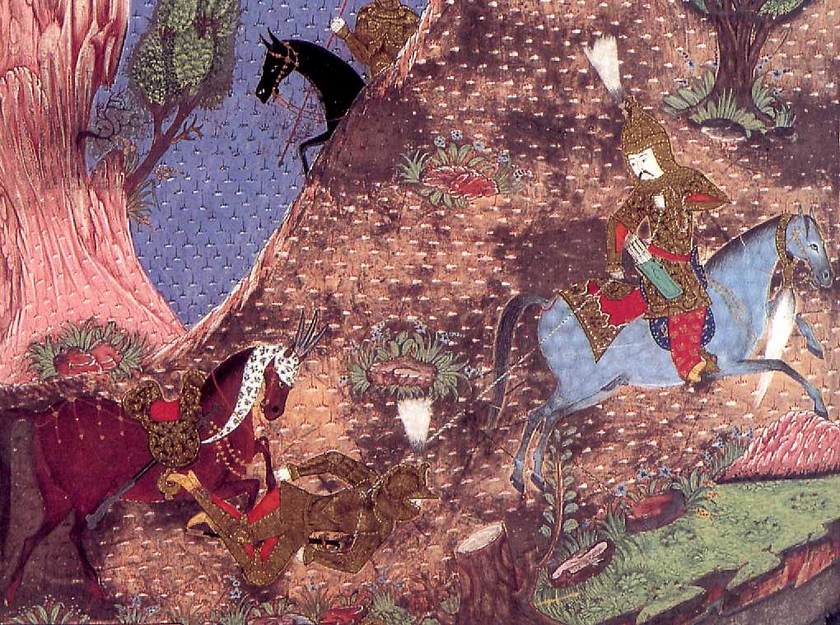
1456 – University of Greifswald founded (17 October)
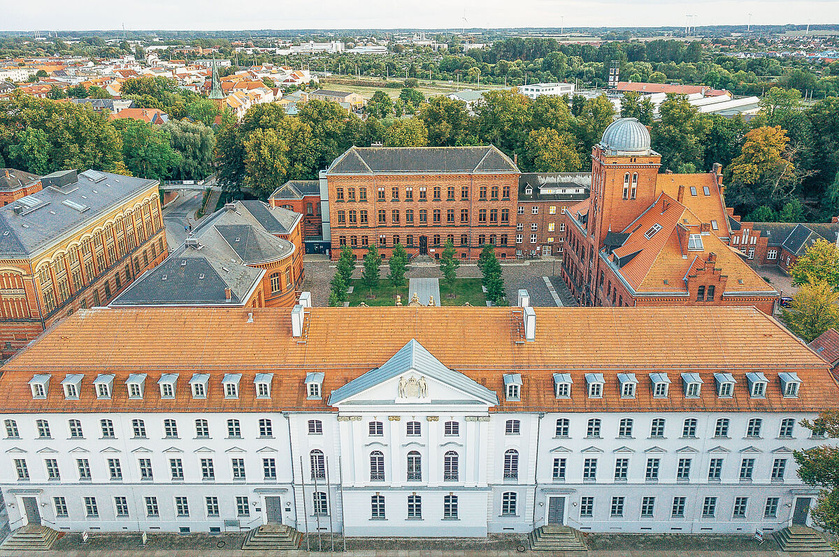
Founded in the Hanseatic town of Greifswald (in what is now Mecklenburg-Vorpommern, Germany) with papal and imperial approval, largely through the efforts of mayor Heinrich Rubenow (its first rector) and Duke Wartislaw IX of Pomerania. It is one of the oldest universities in northern Europe and, during the period when the region belonged to Swedish Pomerania (1648–1815), was for a time the oldest university under Swedish rule. It began with the traditional faculties of theology, philosophy, medicine, and law.
1558 – Poczta Polska (Polish postal service) established (18 October)
King Sigismund II Augustus granted an Italian, Prospero Provana, the right to operate a permanent postal link from Kraków to Venice via Vienna. This is treated as the founding of the Polish postal service (later reorganized under the Thurn und Taxis system). 18 October remains the official Polish Post holiday.
1604 – Kepler’s Supernova (observations beginning 17 October)
A bright new star (a Type Ia supernova, SN 1604) appeared in the constellation Ophiuchus in early October. Johannes Kepler began systematic naked-eye observations on 17 October and tracked it for over a year. It reached magnitude about −2.5 (brighter than Jupiter) and was briefly visible in daylight. His 1606 account (De Stella Nova) made it “Kepler’s Supernova,” the last supernova in the Milky Way clearly observed with the naked eye. The remnant is still studied today.

1610 – Coronation of Louis XIII (17 October)
The nine-year-old Louis XIII (son of the assassinated Henry IV) was crowned and consecrated at Reims Cathedral. His mother, Marie de’ Medici, served as regent. The ceremony formalized his reign; actual power remained with the regency and later with ministers such as Cardinal Richelieu.
1660 – Execution of regicides (including several on 17 October)
After the Restoration of Charles II, a special court tried surviving men who had signed the death warrant of Charles I or otherwise participated in his trial and execution. Ten were sentenced to be hanged, drawn, and quartered. On 17 October, four—Thomas Scot, Gregory Clement, Adrian Scrope, and John Jones—were executed at Charing Cross. Others were put to death on nearby days in mid-October. Samuel Pepys and John Evelyn recorded the events.
1662 – Sale of Dunkirk (17/27 October)
Charles II, short of money and wary of the cost and diplomatic risks of holding the continental port (captured from Spain in 1658), sold Dunkirk and Fort-Mardyck to Louis XIV of France for five million livres (roughly £40,000 in some contemporary reckoning). The transaction was unpopular in England. The date is given as 17 October Old Style / 27 October New Style.
1771 – Premiere of Ascanio in Alba (17 October)
The 15-year-old Wolfgang Amadeus Mozart’s festa teatrale (pastoral opera/serenade) to a libretto by Giuseppe Parini was first performed at the Teatro Regio Ducale in Milan. It was commissioned by Empress Maria Theresa for the wedding of her son Archduke Ferdinand to Maria Beatrice d’Este. The work celebrates the mythical founding of Alba Longa.
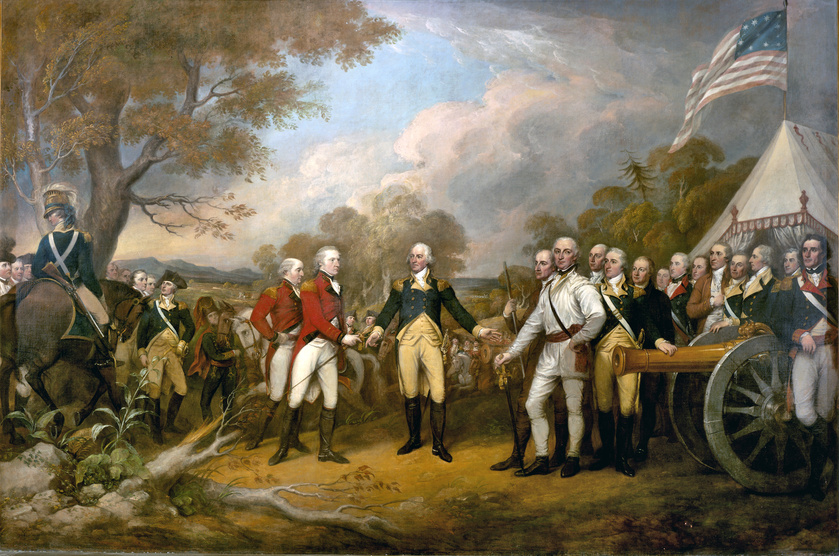
1777 – Surrender at Saratoga (convention signed 16 October; formal surrender 17 October)
After the Battles of Saratoga, British General John Burgoyne opened negotiations with American General Horatio Gates. The Articles of Convention were signed on 16 October; Burgoyne’s army marched out and laid down its arms on the 17th. The surrender of roughly 6,000 men was a major turning point that encouraged French recognition of and alliance with the United States.
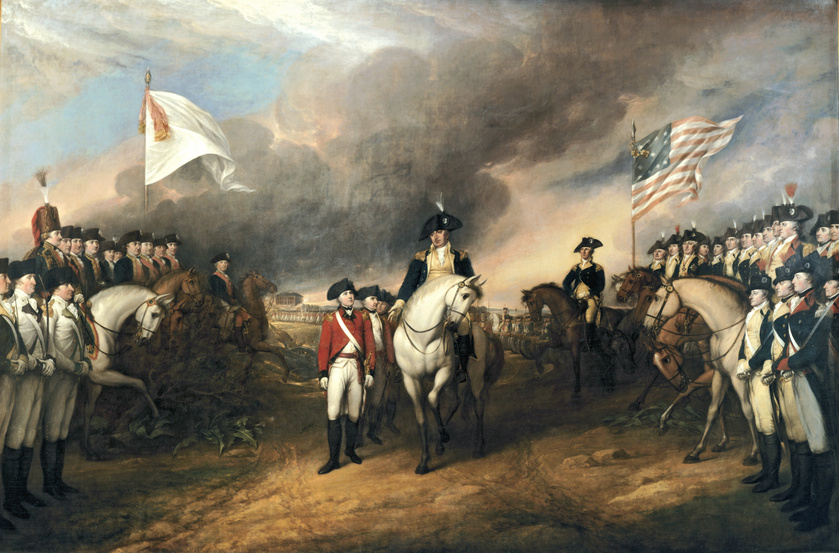
1781 – Siege of Yorktown / Cornwallis’s surrender (negotiations from ~17 October; formal surrender 19 October)
A combined Franco-American force under Washington and Rochambeau, supported by the French fleet under de Grasse, trapped British General Charles Cornwallis’s army on the Yorktown peninsula. A British drummer and officer appeared under a white flag on 17 October to open negotiations. After terms were settled, Cornwallis’s army of about 8,000 men formally surrendered on 19 October (Cornwallis himself did not attend the ceremony). The victory effectively ended major fighting in the American Revolutionary War.
These episodes range from natural disaster and medieval warfare to the founding of lasting institutions, scientific observation, monarchical ceremony, political retribution, and the decisive campaigns of the American Revolution.