VoiceDDB
Politics • Culture • News
Hamas’s Cynical Bloodbath
The Real Story of May 14, 2018
4 hours ago
post photo preview

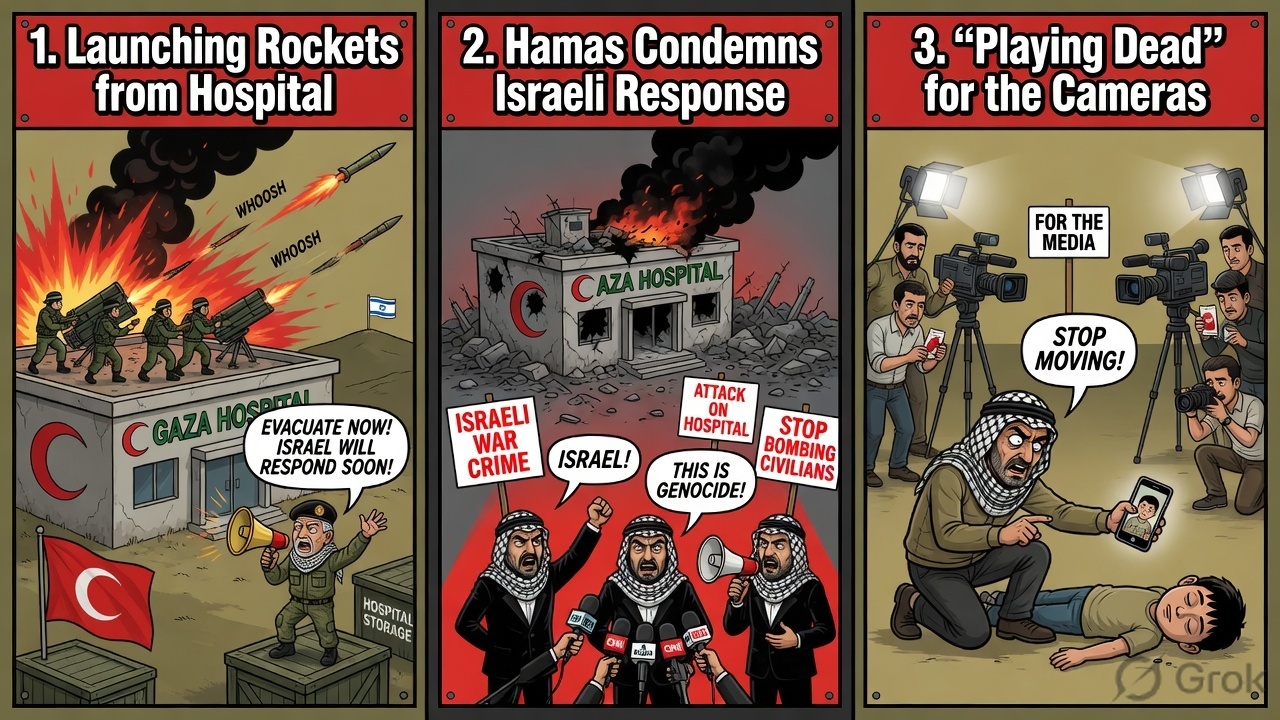
On May 14, 2018, Israel marked its 70th Independence Day while the United States fulfilled a long-overdue commitment by officially opening its embassy in Jerusalem. That same day, Hamas executed a meticulously planned operation it marketed to the world as the “Great March of Return.” Tens of thousands were mobilized toward the Gaza border fence. The goal was never peaceful protest. It was to overwhelm Israeli defenses, breach the perimeter, and force a confrontation that would produce Palestinian casualties—casualties Hamas was prepared to accept in large numbers for propaganda value.

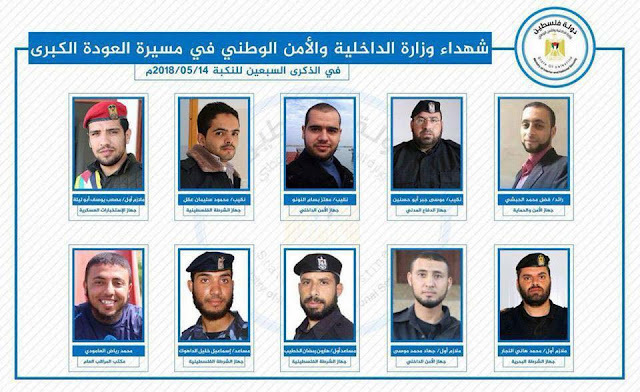
Hamas’s own senior leadership later confirmed the nature of the operation. Politburo member Salah al-Bardawil stated plainly that 50 of the 62 Palestinians killed on May 14–15 were members of Hamas. Islamic Jihad claimed three more of its military-wing operatives among the dead. Israeli forces faced attempts to cut through the fence, plant explosives, hurl firebombs and rocks, and infiltrate sovereign territory. The provided poster from Palestinian authorities—dated May 14, 2018, and headlined “Martyrs in the path of the Great Return March”—tells the truth in pictures: several of those commemorated appear in military berets and uniforms, elevated as heroic “martyrs” rather than civilians caught in crossfire.

Yet the international response was depressingly predictable. Large segments of the press stripped the event of its military context, describing it as a “peaceful demonstration” met with disproportionate Israeli force. Ranking terrorist operatives waving weapons or attempting breaches were recast as unarmed civilians. The same pattern has repeated for decades whenever Israel defends itself: facts on the ground are subordinated to a narrative of Israeli aggression.

Australia’s government at the time was no exception. Then-Foreign Minister Julie Bishop, speaking for the Turnbull administration, acknowledged Israel’s legitimate security needs but echoed calls for “proportionate” response and expressed concern over the scale of force used. In doing so, it lent weight to a false moral equivalence—treating a sovereign democracy’s right to prevent invasion as morally comparable to a terrorist organization’s deliberate strategy of using civilians as cover for armed infiltration.

This delegitimization is not new; it is systemic. Consider the Al-Aqsa Mosque compound atop Jerusalem’s Temple Mount. In classical Islamic tradition, Mecca and Medina have always held primacy. The political elevation of Al-Aqsa as Islam’s “third holiest site” was aggressively promoted in the 20th century by Haj Amin al-Husseini, the Mufti of Jerusalem. Al-Husseini, who met with Adolf Hitler in Berlin in 1941 and collaborated with the Nazis, weaponized the site’s status to incite violence against Jews and internationalize the conflict as a religious crusade. That manufactured sanctity has been leveraged ever since to deny Jewish historical and religious ties to their holiest place.

Israel has repeatedly tested the “land for peace” formula in good faith. In 2005 it unilaterally withdrew every soldier and settler from Gaza, dismantling thriving communities and handing over intact infrastructure. The result? Hamas seized control, turned aid money into rockets and terror tunnels, and launched tens of thousands of missiles into Israeli civilian centers over the following years—many financed by Iran. The very infrastructure Israel left behind was repurposed for war, not state-building.

October 7, 2023, was the logical endpoint of this strategy: a successful large-scale invasion featuring mass murder, rape, and hostage-taking on a scale not seen since the Holocaust. Those atrocities were not the moral equivalent of a nation defending its borders. They were the unveiled face of Hamas’s charter and ideology—an ideology that rejects Israel’s right to exist and glorifies death.

Hamas does not hide its playbook. It openly accepts high casualties among its people, promotes its fighters as martyrs, and counts on a compliant international echo chamber to blame the Jewish state for defending itself. The events of May 14, 2018, were a textbook example. Israel’s response that day prevented a massacre on its own soil. The world’s rush to condemn it revealed far more about the critics than about the facts. Until that pattern of reflexive delegitimization ends, peace will remain impossible—because one side refuses to accept the existence of the other.

 

community logo
Join the VoiceDDB Community
To read more articles like this, sign up and join my community today
0
What else you may like…
Videos
Posts
Articles
November 27, 2022
Jingle Bell Rock

Jingle bell, jingle bell, jingle bell rock
Jingle bells swing and jingle bells ring
Snowin' and blowin' up bushels of fun
Now the jingle hop has begun

Jingle bell, jingle bell, jingle bell rock
Jingle bells chime in jingle bell time
Dancin' and prancin' in Jingle Bell Square
In the frosty air

What a bright time, it's the right time
To rock the night away
Jingle bell time is a swell time
To go glidin' in a one-horse sleigh

Giddy-up jingle horse, pick up your feet
Jingle around the clock
Mix and a-mingle in the jinglin' feet
That's the jingle bell rock

Jingle bell, jingle bell, jingle bell rock
Jingle bell chime in jingle bell time
Dancin' and prancin' in Jingle Bell Square
In the frosty air

What a bright time, it's the right time
To rock the night away
Jingle bell time is a swell time
To go glidin' in a one-horse sleigh

Giddy-up jingle horse, pick up your feet
Jingle around the clock
Mix and a-mingle in the jinglin' feet
That's the jingle bell
That's the jingle...

00:02:04
September 01, 2021
Intro to Locals for the Conservative Voice

David Daniel Ball calls himself the Conservative Voice.

I'm a teacher with three decades experience teaching math to high school kids.I also work with first graders and kids in between first grade and high school. I know the legends of why Hypatia's dad is remembered through his contribution to Math theory. And I know the legend of why followers of Godel had thought he had disproved God's existence.

I'm not a preacher, but I am a Christian who has written over 28 books all of which include some reference to my faith. Twelve blog books on world history and current affairs, detailing world events , births and marriages on each day of the year, organised by month. Twelve books on the background to and history of Bible Quotes. One Bible quote per day for a year. An intro to a science fiction series I'm planning, post apocalyptic cyber punk. An autobiography with short story collections.

I'm known in Australia for my failure as a whistleblower over the negligence death of a school boy. ...

00:01:50
Iran’s Peace Charade: Demanding Truce to Keep Killing

As President Trump weighs the latest overtures from Tehran for some form of “peace,” the Islamic Republic’s mullahs are once again playing a familiar game. They wave the olive branch in public while sharpening their daggers in private. The regime’s history over 47 years reveals a consistent pattern: tactical pauses and diplomatic smiles are simply opportunities to regroup, rearm, and continue their campaign of domestic slaughter, international terrorism, and ideological warfare. Any genuine peace must confront this reality head-on rather than wish it away.

The theocratic takeover in 1979 did not emerge from a vacuum. In the years leading up to the overthrow of the Shah, Ayatollah Ruhollah Khomeini and his network operated covertly from exile in Iraq and later France. Khomeini’s fiery sermons were smuggled into Iran via cassette tapes, building a revolutionary infrastructure among disaffected clerics, bazaar merchants, students, and leftist groups. This underground agitation combined religious fervor with ...

post photo preview
What peace with Iran entails

Since the 1979 Iranian Revolution that established the Islamic Republic, the regime has been accused by the US, Israel, European governments, human rights organizations, and courts of systematic domestic atrocities, state-sponsored terrorism, proxy warfare, and a covert nuclear weapons program. These actions span nearly five decades and form the core legacy any US administration—including one seeking “peace”—must weigh. Iran denies most allegations, framing them as resistance to imperialism or self-defense, but intelligence assessments, UN/IAEA reports, court rulings, and survivor accounts paint a consistent pattern of aggression, repression, and bad-faith diplomacy.

Domestic Atrocities and Repression

The regime has prioritized internal control through mass executions, torture, and brutal crackdowns on dissent, often targeting political opponents, women, minorities, and protesters.

Early post-revolution purges (1980s): After the revolution, thousands of officials from the Shah’s era, leftists, and others were ...

post photo preview
How historical bigotry led to the creation of the Protocols of the Elders of Zion

In the dying years of Tsarist Russia, around 1900–1903, antisemitism was not a fringe prejudice but a state-tolerated weapon and popular scapegoat. Jews were confined to the Pale of Settlement, barred from most rural land ownership by the 1882 May Laws, and subjected to university quotas, expulsions, and periodic mob violence. The 1881–1884 pogroms—sparked by the assassination of Alexander II and fueled by rumors of Jewish conspiracy—killed dozens and destroyed thousands of homes. A second wave loomed, including the deadly Kishinev pogrom of April 1903. Across Europe, older religious hatreds had morphed into modern racial antisemitism: Jews were portrayed not merely as Christ-killers or usurers but as an unassimilable “alien race” undermining nations through finance, revolution, and the press. Pseudoscientific theories and nationalist fervor provided intellectual cover. This toxic soil produced one of history’s most enduring forgeries.

The Protocols of the Elders of Zion emerged ...

post photo preview
post photo preview
King Charles III
A Preordained Disaster for the Monarchy and the UK

King Charles III sits on the throne of the United Kingdom. Yes, he is King of England in the shorthand most people still use. He is also King of Australia, Canada, New Zealand and a dozen other realms. The crown did not skip him. The constitution did not bend. Elizabeth II died; Charles succeeded. That is the fact of the matter.

But facts and fitness are not the same thing. Charles was a known quantity long before 2022. He arrived at the throne already carrying the baggage of decades of controversy, and those who hoped the crown would somehow ennoble him have been disappointed. The monarchy was supposed to be above politics. Charles never really was.

One of the most telling indictments is the so-called “black spider memos” — the private letters the then-Prince of Wales sent to government ministers. Handwritten in his distinctive scrawl, they lobbied Tony Blair’s administration on everything from badger culling and organic farming to military helicopters and alternative medicine. The memos were released only after a ten-year legal battle. What they revealed was not the harmless interest of a concerned citizen. They showed a man wielding the immense, unelected weight of his position to press his personal views on elected officials. Private citizens may write to their MP; that is democracy. A Prince (and now a King) doing the same in secret is something else. Influence that cannot bear sunlight is influence that should not be exercised. Charles understood the difference. He simply chose to ignore it.

Now add the Epstein affair and Charles’s ruthless handling of his own brother. Prince Andrew — stripped of titles, evicted from Royal Lodge, and in 2026 arrested on suspicion of misconduct in public office for allegedly sharing confidential information with Jeffrey Epstein while serving as trade envoy — was sacrificed on the altar of royal damage control. Charles acted with uncharacteristic speed and force: titles gone, patronages stripped, security funding withdrawn, and public statements of “profound concern” while throwing full support behind police inquiries. It was decisive, clinical, and necessary to protect the institution.

Yet the question must be asked: why such ferocious distancing? Andrew’s entanglement with Epstein was deep and public — flights on the Lolita Express, stays at the properties, the disastrous BBC interview, the out-of-court settlement with Virginia Giuffre. But Andrew’s role as trade envoy placed him in diplomatic and intelligence-adjacent circles where Epstein, with his web of powerful handlers and blackmail potential, was known to operate. If Epstein’s operation was designed to compromise influential figures through “diplomacy and black ops” as some accounts suggest, Andrew may have been the perfect mark — a titled but politically naïve royal whose indiscretions could be weaponised.

Charles, by contrast, has faced no equivalent accusations of sexual misconduct. Yet he has been named in newly released Epstein files, with emails from the financier himself claiming Charles was instrumental in pushing Andrew out of his trade envoy role. Biographers have alleged the King’s involvement in the Giuffre settlement and a broader cover-up to shield the monarchy. The speed and totality with which Charles cut his brother loose raises an uncomfortable possibility: was the King himself compromised enough by Epstein’s circle to know that association with Andrew had become toxic — not just for Andrew, but for him? Did he act so forcefully to cauterise a wound that might otherwise spread? The optics are damning. A monarch who preaches duty and integrity appears instead to be engaged in the coldest of family executions to save his own reputation and the crown’s. If Charles was clean, why the panic? If he wasn’t, the hypocrisy is staggering.

Character matters in a constitutional monarch. Charles’s record here is no better. His marriage to Diana, Princess of Wales, collapsed in full public view. He admitted adultery. The “Camillagate” tapes, the bitterness, the betrayal — all of it played out while the world watched. Diana became a global icon of wronged womanhood; Charles the aloof, self-pitying prince who had never grown up. He has spent years trying to rehabilitate his image, but the wound to the monarchy’s dignity has never fully healed.

Then there is the persistent allegation — never acknowledged, never disproved in any public forum — that Charles has an unacknowledged family in Australia. Simon Charles Dorante-Day, a Queensland man, has spent years claiming he is the secret son of Charles and Camilla, conceived in the mid-1960s and adopted out. He has taken his claims to court, demanded DNA testing, and spoken publicly about threats and mockery he says followed his pursuit of the truth. The Palace maintains its customary silence. Whether the story is true or fantasy is almost beside the point. What matters is the impression it leaves: a man who preaches duty and tradition while allegedly failing the most basic duty of all — acknowledging his own flesh and blood. Character is revealed in private as much as in public. On this front, Charles fails the test.

And what of the future? Some quietly ask whether Prince William has already been corrupted by the same system. The heir has so far avoided the worst of his father’s public missteps, but the whispers grow: the Duchy of Cornwall’s finances, the careful management of image, the quiet accumulation of influence. The monarchy has a way of bending even the most promising figures to its ancient rituals and self-preservation. Whether William will prove any different remains to be seen. The institution itself may be the problem.

Could we have had Queen Anne instead? Princess Anne, the King’s sister, is widely admired for her no-nonsense work ethic and straight talk. She sits far down the line of succession — currently around 18th or 19th — because British law still carries the imprint of male-preference rules for those born before 2013. Bypassing Charles, William and the rest of the line for Anne would require an act of Parliament, the consent of every Commonwealth realm, and a national conversation Britain has shown no appetite for. The question is therefore rhetorical. It reveals the deeper frustration many feel: the monarchy is not a meritocracy. It is birthright, for better or worse.

Charles was never going to be a transformative King. He was always going to be the caretaker of a fragile institution he helped weaken. His private lobbying, his public scandals, his personal failings — and now the Epstein shadow and the surgical removal of his own brother — all of it was known. Britain chose to look away. Now the bill has come due. The monarchy’s survival depends not on popularity polls or carefully staged walkabouts, but on public confidence that the person wearing the crown is worthy of it. On the evidence, Charles III never was. The question for Britain is whether it still believes the institution is worth the cost.

Read full Article
post photo preview
Don’t Give Up on Hope
Echoes of 2018 in the Wreckage of Biden’s Legacy

Back in 2018 I wrote an editorial celebrating what a determined president could achieve in a single week. President Trump had just walked away from the flawed Iran nuclear deal, brought home three North Korean hostages, confirmed a historic summit with Kim Jong Un, overseen the capture of five ISIS leaders, and announced record job numbers for April. The mainstream media, meanwhile, obsessed over the non-story of Stormy Daniels. Those feats would have been impressive in a full year; they were unheard of across Obama’s eight years of managed decline.

Trump went further. With a stroke of his pen he clawed back $15 billion of taxpayer money from the bloated $1.3 trillion spending bill Congress had rammed through in March. He signed the omnibus reluctantly, vowing never to repeat the exercise, then began trimming the fat—money Congress had appropriated for programs where spending was either illegal or physically impossible. The cash would have sat in accounts until bureaucrats siphoned it elsewhere. Democrats screamed “cuts!” even though the funds could not lawfully be spent. Trump had wanted $60 billion in savings but broke the package into smaller, less controversial pieces to get anything through the Senate. The $15 billion was the easiest slice, yet the big-spending crowd still threatened to block it. I thanked the CRTV White House Brief at the time for shining light on the story the networks ignored.

Contrast that with the Biden years. Foreign policy that had been steadily reversing Trump’s gains: Iran emboldened, proxies attacking U.S. interests, North Korea and China testing new limits, and the catastrophic Afghanistan withdrawal that gifted the Taliban weapons, airfields, and global prestige while abandoning Americans and allies. Domestically we endured the worst inflation in forty years, wiping out wage gains and crushing fixed-income families; a southern border crisis that shattered records for illegal crossings, fentanyl deaths, and strain on communities; and multi-trillion-dollar spending sprees that ballooned the national debt without delivering the promised infrastructure miracle or energy independence. Job numbers were routinely revised downward, growth was anemic, and the media’s favorite distraction was rarely the substance—only the endless narrative that shielded the administration.

Yet the most personal insult came from the very platforms that claim to connect us. On January 6, 2021, Facebook permanently deleted my account. I had zero connection to the events of that day. The timing felt orchestrated—back-channel pressure from elements of U.S. intelligence that disliked independent voices asking hard questions. It was a chilling reminder that Big Tech and government could collude to silence dissent without due process.

Even before that final deletion, the pattern was clear. One ordinary day I woke up “in Facebook jail”—locked out for twenty-four hours with no warning. I couldn’t post, couldn’t view my business page, couldn’t scroll my feed, and couldn’t even open Messenger to contact friends or customers. I was away from my computer when it hit, so the first I knew was the sudden digital exile. As a partially disabled pensioner trying to make an honest living selling my writing and related products, every restriction hurts. Facebook had lately forced me to post pictures with my text if I wanted to promote my columns; then they changed the rules again and demanded I separate the writing from the products. I’m not hunting for violations—I share memes and commentary to advance a libertarian-leaning agenda—but the platform’s double standards are obvious.

The offense that triggered the latest ban wasn’t even my content. I had shared a silent video I found already circulating on Facebook. It showed what looked like high-quality security footage: a gunman walking up to a crowd of women and children on a street, raising a pistol. A woman in the crowd draws, fires, the man drops, people scatter. She takes cover behind a red car whose driver speeds off, then retrieves the discarded weapon and moves to help the downed shooter. I added a simple comment: “That ended well.” It read like a powerful pro-self-defense meme.

It wasn’t staged. The location was Suzano, Brazil. The gunman was Elivelton Neves Moreira, 21. The crowd was waiting for a school to open at 8 a.m. The woman was Katia da Silva Sastre, an off-duty military police officer and mother of a seven-year-old who was present (plus another younger child elsewhere). Moreira had already fired shots. Had he discovered she was a cop while searching her bag, the outcome could have been far bloodier. Elivelton died later at the hospital. The Governor of São Paulo honoured Katia on Mother’s Day for her courage. I didn’t create the clip; I shared what Facebook itself was hosting. Yet that was enough to lock me out.

I run a Facebook group and had recently told a member to stop reporting comments that met both platform and group rules. The complainant sent me a private message whining that I had “publicly shamed” them. I suggested they simply block people they disliked. Perhaps that same person decided to retaliate by flagging my share. Whatever the trigger, the episode confirmed what many of us already knew: the rules are enforced selectively against those who refuse to toe the approved line.

I refuse to surrender to despair. The principles that produced real results in 2018—fiscal discipline, strength abroad, economic opportunity, and the fundamental right of self-defense—have not been repealed by any administration. Media spin and Silicon Valley gatekeepers can obscure the truth for a season, but they cannot erase it forever. Americans who value liberty, honest work, and accountability will keep speaking, keep building, and keep voting their convictions. Better days are still possible when we refuse to abandon hope.

Read full Article
post photo preview
Mother’s Day
Don’t Give Up on Hope

Mother’s Day traces its modern origins to a daughter’s devotion. In 1908, Anna Jarvis held a memorial service for her mother, Ann Jarvis, who had passed three years earlier in 1905. Ann Jarvis was no ordinary woman. She had tended to the wounded soldiers of both sides during the American Civil War and founded “Mother’s Day Work Clubs” to advocate for public health improvements and better conditions for families and communities.

Anna intended Mother’s Day to be a deeply personal tribute—an individual’s heartfelt recognition of their own mother’s sacrifices and love. Yet by 1914, President Woodrow Wilson, a Democrat, saw political opportunity and proclaimed it a national holiday. Anna Jarvis would later spend years denouncing the growing commercialism that turned the day into a festival of flowers, cards, and gifts, far removed from its sincere beginnings.

Despite these distortions, the essence remains: it is incumbent upon us, as a society, to make things good for mothers and families. We must not give up on hope.

At present, there are numerous obstacles to childbearing and raising families—economic pressures, career demands, and cultural shifts. It doesn’t have to be this way. Every family negotiates sacrifices at many points so that the family unit can thrive and grow. One much-discussed issue is women in the workplace and demands for perfect “equal pay” outcomes. This is something of a furphy. There will always be trade-offs and sacrifices in life; the focus should be on what is best for families as a whole, not rigid ideological score-keeping.

This truth was recognised by former Australian Treasurer Peter Costello, whose pro-family policies, including the baby bonus, famously contributed to a baby boom during his tenure. Families responded positively to incentives that made raising children more viable.

In a public sense, the best gift we can give mothers this Mother’s Day—and every day—is prosperity and affluence for the broader community. That means policies aimed at improving workforce participation and outcomes, lowering public debt, reducing regulatory burdens, and allowing businesses to profit and grow. Strong economies support strong families.

To put our own challenges into stark perspective, consider the horrifying image above: a Sudanese woman subjected to the barbaric practice of “tyre necklace” burning—doused in fuel and set alight after a tire was forced around her—allegedly for being unfaithful. This is the face of true, visceral misogyny and brutality against women in parts of the world.

Do the Trump haters, so quick to decry perceived slights in the West, see this misogyny? Real oppression exists far beyond the borders of our comfortable debates. As we honour our mothers, let us commit to building societies where families can flourish, and never lose hope in the enduring power of motherhood and human resilience.

Read full Article
See More
Available on mobile and TV devices
google store google store app store app store
google store google store app tv store app tv store amazon store amazon store roku store roku store
Powered by Locals