Decoding “states’ rights” as the phrase is used now
When the SAVE Act is discussed, the reply is often that “states’ rights” are being brushed aside: Washington must not dictate how a state runs its elections. The echo is old. Before the Civil War the same words were used to defend a state’s right to keep people as property. Then and now the slogan is thinner than it sounds.
A democracy has a duty of care over the roll. Who may vote is not a local folkway like a county fair rule. It is the boundary of the political community. Australia learned that the ordinary way. Into the early 1980s a person did not have to be a citizen to vote; British subjects and permanent residents could sit on the roll. The Hawke government required citizenship and grandfathered those already enrolled. That is a world away from an undocumented registrant, or a system that treats photo ID as an outrage. A permanent resident is known to the state. An unverified ballot is not.
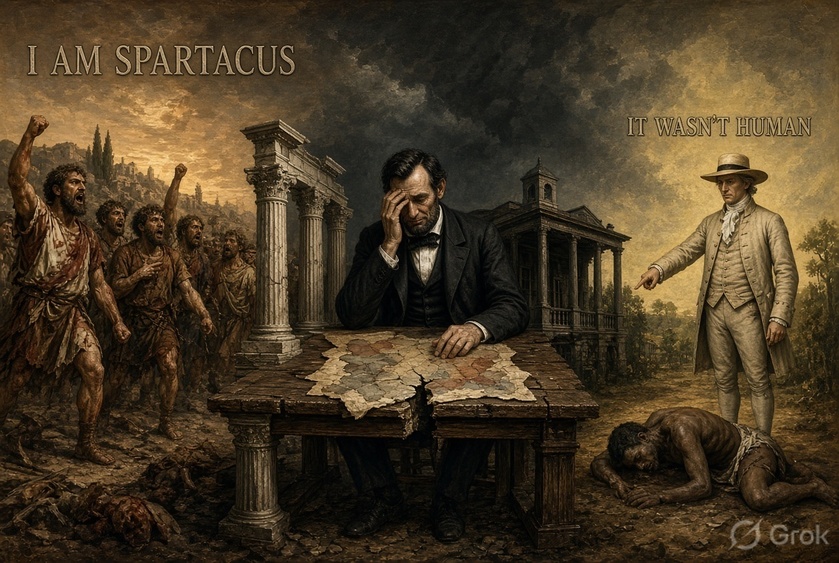
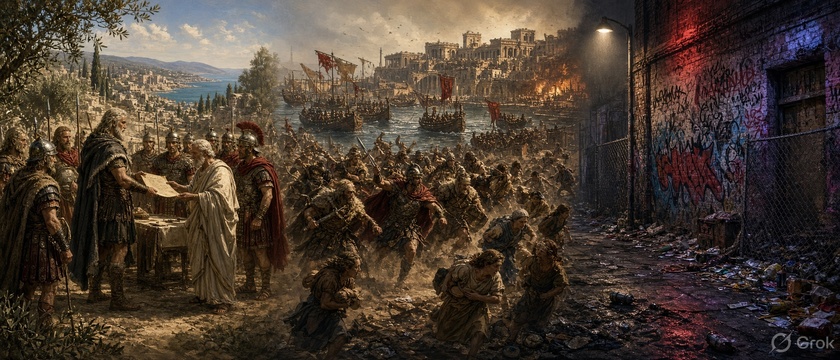
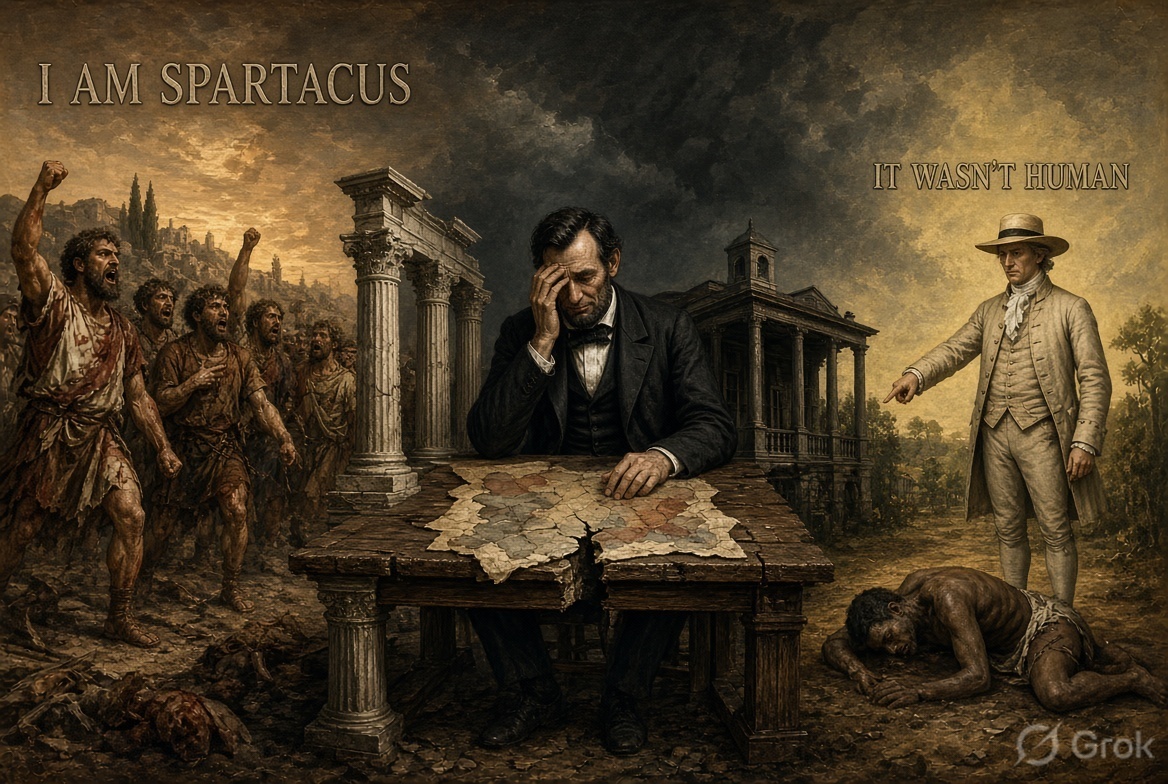
Used as a shield, “states’ rights” often means: do not look too closely at the practice. Slavery was defended that way. It was also a bad bargain next to open labour and capital. Rome, for all its cruelty, still treated bondage as a legal condition many people passed through. After Spartacus was destroyed in 71 BC—legions in the field, then some six thousand crosses along the Appian Way—Rome did not slam the legal door. A slave remained a res under the master’s power, but the peculium let skilled and urban slaves handle money as if it were theirs and buy freedom. Formal manumission could make a libertus a citizen with duties to a patron. Race was not the test. A Greek tutor and a mine slave were both servi.
South Carolina was already a different machine in 1738. The 1712 code treated Negroes, Indians (except allied free Indians), mulattoes and mustizoes as “absolute slaves” and “chattels personal,” status following the mother, unfit for English common law. After the Stono Rebellion of 1739 the Negro Act of 1740 locked the system: no independent plots or hire, no assembly, no writing, no drums, manumission only by act of the legislature, any white man empowered to stop a Black person off the plantation, killing a slave reduced to a fine. That code, not the older one, ran to 1865.
Rome answered revolt with steel and left the statutes elastic. Carolina answered revolt with a statute and closed the exits. A century later the Supreme Court, in Dred Scott (1857), could not find a free man free because of race. That is the fruit of a closed racial caste, not of “states’ rights” as a neutral principle.
The Temple in Jerusalem was destroyed in AD 70 after a Jewish revolt against Rome. It was not sacked because Jews were “one in six” in the city of Rome. Mixing that episode with Carolina’s Black majority only muddies the point. The point is simpler. When “states’ rights” means a state may keep an unverifiable roll, or once meant a state may keep a man as a chattel with no path out, the phrase is doing offensive work. Government that asks for proof of citizenship is not inventing a new tyranny. It is doing the duty the older slogan was written to dodge.
Rome and Carolina shared the word slave. They did not share the method. Citizenship and the ballot are the same kind of line. Either the line is real, or “rights” is only a costume for the practice you refuse to defend in plain speech.