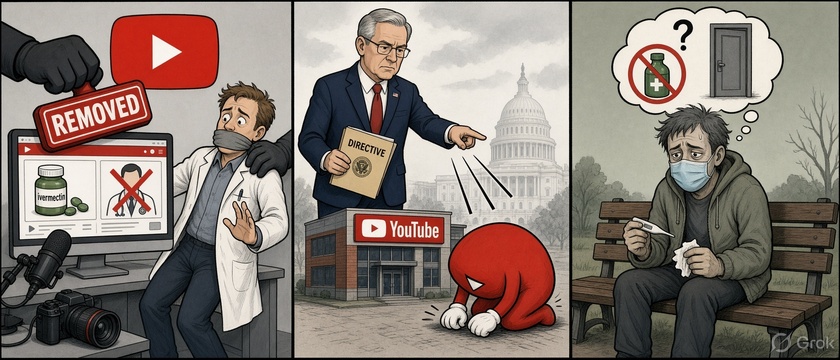
Allison Inquiry shows where questions need to be asked regarding Covid 19 response.
The questions Ottawa still will not sit for
The Allison Inquiry was not a court and did not pretend to be one. Dean Allison and Shawn Buckley said so every day: they were there to listen, not to find facts. Health Canada did not come. That absence is the story as much as anything said under oath.
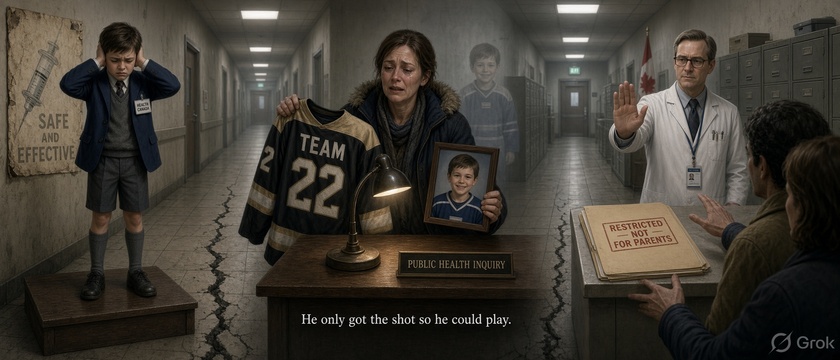
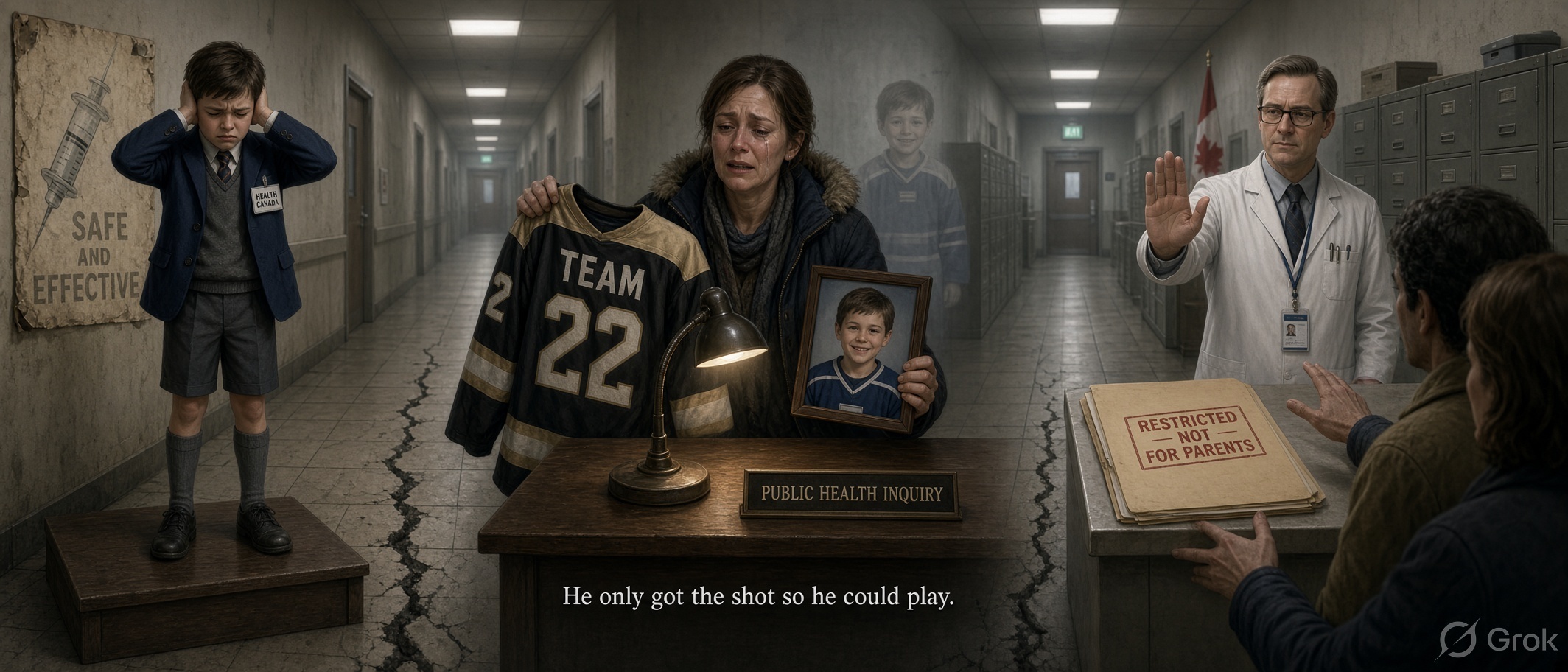
What filled the room for four days on Parliament Hill was a single, stubborn pattern. The people who testified were not the cartoon “anti-vaxxer.” They were paramedics, soldiers, parents who needed a shot so a boy could play hockey, workers who took the product because the state and the employer said it was safe, effective, and necessary. They used the same phrase, again and again: they took one for the team.
Then the team was gone.
What they described is not exotic. Heart injury. Clots. Nerves on fire. A face that would not move. A young man dead on the floor thirty-three days after a first dose. Files rewritten so the word “vaccine” never appears. Serving members told they cannot speak. Families of the dead told the complete medical record is not theirs to have. Doctors who noticed a cluster found the regulator at their door instead of a research desk. A compensation scheme that exists in press releases and starves in practice: thousands of claims, a few hundred cheques, years of appeals, letters that do not even carry the claimant’s name.
That is the shared account of the people who sat in that room. It is not Health Canada’s account. Those two accounts have not been put in the same room on purpose.
The experts who were invited went further — persistence of product in the body, surveillance that cannot see what it is not allowed to count, a product they say should not still be on offer to healthy children while the injured wait. Patients mostly did not come for that argument. They came because a neurologist finally wrote the words no emergency department would, or because no one would write them at all.
Jamie Daniel’s testimony is the part that should end the pretence that this is only a quarrel about “misinformation.” She was an advanced-care paramedic and a young mother. She asked for help in hospital. What arrived was a psychologist talking about medical assistance in dying. She was not suicidal. She was in pain and she wanted treatment. If that is what “care” looks like when the diagnosis is politically expensive, then the question is no longer medical. It is civic.
Canada has a vocabulary for almost everything except this. We can debate carbon, housing, and foreign interference until the lights go out. We cannot, officially, sit still while a citizen says: I did what you asked, I am not the person I was, and the program that was supposed to catch me did not. More than thirty democracies have held some form of pandemic inquiry. Canada’s federal government has not. An MP had to rent the shadow of Parliament and fill it with volunteers.
An unofficial hearing cannot settle causation. It can do something regulators have refused to do: put the injured in the record without first requiring them to apologise for existing. Timing is not proof. Dismissal is not proof either. Both have to be tested in public, with Health Canada in the chair, with the CAF records on the table, with the compensation contractor’s books open, and with doctors free to say what they see without a college file opening behind them.
Those are not radical demands. They are the minimum a country owes people it conscripted into a medical campaign by mandate, by employment, and by moral pressure.
The alternative on offer, if we are honest about Daniel’s hospital room, is quieter and uglier: do not name the injury, do not fund the research, do not fix the scheme — and if the pain does not stop, discuss death as a service. That is not compassion. It is administrative convenience wearing a soft voice.
Allison said the four days shattered a ceiling on silence. Ceilings grow back if nobody walks through the hole. The questions are now on the record. They are ordinary questions. What happened to these people? Who decided not to look? Why does a “no-fault” program fault the claimant at every turn? Why were doctors punished for counting? Why was a mother in a pain crisis offered an exit instead of a diagnosis?
Answer them in a real inquiry, with the departments present, or admit that the policy is to stop asking. There is no third option that still deserves to be called a public health system.