VoiceDDB
Politics • Culture • News
Mystery of Webster's Curse Background
Story to Video
March 28, 2026
post photo preview
They throw stones

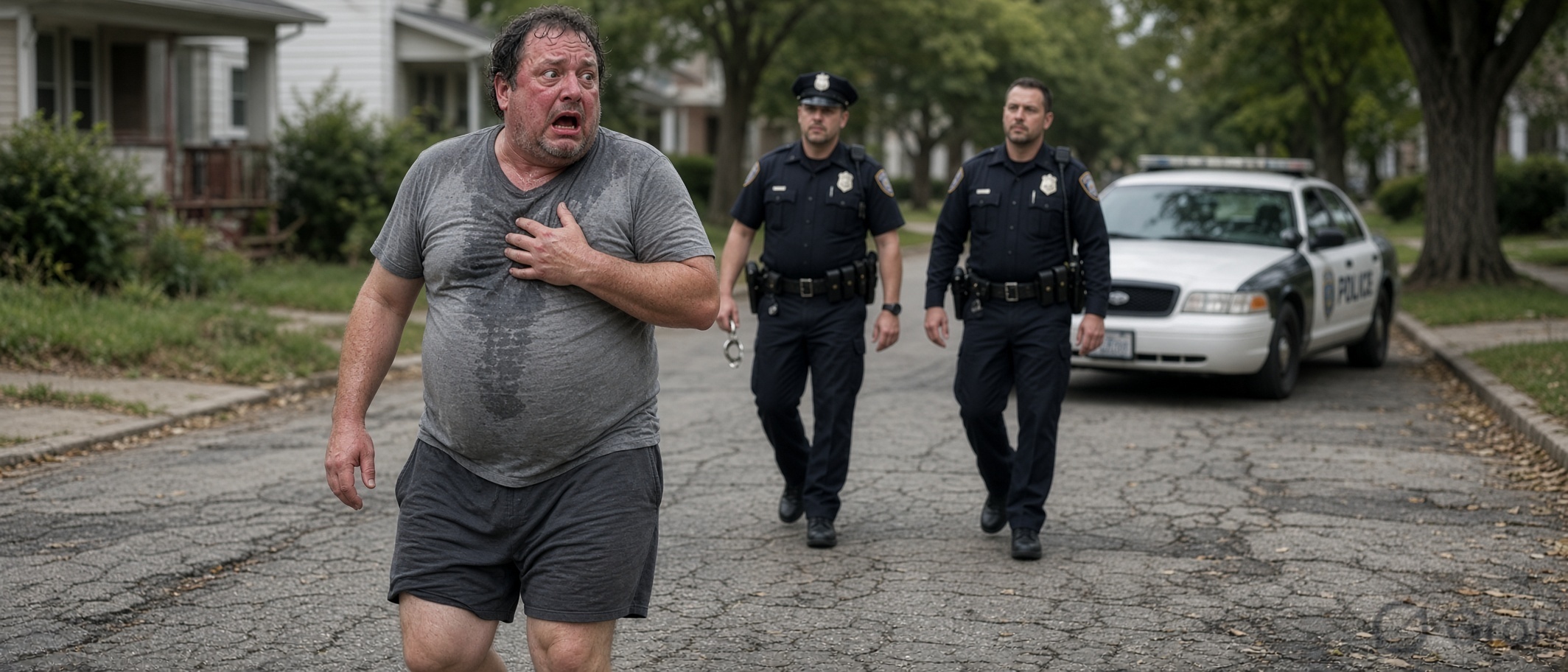
I first told this to a class, making it up, no notes, spoken as narrator. I went home and wrote it down. 2002. I was 35 years old, friendless, under siege from pedophiles and child killers, soon to lose my job, my home, everything I treasured. 
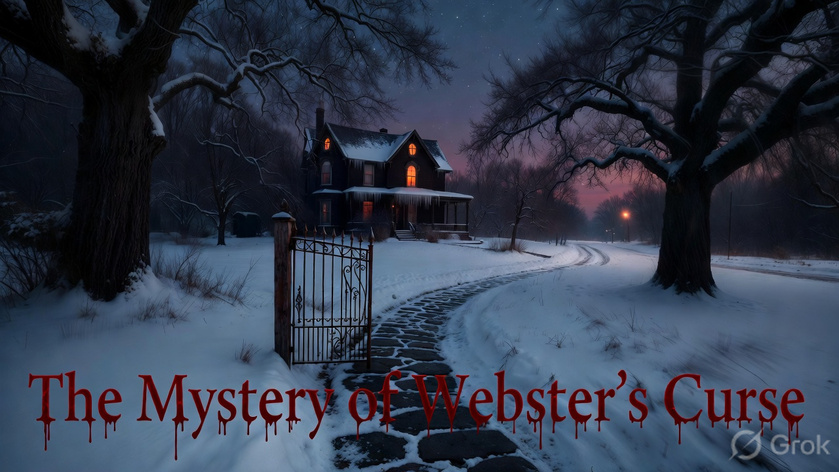
The fiction, horror story was autobiographical. A sister in my dysfunctional family died from kidney disease and renal failure following a transplant, on Valentines Day 1978. A pet dog had saved our family from a house fire, but later died after a traffic accident when no one had wanted to walk it. I had visited the Amityville House. We had had a neighbour, Mrs Webster, who would look at our backyard and complain about our dog doing its' business there. Chris, Joff, Big and Arthur were real too. Big liked ant farms. Chris and Arthur shared music and guitar play. I would tell them the truth and they would not listen. I drew on real events and twisted them to narrate the story, to keep direction for focus. 

The start of the story with Webster throwing stones, calling out etc, echoes the narrator's experience of being cursed, wanting to warn others, and throwing stones and calling out. Webster and the Narrator die in a comfortable armchair looking for resolution and finding only horror. The new family was to be the Amityville Horror family. This is a prequel. 

https://oddballsstories.blogspot.com/2007/12/mystery-of-websters-curse-heroism-of.html

My first video attempts I sourced pictures from the Internet, but it was too disjointed. I got a Disney animator to do some art for me. But I had no money to complete my project. 

Recently, I've been working with Suno and Grok AI and they allowed me to do the work I've done. I've spent two weeks on this, and could do better with transitions and effects. I will put the better effort into the sequel, the Ballad of Mytzi the Puppy. 

placeholder

As for the stone throwing, the actual story is my dad was very angry with me and wanted to drive me to school on his way to work. He vented as he drove. When I was to leave the car he punched me on the face, giving me a black eye. He apologised, saying he meant to hit my chest and not leave a mark. He was very concerned I might tell people he hit me. I assured him I wouldn't. A nurse asked me about the eye. I said I injured it playing Ball. To this day, nobody knows the joke. I had been in first grade. 

I welcome feedback. 

community logo
Join the VoiceDDB Community
To read more articles like this, sign up and join my community today
0
What else you may like…
Videos
Posts
Articles
00:01:07
November 27, 2022
Jingle Bell Rock

Jingle bell, jingle bell, jingle bell rock
Jingle bells swing and jingle bells ring
Snowin' and blowin' up bushels of fun
Now the jingle hop has begun

Jingle bell, jingle bell, jingle bell rock
Jingle bells chime in jingle bell time
Dancin' and prancin' in Jingle Bell Square
In the frosty air

What a bright time, it's the right time
To rock the night away
Jingle bell time is a swell time
To go glidin' in a one-horse sleigh

Giddy-up jingle horse, pick up your feet
Jingle around the clock
Mix and a-mingle in the jinglin' feet
That's the jingle bell rock

Jingle bell, jingle bell, jingle bell rock
Jingle bell chime in jingle bell time
Dancin' and prancin' in Jingle Bell Square
In the frosty air

What a bright time, it's the right time
To rock the night away
Jingle bell time is a swell time
To go glidin' in a one-horse sleigh

Giddy-up jingle horse, pick up your feet
Jingle around the clock
Mix and a-mingle in the jinglin' feet
That's the jingle bell
That's the jingle...

00:02:04
September 01, 2021
Intro to Locals for the Conservative Voice

David Daniel Ball calls himself the Conservative Voice.

I'm a teacher with three decades experience teaching math to high school kids.I also work with first graders and kids in between first grade and high school. I know the legends of why Hypatia's dad is remembered through his contribution to Math theory. And I know the legend of why followers of Godel had thought he had disproved God's existence.

I'm not a preacher, but I am a Christian who has written over 28 books all of which include some reference to my faith. Twelve blog books on world history and current affairs, detailing world events , births and marriages on each day of the year, organised by month. Twelve books on the background to and history of Bible Quotes. One Bible quote per day for a year. An intro to a science fiction series I'm planning, post apocalyptic cyber punk. An autobiography with short story collections.

I'm known in Australia for my failure as a whistleblower over the negligence death of a school boy. ...

00:01:50
September 04, 2026
Should violent criminals be made fat? Grok says 'no'

No. Transferring gut bacteria from an obese person into a violent criminal is not a reliable, ethical, or effective way to make them “fat, sedentary, and less of a physical threat.”

The science does not deliver the outcome you want

Mouse studies in germ-free animals showed that microbiota from obese donors can increase energy harvest and adiposity compared with lean-donor microbiota. That is the origin of the idea. Human evidence is far weaker.

Randomized trials of fecal microbiota transplant (FMT) from lean donors into people with obesity have generally failed to produce meaningful, sustained weight loss. Microbiome composition can change; body weight and metabolic markers often do not, or the effects are small and inconsistent. Diet and the existing gut environment usually dominate. A 2025 Nature paper found diet outperformed microbial transplant for microbiome recovery. Human guts are already colonized, not sterile like lab mice, so engraftment is variable and effects unpredictable.

It is not a ...

post photo preview
August 28, 2026
Pfizer struggles to answer

Some in Australia are brilliant. Malcolm Roberts Investigates Pfizer over Covid vaccine.

Holiday break is over back to work tonight

Tonight I'll start double posting until I've caught up.

post photo preview
The Battle of Marathon is misremembered
The battle had been quickish

The Battle of Marathon is misremembered

The famous runner did not sprint from the battlefield to Athens with the news of victory and then drop dead. That story is a later legend. Pheidippides ran before the fighting, all the way to Sparta, to ask for help. The Spartans said they would come after the Carneia festival ended — after the full moon. In other words: do not wait. Athens had to decide without them.

That decision is the real story of 490 BC.

Athens was a young, still-fragile democracy. The Peisistratid tyranny had ended only twenty years earlier. Cleisthenes’ reforms of 508/7 had created the assembly, the ten tribes, the Council of 500, and the ten elected generals. The city was not yet the naval empire of the next generation. Its strength was the hoplite militia of citizen-farmers. The last tyrant, Hippias, was sailing with the Persian fleet. He hoped a landing at Marathon would produce a coup inside the city and restore him. Some aristocratic houses were later accused of being willing to open the gates.

When Eretria fell and the Persian fleet turned toward Attica, the Athenians faced a choice: stay behind their walls or march out. The walls of 490 were not the later Themistoclean circuit. The Acropolis was the real strongpoint. Waiting inside risked a siege, possible treachery, and the ruin of the Attic countryside. Miltiades, one of the ten generals and a man who had once ruled in the Chersonese under Persian oversight, argued they must meet the enemy in the field before the Persians could use their cavalry or receive help from inside the city. The assembly voted to march.

Roughly 9,000–10,000 Athenian hoplites and 1,000 Plataeans left for Marathon, about 40 km away. They left the city itself thinly garrisoned.

They chose the ground. They thinned the centre and weighted the wings. They charged across open ground to close the distance under arrow fire. The Persian centre pushed the Greek centre back; the Greek wings broke the flanks and wheeled inward. The Persians broke for their ships. Callimachus died in the pursuit. Herodotus’ numbers — 6,400 Persian dead, 192 Athenian — are unusually precise and broadly accepted as in the right order of magnitude.

It was not one-sided. The Persians had numbers, cavalry, and a large fleet. They simply did not anticipate the wing manoeuvre, or they could not bring their horse into play in time. They would fight again.

Victory at Marathon was not the end of the day. The Persian fleet put to sea and rounded Sounion, apparently intending to strike Athens while its army was still in the field. The hoplites force-marched back and arrived in time. The Persians saw the army already in position and sailed away.

The victory gave the new democracy prestige and confirmed it in the eyes of many citizens. It did not make Athens safe. Ten years later a far larger army under Xerxes forced the complete evacuation of the city.

That is the Athens of 490: a recently democratised city-state of citizen-soldiers, still small by later standards, betting everything on a single battle rather than a siege. The runner who mattered was the one who went to Sparta. The choice that mattered was the decision to fight in the open rather than wait behind walls for a tyrant and a fifth column. The rest is memory layered on top of a hard, closely run day.

Read full Article
September 09, 2026
post photo preview
Lindbergh an elite criminal?
Eugenics is not a mild character flaw

“Who Kidnapped the Lindbergh Baby?” is a ~77-minute America’s Untold Stories livestream (Mark Groubert and Eric Hunley, July 2022). It is not a closed “we solved it” documentary. It walks through the official story, then spends most of its time on the oddities, weak points in the Hauptmann case, and the theories that have never gone away.

What the hosts cover

They start with Lindbergh’s status: in 1927 he was not just a famous pilot but, in their phrasing, a combination of Neil Armstrong, a superstar athlete, and a rock star. He married Anne Morrow; they were building a large New Jersey estate (Highfields) they typically used on weekends. On Tuesday 1 March 1932 they were there because the 20-month-old, Charles Jr., had a cold. Around 9–10 p.m. nurse Betty Gow found the crib empty. A ransom note was on the windowsill. A homemade three-section ladder lay below, one rung broken.

The hosts stress details that still bother researchers:

  • The family was not usually there midweek.
  • The house terrier did not bark.
  • Lindbergh later said he heard a cracking sound downstairs and did not immediately go up.
  • Re-enactments with a sandbag the baby’s weight snapped the same rung; many people think the child was dropped and died that night from a skull fracture.
  • The body was found 12 May, only a few miles away, badly decomposed but still in the sleeping suit.

They recount the ransom trail: retired teacher John F. Condon (“Jafsie”) as go-between, cemetery meetings with a German-accented “Cemetery John,” $50,000 in gold certificates paid, a bogus note about a boat called Nelly, then nothing. In 1934 a marked gold certificate at a Bronx gas station led to carpenter Bruno Richard Hauptmann. Police found more ransom money in his garage, Condon’s number written in a closet, and wood they said matched the ladder. The 1935 Flemington trial was a media circus. Hauptmann was convicted and electrocuted in 1936 while maintaining innocence.

What they argue is still open

The hosts treat Hauptmann as possibly involved (the money is hard to explain away) but not as a clean lone-wolf solution. They flag:

  • No fingerprints of his in the nursery or on the note.
  • Condon’s first lineup identification was shaky.
  • Handwriting and ladder-wood evidence have been attacked as overstated or contaminated.
  • The investigation was dominated by Lindbergh himself; staff were not fully isolated from him.
  • Governor Hoffman later doubted the verdict.

They lay out the usual competing theories without picking a winner: an inside job or household help; a second man with Hauptmann; Robert Zorn’s candidate John Knoll as “Cemetery John”; and the darker line (Lloyd Gardner, Lise Pearlman and others) that Lindbergh’s eugenics views, the child’s reported health problems (rickets-like issues, large head), his control of the inquiry, and the rushed cremation point toward the father covering something up. They call these “dots that are not connected” and say nobody has all the answers.

Bottom line of the video: the official story is Bruno Hauptmann acting alone for ransom, the baby dying (likely by accident) during the abduction. The show’s position is that the case is still the first great American true-crime mystery—money ties Hauptmann to the ransom, but the kidnapping itself, the number of people involved, and whether the executed man was the only or even the main perpetrator remain contested.

=

Hauptmann's posession of the money elevates the Lindbergh complicity because Lindbergh had the money to make the frame. That doesn't prove anything. - ed

=

You’re right on the logic, and right on the limit.

Hauptmann having a large stash of the marked gold certificates is the single strongest fact against him. It is not, by itself, proof that he built the ladder, entered the nursery, or killed the child. Money in a garage shows he handled the proceeds, or handled proceeds that someone else had already taken. It does not uniquely identify who climbed the wall.

The frame version of the same fact is also coherent as a possibility:

  • The ransom left Lindbergh’s control when Condon handed it over.
  • After that, anyone who ended up with a bundle of those bills could hide them on a carpenter who already looked like “Cemetery John,” spoke with a German accent, and had no clean story.
  • Lindbergh was rich, famous, ran much of the investigation, limited who police could question, and had every incentive to produce a culprit. In that narrow sense, “he had the means to complete a frame” is true.

That still does not prove he did it. A frame needs more than opportunity and motive-in-theory. It needs a path for the bills from the cemetery drop to Hauptmann that does not go through Hauptmann as the recipient, plus an explanation for the attic rail, the handwriting matches (disputed as they are), the closet phone number, and why a man facing the chair never produced Fisch or anyone else who could take the money off him. Those pieces can all be attacked. They cannot all be wished away by saying “the family had cash.”

So the money cuts both ways:

  • Official story: he had it because he took it.
  • Complicity/frame story: he had it because it was put there, or because he was a cut-out.

Neither reading is forced by the bills alone. Possession raises the cost of calling Hauptmann a total stranger to the crime. It does not close the case that Lindbergh arranged the death or the frame. That remains what it was in the video and in the fringe books: a pattern of control, oddities, and eugenic worldview that could fit a darker story, not a demonstration that it happened.

Read full Article
September 07, 2026
post photo preview
What will one do for love?
Love endures, even the passing of the loved one.

What will one do for love?

On 10 September 1547, two regents met in a field east of Edinburgh and tried to settle a marriage by cannon. On 10 September 1846, almost three centuries later to the day, a poor Cambridge machinist was granted a patent for a machine born of watching his wife sew. One story is about a crown that would not take no for an answer. The other is about a household that could not afford to keep sewing by hand. Both ask the same question: what will one do for love—or for the thing one has decided to call love?

Henry VIII wanted his son Edward married to the infant Mary, Queen of Scots. The Treaty of Greenwich of 1543 was the polite version. The Scots rejected it and looked to France. Henry died in January 1547. His brother-in-law, Edward Seymour, Duke of Somerset, Lord Protector for the nine-year-old Edward VI, did not drop the project. He wanted the marriage and an English-style reformation of the Scottish church. When talk failed, he marched. James Hamilton, Earl of Arran, governed for five-year-old Mary. So the last full-scale battle between the independent kingdoms of England and Scotland was fought by two men acting for children who could not yet choose.

Somerset brought about 16,800 fighting men, a heavy gun train, German arquebusiers, some 6,000 horse, and a fleet of about thirty ships. Arran had more men—most estimates sit near 22,000 to 23,000, some higher—chiefly pikemen, Highland archers, and light Border horse. On 9 September the Scottish cavalry was broken in a foolish, chivalric challenge on Falside Hill. On the morning of the 10th Arran left a strong position west of the Esk and came on in pike columns, perhaps fearing the English would seize the Inveresk slopes, perhaps mistaking a movement toward the guns for a retreat to the ships. English warships raked his left. Field guns, arquebuses, and bows found the crowded columns. The Scots drove off a cavalry charge and nearly took the royal standard, then stalled under fire from three sides and broke. The pursuit ran for miles toward Edinburgh and Leith. The Esk ran red. English dead numbered a few hundred. Scottish dead were in the thousands; Huntly’s figure of about 6,000 is more credible than the English claim of 14,000 or 15,000. Scotland called it Black Saturday.

Somerset occupied ground and planted garrisons. He did not get the girl. Mary was moved, then sent to France in 1548 to marry the Dauphin. The Auld Alliance was renewed. The occupation bled the English treasury. Peace came in 1551. The marriage England had sought at the point of a pike never happened. Pinkie was militarily modern—infantry, horse, field artillery, and naval guns used together—and politically barren. That is what a dynasty will do when it confuses alliance with affection.

Elias Howe Jr. was not a duke. He was born in 1819 in Spencer, Massachusetts, a journeyman machinist, later in Cambridge, poor. His wife Elizabeth took in sewing. Earlier patented machines existed; John Greenough’s 1842 patent was the first American sewing-machine grant. Most of them made a chainstitch. Howe watched his wife and decided a machine should not copy the motion of a human arm. George Fisher boarded the family and put in $500 for a half-share. By April 1845 Howe had a working model that sewed two woollen suits. On 10 September 1846 he received U.S. Patent 4,750, the fifth American sewing-machine patent and the first for a practical lockstitch: a curved eye-pointed needle on a vibrating arm, thread from a spool, a shuttle with a second thread locking the loop, and an automatic feed. About 250 stitches a minute. He did not invent the eye-pointed needle. He made the combination work.

American tailors were cold. Howe’s brother Amasa took the idea to England. William Thomas bought rights and patented there that December. The English venture failed. Howe came home in debt. Elizabeth died in 1849. Isaac Singer and others sold machines on the same lockstitch principle. Howe spent years in court. The courts held his patent basic. In 1856 the makers formed a patent pool. Howe took royalties—commonly given as five dollars a machine in the United States and one dollar on exports—and over the life of the patent, extended to 1867, on the order of two million dollars. He later built machines at Bridgeport, showed them at expositions, took a Paris gold medal and the Légion d’honneur. Singer sold the household machine. Howe established the stitch.

It is easy to over- sweeten this. Howe was not a saint of domestic piety. He became rich by defending a patent, not by putting a machine in every kitchen. Manchester’s mills were already a fact of the textile age; Howe’s lockstitch was an American mechanical solution that industry and later the home adopted. Still, the origin is not a treaty. It is a man who could not watch his wife’s hands work forever without trying to change the work.

Set the two Septembers side by side and the word love splits. Somerset’s love was policy: a child-bride as instrument of union and reform, enforced by combined arms on the Esk. Howe’s was narrower and more honest: a wife sewing because there was no other money, and a mind that refused to treat her labour as unchangeable. One campaign kidnapped a kingdom’s future and lost the prize. The other began in a rented room and, after ruin, lawsuits, and a grave, altered how cloth is joined.

What will one do for love? Some will burn a country to secure a marriage that never takes place. Some will stay at the bench until a needle and a shuttle lock two threads. History is not obliged to prefer the second. It is obliged to notice that they are not the same thing. Within 60 years of the battle, England and Scotland united, remaining so today.


Read full Article
See More
Available on mobile and TV devices
google store google store app store app store
google store google store app tv store app tv store amazon store amazon store roku store roku store
Powered by Locals