The Hollowing Out of Western Education: Spending More, Achieving Less
Across the West — from the United States to Australia, Canada, the United Kingdom, and much of Europe — educational standards are in unmistakable decline. International assessments like the OECD’s PISA tell a consistent story: mathematics, reading, and science scores have fallen in recent cycles, with sharp drops post-2018 exacerbated but not caused by the pandemic. In the US, PISA math scores lag behind leading Asian nations and even many peers. Australia has slipped in long-term trends despite occasional ranking fluctuations. Similar patterns hold in Canada, the UK, and broader Europe. We are witnessing not isolated failures but a systemic erosion of core competencies in the very societies that once led the world in innovation and human capital.
This decline coincides with a dramatic rise in spending. In the US, inflation-adjusted per-pupil K-12 expenditures have surged — estimates range from roughly 60-280% over decades depending on the starting point, with real increases continuing into the 2020s. Aggregate figures across Western nations show education budgets ballooning, often outpacing inflation and economic growth. Yet outcomes stagnate or worsen. Something is profoundly wrong when societies pour vastly more resources into schooling and receive diminishing returns.
We have seen false alarms before. The 1983 A Nation at Risk report sparked national panic over collapsing standards in math and science. But the early 1990s Sandia Report, a careful re-examination, revealed a classic case of Simpson’s Paradox: overall averages fell while nearly every subgroup — by race, income, prior achievement — held steady or improved. The apparent crisis stemmed from a broadening test-taking pool that included more diverse and previously underrepresented students.
Today’s decline is different. Demographic shifts play a role, as they always have in large education systems. But the data suggest genuine stagnation or regression even within subgroups, particularly at the lower and middle tiers. Aggregate spending has risen while foundational skills erode. This is no statistical mirage.
Focus on the bottom 30%. One under-examined but powerful diagnostic is the performance of the bottom 30% of students by achievement — not the very lowest 20%, but the broader band that includes many capable young people held back by circumstance, disengagement, or inadequate support. Reliable cross-national data here can be elusive, yet available evidence points to this group as a tremendous vector for improvement. When the bottom absorbs disproportionate resources without commensurate gains — through endless remediation, administrative bloat, or misallocated interventions — the entire system suffers. Education is a battle of finite resources and attention. Lifting the bottom 30% does not mean neglecting excellence; it means addressing root causes so that potential is unlocked rather than squandered.
Many in this band are not inherently low-ability but face barriers that responsive teaching could overcome. Meet their needs effectively, and spillover effects emerge: stronger classroom norms, peer learning through proximity to higher-achieving students, and a culture where effort is normalized. The capable rise, and those around them are lifted by aspiration and example.
We have forgotten a basic truth: students must work to achieve. No amount of rebranding failure as “different success” erases that reality. Young people know when adults lower the bar — when grades inflate, standards soften, and discomfort is pathologized. The result is not empowerment but demotivation and cynicism. Pretending there is no hierarchy of competence disheartens those who could strive and cheats everyone of honest feedback.
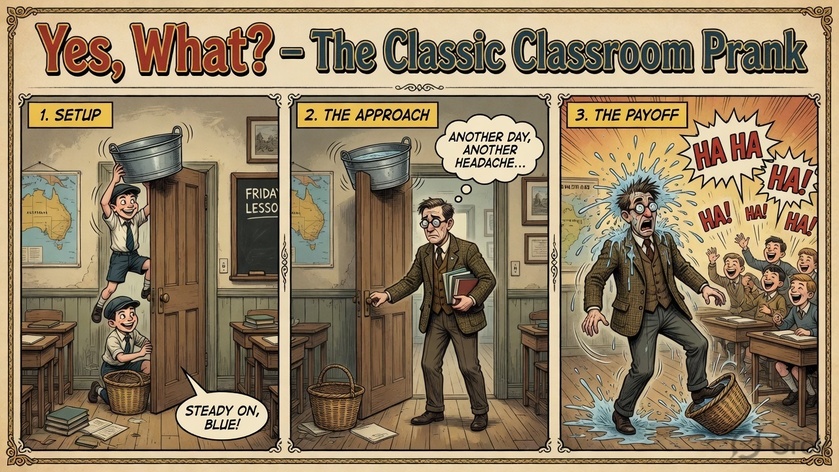
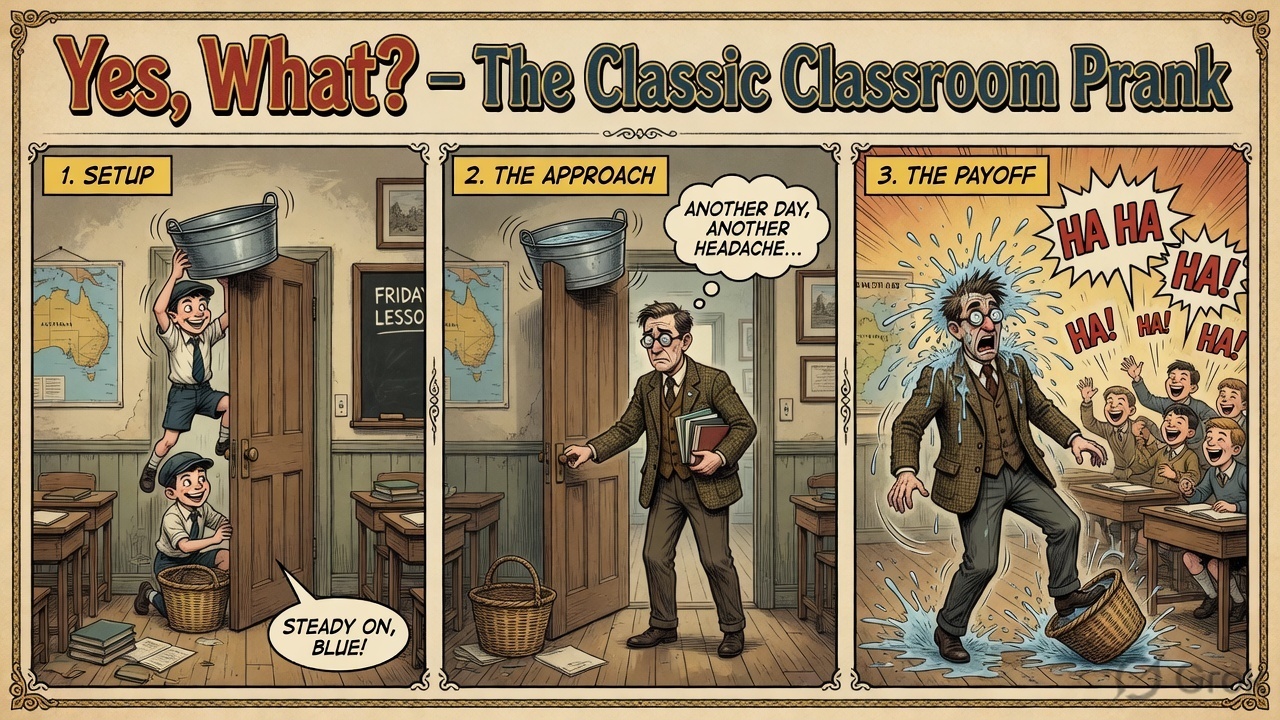
This tension between youthful energy and adult authority was captured brilliantly in the popular 1930s Australian radio comedy "Yes, What?" Set in the chaotic Fourth Form at fictional St. Percy’s school, the series lampooned student hijinks, excuses, and classroom antics. The title derives from the long-suffering headmaster Dr. Percy Pym’s exasperated response to the bumbling student Greenbottle’s vague “Yes” — “Yes, what?” The show thrived on the absurdity of distracted pupils and flustered teachers, drawing from vaudeville traditions familiar to Melbourne audiences.
The hijinks were not the education, but they served a purpose: they challenged authority to be responsive, clear, and effective. In our era of falling standards, we need that same spirit — not chaos for its own sake, but a willingness to confront complacency, demand effort, and restore rigor. Authority without responsiveness breeds resentment; responsiveness without authority breeds disorder.
Western education stands at a crossroads. We cannot spend our way out of this without reforming how resources are used — prioritizing core instruction, high expectations, and support that targets real barriers rather than bureaucratic expansion. The bottom 30% holds keys to broader renewal. Ignoring the need for work, hierarchy, and honest accountability only deepens the hollowing out. It is time to move beyond comforting illusions and recommit to what education has always been: hard, rewarding, and essential for civilizational strength. Our children — and our future — deserve nothing less.