VoiceDDB
Politics • Culture • News
An Early Evaluation of the US-Iran Islamabad Memorandum of Understanding
The Art of the Deal
June 26, 2026
post photo preview
The Art of the Deal: An Early Evaluation of the US-Iran Islamabad Memorandum of Understanding (As of June 26, 2026 — roughly nine days after signing)
The Islamabad MOU is a classic transactional framework agreement in the style of Donald Trump’s “Art of the Deal” approach: apply maximum pressure (military campaign, naval blockade, economic strain), create urgency and pain for the counterparty, then offer relief in exchange for immediate practical concessions plus a structured path to a bigger future deal. It is explicitly not a comprehensive peace treaty or a new JCPOA. It is a 60-day (extendable) circuit breaker designed to stop active fighting, reopen the Strait of Hormuz, deliver upfront economic breathing room to Iran, and set the table for negotiations on the harder issues.
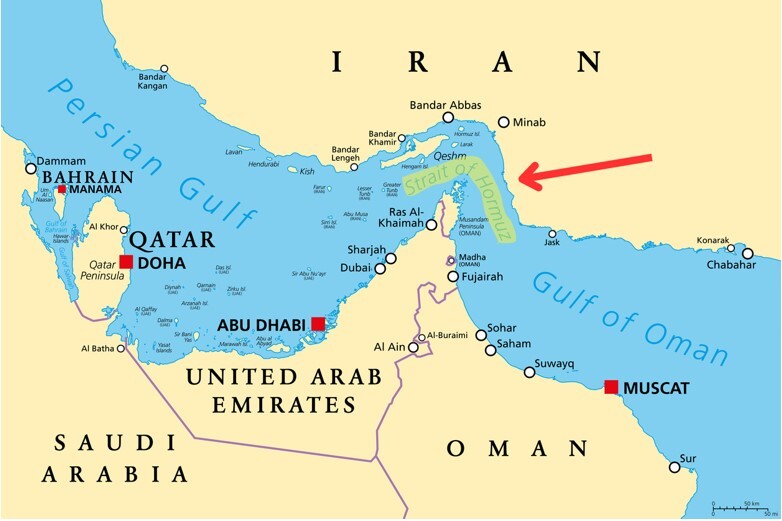
Spotlight on Global Straits: The Strait of Hormuz - Land, Sea, & AirShipping Services - InterlogUSA
Caption
Immediate Outcomes and Structure
The MOU delivered several concrete short-term results:
  • Formal ceasefire declaration across all fronts, including Lebanon.
  • US began lifting the naval blockade; Iran committed to facilitating commercial shipping through the Strait of Hormuz (initially toll-free for 60 days, with demining and dialogue on long-term administration involving Oman and Gulf states).
  • Immediate US Treasury waivers for Iranian oil exports and associated services.
  • Commitment to make frozen Iranian assets usable and to develop a ≥$300 billion reconstruction plan (details in final deal).
  • 60-day clock for a “final deal” covering nuclear issues, sanctions termination schedule, monitoring mechanisms, and other outstanding matters, to be endorsed by a binding UNSC resolution.
Implementation has been partial and contested. Oil is flowing to a meaningful degree and traffic through Hormuz has increased (though still below pre-war levels). Early technical talks occurred in Switzerland. However, sequencing disputes have already emerged.
The Lebanon/Hezbollah Fracture Point
Paragraph 1 explicitly incorporates the Lebanon conflict at Iran’s insistence: immediate and permanent termination of military operations on all fronts, including in Lebanon, plus guarantees of Lebanese territorial integrity and sovereignty. Israel is not a signatory.
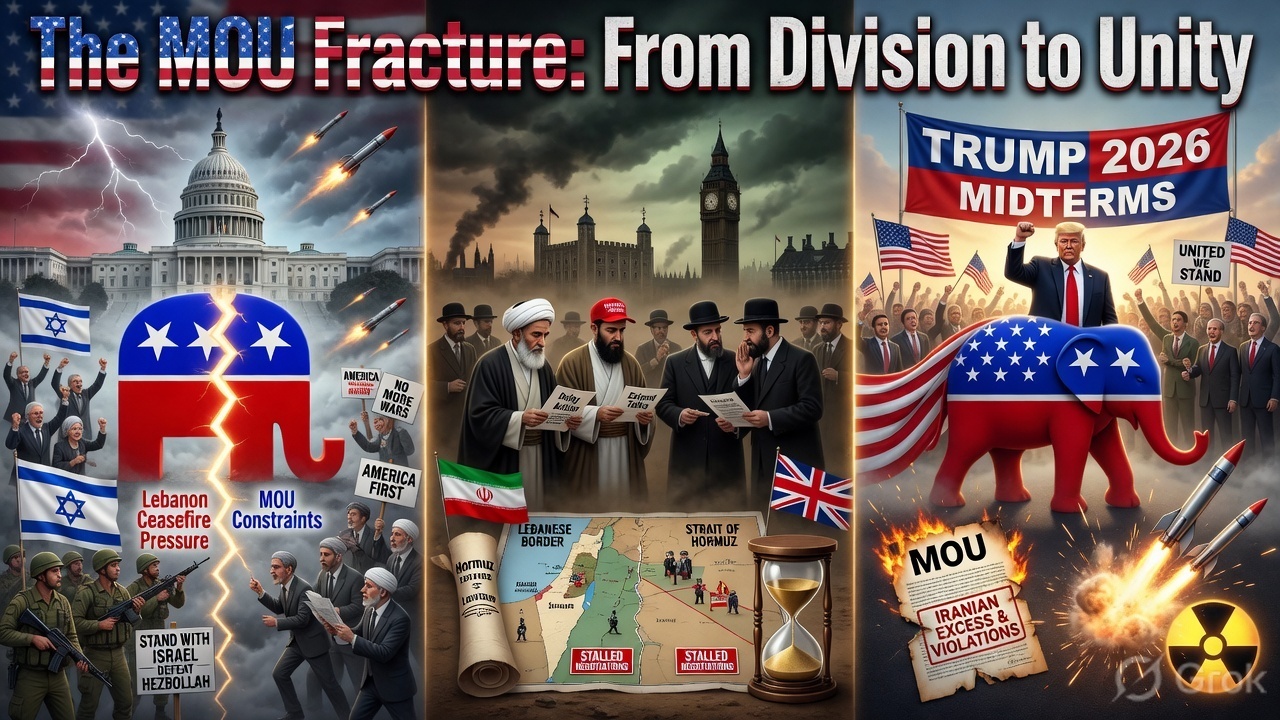
This creates an inherent asymmetry. Iran treats Hezbollah as a core strategic asset and forward deterrent. The regime’s foreign policy — support for the “Axis of Resistance,” funding and arming proxies, and eliminationist rhetoric toward Israel (“Death to Israel” chants and statements from senior figures) — has long operated as a form of state-directed asymmetric warfare. The MOU effectively gives Iran a mechanism to demand US pressure on Israel to scale back or withdraw from southern Lebanon while Hezbollah continues attacks or rebuilds.
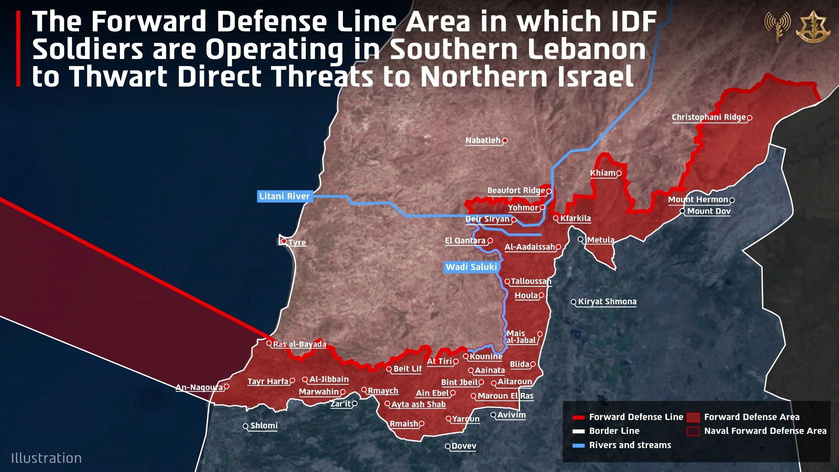
Israeli military publishes map of south Lebanon territory under its control| Reuters
Caption
Post-signing developments confirm the tension:
  • Fighting in Lebanon continued or resumed in places even after a fragile June 19 ceasefire between Israel and Hezbollah.
  • A new “deconfliction cell” (US, Iran, Qatar, Lebanon, Pakistan) was established that excludes Israel and appears to replace or weaken previous mechanisms that allowed Israel to respond to Hezbollah violations.
  • Iran has used (or threatened) Strait of Hormuz issues and sequencing arguments to push for full Israeli withdrawal and Lebanese territorial restoration before deeper nuclear talks.
  • Israel has maintained operations in a forward defense/buffer zone in southern Lebanon and insists on self-defense rights. Netanyahu and senior ministers have made clear they are not bound by the MOU.
This is a genuine fracture point for the MOU. It risks turning the agreement into a tool that constrains Israeli action against an Iranian proxy while giving Iran leverage to portray itself as defender of Lebanese sovereignty. It also directly feeds into broader regional dynamics where Iran seeks to maintain proxy influence even after significant degradation of Hezbollah in prior fighting.
Iranian Regime Behavior and Compliance So Far
Early signals show classic hedging:
  • Sequencing games — Iran is insisting that US/Israeli compliance on Lebanon ceasefire, economic relief, and Hormuz must come first before serious nuclear concessions. This matches long-standing Iranian negotiating tactics of maximizing upfront gains while minimizing verifiable limits on its nuclear program and proxy network.
  • Hormuz — Initial cooperation mixed with threats and claims of closure tied to Lebanon fighting; attempts to introduce fees or control beyond the 60-day toll-free window.
  • Nuclear — Status quo maintained during talks. No major new concessions reported; focus remains on down-blending stockpiles under IAEA (minimum methodology) with broader enrichment and needs deferred to final deal.
The regime (Supreme Leader + IRGC power center, with a reformist-leaning president in a limited role) has strong incentives to delay or dilute the final deal. Prolonging talks keeps pressure on the US politically, sustains some economic relief, and allows time to rebuild proxy capabilities and test enforcement. Whether the clerical/revolutionary establishment (“Mullahs” in common shorthand, though power is more IRGC-clerical hybrid) will ultimately accept meaningful constraints on nuclear breakout capacity, missiles, or proxy funding remains the central open question. History suggests skepticism is warranted.
Iranian Population and Domestic Context
Iranian society shows deep fatigue and discontent with the regime after years of economic mismanagement, repression, and costly foreign adventures. Protests (notably 2022) were primarily anti-regime. War casualties added to the toll (thousands killed, including civilians). Claims of ~40,000 deaths likely aggregate war deaths plus protest suppression figures across years; exact numbers are disputed but the human and economic cost to ordinary Iranians is real and significant.
Some segments may view negotiations after heavy losses as weakness or betrayal by the regime. Others may see any relief from sanctions and blockade as necessary breathing room. The regime’s legitimacy is low; it rules through coercion and patronage more than broad popular consent. A sudden collapse would create a dangerous vacuum — history (Iraq 2003, Libya 2011) shows power vacuums in the region are often filled by militias, extremists, or renewed authoritarianism rather than stable democracy. The organized opposition (including MEK) exists but has limited domestic reach and its own controversies.
US Domestic Politics and GOP Fractures
The MOU has exposed and widened real divisions within the Republican Party:
  • Hawkish/pro-Israel wing — Strong criticism of concessions (oil waivers, asset access, Lebanon constraints, deferred nuclear limits). Some called it “ill-advised” or worse; concerns about forcing Israel to stand down while Hezbollah remains a threat.
  • America First wing — More supportive or defensive, viewing it as ending a costly war without US ground troops, achieving de-escalation and oil flow, and avoiding endless entanglement. VP Vance’s defense of the deal and rebuke of Israeli critics drew pushback, highlighting the split.
Midterm risks exist if the deal is seen as weak on core threats or if economic effects linger. Jewish Republican donors and some pro-Israel groups have expressed disappointment. This is not total fracture yet, but the MOU acts as a stress test for coalition unity.
European Angles (London, Paris, etc.)
European powers have historically favored diplomacy with Iran (JCPOA roots) and strongly prefer stable energy markets. Relief at Hormuz reopening and reduced risk of wider war is genuine. Skepticism about enforcement and long-term Iranian intentions is also common. Any perception that Europe is content to let the US bear political costs while benefiting from oil stability is plausible but secondary to their core interest in avoiding energy shocks and escalation.
Historical Parallel and Strategic Reading
The 2005 Gaza disengagement analogy is apt and cautionary. Israel withdrew, left productive greenhouses and infrastructure for a potential Palestinian state, yet Hamas (after winning elections) seized control and turned the territory into a rocket base and tunnel network rather than a functioning polity. Bill Clinton and others had warned about governance readiness and partner reliability. Unilateral or lightly conditioned concessions to actors with rejectionist ideologies and weak accountability mechanisms often fail.
One plausible reading of Trump’s approach is exactly what you suggest: offer a manageable, testable framework with clear deliverables (ceasefire, Hormuz, initial relief) and a short clock. If Iran honors it and negotiates in good faith toward a final deal with real limits, progress is made. If Iran hedges, delays, violates, or extracts maximum concessions while advancing capabilities, the US can document bad faith, rally support for stronger measures, and say “we tried the diplomatic path after demonstrating costs.” This is consistent with transactional deal-making: test the counterparty under controlled conditions.
Early Verdict
The MOU has succeeded as a short-term circuit breaker. It stopped active large-scale fighting, got oil moving again, and created a structured (if contested) process for further talks. That is a tangible achievement after a destructive conflict.
However, its structural weaknesses are already visible and serious:
  • Inclusion of Lebanon without Israel as a party or robust enforcement mechanism creates ongoing friction and gives Iran leverage over Israeli operations against its main proxy.
  • Nuclear, missile, and proxy issues are largely deferred with minimal upfront concessions from Iran.
  • Sequencing disputes and early hedging (Hormuz, Lebanon demands) suggest Iran is playing for time and maximum gain.
  • GOP divisions and Israeli frustration add domestic and allied stress.
Whether Iran (the regime) will ultimately honor the spirit of the agreement or treat it as another interim arrangement to be gamed remains the decisive question. The “art of the deal” here will be judged not by the signing ceremony but by what happens in the next 60 days (or extensions) — and by whether the final product imposes verifiable, lasting constraints or merely postpones the core conflicts.
This is still extremely early. Implementation is fluid, talks are nascent, and enforcement mechanisms are untested. The coming weeks will reveal whether this framework leads to a more stable equilibrium or becomes another chapter in a long pattern of Iranian delay and extraction.
community logo
Join the VoiceDDB Community
To read more articles like this, sign up and join my community today
0
What else you may like…
Videos
Posts
Articles
00:01:07
November 27, 2022
Jingle Bell Rock

Jingle bell, jingle bell, jingle bell rock
Jingle bells swing and jingle bells ring
Snowin' and blowin' up bushels of fun
Now the jingle hop has begun

Jingle bell, jingle bell, jingle bell rock
Jingle bells chime in jingle bell time
Dancin' and prancin' in Jingle Bell Square
In the frosty air

What a bright time, it's the right time
To rock the night away
Jingle bell time is a swell time
To go glidin' in a one-horse sleigh

Giddy-up jingle horse, pick up your feet
Jingle around the clock
Mix and a-mingle in the jinglin' feet
That's the jingle bell rock

Jingle bell, jingle bell, jingle bell rock
Jingle bell chime in jingle bell time
Dancin' and prancin' in Jingle Bell Square
In the frosty air

What a bright time, it's the right time
To rock the night away
Jingle bell time is a swell time
To go glidin' in a one-horse sleigh

Giddy-up jingle horse, pick up your feet
Jingle around the clock
Mix and a-mingle in the jinglin' feet
That's the jingle bell
That's the jingle...

00:02:04
September 01, 2021
Intro to Locals for the Conservative Voice

David Daniel Ball calls himself the Conservative Voice.

I'm a teacher with three decades experience teaching math to high school kids.I also work with first graders and kids in between first grade and high school. I know the legends of why Hypatia's dad is remembered through his contribution to Math theory. And I know the legend of why followers of Godel had thought he had disproved God's existence.

I'm not a preacher, but I am a Christian who has written over 28 books all of which include some reference to my faith. Twelve blog books on world history and current affairs, detailing world events , births and marriages on each day of the year, organised by month. Twelve books on the background to and history of Bible Quotes. One Bible quote per day for a year. An intro to a science fiction series I'm planning, post apocalyptic cyber punk. An autobiography with short story collections.

I'm known in Australia for my failure as a whistleblower over the negligence death of a school boy. ...

00:01:50
Holiday break is over back to work tonight

Tonight I'll start double posting until I've caught up.

Chinese Space Bio Labs

While Elon Musk is busy landing reusable rockets and building robot swarms on Earth, the CCP has gone full 'Musk but make it bioweapons': they're launching fleets of Starship-inspired rockets crewed by copycat Optimus robots, blasting 'Fau Chi' biolabs straight into Low Earth Orbit.

These gleaming orbital stations, proudly emblazoned with the Chinese characters 福奇 (Fú Qí — sounding suspiciously like 'Fau Chi'), are officially designated as The Science™ Research Facilities. Perfect for safe, ethical gain-of-function experiments on exciting new pathogens like TDS (Trump Derangement Syndrome), 'Last Millennia' nostalgia plagues, and the deadly 'We Are Living in 2026' variant.

The endgame? A billion trusting parents worldwide voluntarily neutering their own children on expert 'Fau Chi' advice from the heavens — because nothing says 'public health' like taking guidance from a floating Chinese biolab with reusable re-entry capabilities.

post photo preview
Editorial from 2018 for June 9th

Don't give up on hope. Western Civilisation is on the nose of universities in Australia. Sydney University collapsed in 1990, and her upper executive got replaced by ALP managerialists as Keating fought a culture war which the Liberal Party have not effectively engaged. Dame Kramer had been made Chancellor, but the Chancellor's position is not executive at Sydney University. Kramer fought effectively for Western Values, but the University, now, is as partisan left as the ABC is now. Kramer had been a powerful presence in charge of the ABC too. 

In 1990, Sydney University lost her Chancellor and Vice Chancellor. The Chancellor, Hermann David Black, died after a long illness. James Anthony Rowland, a former governor of NSW took the chancellor's position for a few years, before passing it to Kramer in 1991. She held on to 2001. From 1981 to 1990, John Manning Ward was the executive head of Sydney University as Vice Chancellor. He had been writing a trilogy on Australian conservative leaders ...

post photo preview
post photo preview
The World Runs on Forgiveness and Grace
When Does Authority and Accountability Coincide?

When Does Authority and Accountability Coincide? The World Runs on Forgiveness and Grace

Every new job I’ve undertaken felt like reinventing the wheel. There was no institutional support, no handed-down wisdom. I had to teach myself competence—and then excellence—in dishwashing, cooking, and teaching. People had performed these tasks for generations, yet it seemed I was the first. Later, when training others, I watched them pour their energy into “fun” activities instead of the paid work at hand. Nothing seemed to work. Systems failed. Efforts collapsed.

And yet, each day the world grows richer. Healthcare advances. Innovation marches forward. How can this be, when so much falters? I believe it is God’s grace. People fail, but by grace they persevere—and sometimes succeed in unexpected ways.

This divine grace stands in stark contrast to the failures of earthly authority. Consider the United Nations, which appears to enable terror against Israel through indoctrination in Gazan schools. Children are tasked with role-playing the killing of Jews. Communities celebrate atrocities. Aid is diverted to weapons and tunnels. Christians fleeing Islamic nations face death upon return from refugee camps, while repatriation policies differ sharply depending on the context. Terrorism often masquerades as secular idealism but reveals itself as mere brutality. Civilised societies have rarely tolerated such patterns for long.

We see forgiveness and redemption breaking through even the darkest tragedies. In one powerful case, an abortion survivor—left for dead in a hospital after a late-term procedure around eight months gestation—tracked down her mother (then 19) and grandmother (a nurse who had pressured the decision). Raised in foster care, she chose to forgive them both. What a testament to grace emerging from horror.

Authority without accountability breeds further tragedy. The architects of the COVID response and controversies surrounding the 2020 elections have connections that, while disputed, demand scrutiny. A practical step forward is passing the SAVE Act, which would safeguard voter eligibility by requiring proof of U.S. citizenship. Tragically, actor Sam Neill, who had been in cancer remission earlier this year, recently passed away. He was vaccinated against COVID.

Meanwhile, U.S. Democrats’ apparent support for Iran’s mullahs over the freedom of the Iranian people creates a clear messaging problem ahead of the midterms. When does authority align with justice? Too often, power operates without consequence, while ordinary people bear the cost.

Yet grace persists. It lifts us beyond systemic failure. It calls us to forgive where possible, demand accountability where necessary, and trust that perseverance under God’s mercy can turn even profound brokenness toward something better. The world improves not because our institutions are flawless, but because grace fills the gaps where human effort falls short.

Read full Article
post photo preview
Why I Am Translating Fairytales
into Warlpiri, Arrernte, Pitjantjatjara, Gamilaraay/Yuwaalaraay, Noongar, Warlmanpa, Warumungu, Alyawarr, Tiwi, and Yolngu Matha

Editorial: Why I Am Translating Fairytales into Warlpiri, Arrernte, Pitjantjatjara, Gamilaraay/Yuwaalaraay, Noongar, Warlmanpa, Warumungu, Alyawarr, Tiwi, and Yolngu Matha

I am a simple maths teacher with a hobby of making videos. I came to my central Australian workplace with a deep thirst to learn about the people whose land I now share. The communities here are warm, friendly, and generous with their time and smiles. Yet the deeper background — beyond dry history books — can be hard to access. I wanted to understand the habits, myths, and stories that define people as they choose to project themselves to their children and the world.

What I quickly learned is respect for boundaries. These are living cultures with sacred stories meant for the edification of their own young people, not for casual outsider curiosity. I will not profane what is not mine to share. Instead, I take well-known fairytales from the European tradition — stories like The Frog Prince, Cinderella, or even Bambi (which isn’t a classic fairytale but fits the spirit) — and adapt them thoughtfully into local linguistic and cultural contexts.

This project celebrates and popularises Indigenous languages and ways of seeing the world without crossing sacred lines. It satisfies my own curiosity in a constructive way while creating resources that communities might enjoy. The result so far includes the book Bambi of the Jukurrpa, along with videos, folk songs, and plans for simple class plays for Years 2–3 students.

My Method

I began by listing fifty popular fairytales. For each language — Warlpiri, Arrernte, Pitjantjatjara, Gamilaraay/Yuwaalaraay, Noongar, Warlmanpa, Warumungu, Alyawarr, Tiwi, and Yolngu Matha — I transliterate and adapt a story. Each language brings its own flavour: desert logics differ from coastal ones, and kinship rules, Country, and social norms shape the narrative.

Adaptation is never mechanical. Take The Frog Prince. In the European version, a kiss transforms the frog. In Warlpiri context, a suitor must earn acceptance through family, sharing food, and proper behaviour. That cultural shift changes the story’s arc, resolution, and moral weight. I document these challenges openly — the linguistic hurdles, the cultural sensitivities, the creative decisions. Then I create visual prompts for AI-generated imagery, produce a short video, compose a simple folk song in the language, and film another clip. Finally, I add a call to action so viewers, especially young ones, can engage with the tale.

The process is labour-intensive but deeply rewarding. It forces me to engage seriously with each language’s grammar, vocabulary, and worldview. These are languages with rich documentation — dictionaries, grammars, and community efforts — that make such work possible and respectful.

Addressing Criticism

Some people have told me they like the work. Children smile at the videos, and elders have offered quiet encouragement. But I also received an anonymous complaint suggesting I was chasing “vast wealth” through this hobby.

Let me be clear: yes, I hope the project grows and perhaps generates some income one day — not from exploitation, but from honest creative labour that might support more language resources, school materials, or even community video projects. Like many teachers in remote places, I invest my own time and resources because I believe in the value. Sharing stories across cultures, while keeping sacred things sacred, builds bridges. It helps outsiders like me learn properly and gives Indigenous kids fun, affirming content in their own languages.

I am not here to take. I am here to learn, contribute in my small way, and celebrate the living strength of these cultures. If my adaptations spark even one young person to feel pride in their language or prompt a conversation between generations, then the effort is worthwhile.

This is not about profit above all. It is about curiosity met with respect, and fairytales reborn in the red dust, the mangroves, and the songlines — where they can speak to new hearts without erasing the old ones.

David Daniel Ball

Read full Article
post photo preview
John Quincy Adams
The Great President Sabotaged by a Corrupt Opposition

John Quincy Adams: The Great President Sabotaged by a Corrupt Opposition

John Quincy Adams was one of the most prepared, intellectually formidable, and nationally minded men ever to occupy the White House. His single term is routinely dismissed as a failure of temperament or political skill. That verdict is too convenient. Adams was not defeated by his own limitations so much as by a determined, well-organized opposition that treated constitutional process as optional, used character assassination as strategy, and then wrote the history books. The real scandal of the 1820s was not a “corrupt bargain.” It was the successful effort to cripple a legitimate president and then blame him for the results.

The 1824 election produced no electoral majority. Andrew Jackson led in both popular and electoral votes, but the Constitution sent the decision to the House of Representatives. Henry Clay, Speaker of the House and a rival candidate, threw his support to Adams. Adams won on the first ballot. When Adams later named Clay Secretary of State—the traditional stepping-stone to the presidency—Jackson’s partisans invented the “corrupt bargain.” No hard evidence of a quid pro quo has ever surfaced. What existed was a perfectly legal exercise of the contingent election process and a logical appointment of the most experienced statesman available. That was enough. From the moment Adams took the oath, a permanent campaign of delegitimization began.

Adams entered office with a clear national program. He wanted federally supported internal improvements—roads, canals, and later railroads—to bind the sections together. He proposed a national university, a naval academy, an astronomical observatory, scientific surveys, and a more energetic federal role in economic development. He believed the Union required active government if it was to become a continental power rather than a collection of jealous localities. Much of this agenda was blocked or starved by a Congress increasingly dominated by Jacksonians and states’-rights men. Southern planters in particular recoiled from any expansion of federal power that might one day touch slavery. They dressed self-interest in the language of constitutional purity and equity. Adams’s program was labeled “overambitious.” In reality it was opposed because it threatened local power and sectional advantage.

Adams was no political innocent. He understood that he lacked the numbers and the popular machinery his opponents possessed. He refused, however, to descend into the patronage and party-building that Jackson’s men practiced with enthusiasm. He believed public office should be filled on merit and that a president should stand above faction. In the emerging age of mass parties and spoils, that principle left him isolated. His critics then and later called this political ineptitude. It was closer to principle colliding with a new style of politics that rewarded loyalty over competence.

Jackson’s own presidency revealed the difference. He arrived with the numbers Adams never had and with a disciplined party apparatus. He showed little interest in Adams’s program of national development. Instead he expanded executive power through the Bank War and Indian Removal while practicing rotation in office—the spoils system—on a new scale. Compromises were made, but the losers were often those without political muscle. Jackson’s administration was effective at accumulating and using power. It was not the administration Adams had tried to run, nor did it share Adams’s vision of what the federal government existed to accomplish.

The press of the day played its part. Partisan newspapers treated Adams with a hostility that prefigures modern media polarization. One side was portrayed as the people’s tribune; the other as elitist, corrupt, and illegitimate. Reputation was ruined by repetition more than by proof. Adams, characteristically, was harder on himself than most of his enemies. His diaries record frustration and self-reproach. He wanted to achieve more. That private severity has been taken as confirmation of public failure. It is better read as the honesty of a man who measured himself against high standards while others measured him by the success of their obstruction.

Posterity absorbed the Jacksonian narrative too readily. Adams’s presidency is remembered for what Congress prevented rather than for the coherence of the vision that was blocked. His later career in the House—fighting the gag rule, defending the Amistad captives, and speaking against the expansion of slavery—revealed the same moral seriousness that had marked his executive years. The man who was supposedly unfit for the presidency proved one of the most formidable legislators of his age.

Adams did not fail because his opponents were merely vigorous. He was hampered because a significant portion of the political class preferred to wreck a presidency rather than contest its ideas on the merits. The “corrupt bargain” charge was the original sin that justified every subsequent act of sabotage. When the opposition succeeded in painting Adams as inept and overreaching, it won the historical argument by force of repetition. The deeper truth is less flattering to the victors: a capable president with a serious national program was systematically undercut by men who had the numbers, the ruthlessness, and the willingness to treat constitutional process as a temporary inconvenience.

That pattern is not ancient history. It is a recurring temptation in democratic politics—the conversion of opposition into delegitimization, and the conversion of temporary majorities into permanent narrative control. John Quincy Adams paid the price in his own time. The country paid a longer one by absorbing a diminished view of what energetic, national-minded government might have looked like in the critical decades before the Civil War.

Read full Article
See More
Available on mobile and TV devices
google store google store app store app store
google store google store app tv store app tv store amazon store amazon store roku store roku store
Powered by Locals