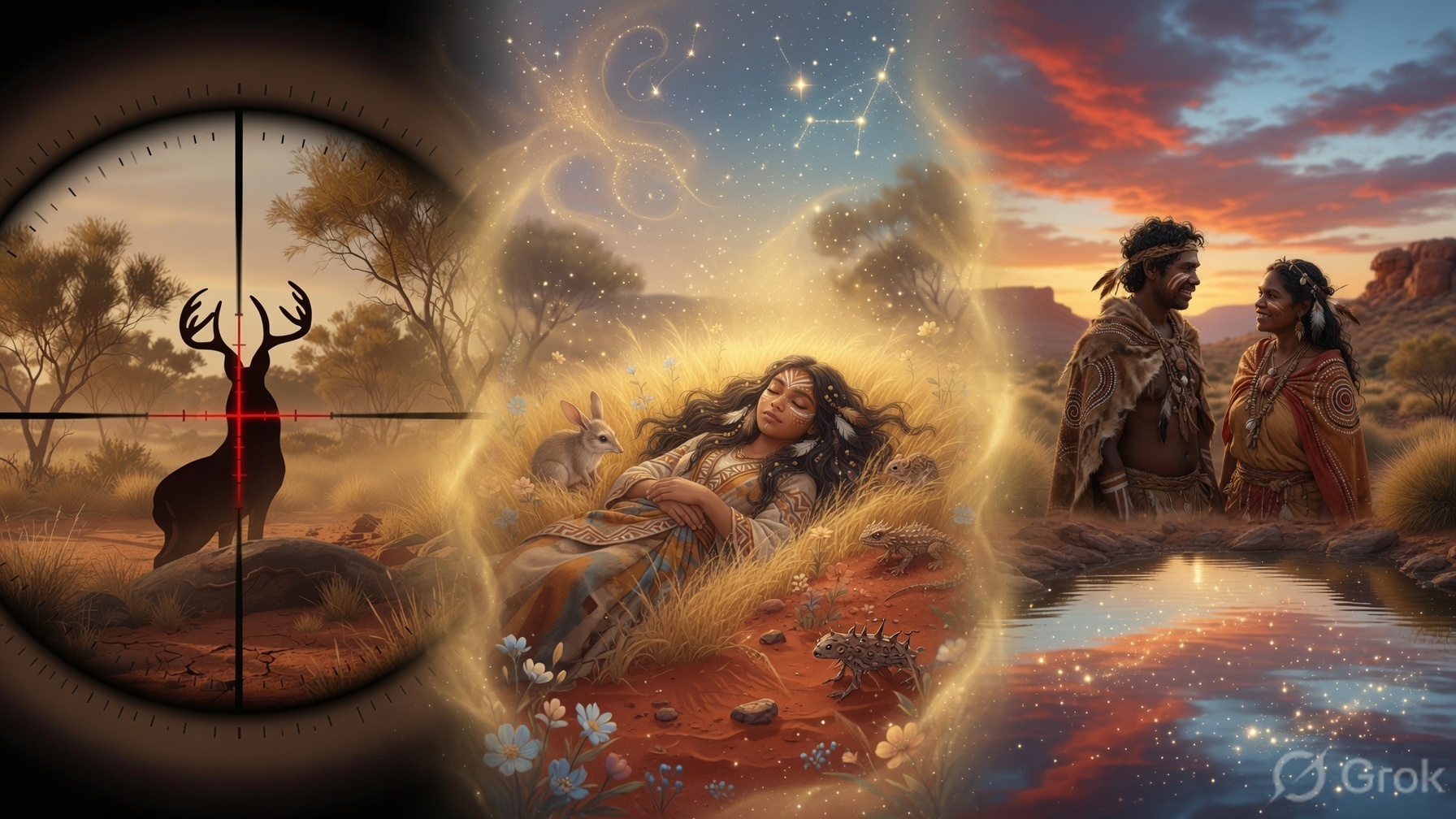
Editorial: Why I Am Translating Fairytales into Warlpiri, Arrernte, Pitjantjatjara, Gamilaraay/Yuwaalaraay, Noongar, Warlmanpa, Warumungu, Alyawarr, Tiwi, and Yolngu Matha
I am a simple maths teacher with a hobby of making videos. I came to my central Australian workplace with a deep thirst to learn about the people whose land I now share. The communities here are warm, friendly, and generous with their time and smiles. Yet the deeper background — beyond dry history books — can be hard to access. I wanted to understand the habits, myths, and stories that define people as they choose to project themselves to their children and the world.
What I quickly learned is respect for boundaries. These are living cultures with sacred stories meant for the edification of their own young people, not for casual outsider curiosity. I will not profane what is not mine to share. Instead, I take well-known fairytales from the European tradition — stories like The Frog Prince, Cinderella, or even Bambi (which isn’t a classic fairytale but fits the spirit) — and adapt them thoughtfully into local linguistic and cultural contexts.
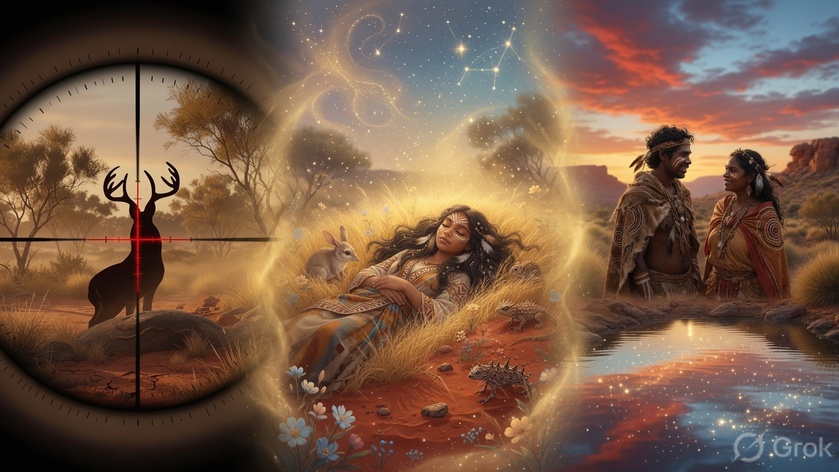
This project celebrates and popularises Indigenous languages and ways of seeing the world without crossing sacred lines. It satisfies my own curiosity in a constructive way while creating resources that communities might enjoy. The result so far includes the book Bambi of the Jukurrpa, along with videos, folk songs, and plans for simple class plays for Years 2–3 students.
My Method
I began by listing fifty popular fairytales. For each language — Warlpiri, Arrernte, Pitjantjatjara, Gamilaraay/Yuwaalaraay, Noongar, Warlmanpa, Warumungu, Alyawarr, Tiwi, and Yolngu Matha — I transliterate and adapt a story. Each language brings its own flavour: desert logics differ from coastal ones, and kinship rules, Country, and social norms shape the narrative.
Adaptation is never mechanical. Take The Frog Prince. In the European version, a kiss transforms the frog. In Warlpiri context, a suitor must earn acceptance through family, sharing food, and proper behaviour. That cultural shift changes the story’s arc, resolution, and moral weight. I document these challenges openly — the linguistic hurdles, the cultural sensitivities, the creative decisions. Then I create visual prompts for AI-generated imagery, produce a short video, compose a simple folk song in the language, and film another clip. Finally, I add a call to action so viewers, especially young ones, can engage with the tale.
The process is labour-intensive but deeply rewarding. It forces me to engage seriously with each language’s grammar, vocabulary, and worldview. These are languages with rich documentation — dictionaries, grammars, and community efforts — that make such work possible and respectful.
Addressing Criticism
Some people have told me they like the work. Children smile at the videos, and elders have offered quiet encouragement. But I also received an anonymous complaint suggesting I was chasing “vast wealth” through this hobby.
Let me be clear: yes, I hope the project grows and perhaps generates some income one day — not from exploitation, but from honest creative labour that might support more language resources, school materials, or even community video projects. Like many teachers in remote places, I invest my own time and resources because I believe in the value. Sharing stories across cultures, while keeping sacred things sacred, builds bridges. It helps outsiders like me learn properly and gives Indigenous kids fun, affirming content in their own languages.
I am not here to take. I am here to learn, contribute in my small way, and celebrate the living strength of these cultures. If my adaptations spark even one young person to feel pride in their language or prompt a conversation between generations, then the effort is worthwhile.
This is not about profit above all. It is about curiosity met with respect, and fairytales reborn in the red dust, the mangroves, and the songlines — where they can speak to new hearts without erasing the old ones.
David Daniel Ball