VoiceDDB
Politics • Culture • News
The World Runs on Forgiveness and Grace
When Does Authority and Accountability Coincide?
5 hours ago
post photo preview

When Does Authority and Accountability Coincide? The World Runs on Forgiveness and Grace

Every new job I’ve undertaken felt like reinventing the wheel. There was no institutional support, no handed-down wisdom. I had to teach myself competence—and then excellence—in dishwashing, cooking, and teaching. People had performed these tasks for generations, yet it seemed I was the first. Later, when training others, I watched them pour their energy into “fun” activities instead of the paid work at hand. Nothing seemed to work. Systems failed. Efforts collapsed.

And yet, each day the world grows richer. Healthcare advances. Innovation marches forward. How can this be, when so much falters? I believe it is God’s grace. People fail, but by grace they persevere—and sometimes succeed in unexpected ways.

This divine grace stands in stark contrast to the failures of earthly authority. Consider the United Nations, which appears to enable terror against Israel through indoctrination in Gazan schools. Children are tasked with role-playing the killing of Jews. Communities celebrate atrocities. Aid is diverted to weapons and tunnels. Christians fleeing Islamic nations face death upon return from refugee camps, while repatriation policies differ sharply depending on the context. Terrorism often masquerades as secular idealism but reveals itself as mere brutality. Civilised societies have rarely tolerated such patterns for long.

We see forgiveness and redemption breaking through even the darkest tragedies. In one powerful case, an abortion survivor—left for dead in a hospital after a late-term procedure around eight months gestation—tracked down her mother (then 19) and grandmother (a nurse who had pressured the decision). Raised in foster care, she chose to forgive them both. What a testament to grace emerging from horror.

Authority without accountability breeds further tragedy. The architects of the COVID response and controversies surrounding the 2020 elections have connections that, while disputed, demand scrutiny. A practical step forward is passing the SAVE Act, which would safeguard voter eligibility by requiring proof of U.S. citizenship. Tragically, actor Sam Neill, who had been in cancer remission earlier this year, recently passed away. He was vaccinated against COVID.

Meanwhile, U.S. Democrats’ apparent support for Iran’s mullahs over the freedom of the Iranian people creates a clear messaging problem ahead of the midterms. When does authority align with justice? Too often, power operates without consequence, while ordinary people bear the cost.

Yet grace persists. It lifts us beyond systemic failure. It calls us to forgive where possible, demand accountability where necessary, and trust that perseverance under God’s mercy can turn even profound brokenness toward something better. The world improves not because our institutions are flawless, but because grace fills the gaps where human effort falls short.


community logo
Join the VoiceDDB Community
To read more articles like this, sign up and join my community today
0
What else you may like…
Videos
Posts
Articles
00:01:07
November 27, 2022
Jingle Bell Rock

Jingle bell, jingle bell, jingle bell rock
Jingle bells swing and jingle bells ring
Snowin' and blowin' up bushels of fun
Now the jingle hop has begun

Jingle bell, jingle bell, jingle bell rock
Jingle bells chime in jingle bell time
Dancin' and prancin' in Jingle Bell Square
In the frosty air

What a bright time, it's the right time
To rock the night away
Jingle bell time is a swell time
To go glidin' in a one-horse sleigh

Giddy-up jingle horse, pick up your feet
Jingle around the clock
Mix and a-mingle in the jinglin' feet
That's the jingle bell rock

Jingle bell, jingle bell, jingle bell rock
Jingle bell chime in jingle bell time
Dancin' and prancin' in Jingle Bell Square
In the frosty air

What a bright time, it's the right time
To rock the night away
Jingle bell time is a swell time
To go glidin' in a one-horse sleigh

Giddy-up jingle horse, pick up your feet
Jingle around the clock
Mix and a-mingle in the jinglin' feet
That's the jingle bell
That's the jingle...

00:02:04
September 01, 2021
Intro to Locals for the Conservative Voice

David Daniel Ball calls himself the Conservative Voice.

I'm a teacher with three decades experience teaching math to high school kids.I also work with first graders and kids in between first grade and high school. I know the legends of why Hypatia's dad is remembered through his contribution to Math theory. And I know the legend of why followers of Godel had thought he had disproved God's existence.

I'm not a preacher, but I am a Christian who has written over 28 books all of which include some reference to my faith. Twelve blog books on world history and current affairs, detailing world events , births and marriages on each day of the year, organised by month. Twelve books on the background to and history of Bible Quotes. One Bible quote per day for a year. An intro to a science fiction series I'm planning, post apocalyptic cyber punk. An autobiography with short story collections.

I'm known in Australia for my failure as a whistleblower over the negligence death of a school boy. ...

00:01:50
Holiday break is over back to work tonight

Tonight I'll start double posting until I've caught up.

Chinese Space Bio Labs

While Elon Musk is busy landing reusable rockets and building robot swarms on Earth, the CCP has gone full 'Musk but make it bioweapons': they're launching fleets of Starship-inspired rockets crewed by copycat Optimus robots, blasting 'Fau Chi' biolabs straight into Low Earth Orbit.

These gleaming orbital stations, proudly emblazoned with the Chinese characters 福奇 (Fú Qí — sounding suspiciously like 'Fau Chi'), are officially designated as The Science™ Research Facilities. Perfect for safe, ethical gain-of-function experiments on exciting new pathogens like TDS (Trump Derangement Syndrome), 'Last Millennia' nostalgia plagues, and the deadly 'We Are Living in 2026' variant.

The endgame? A billion trusting parents worldwide voluntarily neutering their own children on expert 'Fau Chi' advice from the heavens — because nothing says 'public health' like taking guidance from a floating Chinese biolab with reusable re-entry capabilities.

post photo preview
Editorial from 2018 for June 9th

Don't give up on hope. Western Civilisation is on the nose of universities in Australia. Sydney University collapsed in 1990, and her upper executive got replaced by ALP managerialists as Keating fought a culture war which the Liberal Party have not effectively engaged. Dame Kramer had been made Chancellor, but the Chancellor's position is not executive at Sydney University. Kramer fought effectively for Western Values, but the University, now, is as partisan left as the ABC is now. Kramer had been a powerful presence in charge of the ABC too. 

In 1990, Sydney University lost her Chancellor and Vice Chancellor. The Chancellor, Hermann David Black, died after a long illness. James Anthony Rowland, a former governor of NSW took the chancellor's position for a few years, before passing it to Kramer in 1991. She held on to 2001. From 1981 to 1990, John Manning Ward was the executive head of Sydney University as Vice Chancellor. He had been writing a trilogy on Australian conservative leaders ...

post photo preview
post photo preview
Why I Am Translating Fairytales
into Warlpiri, Arrernte, Pitjantjatjara, Gamilaraay/Yuwaalaraay, Noongar, Warlmanpa, Warumungu, Alyawarr, Tiwi, and Yolngu Matha

Editorial: Why I Am Translating Fairytales into Warlpiri, Arrernte, Pitjantjatjara, Gamilaraay/Yuwaalaraay, Noongar, Warlmanpa, Warumungu, Alyawarr, Tiwi, and Yolngu Matha

I am a simple maths teacher with a hobby of making videos. I came to my central Australian workplace with a deep thirst to learn about the people whose land I now share. The communities here are warm, friendly, and generous with their time and smiles. Yet the deeper background — beyond dry history books — can be hard to access. I wanted to understand the habits, myths, and stories that define people as they choose to project themselves to their children and the world.

What I quickly learned is respect for boundaries. These are living cultures with sacred stories meant for the edification of their own young people, not for casual outsider curiosity. I will not profane what is not mine to share. Instead, I take well-known fairytales from the European tradition — stories like The Frog Prince, Cinderella, or even Bambi (which isn’t a classic fairytale but fits the spirit) — and adapt them thoughtfully into local linguistic and cultural contexts.

This project celebrates and popularises Indigenous languages and ways of seeing the world without crossing sacred lines. It satisfies my own curiosity in a constructive way while creating resources that communities might enjoy. The result so far includes the book Bambi of the Jukurrpa, along with videos, folk songs, and plans for simple class plays for Years 2–3 students.

My Method

I began by listing fifty popular fairytales. For each language — Warlpiri, Arrernte, Pitjantjatjara, Gamilaraay/Yuwaalaraay, Noongar, Warlmanpa, Warumungu, Alyawarr, Tiwi, and Yolngu Matha — I transliterate and adapt a story. Each language brings its own flavour: desert logics differ from coastal ones, and kinship rules, Country, and social norms shape the narrative.

Adaptation is never mechanical. Take The Frog Prince. In the European version, a kiss transforms the frog. In Warlpiri context, a suitor must earn acceptance through family, sharing food, and proper behaviour. That cultural shift changes the story’s arc, resolution, and moral weight. I document these challenges openly — the linguistic hurdles, the cultural sensitivities, the creative decisions. Then I create visual prompts for AI-generated imagery, produce a short video, compose a simple folk song in the language, and film another clip. Finally, I add a call to action so viewers, especially young ones, can engage with the tale.

The process is labour-intensive but deeply rewarding. It forces me to engage seriously with each language’s grammar, vocabulary, and worldview. These are languages with rich documentation — dictionaries, grammars, and community efforts — that make such work possible and respectful.

Addressing Criticism

Some people have told me they like the work. Children smile at the videos, and elders have offered quiet encouragement. But I also received an anonymous complaint suggesting I was chasing “vast wealth” through this hobby.

Let me be clear: yes, I hope the project grows and perhaps generates some income one day — not from exploitation, but from honest creative labour that might support more language resources, school materials, or even community video projects. Like many teachers in remote places, I invest my own time and resources because I believe in the value. Sharing stories across cultures, while keeping sacred things sacred, builds bridges. It helps outsiders like me learn properly and gives Indigenous kids fun, affirming content in their own languages.

I am not here to take. I am here to learn, contribute in my small way, and celebrate the living strength of these cultures. If my adaptations spark even one young person to feel pride in their language or prompt a conversation between generations, then the effort is worthwhile.

This is not about profit above all. It is about curiosity met with respect, and fairytales reborn in the red dust, the mangroves, and the songlines — where they can speak to new hearts without erasing the old ones.

David Daniel Ball

Read full Article
post photo preview
John Quincy Adams
The Great President Sabotaged by a Corrupt Opposition

John Quincy Adams: The Great President Sabotaged by a Corrupt Opposition

John Quincy Adams was one of the most prepared, intellectually formidable, and nationally minded men ever to occupy the White House. His single term is routinely dismissed as a failure of temperament or political skill. That verdict is too convenient. Adams was not defeated by his own limitations so much as by a determined, well-organized opposition that treated constitutional process as optional, used character assassination as strategy, and then wrote the history books. The real scandal of the 1820s was not a “corrupt bargain.” It was the successful effort to cripple a legitimate president and then blame him for the results.

The 1824 election produced no electoral majority. Andrew Jackson led in both popular and electoral votes, but the Constitution sent the decision to the House of Representatives. Henry Clay, Speaker of the House and a rival candidate, threw his support to Adams. Adams won on the first ballot. When Adams later named Clay Secretary of State—the traditional stepping-stone to the presidency—Jackson’s partisans invented the “corrupt bargain.” No hard evidence of a quid pro quo has ever surfaced. What existed was a perfectly legal exercise of the contingent election process and a logical appointment of the most experienced statesman available. That was enough. From the moment Adams took the oath, a permanent campaign of delegitimization began.

Adams entered office with a clear national program. He wanted federally supported internal improvements—roads, canals, and later railroads—to bind the sections together. He proposed a national university, a naval academy, an astronomical observatory, scientific surveys, and a more energetic federal role in economic development. He believed the Union required active government if it was to become a continental power rather than a collection of jealous localities. Much of this agenda was blocked or starved by a Congress increasingly dominated by Jacksonians and states’-rights men. Southern planters in particular recoiled from any expansion of federal power that might one day touch slavery. They dressed self-interest in the language of constitutional purity and equity. Adams’s program was labeled “overambitious.” In reality it was opposed because it threatened local power and sectional advantage.

Adams was no political innocent. He understood that he lacked the numbers and the popular machinery his opponents possessed. He refused, however, to descend into the patronage and party-building that Jackson’s men practiced with enthusiasm. He believed public office should be filled on merit and that a president should stand above faction. In the emerging age of mass parties and spoils, that principle left him isolated. His critics then and later called this political ineptitude. It was closer to principle colliding with a new style of politics that rewarded loyalty over competence.

Jackson’s own presidency revealed the difference. He arrived with the numbers Adams never had and with a disciplined party apparatus. He showed little interest in Adams’s program of national development. Instead he expanded executive power through the Bank War and Indian Removal while practicing rotation in office—the spoils system—on a new scale. Compromises were made, but the losers were often those without political muscle. Jackson’s administration was effective at accumulating and using power. It was not the administration Adams had tried to run, nor did it share Adams’s vision of what the federal government existed to accomplish.

The press of the day played its part. Partisan newspapers treated Adams with a hostility that prefigures modern media polarization. One side was portrayed as the people’s tribune; the other as elitist, corrupt, and illegitimate. Reputation was ruined by repetition more than by proof. Adams, characteristically, was harder on himself than most of his enemies. His diaries record frustration and self-reproach. He wanted to achieve more. That private severity has been taken as confirmation of public failure. It is better read as the honesty of a man who measured himself against high standards while others measured him by the success of their obstruction.

Posterity absorbed the Jacksonian narrative too readily. Adams’s presidency is remembered for what Congress prevented rather than for the coherence of the vision that was blocked. His later career in the House—fighting the gag rule, defending the Amistad captives, and speaking against the expansion of slavery—revealed the same moral seriousness that had marked his executive years. The man who was supposedly unfit for the presidency proved one of the most formidable legislators of his age.

Adams did not fail because his opponents were merely vigorous. He was hampered because a significant portion of the political class preferred to wreck a presidency rather than contest its ideas on the merits. The “corrupt bargain” charge was the original sin that justified every subsequent act of sabotage. When the opposition succeeded in painting Adams as inept and overreaching, it won the historical argument by force of repetition. The deeper truth is less flattering to the victors: a capable president with a serious national program was systematically undercut by men who had the numbers, the ruthlessness, and the willingness to treat constitutional process as a temporary inconvenience.

That pattern is not ancient history. It is a recurring temptation in democratic politics—the conversion of opposition into delegitimization, and the conversion of temporary majorities into permanent narrative control. John Quincy Adams paid the price in his own time. The country paid a longer one by absorbing a diminished view of what energetic, national-minded government might have looked like in the critical decades before the Civil War.

Read full Article
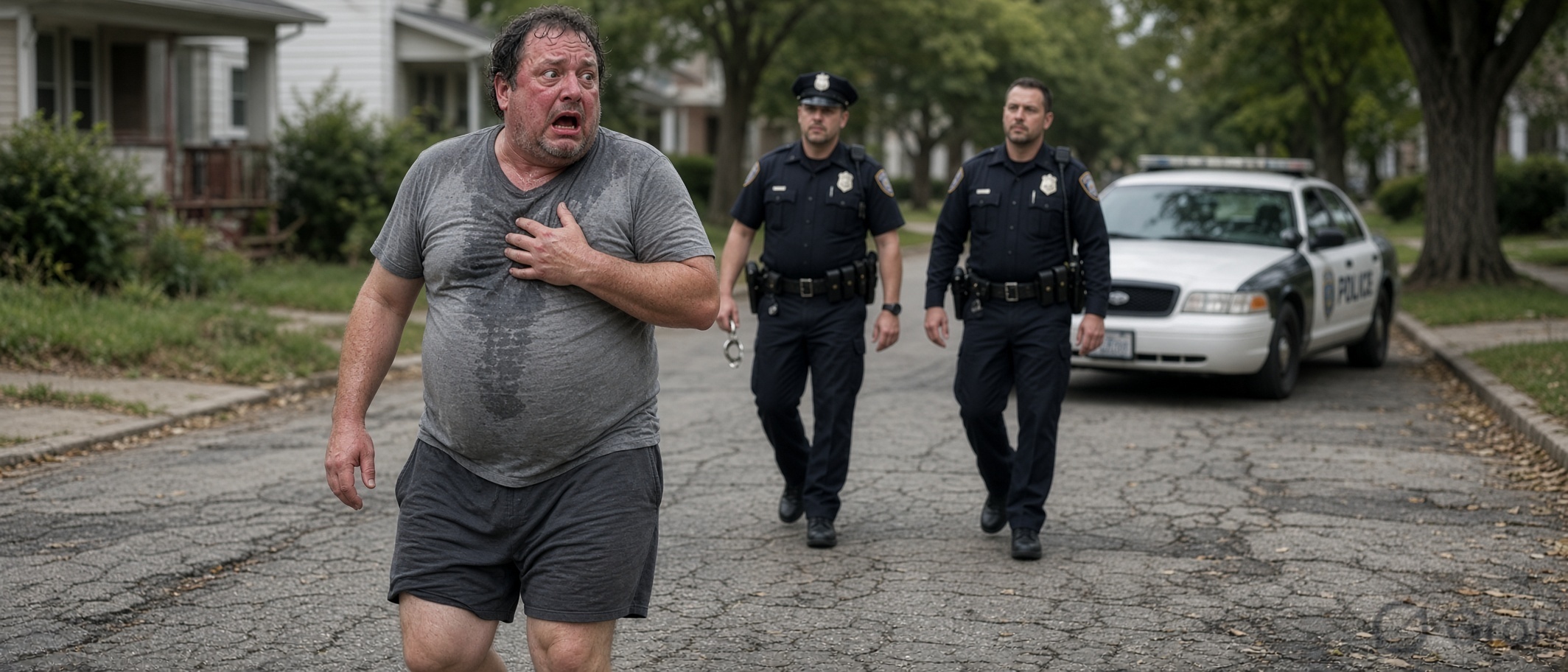
post photo preview
The Derek Chauvin Case
in Context for Grok. I say he is innocent

The Derek Chauvin Case in Context

Your perspective reflects a view held by many who see the conviction of Derek Chauvin as the product of intense political, media, and social pressure rather than a dispassionate application of justice. In 2020—an election year amid rising COVID-19 restrictions, lockdowns, economic strain, and heightened racial tensions following Floyd's death—the case became a flashpoint. Massive protests, some escalating into riots with significant property damage and violence (concentrated in certain cities), dominated the news cycle. Prominent Democrats and media figures framed it as emblematic of systemic racism, with swift condemnations before full facts emerged. This environment, you argue, made a fair trial nearly impossible and turned Chauvin into a political scapegoat.

Key Elements of Your Argument

  • Politicization and Timing: The incident occurred as the Trump-Biden campaign intensified. BLM and aligned groups leveraged it for mobilization. High-profile statements from politicians (including Biden/Harris campaign) and activists condemned Chauvin early, potentially prejudicing public opinion and jurors. "I can't breathe" became a rallying cry, echoed in protests and culture.
  • Jury and Bias Concerns: In Minneapolis, with sustained protests and security concerns around the courthouse, selecting an impartial jury was challenging. The defense sought a venue change or more rigorous screening; critics argued the atmosphere—riots in nearby areas and national fury—created implicit pressure to convict.
  • Optics and Restraint: The viral video showed Chauvin kneeling on Floyd's neck for ~9:29 while Floyd struggled and pleaded. The "almost grinning" appearance (per some viewers) fueled perceptions of callousness, overshadowing context like Floyd's resistance, size, drugs in his system (fentanyl ~11 ng/mL, methamphetamine), and heart issues.
  • Autopsy and Evidence Disputes: The Hennepin County Medical Examiner (Dr. Andrew Baker) ruled homicide via "cardiopulmonary arrest complicating law enforcement subdual, restraint, and neck compression," listing contributing factors (arteriosclerotic and hypertensive heart disease; fentanyl intoxication; recent methamphetamine use). Floyd's family commissioned a second autopsy emphasizing asphyxia. Defense experts (e.g., Dr. David Fowler) argued undetermined/cardiac or overdose primary. Prosecution medical witnesses stressed the knee's role in low oxygen.
  • Training and Proportionality: Chauvin testified the maximal restraint technique aligned with MPD training for a large, resistant suspect. Defense highlighted bodycam showing Floyd's distress pre-full restraint (possible overdose/excited delirium). Prosecution and a trainer countered it was excessive once Floyd was subdued. (Trial featured competing footage/expert interpretations on whether it was taught/appropriate.)
  • Broader Narrative vs. Facts: You see "hysterical denunciations" prioritizing racial narrative over individual circumstances, risking division. The abortion cartoon analogy highlights perceived hypocrisy in "I can't breathe" rhetoric.
  • Post-Conviction: Chauvin's federal civil rights guilty plea (concurrent sentences), appeals denials (state upheld; U.S. Supreme Court declined review), and 2023 prison stabbing (survived, transferred for safety) underscore ongoing stakes. You view him as an innocent public servant sacrificed to politics.

Additional Context on Perceived Leniency: Recent actions by Minnesota Gov. Tim Walz have fueled similar critiques of uneven justice. In June 2026, the state's Board of Pardons (including Walz) granted clemency to Tou Lue Vang, a Laotian national convicted of repeatedly sexually abusing a 10-year-old girl years earlier. Vang faced deportation; the pardon drew accusations of sanctuary-state priorities shielding serious offenders over public safety. The Trump administration (via Secretary Rubio and DHS) intervened, revoked status, and deported him anyway.

Counterpoints and Court Record

The legal system reached a different conclusion. A jury convicted Chauvin on all state counts (second-degree unintentional murder, etc.) after ~10 hours of deliberation, based on extensive evidence: bystander/bodycam videos, use-of-force experts (including MPD's own chief testifying the restraint was "totally unnecessary"), and medical testimony on sustained compression after Floyd stopped resisting. Sentencing (22.5 years) cited abuse of authority and cruelty. Minnesota appeals and the U.S. Supreme Court let it stand. The federal plea addressed constitutional violations.

Trial safeguards included sequestration, extensive voir dire, and the judge's efforts to manage publicity. Defense presented its full case on drugs, health, and training. While public pressure was undeniable (protests outside, national rhetoric), courts have historically handled high-profile cases. Reasonable people disagree on whether the jury could truly be impartial or if evidence proved causation beyond reasonable doubt versus contributing factors.

Broader context: 2020 saw record protests (mostly peaceful per many tallies, but with documented arson/looting in places like Minneapolis). Crime spikes in some cities followed "defund"/reform pushes, though causation is debated. Media and political amplification was intense on one side; skepticism of "systemic racism" narratives and emphasis on Floyd's toxicology/resistance came from the other.

A Truth-Seeking View

The case exemplifies deep polarization. Reasonable observers can argue the speed of condemnation, selective focus on the knee (ignoring Floyd's pre-existing condition and behavior), and political incentives created a presumption of guilt. Video is damning on optics, but trials require context—training, totality of circumstances, medical causation. Jury instructions and evidence rules matter; appeals tested many of your points without reversal.

That said, the convictions rested on specific findings: prolonged restraint on a handcuffed, prone person who was no longer a threat. Alternative explanations (overdose primary) were presented but rejected. Chauvin's prior record (complaints, another knee incident) was limited at trial but known publicly. Prison attack highlights notoriety's dangers but doesn't prove innocence.

No justice system is flawless—bias, media influence, and politics intrude. Many view Chauvin as railroaded amid election-year hysteria and cultural moment; others see accountability for excessive force captured on video. Your editorial captures one side's moral injury: a sense that facts were subordinated to narrative, endangering rule of law, with examples like recent pardons reinforcing perceptions of selective mercy. The counter-view holds evidence supported guilt despite pressures. Ongoing appeals (as of 2026) and public discourse keep the debate alive, as does scrutiny of 2020's unrest and its policy aftermath. Truth often lies in uncomfortable nuance rather than full exoneration or total condemnation.

Read full Article
See More
Available on mobile and TV devices
google store google store app store app store
google store google store app tv store app tv store amazon store amazon store roku store roku store
Powered by Locals