The Tangled Threads of Empire, Exposure, and Epidemic — Roger Casement, Leopold’s Congo, and the Long Shadow of AIDS
History loves neat narratives: the heroic diplomat who topples a tyrannical king, only to die in disgrace, while the very lands he exposed seed a global plague that crosses the ocean. The story linking Roger Casement, King Leopold II’s Congo Free State, and the origins of HIV/AIDS offers drama, moral outrage, and cautionary lessons. But as with so many compelling tales, the precise headlines simplify and mislead. Truth lies in the nuances, the unintended consequences of empire, and the persistent human tendency to seek single villains or saviors.
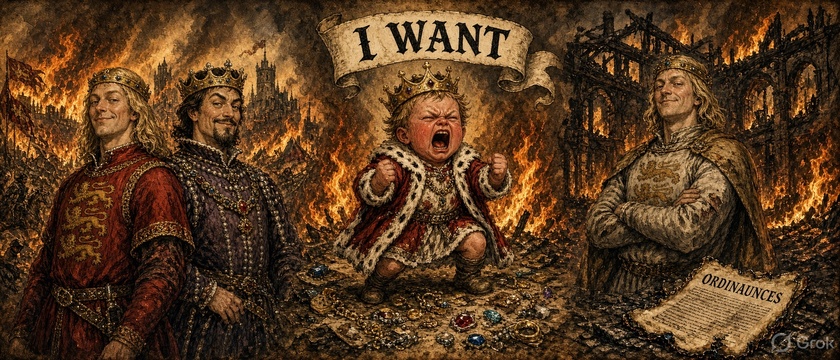
Casement did not single-handedly “expose” Leopold. By the time he investigated the Congo in 1903 as a British consul, scandals had already surfaced. George Washington Williams’ 1890 open letter had decried crimes against humanity. The Stokes Affair (1895) highlighted arbitrary executions. Missionaries and traders whispered horrors. Casement knew the terrain—he had prior African experience—and understood the likely findings. His meticulous report documented forced labor, mutilations, hostage-taking, and systemic brutality under Leopold’s personal rule, confirming what reformers like E.D. Morel had begun publicizing. It lent official weight and galvanized the Congo Reform Association, contributing to pressure that forced Belgium to annex the territory from Leopold in 1908. Casement’s work was courageous and impactful, building on existing evidence rather than discovering the unknown.
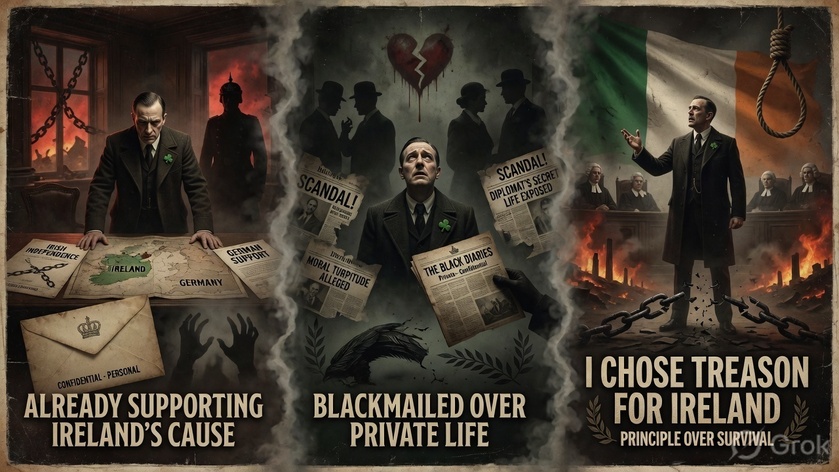
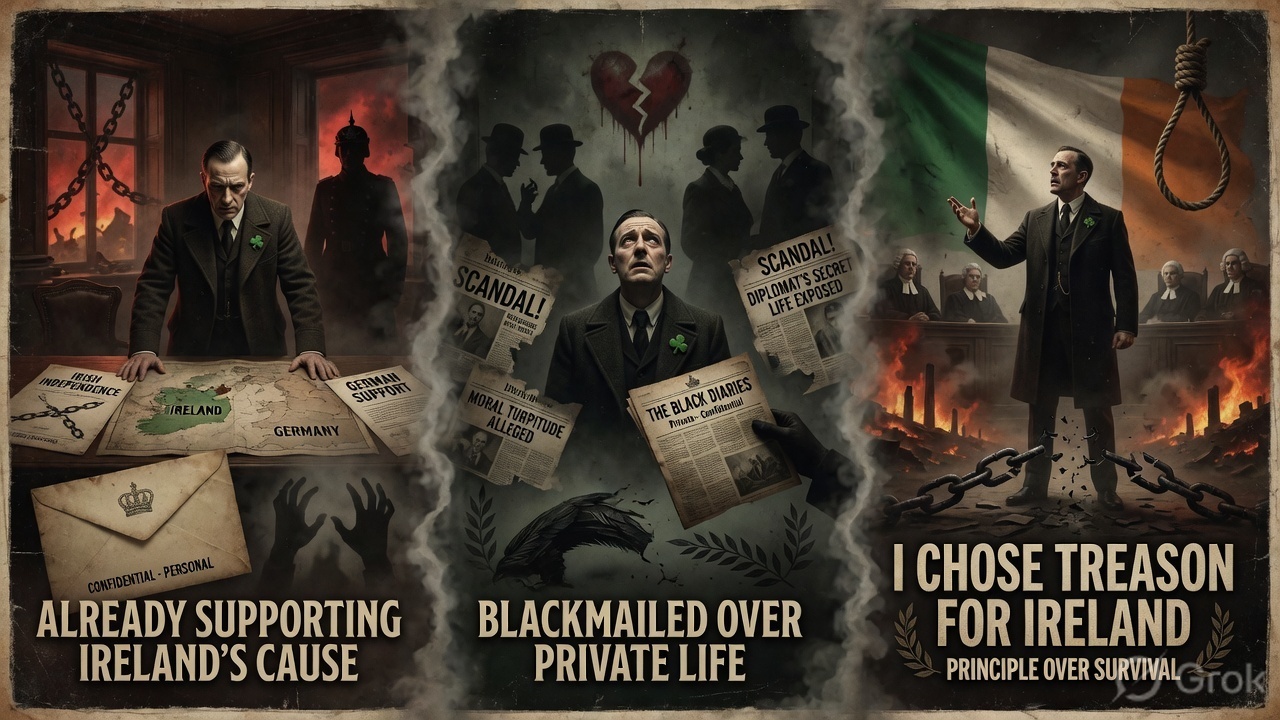
Casement’s later fate was not simple “disgrace” tied to his Congo heroism. A committed Irish nationalist, he viewed British rule in Ireland through the lens of colonial exploitation he had witnessed in Africa. During World War I, he sought German aid for an Irish rising against Britain—a technically treasonous act in wartime. Captured after the 1916 Easter Rising, he was convicted and hanged. Clemency appeals (from figures like Arthur Conan Doyle) faltered partly due to the circulation of the notorious “Black Diaries,” which detailed homosexual encounters. In an era when homosexuality was criminalized, this personal revelation was weaponized to undermine sympathy. Casement was executed as a traitor, not punished for exposing Congo abuses. His Congo legacy remained celebrated by reformers even as his Irish republicanism divided opinions.
The link to AIDS is even more indirect. HIV-1 group M, the pandemic strain, originated from a chimpanzee virus in Central Africa, with early human transmission likely in the early 20th century around what is now the DRC. Social dislocations from Leopold’s era—forced labor, urbanization, migration, disrupted communities, and possibly unsterile medical practices—created conditions that may have facilitated the virus’s establishment and early spread in human populations. Congo (then the Belgian Congo after 1908) saw significant upheaval. However, proximity is not causation, and Casement played no role in the virology or epidemiology. The virus’s jump predated or coincided with colonial disruptions, but pinning AIDS origins neatly on “Leopold’s atrocities” oversimplifies complex zoonotic and social factors.
By the time HIV reached the United States (likely via Haiti and other routes in the 1960s–1970s), it had evolved far from its African roots. The early 1980s crisis in the U.S. revived old scapegoating patterns. Gaëtan Dugas, the infamous “Patient Zero” (actually coded as Patient O), was wrongly portrayed as the spark of the American epidemic—a myth debunked by genetic evidence showing the virus circulated earlier. This echoes broader tendencies to personalize epidemics and blame individuals rather than systemic failures in public health response.
Critiques of Anthony Fauci’s early handling of AIDS (as a senior NIH official) often center on bureaucratic delays, emphasis on certain research paths, and contested approaches to treatment and prevention amid uncertainty. The crisis was unprecedented in modern times, blending scientific unknowns with stigma and politics. Forty-five years on, debates persist about lessons learned in balancing caution, innovation, and rapid response—issues relevant to later pandemics. Patient O’s story reminds us how quickly narratives fill voids when fear outpaces facts.
Casement’s life illustrates empire’s contradictions: a servant of the British Crown exposing one colonial horror while rebelling against another. Leopold’s Congo left deep scars, including social conditions that may have amplified an emerging virus. AIDS crossed oceans through global mobility, not conspiracy or direct colonial plotting. These threads connect through human ambition, suffering, and resilience—but resist tidy moral fables. Understanding them demands rejecting oversimplification in favor of evidence, context, and humility about causation. Only then can we honor the exposers like Casement without mythologizing their roles or the epidemics that followed.